
- How We Ranked Premier League Club Owners
- Premier League Club Owners Ranked by Net Worth: Full Table
- 20. Brentford, Matthew Benham
- 19. Hull City, Acun Ilıcalı
- 18. Coventry City, Doug King
- 17. Brighton & Hove Albion, Tony Bloom
- 16. Sunderland, Kyril Louis-Dreyfus
- 15. Bournemouth, Bill Foley
- 14. Nottingham Forest, Evangelos Marinakis
- 13. Crystal Palace, Woody Johnson, Josh Harris, David Blitzer & Steve Parish
- 12. Tottenham Hotspur, Joe Lewis & Daniel Levy (ENIC Group)
- 11. Leeds United, 49ers Enterprises
- 10. Liverpool, John W. Henry & Tom Werner (Fenway Sports Group)
- 9. Everton, The Friedkin Group (Dan Friedkin)
- 8. Ipswich Town, Gamechanger 20 Ltd (ORG Portfolio Management / Portman Holdings)
- 7. Aston Villa, Nassef Sawiris & Wes Edens (V Sports)
- 6. Fulham, Shahid Khan
- 5. Arsenal, Stan Kroenke
- 4. Chelsea, Todd Boehly, Clearlake Capital, Mark Walter & Hansjörg Wyss (BlueCo)
- 3. Manchester City, Sheikh Mansour bin Zayed Al Nahyan (Abu Dhabi United Group)
- 2. Manchester United, The Glazer Family & Sir Jim Ratcliffe
- 1. Newcastle United, Saudi Arabia's Public Investment Fund
- Which Premier League Owner Is the Richest?
- How Premier League Ownership Has Changed
- Frequently Asked Questions
- Final Thoughts
Money has never mattered more in English football. Every summer transfer window, every wage bill, every stadium redevelopment traces back to one thing: who is writing the cheques. As the 2026–27 Premier League season gets underway, the gap between the boardrooms of the wealthiest clubs and those simply trying to survive has rarely looked wider.
This list ranks all 20 Premier League club owners for the 2026–27 season (Arsenal, Aston Villa, Bournemouth, Brentford, Brighton, Chelsea, Coventry City, Crystal Palace, Everton, Fulham, Hull City, Ipswich Town, Leeds United, Liverpool, Manchester City, Manchester United, Newcastle United, Nottingham Forest, Sunderland and Tottenham Hotspur) by the estimated net worth of their controlling owners. It also explains how each fortune was built, when each owner arrived and how their financial firepower (or lack of it) has shaped their club’s trajectory.
How We Ranked Premier League Club Owners
Net worth figures for football club owners are estimates, not audited facts. They’re compiled here using a mix of Forbes’ billionaire rankings, the Sunday Times Rich List, Bloomberg’s Billionaires Index and reporting from football and business outlets, cross-checked against the most recent available figures as of mid-2026.
A few caveats worth flagging before diving in:
-
- Where a club is owned by a consortium, we’ve generally used the wealth of the individual or group with controlling/majority influence, though we note the wider ownership picture in each entry.
- Sovereign wealth funds (Newcastle’s PIF) and state-linked ownership (Manchester City’s Abu Dhabi United Group) aren’t personal fortunes in the traditional sense, they represent access to national wealth that dwarfs anything a private billionaire can offer. We’ve ranked them accordingly, but they’re a different category entirely from individually-owned clubs.
- Some ownership groups, like Ipswich Town’s Gamechanger 20 Ltd, are backed by institutional capital (in this case a US pension fund) rather than a single billionaire’s personal balance sheet, so the number reflects assets under management rather than one person’s wealth.
- Net worth is not the same as transfer spending power or club valuation. A wealthy owner who runs a club conservatively (like Brighton’s Tony Bloom) can be outspent by a less wealthy one with looser purse strings.
With that in mind, here’s how the 2026–27 Premier League ownership landscape stacks up, from poorest to richest.
Premier League Club Owners Ranked by Net Worth: Full Table
| Rank | Club | Owner(s) | Est. Net Worth | Owner Since | Source of Wealth |
| 1 | Newcastle United | Public Investment Fund (Saudi Arabia) | Sovereign fund; assets in the hundreds of billions | 2021 | Sovereign wealth fund / oil revenues |
| 2 | Manchester United | Glazer Family & Sir Jim Ratcliffe | ~£24.4bn | 2005 (Glazers) / 2024 (Ratcliffe) | Leveraged buyout / INEOS chemicals |
| 3 | Manchester City | Sheikh Mansour (Abu Dhabi United Group) | State-linked; no comparable private ceiling | 2008 | Abu Dhabi ruling family / sovereign wealth |
| 4 | Chelsea | Todd Boehly, Clearlake Capital, Mark Walter, Hansjörg Wyss (BlueCo) | ~£11.9bn | 2022 | Private equity / insurance / investment |
| 5 | Arsenal | Stan Kroenke | ~£11.2bn | 2018 (sole owner) | Real estate / sports franchises |
| 6 | Fulham | Shahid Khan | ~£10–13bn | 2013 | Auto parts manufacturing (Flex-N-Gate) |
| 7 | Aston Villa | Nassef Sawiris & Wes Edens (V Sports) | ~£8–10bn | 2018 | Industrial conglomerate / private equity |
| 8 | Ipswich Town | Gamechanger 20 Ltd (ORG / Portman Holdings) | Multi-billion fund backing (institutional) | 2021 | US pension fund investment vehicle |
| 9 | Everton | The Friedkin Group (Dan Friedkin) | ~£6.2–7.9bn | 2024 | Gulf States Toyota / entertainment / hospitality |
| 10 | Liverpool | John W. Henry & Tom Werner (FSG) | ~£6bn | 2010 | Commodities trading / sports ownership |
| 11 | Leeds United | 49ers Enterprises | ~£5.2bn | 2023 (full control) | NFL franchise ownership (DeBartolo-York family) |
| 12 | Tottenham Hotspur | Joe Lewis & Daniel Levy (ENIC Group) | ~£4.5–5.2bn | 2001 | Currency trading / Tavistock Group |
| 13 | Crystal Palace | Woody Johnson, Josh Harris, David Blitzer, Steve Parish | ~£4.3–6.8bn | 2010 (Parish) / 2025 (Johnson) | Pharmaceuticals heritage / private equity / NFL |
| 14 | Nottingham Forest | Evangelos Marinakis | ~£3.3bn | 2017 | Shipping (Capital Maritime & Trading) |
| 15 | Bournemouth | Bill Foley | ~£2.1–2.7bn | 2022 | Insurance / financial technology |
| 16 | Sunderland | Kyril Louis-Dreyfus | ~£2–2.8bn | 2021 | Agricultural commodities (Louis-Dreyfus Group) |
| 17 | Brighton & Hove Albion | Tony Bloom | ~£1.3–1.7bn | 2009 | Sports betting analytics (Starlizard) |
| 18 | Coventry City | Doug King | ~£305–333m | 2023 | Shipping / offshore investment |
| 19 | Hull City | Acun Ilıcalı | ~£150–375m (estimates vary) | 2022 | Television production (Acun Medya) |
| 20 | Brentford | Matthew Benham | ~£220m | 2012 (full ownership) | Sports betting analytics (Smartodds) |
Figures are rounded estimates compiled from public sources and are approximate. Sovereign and fund-backed entries (Newcastle, Manchester City, Ipswich) aren’t directly comparable to individually-held net worth.
20. Brentford, Matthew Benham
Estimated net worth: ~£220 million
Matthew Benham sits at the more modest end of Premier League ownership, but Brentford’s rise from League One obscurity to a well-run top-flight club is arguably the division’s best case study in smart spending over big spending. Benham, a lifelong Bees fan, made his fortune through sports betting analytics firms Smartodds and the betting exchange Matchbook.
He took control of Brentford in 2012 and has since built the club’s identity around data-driven recruitment, a sharp academy pipeline and one of the best value-for-money squads in the league. He also owns Danish club FC Midtjylland, which operates under a similar analytical philosophy. Benham’s net worth is dwarfed by most of his Premier League rivals, but Brentford’s stadium move to the Gtech Community Stadium and consistent top-half finishes show what disciplined ownership can achieve without billionaire-scale resources.
19. Hull City, Acun Ilıcalı
Estimated net worth: ~£150–375 million (estimates vary widely)
Hull City’s return to the Premier League after a play-off triumph in 2025–26 brings Turkish media mogul Acun Ilıcalı into the top flight for the first time. Ilıcalı built his wealth through Acun Medya, a television production empire behind some of Turkey’s biggest entertainment formats and he owns two of the country’s leading channels, TV8 and TV5.
He bought Hull City in January 2022 for around £30 million, ending the unpopular tenure of the Allam family and has run the club with relative financial discipline since: Hull’s net transfer spend under his ownership has stayed in credit. Estimates of Ilıcalı’s personal fortune vary enormously depending on the source, from under £100 million to well over £300 million, reflecting the difficulty of valuing a privately held media empire spanning more than a dozen countries.
Whatever the true figure, he sits among the least wealthy owners in the Premier League: a gap that will be tested as Hull try to survive their first top-flight campaign since 2017.
18. Coventry City, Doug King
Estimated net worth: ~£305–333 million
Coventry’s return to the Premier League after a 25-year absence is one of English football’s best redemption stories and Doug King has been central to it. The South African-born businessman, who made his money through the King Group’s shipping, investment and offshore interests, completed his takeover in 2023 and has focused heavily on stabilising the club’s off-field foundations, including buying back the Coventry Building Society Arena, ending years of stadium uncertainty.
King backed manager Frank Lampard’s promotion-winning campaign in 2025–26 and while his fortune is modest by Premier League standards, Coventry’s rise shows that careful, community-focused ownership can still produce a top-flight club.
17. Brighton & Hove Albion, Tony Bloom
Tony Bloom has been recognised for his services to football and the city of Brighton and Hove in the 2024 King's New Year Honours List. 👏 pic.twitter.com/5stsWy1lXA
— Brighton & Hove Albion (@OfficialBHAFC) December 29, 2023
Estimated net worth: ~£1.3–1.7 billion
Tony Bloom is proof that a relatively modest net worth (by elite Premier League standards) can still build one of the most admired footballing operations in Europe. A professional poker player before he was a club owner, Bloom made the bulk of his fortune through Starlizard, a sports betting analytics consultancy he founded, which uses statistical modelling to advise gambling syndicates.
He took control of his boyhood club in 2009 and has overseen a remarkable transformation: promotion to the Premier League in 2017, European qualification and a scouting and data model that has turned Brighton into one of football’s most efficient sellers of talent, repeatedly cashing in on players like Moises Caicedo and Alexis Mac Allister for enormous profit.
Bloom’s net worth is comparatively small next to the state-backed and billionaire-owned giants above him, but few owners in the league get more out of every pound spent.
16. Sunderland, Kyril Louis-Dreyfus
Estimated net worth: ~£2–2.8 billion
Kyril Louis-Dreyfus became the youngest chairman in English football when he took majority control of Sunderland in February 2021, aged just 23, inheriting wealth from the Louis-Dreyfus Group, one of the world’s largest agricultural commodities trading conglomerates.
His father, Robert Louis-Dreyfus, was previously a major shareholder in Adidas and Olympique de Marseille. Under Kyril’s stewardship, Sunderland climbed out of League One, endured a rollercoaster few years back in the Championship and finally returned to the Premier League after an eight-year absence.
His personal wealth is modest relative to most of his Premier League rivals, but the family’s broader financial network has allowed Sunderland to invest significantly in recruitment, headlined by a heavy summer outlay that signalled serious top-flight ambition.
15. Bournemouth, Bill Foley
Estimated net worth: ~£2.1–2.7 billion
Bill Foley completed his takeover of Bournemouth in December 2022 through his Black Knight Football Club vehicle, becoming the latest in a wave of American investors in the Premier League. The Las Vegas-based businessman built his fortune in the insurance and financial technology industries as chairman of Fidelity National Financial, Cannae Holdings and Black Knight Financial Services and is also known in sports circles as the founding owner of the NHL’s Vegas Golden Knights, whom he took to three Stanley Cup Finals.
Since Foley’s arrival, Bournemouth’s value has multiplied several times over, the club has climbed steadily up the table and a 2025–26 top-half finish delivered Europa League qualification for the first time in the Cherries’ 127-year history. It’s one of the clearer examples in the league of moderate but well-directed investment translating into consistent progress on the pitch.
14. Nottingham Forest, Evangelos Marinakis
Nottingham Forest owner Evangelos Marinakis has made a further financial commitment to the Club with the conversion of £11m worth of loans into shares for the financial year 2022/23.
— Nottingham Forest (@NFFC) December 15, 2023
Estimated net worth: ~£3.3 billion
Greek shipping magnate Evangelos Marinakis, chairman of Capital Maritime & Trading Corp, bought Nottingham Forest in 2017 for a reported £67 million and has overseen one of the more eventful ownership spells in the modern Premier League. Marinakis also owns Greek giants Olympiacos and his willingness to spend heavily in the transfer market helped fuel Forest’s promotion in 2022 and their subsequent push into European competition, including a run to the Europa League semi-finals.
That spending has come with volatility, however: Forest have cycled through several managers in quick succession under his ownership, drawing criticism even as results have generally trended upward. Marinakis remains one of the more hands-on and unpredictable owners in the division.
13. Crystal Palace, Woody Johnson, Josh Harris, David Blitzer & Steve Parish
Estimated combined net worth: ~£4.3–6.8 billion
Crystal Palace’s ownership underwent a significant shift in 2025, when American businessman Robert “Woody” Johnson, co-owner of the NFL’s New York Jets and a former US Ambassador to the United Kingdom, agreed to buy John Textor’s roughly 43% stake for around £190 million, resolving a UEFA multi-club ownership dispute that had threatened Palace’s European qualification.
Johnson, whose personal fortune is estimated in the billions through his family’s Johnson & Johnson pharmaceutical heritage and NFL ownership, now holds the largest single stake in the club. He joins long-standing owners Josh Harris and David Blitzer, both of whom made their money in private equity and also hold stakes in the NBA’s Philadelphia 76ers and NHL’s New Jersey Devils, along with chairman Steve Parish, who has run the club day-to-day since rescuing it from administration in 2010. Palace’s Conference League triumph in 2025–26, their first major trophy, capped a period of steady growth under this multi-owner structure.
12. Tottenham Hotspur, Joe Lewis & Daniel Levy (ENIC Group)
Tottenham Hotspur chairman Daniel Levy says the club are in talks with 'prospective investors'. pic.twitter.com/mQ2RvebjPT
— BBC Sport (@BBCSport) April 3, 2024
Estimated net worth: ~£4.5–5.2 billion
Tottenham’s ownership runs through ENIC Group, founded in the 1990s by reclusive billionaire Joe Lewis alongside Daniel Levy. Lewis, who built his fortune through currency trading and the sprawling Tavistock Group investment portfolio, spanning real estate, hospitality, life sciences and more, transferred his majority stake into a family trust in 2022 and has since stepped back from direct involvement.
Levy, long the public face of the club as chairman, stepped down from his executive role in September 2025 after 25 years in charge, though he retains his roughly 30% stake in ENIC. Under this ownership, Spurs delivered a state-of-the-art new stadium in 2019 and years of Champions League qualification, even as silverware remained elusive for long stretches, until a Europa League triumph and Champions League run in recent seasons finally delivered the trophies fans had waited decades for.
11. Leeds United, 49ers Enterprises
Estimated net worth: ~£5.2 billion
Leeds United’s ownership is led by 49ers Enterprises, the investment arm of the San Francisco 49ers NFL franchise, which is controlled by the DeBartolo-York family. The group first invested in Leeds in 2018 and completed a full takeover in 2023, bringing NFL-style data analytics and recruitment infrastructure to Elland Road under the guidance of 49ers Enterprises president Paraag Marathe.
Leeds bounced between the Premier League and Championship for several seasons before securing promotion back to the top flight, backed by significant recruitment investment aimed at avoiding another quick relegation. The 49ers ownership group brings substantial American sports-business wealth and cross-sport expertise, even if the personal fortunes behind it are less publicly documented than those of some Premier League rivals.
10. Liverpool, John W. Henry & Tom Werner (Fenway Sports Group)
Estimated net worth: ~£6 billion
Fenway Sports Group has owned Liverpool since 2010, led by principal owner John W. Henry, whose fortune originated in commodities trading before expanding into sports ownership. FSG’s portfolio also includes Major League Baseball’s Boston Red Sox, the NHL’s Pittsburgh Penguins, NASCAR’s RFK Racing and a majority stake in golf’s PGA-affiliated TGL.
Under Henry and chairman Tom Werner, Liverpool have won the Premier League, Champions League and multiple domestic cups, generally favouring a sustainable, self-funding model over the kind of unrestrained spending seen at state-backed rivals.
FSG has occasionally explored bringing in outside investment to boost the club’s financial firepower, reflecting the reality that even a multi-billion-pound ownership group can find itself outgunned by sovereign wealth in the modern Premier League.
9. Everton, The Friedkin Group (Dan Friedkin)
It’s official! @Everton Football Club is now a part of The Friedkin Group family. We are thrilled to lead this historic club into a new era. ⚽🥂💙 pic.twitter.com/9a1CdqsmHK
— The Friedkin Group (@friedkingroup) December 19, 2024
Estimated net worth: ~£6.2–7.9 billion
Everton’s ownership changed hands in December 2024, when The Friedkin Group completed its takeover from Farhad Moshiri in a deal worth more than £400 million. Chairman Dan Friedkin built his wealth through Gulf States Toyota, one of the largest independent Toyota distributors in the world, alongside interests in film production (Imperative Entertainment), luxury hospitality (Auberge Resorts Collection) and aviation.
The Friedkin Group also owns Italian side Roma, which won the inaugural UEFA Europa Conference League under its ownership in 2022. At Everton, the takeover arrived just as the club prepared to move into a new stadium and Friedkin’s backing is seen as central to stabilising a club that had endured years of financial turbulence and profitability-and-sustainability rule breaches under Moshiri.
8. Ipswich Town, Gamechanger 20 Ltd (ORG Portfolio Management / Portman Holdings)
Estimated backing: fund assets in the multi-billion-pound range (institutional capital, not a single personal fortune)
Ipswich Town’s Premier League return in 2026–27, their third promotion in four seasons, comes under an ownership structure built around institutional capital rather than a single billionaire. Gamechanger 20 Ltd took control in 2021, majority-backed by ORG Portfolio Management, an American investment firm managing pension assets on behalf of the Arizona Public Safety Personnel Retirement System, alongside football executives Brett Johnson, Berke Bakay and Mark Detmer, who previously built up USL side Phoenix Rising FC.
In December 2025, Portman Holdings LLC became the club’s majority shareholder in a further restructuring, with other investors, including musician and boyhood fan Ed Sheeran, also holding stakes. Because the ownership is fund-driven rather than personally held, precise net worth comparisons with billionaire owners elsewhere in the league are imperfect, but the backing has been more than sufficient to fund Ipswich’s rapid rise from League One to the Premier League under manager Kieran McKenna.
7. Aston Villa, Nassef Sawiris & Wes Edens (V Sports)
Aston Villa can confirm the club’s holding company, V Sports, has entered into a sale and purchase agreement to acquire 46 per cent of the shares in Portuguese club Vitória Sport Clube.
— Aston Villa (@AVFCOfficial) February 14, 2023
Estimated combined net worth: ~£8–10 billion
Aston Villa are owned jointly by Egyptian billionaire Nassef Sawiris, whose fortune comes from the family’s Orascom industrial and construction conglomerate and American investor Wes Edens, co-founder of private equity giant Fortress Investment Group.
The pair, operating through their V Sports vehicle, took control in 2018 and have since overseen Villa’s rise from the Championship to regular European qualification, including a Champions League campaign.
V Sports has also expanded its multi-club footprint, taking stakes in Portugal’s Vitória SC and other clubs. The Sawiris-Edens partnership represents one of the more textbook modern Premier League ownership models: significant personal wealth combined with a clear football strategy and sustained investment in infrastructure, including Villa Park’s ongoing redevelopment.
6. Fulham, Shahid Khan
Estimated net worth: ~£10–13 billion
Shahid Khan’s story is one of the most striking in Premier League ownership. He arrived in the United States from Pakistan at 16 with just a few dollars in his pocket, worked his way through the University of Illinois and built Flex-N-Gate into one of the world’s largest automotive parts manufacturers, supplying bumpers and components to major car makers.
Khan bought Fulham in 2013 and has since also owned the NFL’s Jacksonville Jaguars, giving him a rare foothold in both English and American professional sports. Fulham’s Premier League tenure under Khan has included yo-yoing between divisions, but under manager Marco Silva the club has found sustained top-flight stability and Khan’s vast personal wealth means Fulham retains significant untapped spending potential relative to their current on-pitch ambitions.
5. Arsenal, Stan Kroenke
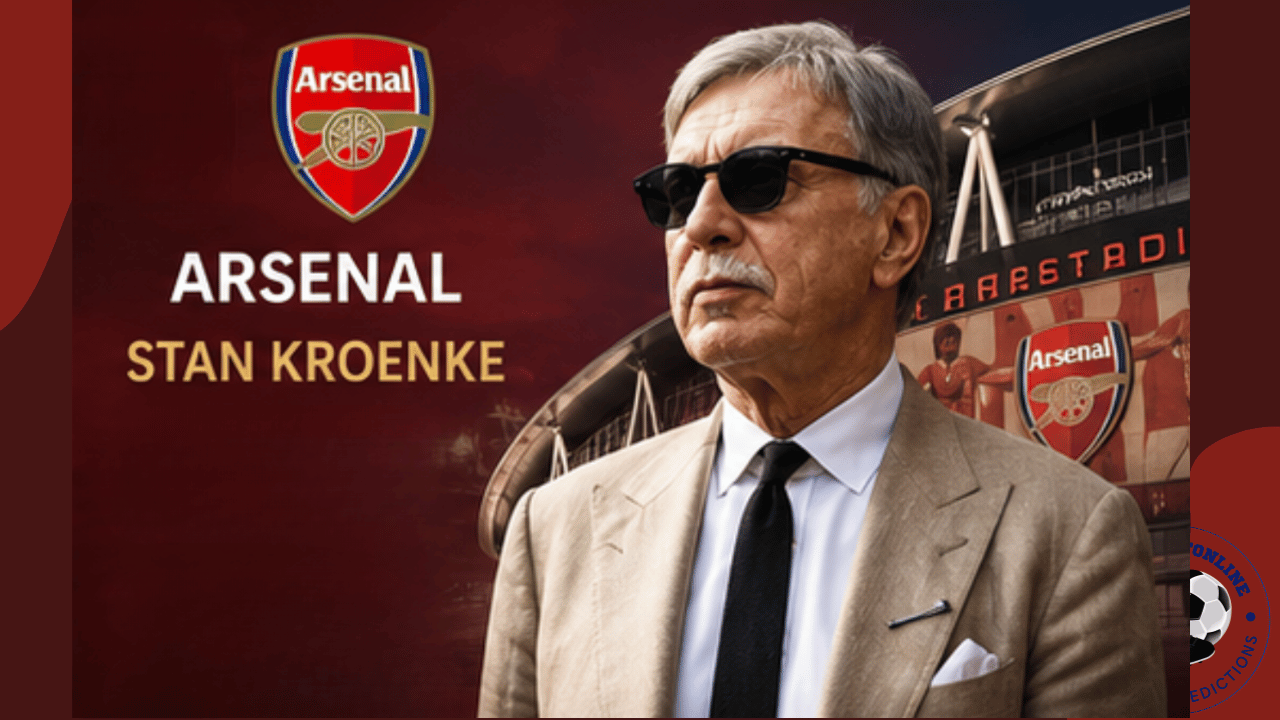
Estimated net worth: ~£11.2 billion
Stan Kroenke built his fortune through real estate development before assembling one of the largest sports ownership portfolios in the world, including the NFL’s Los Angeles Rams, the NBA’s Denver Nuggets, the NHL’s Colorado Avalanche and MLS’s Colorado Rapids, operated through Kroenke Sports & Entertainment.
He became Arsenal’s sole owner in 2018 after buying out Alisher Usmanov’s stake, ending a long period of shared ownership. Kroenke was criticised for years for perceived under-investment relative to his personal wealth, but that changed markedly from 2022 onward, with Arsenal backing manager Mikel Arteta with major signings, including a club-record deal for Declan Rice, as the club returned to sustained title contention and won the Premier League in 2025–26.
4. Chelsea, Todd Boehly, Clearlake Capital, Mark Walter & Hansjörg Wyss (BlueCo)
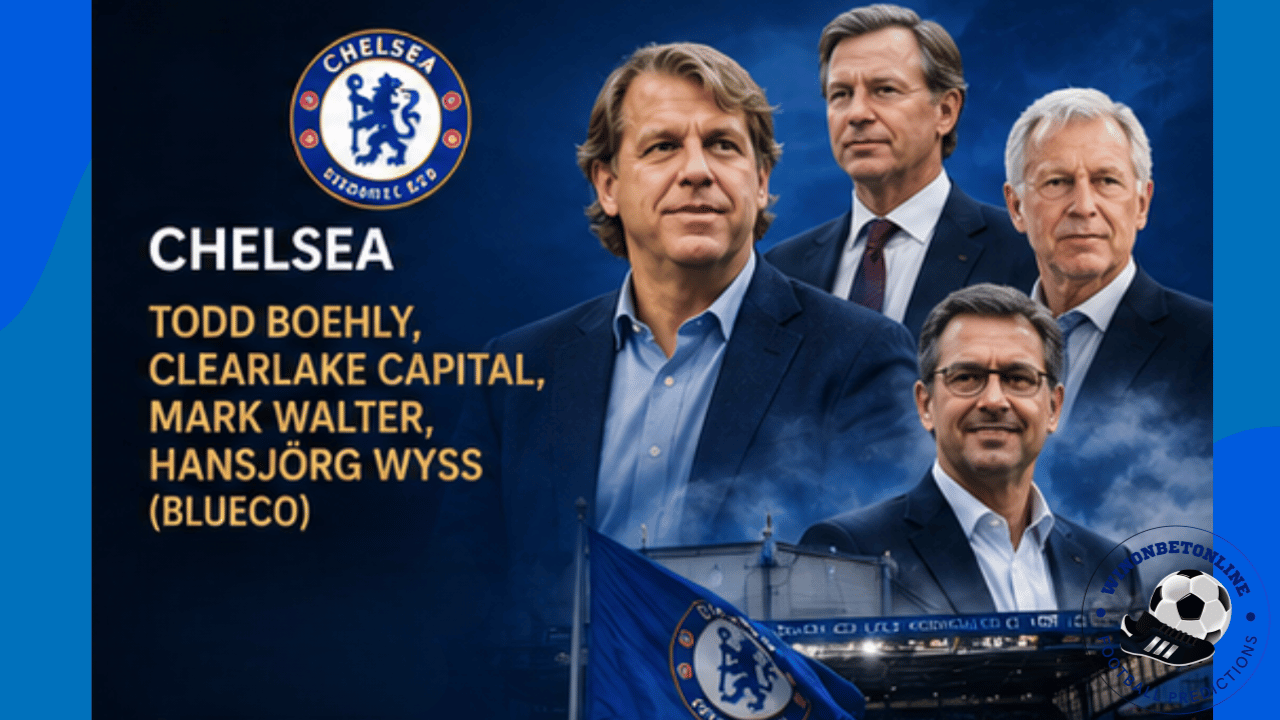
Estimated combined net worth: ~£11.9 billion
Chelsea’s modern ownership story began in 2022, when Roman Abramovich was forced to sell the club following UK sanctions linked to Russia’s invasion of Ukraine. A consortium led by American businessman Todd Boehly and private equity firm Clearlake Capital completed a £4.25 billion purchase, with Clearlake holding the largest economic stake and Boehly serving as the public-facing chairman.
The group, operating under the BlueCo umbrella alongside French club Strasbourg, also includes Dodgers part-owner Mark Walter and Swiss billionaire Hansjörg Wyss. Chelsea’s ownership has been defined by an extraordinary volume of transfer activity, unusually long player contracts designed to spread fees for financial fair play purposes and significant managerial turnover, alongside continued heavy investment in the women’s team and academy infrastructure.
3. Manchester City, Sheikh Mansour bin Zayed Al Nahyan (Abu Dhabi United Group)
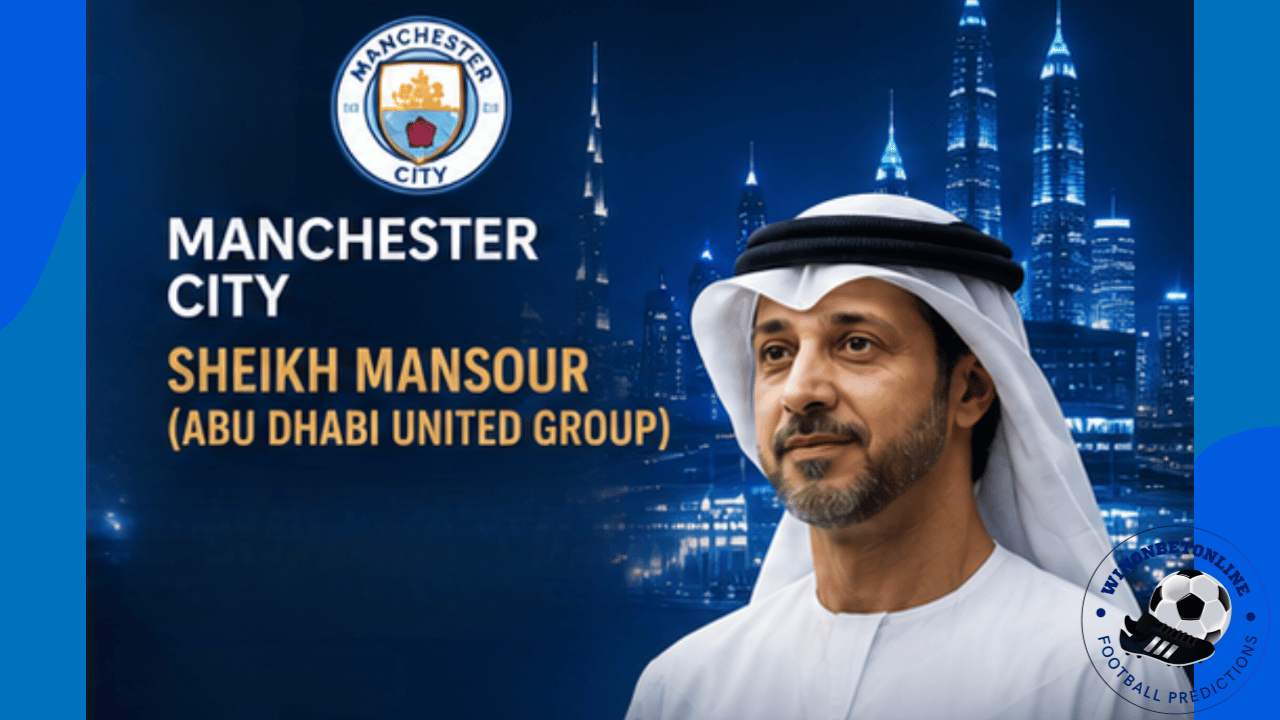
Estimated backing: state-linked wealth, functionally without a comparable ceiling among private owners
Manchester City have been owned since 2008 by Sheikh Mansour bin Zayed Al Nahyan, a member of Abu Dhabi’s ruling family and half-brother of the UAE President, through the Abu Dhabi United Group. City Football Group, the broader holding structure built around the club, also owns New York City FC, Melbourne City, Mumbai City and stakes in several other clubs worldwide, forming one of football’s largest multi-club networks.
The backing behind Manchester City is best understood not as a conventional personal fortune but as access to a share of Abu Dhabi’s vast sovereign oil wealth, a scale that has allowed the club to transform from a mid-table also-ran into the dominant force in English football, winning six Premier League titles since 2012 and a first Champions League in 2023, while facing an ongoing set of Premier League charges related to alleged breaches of financial rules.
2. Manchester United, The Glazer Family & Sir Jim Ratcliffe
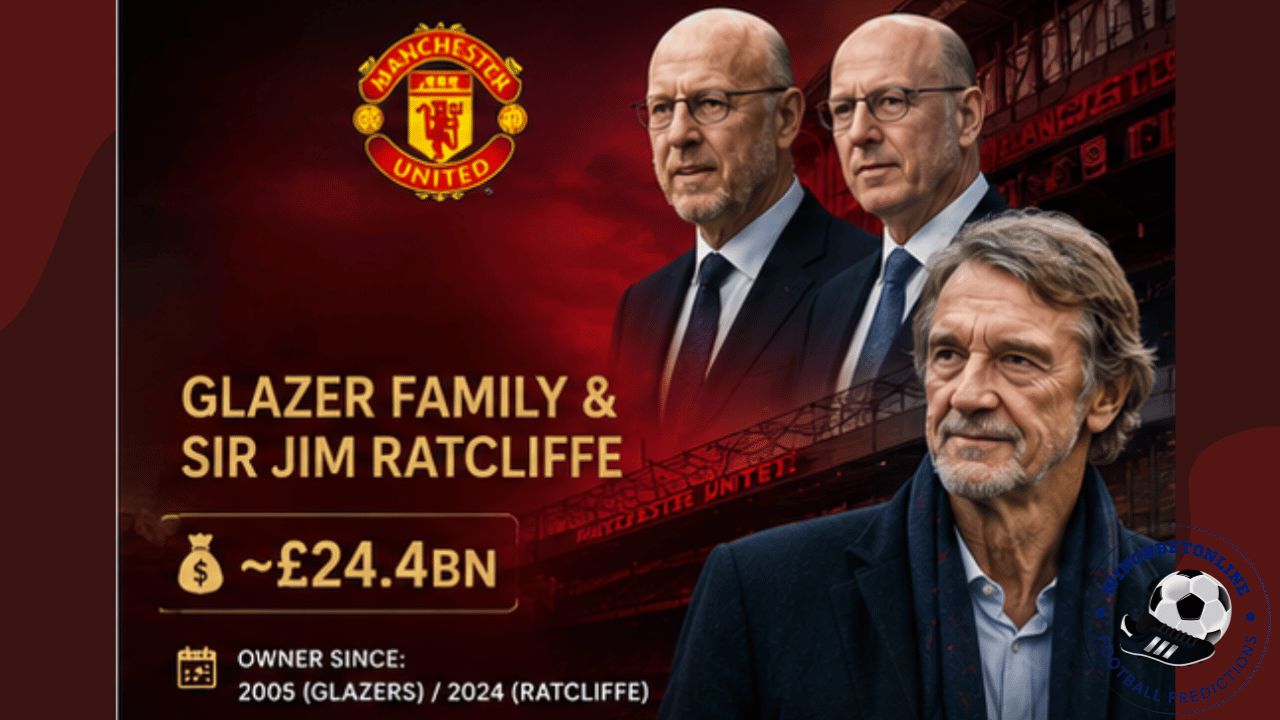
Estimated combined net worth: ~£24.4 billion
The Glazer family, led by Joel and Avram Glazer, took control of Manchester United in a heavily leveraged 2005 takeover that remains one of the most controversial ownership changes in English football history, saddling the club with significant debt that fans have protested against for two decades.
In February 2024, British billionaire Sir Jim Ratcliffe’s INEOS Sport bought a 27.7% stake for roughly £1.6 billion, taking control of football operations while the Glazers retained the larger economic stake. Ratcliffe, founder of chemicals giant INEOS and one of Britain’s wealthiest people, has pushed through significant off-field changes, including cost-cutting measures and investment in Old Trafford’s long-term redevelopment plans, even as speculation about a fuller Glazer exit has persisted without resolution.
1. Newcastle United, Saudi Arabia’s Public Investment Fund
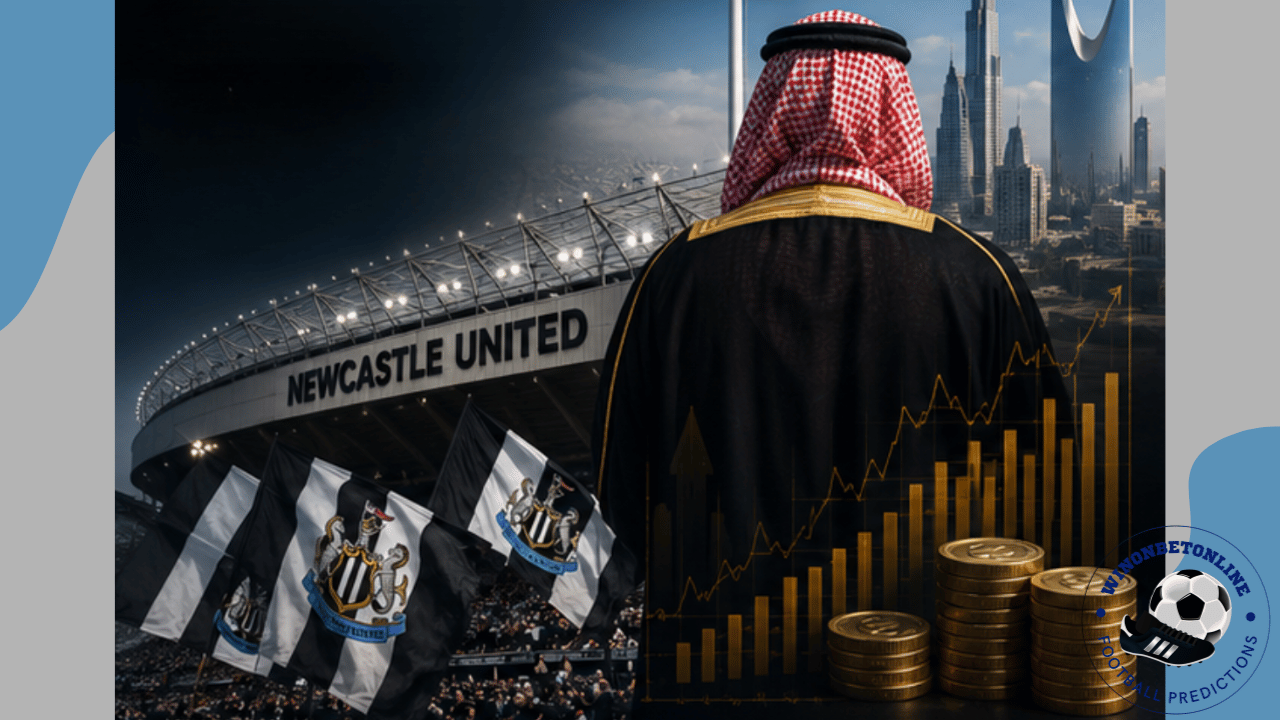
Estimated backing: sovereign wealth fund managing hundreds of billions of dollars in assets
No club in the Premier League, or arguably world football, can match the resources behind Newcastle United. Saudi Arabia’s Public Investment Fund (PIF) took an 85% stake in Newcastle in October 2021, in a deal reported at around $415 million, with the remaining shares split between PCP Capital Partners and the Reuben Brothers’ RB Sports & Media.
PIF is one of the largest sovereign wealth funds on earth, managing assets that run into the hundreds of billions of dollars as part of Saudi Arabia’s broader economic diversification strategy. The scale of that backing dwarfs every other Premier League owner combined, though Newcastle’s spending has still been shaped by the Premier League’s Profit and Sustainability Rules, preventing the kind of unrestrained outlay some feared when the takeover completed. Even so, the Saudi-backed era has transformed Newcastle from relegation battlers into Champions League regulars and, finally, trophy winners.
Which Premier League Owner Is the Richest?
Strictly by personal or entity-level financial backing, Newcastle United’s Saudi Public Investment Fund sits in a category of its own, a sovereign wealth fund with resources that make individual billionaire ownership groups look modest by comparison. If you set aside state-backed ownership and look purely at private individual or family wealth, the Glazer family and Sir Jim Ratcliffe at Manchester United, followed closely by Manchester City’s Sheikh Mansour and Chelsea’s BlueCo consortium, lead the pack among conventionally-owned clubs.
How Premier League Ownership Has Changed
A decade ago, Premier League ownership was dominated by a mix of local businessmen, media entrepreneurs and a handful of overseas billionaires. Today, the picture looks dramatically different. Sovereign wealth funds and state-linked investment vehicles now control two of English football’s biggest clubs.
American ownership has become the dominant force across the league, with private equity firms, NFL and NBA owners and Wall Street executives now running clubs from Chelsea to Everton to Leeds. Multi-club ownership networks such as City Football Group, Eagle Football, 49ers Enterprises and Friedkin Group increasingly link Premier League clubs to sister teams in Europe, the Americas and Asia.
This shift has widened the financial gap between the traditional “Big Six” and the rest of the division, even as smart, disciplined ownership at clubs like Brighton, Bournemouth and Brentford has shown that vast wealth isn’t the only route to competing effectively. Meanwhile, newly promoted clubs like Coventry City, Hull City and Ipswich Town illustrate the other end of the spectrum: owners with comparatively modest resources trying to establish themselves in a league increasingly shaped by billionaire and sovereign capital.
Frequently Asked Questions
Who is the richest Premier League club owner in 2026? Newcastle United’s owner, Saudi Arabia’s Public Investment Fund, has by far the greatest financial resources of any Premier League ownership group, though as a sovereign wealth fund it isn’t directly comparable to individually-owned clubs. Among privately owned clubs, Manchester United’s ownership (the Glazer family and Sir Jim Ratcliffe) and Manchester City’s Sheikh Mansour rank at the top.
Which Premier League club has the poorest owner? Brentford’s Matthew Benham and newly promoted Hull City’s Acun Ilıcalı sit at the lower end of the Premier League’s net worth rankings, though both have run their clubs efficiently relative to their resources.
Does a richer owner guarantee success? Not necessarily. Clubs like Brighton and Brentford have consistently punched above their financial weight through data-driven recruitment and smart management, while some heavily backed clubs have underperformed relative to their resources. That said, sustained financial backing, particularly for infrastructure, wages and squad depth, remains one of the strongest predictors of long-term success in the modern Premier League.
How are these net worth figures calculated? They’re drawn from public sources including Forbes, the Sunday Times Rich List and Bloomberg’s Billionaires Index, along with financial reporting on specific takeovers and ownership structures. Because much of this wealth is held in private companies, real estate and other illiquid assets, all figures should be treated as informed estimates rather than precise, audited totals.
Do these figures include club valuation? No. Club valuation (what a team itself is worth, based on revenue, assets and market comparables) is a separate figure from an owner’s personal or entity-level net worth. A club can be extremely valuable even if its owner isn’t especially wealthy and vice versa.
Final Thoughts
The Premier League’s ownership landscape in 2026 tells a broader story about where football’s money now comes from: sovereign wealth funds, American private equity and a shrinking pool of old-school local benefactors. That gap between the state-backed and billionaire-owned giants at the top and the more modestly resourced owners further down the list shapes almost everything about the competitive balance of English football, from transfer windows to managerial patience to long-term infrastructure investment.
Yet as clubs like Brighton, Bournemouth and Brentford continue to prove, wealth alone has never been the entire story and for newly promoted sides like Coventry, Hull and Ipswich, how far smart ownership can stretch limited resources will be one of the most compelling subplots of the season ahead.
Net worth figures are estimates based on publicly available reporting as of mid-2026 and are subject to change.
