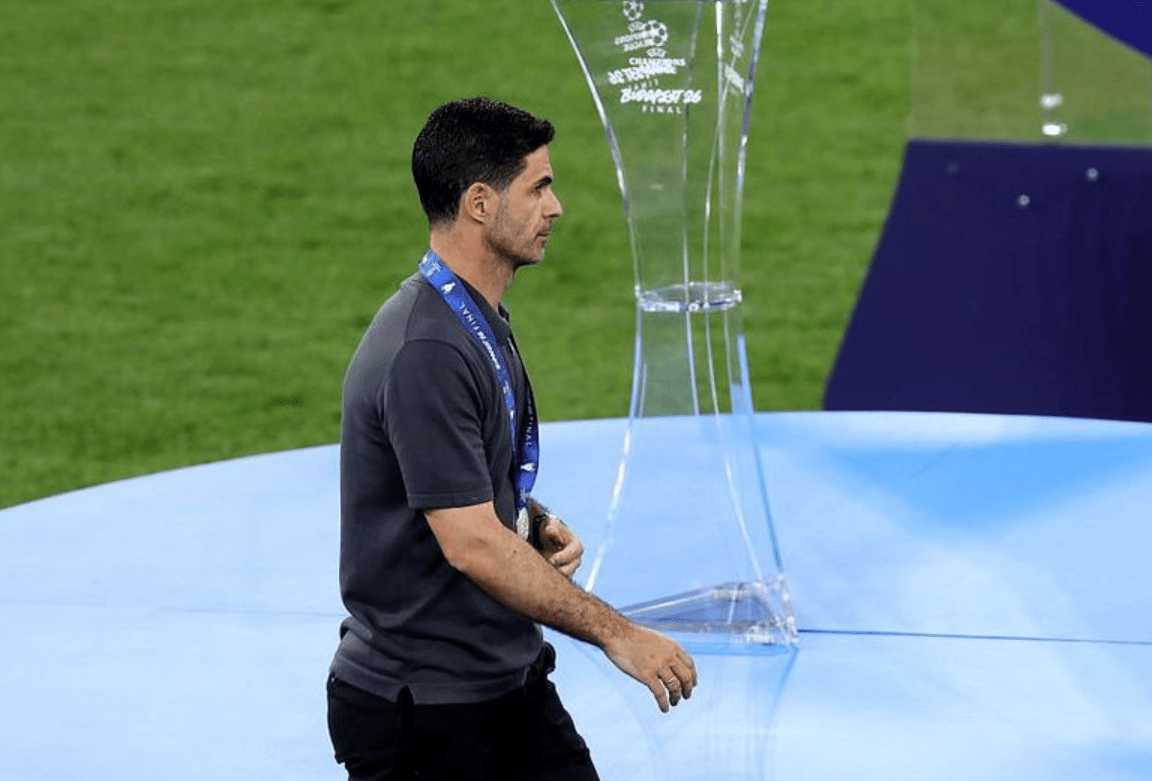
Arsenal’s long-awaited return to the UEFA Champions League final ended in disappointment on Saturday, but manager Mikel Arteta believes the club is close to taking the final step towards becoming champions of Europe.
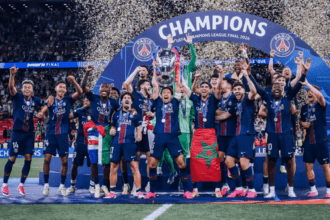
The Gunners suffered a painful penalty shoot-out defeat to Paris Saint-Germain after a 1-1 draw at Budapest’s Puskas Arena, extending Arsenal’s wait for a first Champions League title.
It was Arsenal’s first appearance in the final since 2006, when they also finished as runners-up, and the defeat continued a frustrating run of losses in major European finals.
Despite the heartbreak, Arsenal’s season has marked significant progress. The North London club secured its first Premier League title in 22 years and re-established itself among Europe’s leading teams.
However, the final also highlighted areas where Arteta’s side must improve if they are to challenge consistently for the biggest prizes.
“We want to reach another level and we’re going to have to show that ambition,” Arteta said after the match.
“We are capable of doing it, but it will require us to be ambitious, smart and quick in the decisions we make.”
Arsenal’s players were forced to watch PSG celebrate after penalties from Eberechi Eze and Gabriel were saved, denying the club a historic triumph.
While supporters will celebrate the Premier League title during Sunday’s victory parade in London, the Champions League defeat leaves a feeling of unfinished business.
The final underlined the gap between Arsenal and Europe’s newest dominant force. PSG’s attacking trio of Ousmane Dembele, Khvicha Kvaratskhelia and Desire Doue caused constant problems and demonstrated the level Arsenal must reach.
Arteta acknowledged the quality of the French side’s attack and suggested his squad may need further strengthening during the summer transfer window.
“What they can do individually with the ball is exceptional,” he said.
Arsenal have invested carefully in recent years, developing players such as Bukayo Saka into world-class talents while making targeted signings. Last summer arrivals including Eberechi Eze, Viktor Gyokeres, Martin Zubimendi and Noni Madueke have added depth, but the final showed there may still be room for improvement, particularly in attack.
Kai Havertz scored Arsenal’s goal in the final, but PSG’s firepower proved decisive over the course of the contest.
While Arsenal’s attack came under scrutiny, their defensive record throughout the tournament remained impressive. They reached the final unbeaten in Europe and conceded only seven goals before the showpiece match.
Yet against PSG, Arsenal struggled to impose themselves. They saw little of the ball and created few clear chances over 120 minutes, underlining the need to become more effective in open play against elite opposition.
The positive for Arsenal is that the foundations are firmly in place. Arteta has transformed the club into Premier League champions and Champions League finalists, achievements that seemed distant only a few years ago.
The next stage of the project is clear: add more attacking quality, increase squad depth and find the small improvements needed to compete with Europe’s very best.
Arsenal do not require a complete rebuild. Instead, they need a carefully planned evolution that preserves their defensive strength while making them more dangerous going forward.
The defeat to PSG will hurt, but it also provides a clear roadmap. Having returned to the top of English football and reached the biggest stage in Europe, Arsenal’s challenge now is turning progress into silverware on the continent.
For Arteta and his players, the mission remains unfinished, but the belief is stronger than ever that their moment will come.