

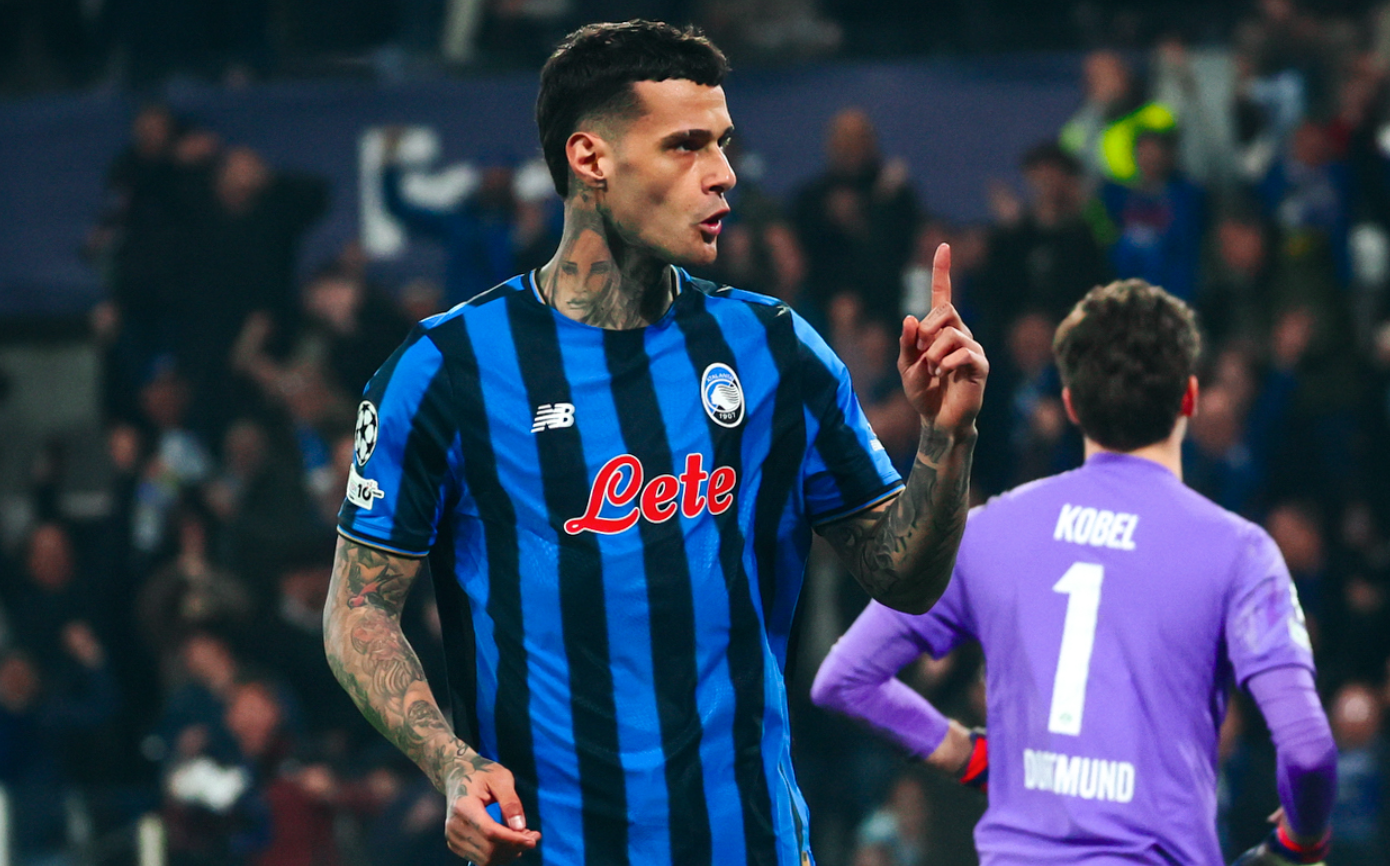
Atalanta BC produced one of the most stirring European nights in their history, overturning a two-goal first-leg deficit to defeat Borussia Dortmund 4-1 at the New Balance Arena and advance to the UEFA Champions League last 16 with a 4-3 aggregate victory.
La Dea’s dramatic triumph sealed their place in the knockout phase and marked a milestone in recent Champions League history. They became the first team since the 2018 to 19 campaign to recover from a two-goal first-leg deficit and progress in a UCL knockout tie. It was a result forged through relentless intensity, clinical finishing, and a refusal to yield until the final whistle.
For Dortmund, who arrived in Bergamo having lost just once in the Bundesliga all season, the evening unraveled in a manner few could have predicted. Their first-leg cushion evaporated under sustained pressure from an Atalanta side that combined tactical discipline with attacking bravery.
The tone was set inside the opening five minutes. Nicola Zalewski immediately tested Gregor Kobel with a fierce effort that forced the Swiss goalkeeper into a sharp save. It proved to be an early warning. Moments later, Lorenzo Bernasconi delivered a probing cross that Ramy Bensebaini inadvertently redirected into the path of Gianluca Scamacca. The Italian striker reacted instinctively, tapping home from close range to halve the aggregate deficit and ignite the home crowd.
Scamacca’s goal transformed the contest. Atalanta pressed with confidence, sensing vulnerability in a Dortmund defence that had appeared secure just days earlier in domestic competition. Zalewski, lively and inventive down the flank, continued to torment the visitors. He drew another desperate stop from Kobel before curling narrowly over from the edge of the area.
Dortmund gradually steadied themselves as the half wore on. Serhou Guirassy found space at the back post but headed off target, while Julian Brandt forced Marco Carnesecchi into a smart save with a sharp snapshot. Yet despite their improvement, Die Schwarzgelben struggled to impose sustained control.
Just before the break, Atalanta struck a decisive blow. Davide Zappacosta unleashed a drive that took a heavy deflection off Bensebaini, wrong-footing Kobel and nestling in the net. The element of fortune did little to diminish the significance of the moment. At 2-0 on the night, the aggregate score was level, and the psychological balance had swung firmly in Atalanta’s favour.
The turnaround illustrated the hosts’ capacity to combine structure with spontaneity. Scamacca’s intelligent movement inside the box, Zalewski’s direct running, and the midfield’s relentless pressing collectively disrupted Dortmund’s rhythm. “When you face a team with a two-goal advantage, the first objective is to believe,” noted a UEFA technical observer after the match. “Atalanta’s early aggression changed the narrative of the tie.”
For Dortmund, the inability to weather the early storm proved costly. Kobel’s reflex saves kept the tie alive during the opening exchanges, but defensive lapses and misfortune compounded their problems. Bensebaini’s involvement in both first-half goals, first with the inadvertent assist and then with the decisive deflection, encapsulated a difficult evening for the German side.
Atalanta’s progression also underlined the depth and maturity of their squad. Carnesecchi’s alertness to deny Brandt ensured that Dortmund never gained a crucial away goal in the first half. Each intervention, no matter how routine it appeared, contributed to sustaining momentum in what had become a finely poised European battle.
The broader significance of the result should not be understated. Champions League knockout ties are frequently defined by marginal gains and psychological resilience. Recovering from a two-goal first-leg deficit requires more than tactical adjustment. It demands emotional composure and unwavering belief across 180 minutes. Atalanta delivered both in abundance.
Statistically, Dortmund’s strong domestic record suggested they were equipped to manage the occasion. Losing just once in the Bundesliga all season speaks to consistency and defensive solidity. Yet European competition often presents a different test, particularly away from home under intense pressure. In Bergamo, the early concession unsettled them, and Atalanta capitalised ruthlessly.
Scamacca’s contribution exemplified the clinical edge required at this level. His instinctive finish for the opener not only shifted the aggregate scoreline but also infused his teammates with conviction. Zalewski’s influence was equally pronounced, repeatedly forcing Kobel into action and stretching Dortmund’s defensive shape.
By full time, the scoreline reflected more than just efficiency in front of goal. It told the story of a side that refused to be defined by the first leg. The 4-1 victory on the night secured a 4-3 aggregate triumph, confirming Atalanta’s place among Europe’s elite sixteen and reinforcing their reputation as one of the continent’s most resilient competitors.
For Dortmund, the exit serves as a reminder of the unforgiving nature of the Champions League. A two-goal advantage can dissolve quickly under sustained pressure. Managing tempo, absorbing momentum swings, and capitalising on key moments remain fundamental in knockout football.
Atalanta’s comeback will be remembered as a defining chapter in their European journey. Overturning a two-goal deficit in a Champions League knockout tie is a rarity in the modern era. Achieving it against a team of Dortmund’s pedigree underscores the magnitude of the accomplishment.
In Bergamo, belief met execution. The result was not merely progression, but a statement.


