
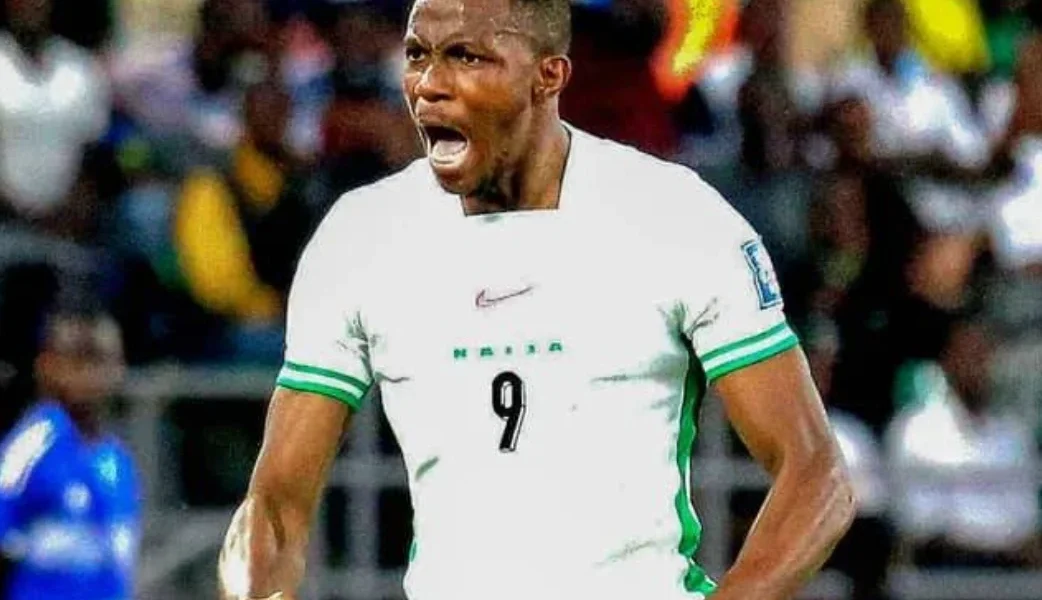
Nigeria has a long tradition of powerful strikers, from Rashidi Yekini in the 1990s to Odion Ighalo in more recent years. Victor Osimhen belongs to that line, but his influence on Nigerian football goes beyond goals. He has raised the global profile of the Super Eagles, shown young players a clear path to the top and become the player the national team is built around.
To understand that influence, it helps to look at four areas: his rise through Nigeria’s youth system, his achievements in Europe, his scoring record for the Super Eagles and what happens to the team when he is missing.
A product of Nigeria’s youth pathway
Lagos-born Osimhen first caught global attention at the 2015 FIFA U-17 World Cup in Chile. Playing under coach Emmanuel Amuneke, he finished as the tournament’s top scorer with 10 goals and was named its second-best player as Nigeria’s Golden Eaglets lifted the trophy.
His journey after that tournament matters because it showed how a youth success can lead to a top career. He moved to Wolfsburg, then scored 20 goals in 36 games at Charleroi in Belgium and 18 in 38 at Lille in France. In 2020 he joined Napoli, where he became one of Europe’s most feared centre-forwards.
Bringing Nigeria back to the top of African football awards
The 2022/23 season changed his status. Osimhen scored 26 Serie A goals as Napoli won their first league title in 33 years. He became the first African to finish as Serie A top scorer, and his total broke George Weah’s record for the most goals by an African in a single Serie A season.
Recognition followed quickly. He finished eighth in the 2023 Ballon d’Or, the first Nigerian to reach the top 10. In December 2023, he beat Mohamed Salah and Achraf Hakimi to the CAF African Player of the Year award, becoming the first Nigerian man to win it since Nwankwo Kanu in 1999. He was also top scorer in AFCON 2023 qualifying with 10 goals.
His success continued in Turkey. On loan at Galatasaray in 2024/25, he scored 26 league goals and 37 in all competitions, a record for a foreign player in one Turkish season, as the club won the league and cup double. Galatasaray then signed him permanently in July 2025 for 75 million euros, a Turkish transfer record.
Chasing Rashidi Yekini’s Super Eagles record
For the national team, Osimhen has scored 35 goals in just over 50 appearances. Only Yekini, with 37, has scored more for Nigeria. Yekini was African Footballer of the Year in 1993 and scored Nigeria’s first World Cup goal, against Bulgaria in 1994, so the record carries real historical weight.
Osimhen’s recent goals have come in big matches. In November 2025, he scored twice in extra time as Nigeria beat Gabon 4-1 in a World Cup play-off in Rabat. At AFCON 2025 in Morocco, he scored four times, including a header and an assist in the 2-0 quarter-final win over Algeria, where he was named man of the match.
Despite the record chase, he has kept the focus on the team. Speaking at AFCON 2025, he said that “the late Rashidi Yekini is the best striker the Super Eagles have ever produced”, and added that an AFCON title mattered more to him than any personal record.
The Osimhen dependence question
His importance is clearest when he is absent. Nigeria lost to DR Congo on penalties in the November 2025 play-off, missing the 2026 World Cup. At AFCON 2025, they won their first five games but lost the semi-final to hosts Morocco 4-2 on penalties after a 0-0 draw, then beat Egypt on penalties for third place with Osimhen on the bench.
That semi-final on 14 January 2026 remains his last appearance for Nigeria. Without him in 2026, the Super Eagles have played nine matches, winning four, drawing three and losing two, while scoring 17 goals. A right-thigh muscle strain kept him out of September’s AFCON 2027 qualifiers, where Nigeria beat Madagascar 2-1 but lost 3-0 to Guinea-Bissau.
Those results tell a balanced story. Other forwards can score, but the team has struggled for consistency without the striker who usually leads the line, presses defenders and creates space for players such as Ademola Lookman and Alex Iwobi.
What his influence means for Nigeria
Osimhen’s impact on Nigerian football can be measured in trophies, awards and transfer fees, but also in expectations. He ended Nigeria’s long wait for an African Player of the Year, proved that a Golden Eaglets star can become a world-class striker and made the Super Eagles a team opponents plan around.
At 27, he is two goals away from equalling Yekini. Once he returns from injury, the national record and a fourth AFCON title for Nigeria will be his clearest remaining targets.
