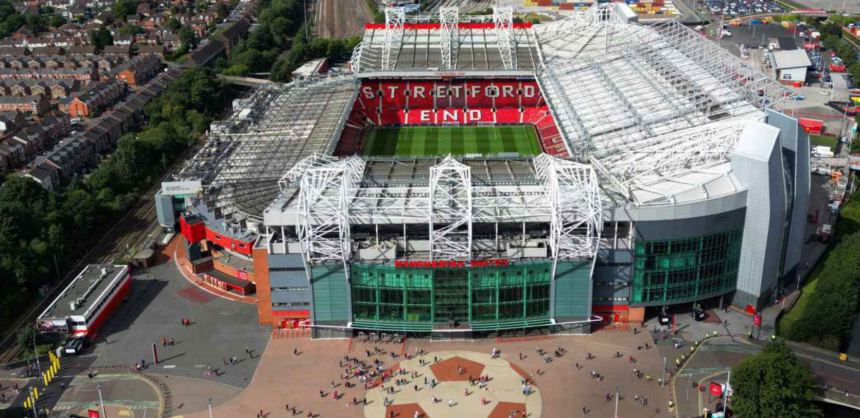
Manchester United chief executive Omar Berrada has pointed to the club’s ongoing off-pitch transformation as a major factor behind a significant financial turnaround, after the Premier League side reported a strong rise in operating profit in the first half of the fiscal year.
The latest figures underline a shift in the club’s financial trajectory following a major restructuring programme led by minority owner Jim Ratcliffe. The cost-cutting drive, which included a reduction of around 450 jobs, has begun to show measurable results, even as overall revenues dipped compared to last year.
Manchester United generated an operating profit of £32.6 million in the first six months of the financial year. That represents a substantial improvement from the £3.9 million operating loss recorded in the same period last year. Over the most recent quarter, the club reported an operating profit of £19.6 million, up sharply from £3.1 million during the corresponding period.
For a club that has faced increasing scrutiny over its finances and football structure in recent years, the turnaround is being presented as evidence that strategic changes behind the scenes are taking hold.
United said in its financial update that the improved profitability reflected “the positive impact of operating cost and headcount reduction programmes implemented in the prior year”. The statement confirmed that the club’s financial direction is now closely linked to the broader transformation project overseen by Ratcliffe, who now leads the football operations side of the business.
Speaking about the results, Berrada stressed that the financial recovery is rooted in structural changes rather than short-term gains.
“We are now seeing the positive financial impact of our off-pitch transformation materialise both in our costs and profitability,” he said. “Today’s results demonstrate the underlying strength of our business as we continue to push for the best football results possible for our men’s and women’s teams.”
While profitability improved, the numbers also highlighted the ongoing challenge of maintaining revenue growth without European competition. United’s total revenues for the second quarter were £190.3 million, down from £198.7 million in the same period last year.
Commercial income fell from £85.1 million to £78.5 million, while matchday revenue dropped from £52 million to £49.5 million. These declines were largely attributed to the club’s absence from continental competition this season after failing to qualify for either the Champions League or Europa League last year.
The financial impact of missing out on European football is significant. Revenue from UEFA competitions includes matchday earnings, broadcast income and commercial exposure, all of which are vital to the balance sheet of a club of United’s scale. Without those fixtures, the club not only loses direct income but also reduced global engagement during key midweek matches.
However, there is growing optimism inside Old Trafford that the situation could improve in the coming months. United are currently in fourth place in the Premier League under interim manager Michael Carrick, putting them in a strong position to return to the Champions League next season.
The club believes that a top-four finish would deliver a major boost to revenue streams and further strengthen financial stability. The impact would be immediate, from broadcast distributions to sponsorship visibility and ticket demand for high-profile European nights.
There is also encouragement from the women’s team, who have progressed to the quarter-finals of the UEFA Women’s Champions League. The success of the women’s side has been increasingly highlighted by club executives as part of a broader growth strategy. It reflects the importance of expanding the club’s global footprint while reinforcing its sporting identity across both programmes.
Despite the drop in revenues this quarter, United remain confident about their full-year outlook. The club says it is on track to record total revenues between £640 million and £660 million for the fiscal year. That projection suggests stability even in a season without European competition, which executives view as a positive signal.
Financial discipline, according to insiders, has become a core focus of the new leadership structure. The restructuring programme has been designed not only to reduce costs but also to improve operational efficiency across departments. This includes streamlining decision-making, aligning football and business objectives, and ensuring resources are directed toward long-term competitive success.
The job cuts, while controversial among supporters and staff, were framed by the club as necessary to build a sustainable future. In modern football, clubs face increasing pressure from rising wage bills, transfer spending and regulatory scrutiny. United’s leadership believes that maintaining strong financial fundamentals will allow them to compete at the highest level.
The broader message from the latest results is that the club is attempting to reset both financially and structurally. The improved operating profit gives the leadership group more flexibility to invest in football operations while maintaining compliance with financial regulations.
For supporters, the key question remains whether the off-pitch transformation will translate into sustained success on the pitch. A return to European football, coupled with a stable financial base, could mark a turning point for one of the world’s most scrutinised clubs.
As the season progresses, the link between performance and profitability will remain central to the narrative around Manchester United. The club’s leadership has made it clear that sporting success and commercial growth must go hand in hand. The latest figures suggest that, for the first time in several years, both ambitions may be moving in the same direction.