
Private investment is becoming a bigger part of Nigerian football. For years, many of the country’s professional clubs depended heavily on state governments, but privately funded teams are now making a stronger impact across the football pyramid. The change was especially clear in 2026, when Sporting Lagos, Inter Lagos, Doma United and Ranchers Bees all gained promotion to the Nigeria Premier Football League. The NPFL confirmed the four clubs were admitted ahead of the 2026/27 season.
Nigerian investment in football is also reaching beyond the domestic league. Some investors have built clubs and academies in Nigeria, while others have taken stakes in European or Major League Soccer projects. This list looks at 10 of the most notable Nigerian football owners and investors in 2026, considering their involvement in club ownership, football development, infrastructure and international investment.
1. Kunle Soname
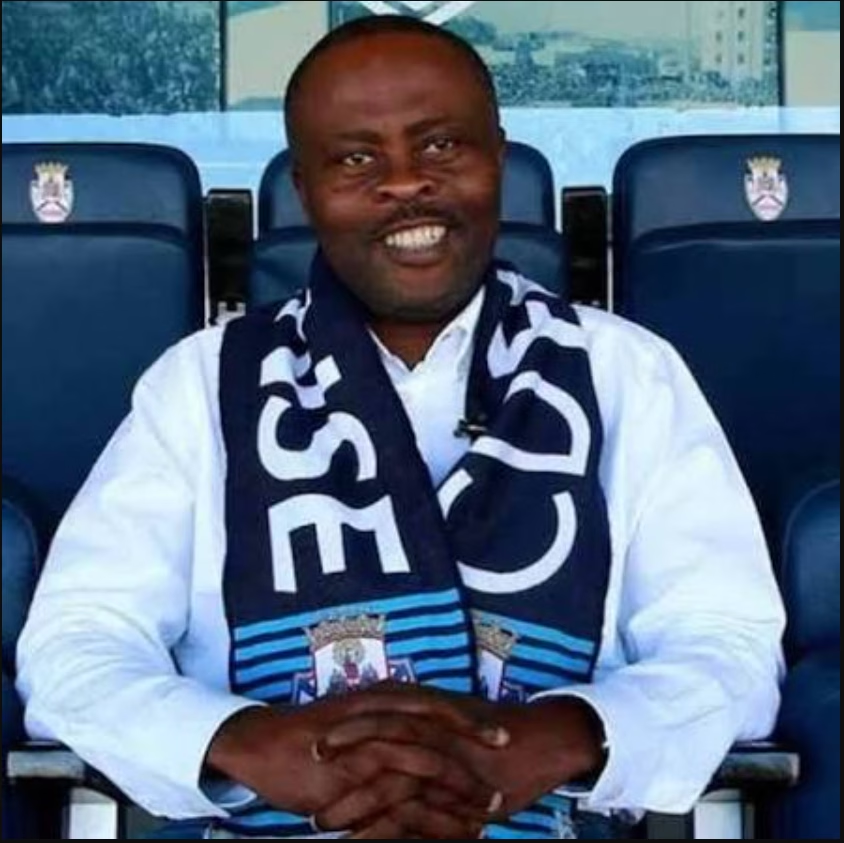
Kunle Soname has built one of the most extensive football investment projects associated with a Nigerian private investor. He is the chairman and owner of Remo Stars, while also being the founder of Beyond Limits FC, a club that competes in the Nigeria National League. The NPFL has specifically recognised Soname for his contribution to Nigerian football and described him as one of the league’s biggest individual investors.
His investment in Remo Stars goes beyond simply financing a first-team squad. The club has developed its football infrastructure in Ikenne, with facilities that have attracted attention from the NPFL. The league’s chairman has pointed to the physical structure supporting Remo Stars as an example of what other Nigerian clubs could aspire to build. Soname’s football interests also cover different levels of the game. Beyond Limits provides another pathway for young players, while his wider football involvement has included women’s football. That gives his investment a broader structure than a club that focuses only on its senior men’s team.
His influence also extends outside Nigeria. Soname has been involved in Portuguese football through CD Feirense, giving him experience with football investment in both Nigeria and Europe. With domestic clubs, youth development and international interests forming part of his football portfolio, Soname stands out among Nigerian investors in 2026.
2. Shola Akinlade
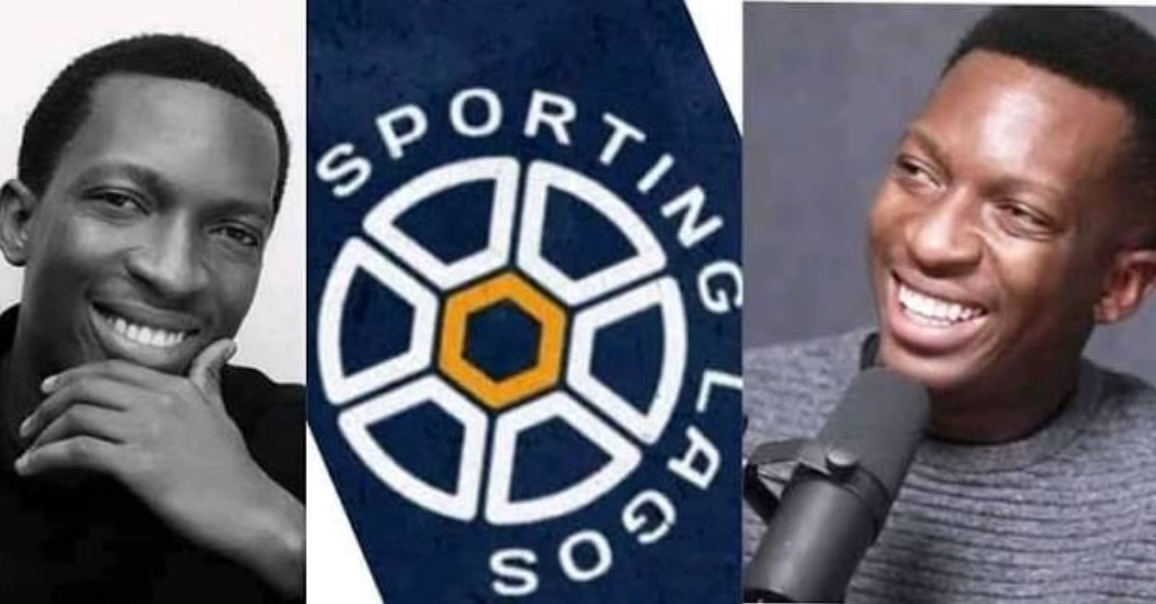
Shola Akinlade is the founder and owner of Sporting Lagos, the Lagos-based club that returned to the NPFL for the 2026/27 season. The club was established in 2022 and has developed a modern identity around football, technology, entertainment and fan engagement. Its return to the top division came after promotion from the Nigeria National League in 2026.
Akinlade’s football project has also included international connections. Sporting Lagos previously held an ownership interest in Danish club Aarhus Fremad and worked with the club on player recruitment, talent development and coaching development. In January 2026, however, Aarhus Fremad confirmed that Akinlade and Sporting Lagos had sold their shares and left the club’s ownership group.
That change is important when assessing Akinlade’s current football portfolio. He remains closely associated with Sporting Lagos, but he should not be described as a current owner of Aarhus Fremad. The Danish club said the sporting relationship with Sporting Lagos would continue even after the ownership change. Sporting Lagos’ return to the NPFL adds another chapter to Akinlade’s investment in Nigerian football. The club is now part of a new group of privately owned teams competing at the highest domestic level, giving its owner another opportunity to develop the project within Nigeria’s top division.
3. Nneka Ede
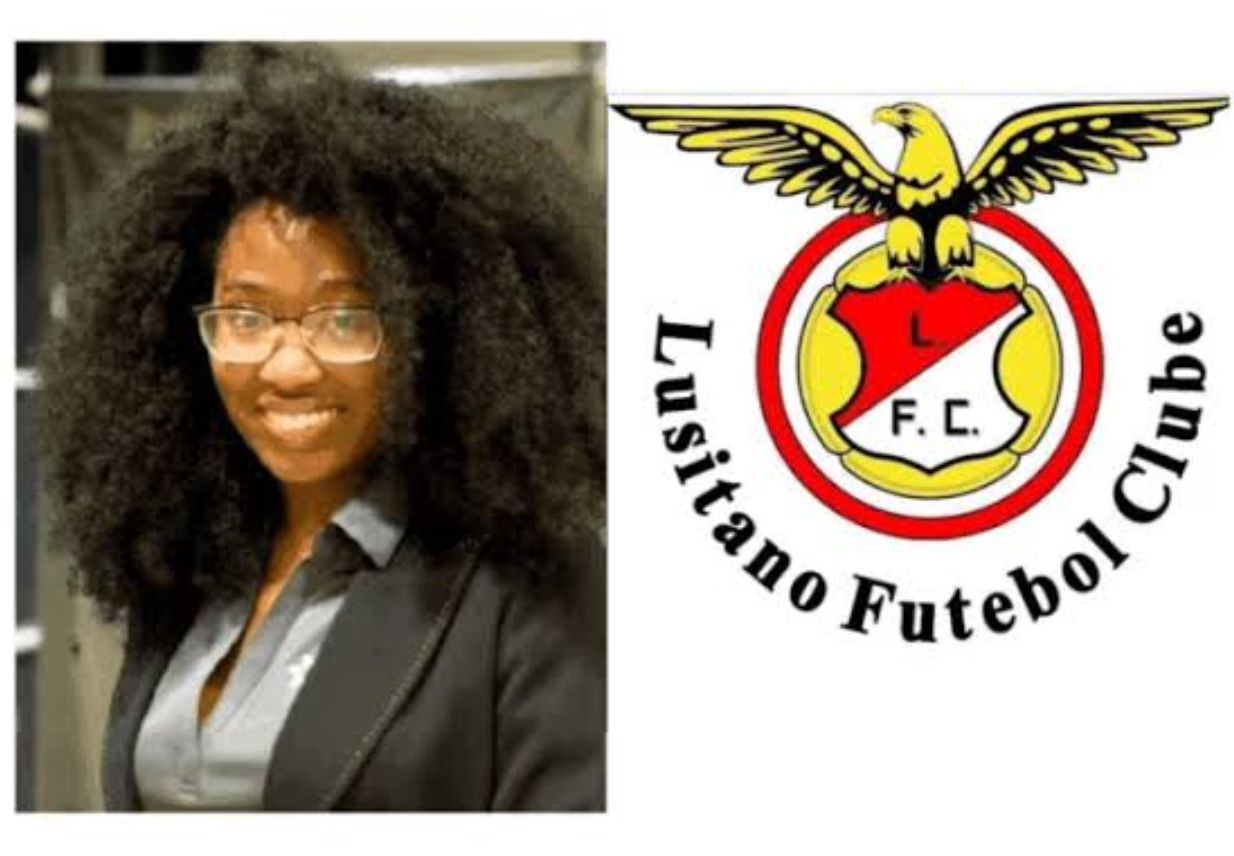
Nneka Ede became one of the most notable Nigerian figures in international football ownership after acquiring Lusitano Ginásio Clube, Futebol, SAD in Portugal. Her investment attracted attention because it placed a Nigerian woman at the centre of European football ownership and created another route for Nigerian and African football interests to connect with the European game.
Her football involvement has been associated with developing opportunities for young African players. The Portuguese project offered a potential pathway between talent in Africa and the European football system, where young players can gain experience in a different competitive and professional environment.
Ede’s involvement is particularly notable because Nigerian football investment has traditionally been dominated by male business figures and government institutions. Her entry into European club ownership therefore represented a different direction for Nigerian investors looking beyond the country’s domestic football structure. Her international activities have also been linked to football investment discussions beyond Portugal. While the details of different investment arrangements have changed over time, Ede remains one of the Nigerian names associated with private ownership interests in European football.
4. Umar Sadiq
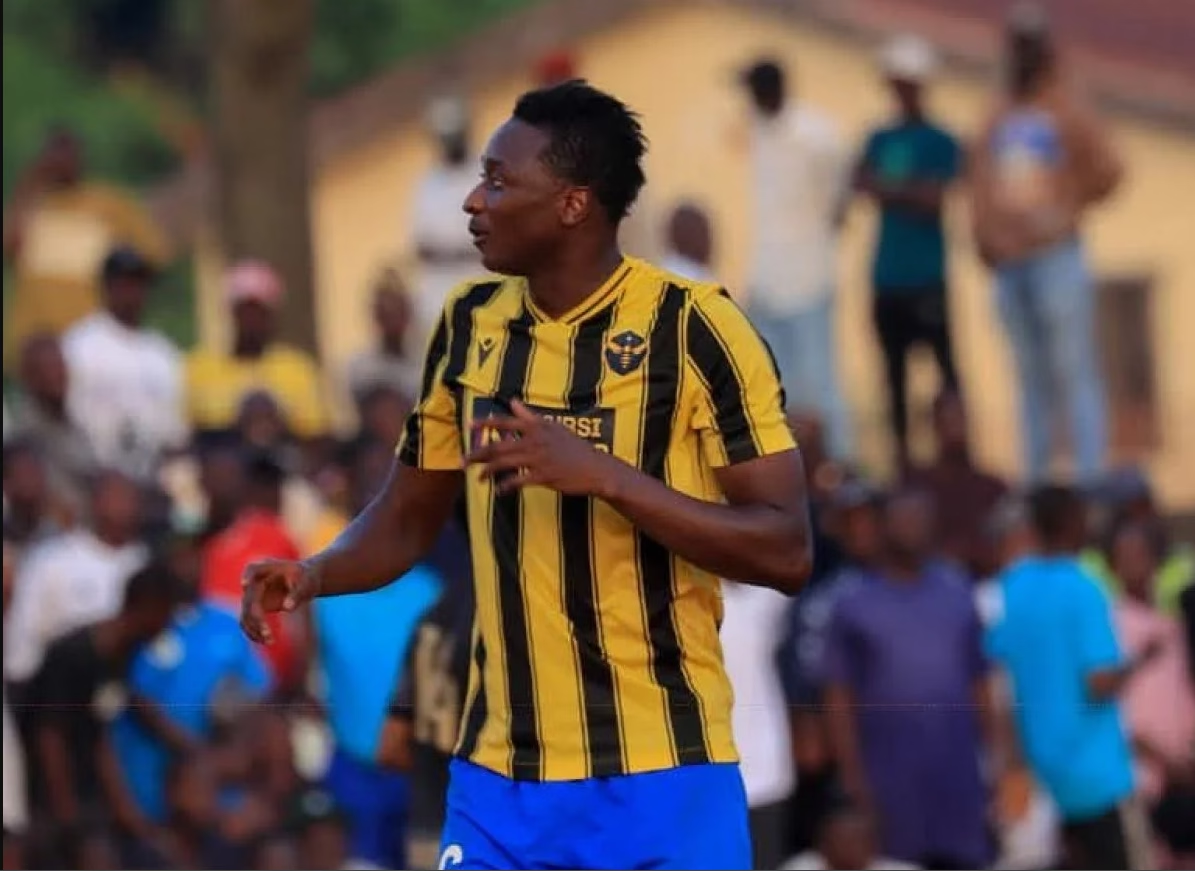
Super Eagles striker Umar Sadiq became a football club owner through his involvement with Ranchers Bees of Kaduna. The historic club secured promotion to the NPFL in 2026 after winning its Nigeria National League conference, joining three other privately owned clubs in making the step up to Nigeria’s top division.
Ranchers Bees has a long connection with Nigerian football and previously helped launch the careers of players such as Daniel Amokachi. Sadiq’s involvement therefore combines investment with the revival of a club that already has a place in the country’s football history. The club’s return to the NPFL gives the project a much larger national platform.
Sadiq has also explained that his decision to invest in Nigerian football was influenced by a conversation with Aliko Dangote. His focus has been connected to contributing to football in his home community, rather than simply putting his name behind an existing professional team. The promotion of Ranchers Bees has now placed Sadiq among the Nigerian footballers who have moved into club ownership while still being connected to the professional game as players. His project will be closely watched as Ranchers Bees establishes itself in the NPFL.
5. Tems
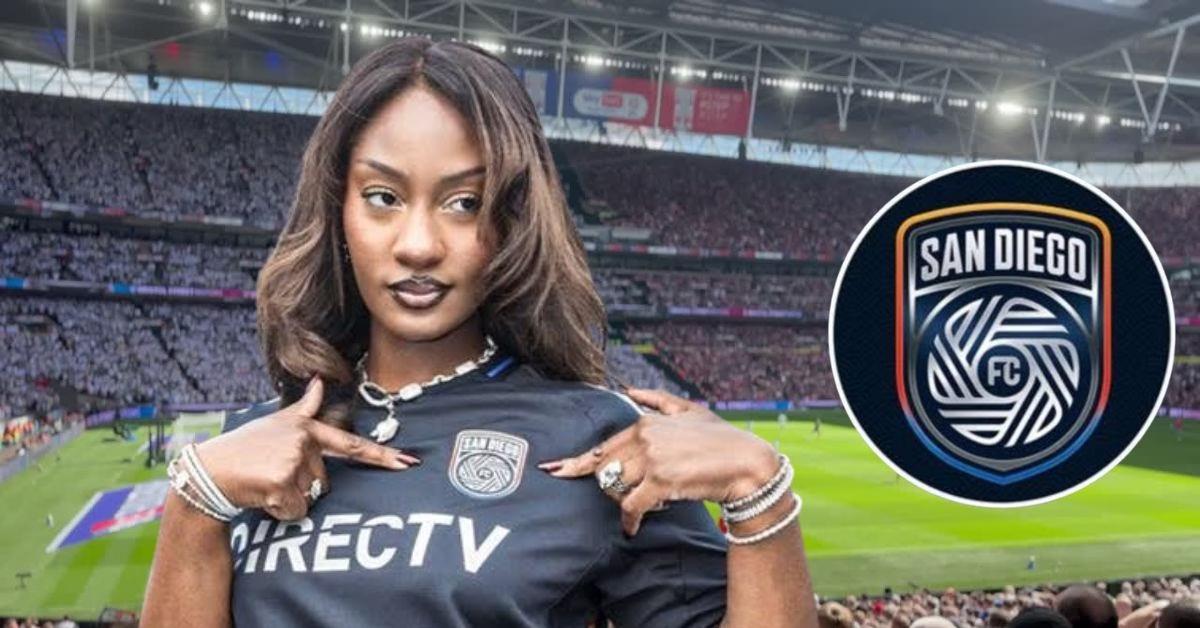
Tems has taken a different route into football ownership. The Lagos-born singer joined the ownership group of Major League Soccer club San Diego FC through her company, The Leading Vibe. San Diego FC officially announced her as a club partner, placing her within an ownership group that includes figures from football, entertainment and American sport.
Her investment is not in the Nigerian domestic league, but it represents Nigerian participation in one of the world’s growing football markets. San Diego FC is also connected to Right to Dream, an organisation with roots in football development and youth education across Africa and other parts of the world.
Tems joined an ownership group that includes former World Cup winner Juan Mata, actress Issa Rae and San Diego Padres star Manny Machado. Her involvement therefore places a Nigerian entertainment figure inside an international football ownership structure rather than a traditional domestic club project. Her football investment also shows how Nigerian influence in the sport is spreading beyond the country’s borders. Instead of owning an NPFL club, Tems has entered the international market through MLS, bringing her profile and business interests into a growing American football project.
6. Tunde Folawiyo
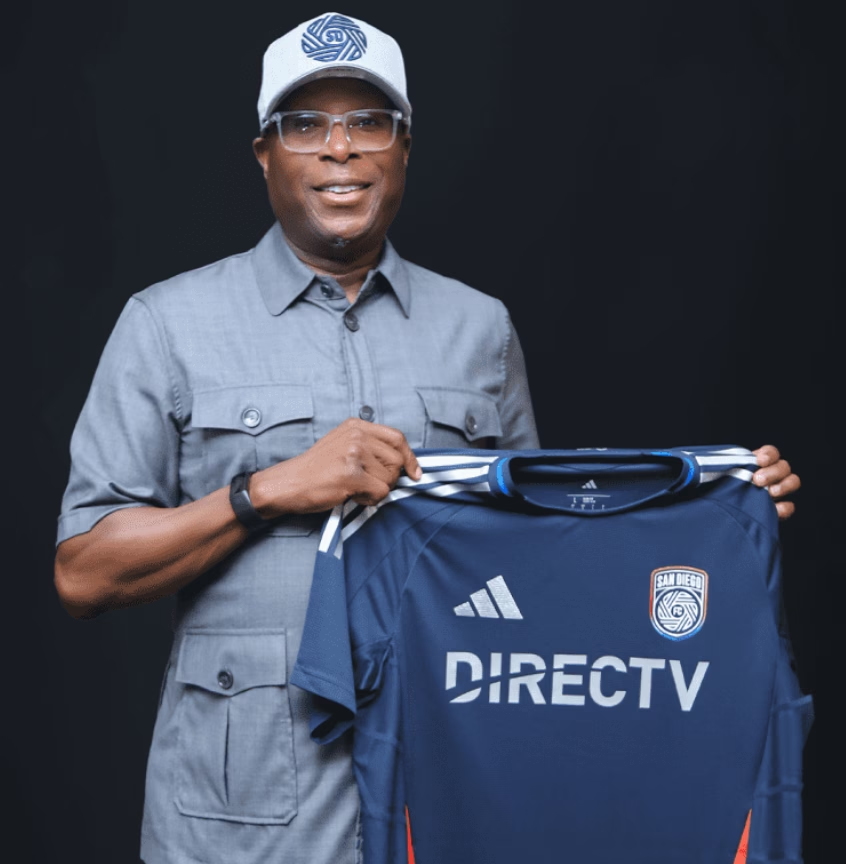
Tunde Folawiyo is another Nigerian investor with an international football connection through San Diego FC. He is chairman of Pave Investments and joined the MLS club’s ownership group alongside Kwamena Afful, Pave’s founding director. San Diego FC describes Folawiyo as a partner in the club’s ownership structure.
Folawiyo’s background extends across several industries, including sports, entertainment, banking, telecommunications, energy, agriculture, hospitality and real estate. His involvement in football is therefore part of a broader investment background rather than a career built solely around the domestic Nigerian game.
His sports interests also extend beyond football. San Diego FC’s official ownership profile notes that Folawiyo serves on the board of NBA Africa, the organisation connected to the Basketball Africa League and the NBA’s business interests on the continent. Through Pave Investments and San Diego FC, Folawiyo represents a different form of Nigerian sports investment. Rather than concentrating on an NPFL club, his involvement connects Nigerian capital with international sports organisations and a Major League Soccer franchise.
7. Barau I. Jibrin
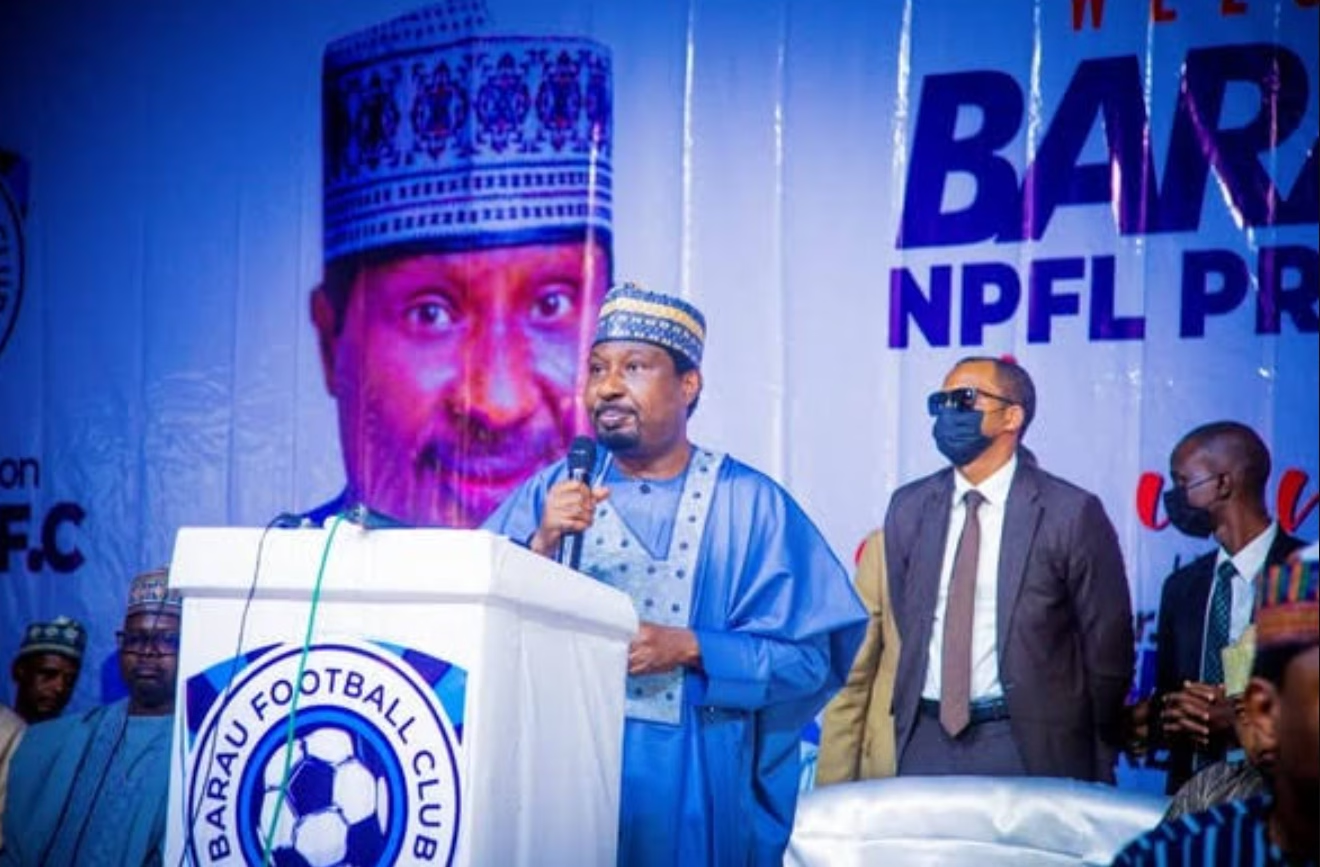
Senator Barau I. Jibrin is the founder and owner of Barau FC, a Kano-based club that reached the NPFL after progressing through Nigeria’s lower divisions. The club is now part of the 20-team 2026/27 NPFL season and has quickly established itself as one of the new private projects in Nigerian top-flight football. Barau FC’s rise has been rapid compared with the long histories of many traditional NPFL clubs. The team began its top-flight campaign in August 2026 and recorded a 3-1 victory over Nasarawa United in its opening home match.
The club’s ownership gives Jibrin a direct role in the development of a professional football project in northern Nigeria. The organisation has also continued to build its management structure, appointing Kabiru Baita as vice president and former Nigeria international Dominic Iorfa as general manager in September 2026. Barau FC’s arrival in the NPFL is part of the wider expansion of private ownership in Nigerian football. Its progress will provide a clearer picture of how quickly a privately funded club can build itself into an established top-flight organisation.
8. Sanmi Doherty
Sanmi Doherty is one of the leading figures behind Ikorodu City FC, a privately run club from Lagos. The club reached the NPFL after moving through the lower levels of Nigerian football and has since established itself as a competitive top-flight side. Ikorodu City made a strong impression during the 2025/26 NPFL season, finishing fourth in the final standings. The club also reached the final day with a chance of influencing the title race before Rangers defeated them 2-1 in Lagos to secure the championship.
The club’s progress has made its ownership and management model one of the more interesting private projects in Lagos. Ikorodu City has developed its identity around the community and the wider football culture of the area, while also operating in a league increasingly containing privately backed clubs. The 2026/27 season provides another test for the project. Ikorodu City remains in the NPFL and is now competing against established clubs as well as several newly promoted private teams. Its progress gives Doherty and the club’s wider management group another opportunity to build on their rapid rise.
9. Lanre Vigo, Olumide Fayankin and Gatumi Aliyu
Lanre Vigo, Olumide Fayankin and Gatumi Aliyu founded Inter Lagos in 2023, creating another privately backed football project in Lagos. The club was formed with the ambition of building a strong football identity around the city and developing a team capable of moving through Nigeria’s football structure.
Inter Lagos made its debut in the Nigeria National League during the 2023/24 season. Its progress was relatively quick, and the club eventually secured promotion to the NPFL in 2026 alongside Sporting Lagos, Ranchers Bees and Doma United. The promotion was significant because all four teams moving from the NNL to the NPFL in 2026 were privately owned.
That gave Inter Lagos a place in one of the most notable developments in recent Nigerian domestic football. The club’s first NPFL campaign has already provided a tougher test. Inter Lagos lost 2-1 to Shooting Stars on the opening weekend before suffering a 1-0 defeat against Doma United in their second league match.
10. Michael Amaefula
Michael Amaefula is the founder and president of Kun Khalifat FC, an Owerri-based club that has progressed through Nigeria’s lower divisions into the NPFL. The club has also placed emphasis on developing young players, with academy graduates given opportunities in the senior team. One example is Alex Sunday Amaefula, who joined the club’s academy at the age of 13 before progressing into the senior side. In 2025, Kun Khalifat extended his contract until 2030 after he moved through the club’s youth structure.
The club’s ownership position changed during 2026. In August, Amaefula wrote to the NPFL confirming that the shareholders were in the process of transferring a majority stake to a prospective buyer. The league said the transaction had not yet been concluded at that point. That development makes Kun Khalifat different from many other clubs on this list. Amaefula’s contribution is tied to the club’s rise into the NPFL, but its future ownership structure could change if the proposed majority-share transfer is completed.
The Growth Of Private Investment In Nigerian Football
The 2026/27 NPFL season provides a clear example of how private investment is becoming more visible in Nigerian football. The league’s 20-club list includes Sporting Lagos, Inter Lagos, Ranchers Bees, Barau FC, Ikorodu City and Kun Khalifat, all of which are connected to private ownership or investment structures.
The promotion of four privately owned clubs in 2026 was particularly notable. Sporting Lagos, Inter Lagos, Doma United and Ranchers Bees all moved up from the NNL, with the NPFL subsequently holding an induction programme to prepare them for the financial, administrative and infrastructure requirements of top-flight football. The early weeks of the 2026/27 season have also shown that these clubs are not simply entering the NPFL to make up the numbers. Doma United opened the campaign with three consecutive victories and moved to the top of the table in September, while Ranchers Bees also recorded a 4-0 victory over Abia Warriors.
For Nigerian football, the bigger question is whether these investments can become sustainable over the long term. Strong ownership can provide funding, facilities and planning, but clubs also need sound administration, player development, commercial income and competitive performances to establish themselves.
Final Thoughts
Nigerian football ownership is no longer limited to traditional government-backed clubs. Investors such as Kunle Soname and Shola Akinlade have built modern domestic football projects, while Umar Sadiq and Barau Jibrin have entered club ownership from different backgrounds. At the international level, Tems and Tunde Folawiyo show how Nigerian investors can become involved in major football projects outside the country. Meanwhile, the rise of Ranchers Bees, Inter Lagos, Sporting Lagos and other privately owned clubs suggests that private investment could become an increasingly important part of the Nigerian football landscape.
