Real Madrid confirmed their place in the UEFA Champions League last 16 after a tense 2-1 victory over S.L. Benfica at the Santiago Bernabéu, sealing a 3-1 aggregate success and extending their winning run at home to seven consecutive matches.
The Spanish giants arrived in the second leg holding a narrow advantage, but the backdrop to the contest remained dominated by last week’s controversial first leg. The unsavoury incident involving Vinícius Júnior and Gianluca Prestianni cast a shadow over the tie, with racism once again a painful topic in European football. Prestianni’s suspension added further tension to an already emotionally charged encounter, while Vinícius’ spectacular goal in Lisbon had given Madrid a slender but valuable edge.
Benfica strike early to unsettle hosts
Despite the advantage, Madrid struggled to find rhythm in the opening stages. The visitors looked sharper and more composed, and their positive approach was rewarded after only 14 minutes. Rafa Silva opened the scoring to bring the aggregate score level.
The move started with Vangelis Pavlidis driving into the penalty area before cutting the ball back. Raúl Asencio attempted to intervene, but although Thibaut Courtois initially prevented the danger, Silva reacted quickest to slot home the rebound. It was a deserved lead for Benfica, who had begun the match with greater urgency and purpose.
The goal exposed Madrid’s uncertainty and briefly shifted momentum. Benfica’s midfield pressed aggressively, disrupting the hosts and forcing mistakes in dangerous areas. For a club that prides itself on composure in high pressure situations, the opening spell represented an uncomfortable reminder of how quickly Champions League ties can change.
Tchouaméni restores balance in a frantic first half
Madrid, however, responded with resilience. Their equaliser arrived through Aurélien Tchouaméni, whose first time finish underlined the midfielder’s growing influence in key matches. The Frenchman surged forward to meet Federico Valverde’s cross and struck cleanly, restoring both parity on the night and Madrid’s aggregate control.
The Bernabéu crowd sensed a shift and the tempo increased dramatically. Arda Güler thought he had completed the turnaround moments later with a sharp close range finish, but a marginal VAR offside decision denied the youngster.
The contest became increasingly open, with both sides trading attacks at speed. Courtois once again demonstrated his importance when he produced an outstanding save to deny Richard Ríos late in the first half. That intervention proved crucial in maintaining Madrid’s position and highlighted the goalkeeper’s reputation as a decisive figure on the biggest stage.
End to end action continues after the break
The intensity did not drop after the interval. Trent Alexander-Arnold threatened with a weaving run into the box but failed to hit the target, while Silva’s deflected effort struck the crossbar as Benfica continued to believe.
Madrid’s defensive structure looked fragile at times. Pavlidis came close again when his strike deflected narrowly wide, a moment that underlined how close the tie remained. The Spanish side were walking a fine line, struggling to assert control in midfield and frequently exposed in transition.
The match then took a worrying turn when Asencio suffered a heavy collision with Eduardo Camavinga. The defender required lengthy treatment before being stretchered off, a sobering moment that briefly halted the contest and reminded everyone of the physical demands at this level.
Vinícius delivers when it matters most
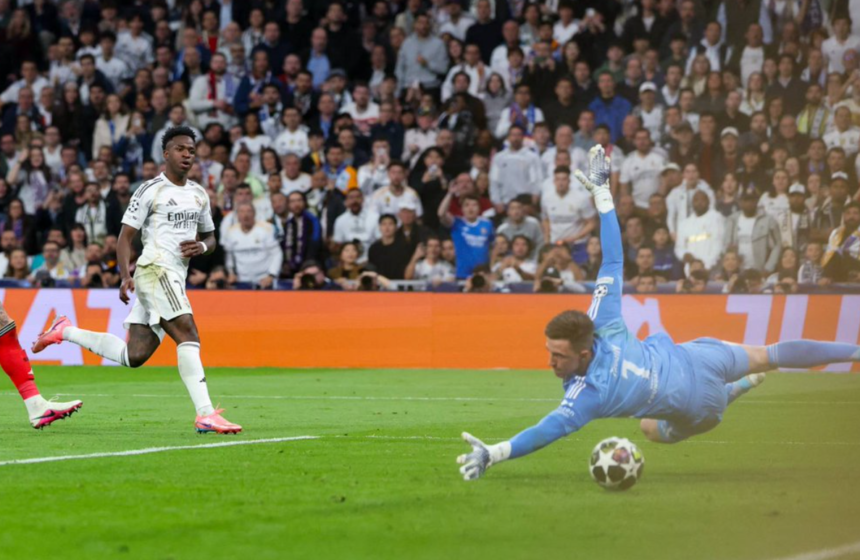
At a time when Madrid needed calm and leadership, Vinícius provided the decisive moment. Latching onto a perfectly weighted through ball from Valverde, the Brazilian opened his body and guided a composed right foot finish past Anatoliy Trubin.
It was not Madrid’s most fluent performance, but the goal reflected their enduring quality in decisive moments. Vinícius’ ability to influence major European ties continues to grow, and his composure in front of goal proved the difference in an otherwise scrappy contest.
Benfica refused to give up. Silva remained their most dangerous threat and almost converted Andreas Schjelderup’s cross at the far post before Álvaro Carreras intervened. Yet the visitors could not find the equaliser that would have reignited the tie.
Madrid’s European consistency continues
In the end, Álvaro Arbeloa’s team did enough to progress, extending a remarkable record. Madrid have now reached the Champions League last 16 in every season since the 1996 to 1997 campaign, a testament to their sustained dominance and ability to manage pressure across different eras.
Their performance was far from perfect, but it reinforced a familiar narrative. Madrid rarely panic in knockout football. Even when the rhythm is missing, they remain capable of finding solutions through moments of individual brilliance and experience.
Mourinho’s frustrations continue in Europe
For José Mourinho, the defeat added to a difficult recent run in Europe. The experienced coach has now failed to win any of his last ten Champions League knockout matches. Benfica’s broader record also reflects the challenge. They have suffered defeat in eight of their last nine European knockout ties after losing the first leg at home.
There were positives for the Portuguese side. Their aggressive pressing, tactical discipline and attacking intent troubled Madrid for long periods. Silva’s performance in particular stood out, offering a reminder of Benfica’s ability to compete at the highest level when confidence and belief align.
What this result means moving forward
Madrid will now turn their attention to the next stage with renewed confidence, but the match also highlighted areas for improvement. Defensive organisation and control in midfield remain key concerns if they are to progress deeper in the competition.
Benfica, meanwhile, exit with pride but also frustration. Their performance showed they were capable of overturning the deficit, yet fine margins and missed chances ultimately proved costly.
As the Champions League moves into its decisive phase, Madrid once again find themselves where they expect to be. History suggests they will remain a major threat. The challenge for their opponents will be to match not only their quality but also their resilience and experience when it matters most.