
- What Is a Bicycle Kick in Football? The Definition in Simple Terms
- How a Bicycle Kick Works, Step by Step
- What Is a Bicycle Kick in Football Used For? Attack and Defence
- The Many Names of the Bicycle Kick Around the World
- The Debated Origin of the Bicycle Kick
- What Is a Bicycle Kick in Football? The Men Who Made It Famous
- Four Famous Bicycle Kick Goals
- What Is a Bicycle Kick in Football? The Rules and the Referee
- Is a Bicycle Kick Dangerous? Safety First
- Frequently Asked Questions About What Is a Bicycle Kick in Football
- Is a bicycle kick legal in football?
- What is the difference between a bicycle kick and a volley?
- Who scored the most famous bicycle kick goal?
- Can a goalkeeper save a bicycle kick?
- Can I learn a bicycle kick as a beginner?
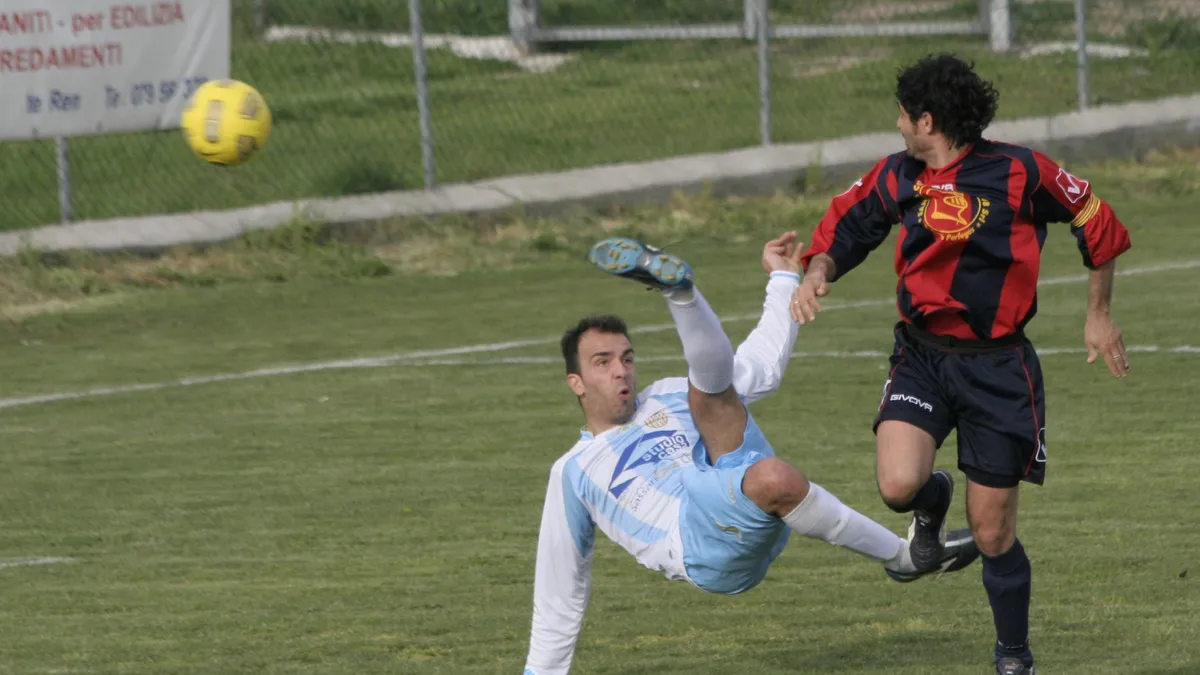
What is a bicycle kick in football? It is one of the most spectacular sights in the sport: a player throws the body backwards into the air and strikes an airborne ball with a scissors movement of the legs, all before landing on the back. Fans leap out of their seats when they see it. The move turns an ordinary cross into a moment of pure theatre.
Last updated: November 2026
Quick Answer
- A bicycle kick is an overhead strike. The player jumps backwards and kicks an airborne ball while upside down in the air.
- It is legal, as long as it does not endanger a nearby opponent.
- The move is also called an overhead kick, a scissors kick, a chilena in Latin America, a chalaca in Peru and a bicicleta in Brazil.
- Famous examples include Cristiano Ronaldo against Juventus in 2018 and Wayne Rooney against Manchester City in 2011.
- It is an advanced skill: only try it with coaching and practice.
What Is a Bicycle Kick in Football? The Definition in Simple Terms
Put simply, what is a bicycle kick in football? It is an overhead strike in which a player kicks an airborne ball rearward in midair. The player throws the body backward into the air and, before landing, makes a shearing movement with the legs to get the striking leg in front of the other. As a result, the ball flies backwards over the player’s own head, usually towards the goal. The player lands on the upper back or shoulders.
The move is also known as an overhead kick or a scissors kick. The legs open and close like a pair of scissors while the body is in the air.
How a Bicycle Kick Works, Step by Step
First, the ball must be in the air, usually from a cross, or the player flicks it up before the attempt. Next, the non-kicking leg rises first to propel the body upwards. The back moves rearward until it is almost parallel to the ground. At peak height, the kicking leg snaps towards the ball while the non-kicking leg comes down to add power.
Meanwhile, the eyes stay on the ball until the moment of contact. The arms are used for balance and to soften the landing. Finally, the player lands on the upper back and shoulders, not on the neck or the head.
What Is a Bicycle Kick in Football Used For? Attack and Defence
In attack, a player uses a bicycle kick to shoot at goal when the ball is too high to volley normally or there is no time to control it. For example, a cross may arrive behind a striker who has the back to goal. Instead of turning, the striker can launch into a bicycle kick in one motion. Strikers and attacking midfielders attempt it most often. You can read about the different roles on the pitch in our Football Positions Explained guide.
In defence, a defender facing the own goal can use a bicycle kick to clear the ball away from the goalmouth. In that case, the aim is distance and safety, not accuracy. However, defenders try it far less often than attackers, because a mistimed clearance near the goal can be costly.
The Many Names of the Bicycle Kick Around the World
The bicycle kick carries different names around the world. In Chile and most of Latin America, it is called the chilena. Peruvians call it the chalaca. In Brazil, it is called the bicicleta. English speakers usually say bicycle kick, overhead kick or scissors kick.
These names show how widely the skill travelled. One acrobatic move picked up a new name in each country that adopted it. As a result, South American fans may not recognise the English name at all, even though they know the move itself.
The Debated Origin of the Bicycle Kick
The story behind what is a bicycle kick in football starts in South America. Historians still argue about the details. Labourers from the Pacific seaports of Chile and Peru likely performed the first bicycle kicks in football matches, possibly as early as the late 19th century. However, no written record settles the question.
Ramón Unzaga is the name most often linked to the move: a Spanish-born player who moved to Chile and became a naturalised Chilean, he is widely credited with pioneering the bicycle kick. He reportedly performed it in 1914 at the El Morro stadium in Talcahuano, and again at the South American Championships of 1916 and 1920. After those tournaments, the name “chilena” stuck.
On the other hand, Peru has its own claim. The move was first seen in the port city of Callao, possibly as early as 1892, according to local lore. Neither side has produced proof that ends the argument. The bicycle kick grew out of the seaport football of Chile and Peru.
What Is a Bicycle Kick in Football? The Men Who Made It Famous
Long after Unzaga, Leônidas da Silva of Brazil, nicknamed the “Black Diamond”, carried the bicycle kick to a worldwide audience. He performed it at the 1938 World Cup against Poland, and the crowds went wild. In short, Leônidas turned a South American trick into a world-famous skill.
Pelé, the greatest Brazilian of all, did not invent the bicycle kick, despite what many fans assume. He did, however, help make the image famous by scoring one in the film Escape to Victory. That scene fixed the bicycle kick in the minds of millions of viewers.
Four Famous Bicycle Kick Goals
Some bicycle kicks live forever because of the stage on which they happened. The most celebrated of all came from Cristiano Ronaldo for Real Madrid against Juventus on 3 April 2018, in a Champions League quarter-final: he met a cross from Dani Carvajal and rose about 2.38 metres (7.8 feet) off the ground before striking the ball into the top corner. In fact, even the Juventus fans rose to applaud him.
Gareth Bale produced another in the 2018 Champions League final on 26 May 2018, scoring for Real Madrid against Liverpool. It remains one of the great final goals. Zlatan Ibrahimović scored his famous bicycle kick for Sweden against England on 14 November 2012, a long-range overhead effort that stunned the crowd.
Wayne Rooney completed the set for Manchester United against Manchester City on 12 February 2011. His bicycle kick was the winning goal in the Manchester derby. Rooney’s strike was a single goal, not a treble. For the difference between one goal and three, read What Is a Hat-Trick in Football?
What Is a Bicycle Kick in Football? The Rules and the Referee
Supporters often ask what is a bicycle kick in football in the eyes of a referee. The answer is simple: the Laws of the Game allow it. IFAB Law 12 states the rule in one clear sentence. “A scissors or bicycle kick is permissible provided that it is not dangerous to an opponent.” In other words, a bicycle kick is not automatically a foul.
It only becomes an offence when it endangers a nearby opponent, or when it stops an opponent from playing the ball for fear of injury. Referees call that “playing in a dangerous manner”, and the punishment is an indirect free kick. If the kick makes contact with an opponent, it is a direct free kick, and a penalty if it happens inside the offender’s own penalty area.
Is a Bicycle Kick Dangerous? Safety First
Yes, a bicycle kick is dangerous for inexperienced players, and it should never be tried as a joke. It is an advanced skill, and the greatest danger is the landing. A bad fall can injure the head, the back or the wrist.
Players who practise the move follow clear safety rules: land on the upper back and shoulders, tuck the chin to the chest, use the arms for support and roll to the side. In addition, they practise on soft ground first and build up slowly, with a coach watching every attempt.
Frequently Asked Questions About What Is a Bicycle Kick in Football
Is a bicycle kick legal in football?
Yes, it is legal. IFAB Law 12 allows a scissors or bicycle kick, provided that it is not dangerous to an opponent. The referee only blows the whistle when the kick endangers a nearby player.
What is the difference between a bicycle kick and a volley?
A volley is a strike of an airborne ball while the player stays on the feet. A bicycle kick is different. The player leaves the ground, throws the body backwards and kicks the ball while upside down in the air.
Who scored the most famous bicycle kick goal?
There is no official ranking, but Cristiano Ronaldo’s 2018 goal against Juventus is the example most fans mention first: he rose about 2.38 metres off the ground and struck the ball into the top corner in a Champions League quarter-final.
Can a goalkeeper save a bicycle kick?
Yes, just like any other shot. However, bicycle kicks are hard to read, because the ball leaves the foot late and at an unusual angle. Goalkeepers often have less time to react.
Can I learn a bicycle kick as a beginner?
You can learn it, but only with coaching and plenty of practice. Start on soft ground, learn the landing first, and build up the jump and the kick in small steps.
So, what is a bicycle kick in football? It is skill, courage and timing packed into one acrobatic moment. It is rare, it is risky, and it is legal when done safely, which is exactly why fans remember the great ones for decades. You can relive more classic football moments in our Sports News section, follow the action on our free live scores page, and visit our free football predictions page before the next big game.