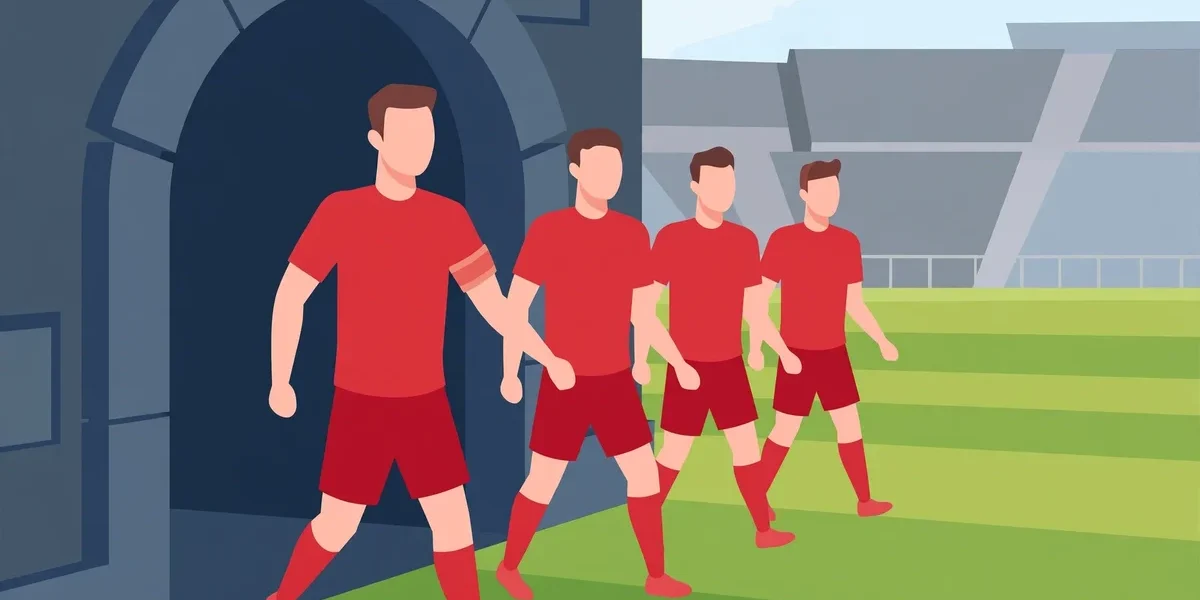
- What Is a Football Captain? The Basic Idea
- What Is a Football Captain? The Armband: How You Spot the Captain
- What Is a Football Captain? What the Laws Say
- What Is a Football Captain? The Coin Toss: The Captain's Only Formal Duty
- What Is a Football Captain? What the Captain Cannot Do
- The "Only the Captain" Guidelines
- Vice-Captains: Who Steps In
- What Is a Football Captain? How the Manager Picks One
- Famous Captains in Football History
- Frequently Asked Questions About What Is a Football Captain
- Does every team have to name a captain?
- Can a football captain argue with the referee?
- Who takes over if the captain is sent off?
- Does the captain choose who takes a penalty?
- Can a goalkeeper be the captain?
- Who picks the football captain?
- Conclusion
What is a football captain? The captain is the player chosen to lead the team on the pitch. You can spot the captain at once, because the captain wears an armband. Fans often call the captain the skipper. This guide explains the armband, the Laws, the coin toss, the vice-captain and the great captains.
Last updated: November 2026
Quick Answer
- What is a football captain? The on-pitch leader of the team, chosen by the manager and identified by an armband.
- The captain has no special status or privileges under the Laws of the Game.
- The captain’s only formal duty is to take part in the coin toss before kick-off and before a penalty shoot-out.
- A vice-captain takes over when the captain is not in the starting eleven, or leaves the pitch.
- The captain cannot overrule the referee, demand an explanation, or choose the penalty taker.
What Is a Football Captain? The Basic Idea
The captain of a football team is the player chosen to be the on-pitch leader of the team, sometimes called the skipper. The captain is often one of the older or more experienced members of the squad. In fact, the manager usually picks a player who can heavily influence a game, or a player with strong leadership qualities.
The captain does not need to be the best player on the team. In fact, the manager looks for character. A good captain stays calm under pressure, talks to team-mates, and sets the tone for the rest of the team. For example, a captain may lift the mood of the team after conceding a goal.
In practice, the captain acts as a rallying point for team-mates when morale is low. The captain also leads the team out of the tunnel before kick-off. After a cup final, the captain leads the team up to collect medals and lift the trophy. To learn how each player fits into the team, read our guide on football positions explained.
What Is a Football Captain? The Armband: How You Spot the Captain
The armband is the sign of the captain. When fans ask what is a football captain, the armband is the first clue they get. The captain wears it on the upper arm, and it marks the player out from the other ten players on the pitch.
Wearing the armband became mandatory in the 2024/25 edition of the Laws of the Game. Before that change, the armband was traditional but not required. As a result, every team must have a captain on the field of play who wears an identifying armband.
Law 4 also sets rules for the armband itself. The captain must wear the armband issued or authorised by the competition organiser. In addition, the armband may be a single-coloured armband that carries the word “captain” or the letter “C”, or a translation of those words. The word or letter should also be a single colour.
What Is a Football Captain? What the Laws Say
The Laws of the Game say very little about the captain. Law 3.10 of the 2024/25 edition states: “Each team must have a captain on the field of play who wears an identifying armband. The team captain has no special status or privileges but has a degree of responsibility for the behaviour of the team.”
What Is a Football Captain? The Coin Toss: The Captain’s Only Formal Duty
The captain’s only formal duty under the Laws is to take part in the coin toss. Before kick-off, the referee calls the two captains together, and the captain who wins the toss chooses whether to kick off or choose which goal to attack. The captains meet again for a coin toss before a penalty shoot-out, to decide which team kicks first.
After that, the captain’s real work is informal. The captain talks to team-mates, keeps the shape of the team, and speaks for the team on the pitch. None of that comes from the Laws. It comes from leadership.
What Is a Football Captain? What the Captain Cannot Do
However, many fans believe the captain can argue with the referee on behalf of the team. That is wrong. The captain cannot overrule the referee, demand an explanation for a decision, choose who takes a penalty, or claim extra benefit of the doubt on fouls.
The captain has no special status or privileges, and the referee’s decision is final. A captain who argues too much can receive a yellow card, just like any other player.
Some fans also believe the captain must take the penalties or the free kicks. That is wrong too. The manager picks the penalty taker and the free kick taker, and the armband itself gives no right to the ball.
The “Only the Captain” Guidelines
Some competitions use extra guidelines about who may talk to the referee. Under these guidelines, only one player from each team, usually the captain, may approach the referee after a major decision, and must do so respectfully. In addition, a captain-only zone extends 4 metres around the referee, and other players must stay out of it.
These guidelines are not a universal rule. Competitions may choose to adopt them, and some do. UEFA used these guidelines at Euro 2024. In short, when fans ask what is a football captain under these guidelines, the answer is the one player who may approach the referee.
If the goalkeeper is the captain and these guidelines are in use, the team must tell the referee, no later than at the coin toss before kick-off, which outfield player is nominated to approach the referee instead. The reason is simple: the goalkeeper cannot leave the goal area.
Vice-Captains: Who Steps In
Every team needs a plan for when the captain cannot play. The vice-captain, sometimes called the assistant captain, takes over when the club captain is not in the starting eleven. The vice-captain also takes the armband if the captain is substituted during a match, or if the referee sends the captain off.
For example, the vice-captain is usually the next most experienced leader in the squad. Teams usually settle the order in advance, so there is no confusion on the pitch.
What Is a Football Captain? How the Manager Picks One
There is no rule in the Laws about how a captain is chosen. The manager usually picks the captain. The manager looks for a player with leadership qualities, a player the rest of the squad respects, and a player who understands the manager’s plan.
Sometimes the players vote for their captain.
Famous Captains in Football History
In fact, some captains have become legends because of what they led their teams to win. Bobby Moore captained England to the 1966 World Cup and lifted the trophy at Wembley.
Franz Beckenbauer captained West Germany. Paolo Maldini served as the long-time captain of AC Milan, and Roy Keane captained Manchester United through their most successful years. Steven Gerrard captained Liverpool, and John Terry captained Chelsea.
Sergio Ramos captained Real Madrid and Spain, and he lifted trophies for both. Lionel Messi captained Argentina and lifted the 2022 World Cup. For the full story of that tournament, read our guide to the history of the World Cup.
Each of these captains led in a different way. Moore led by example and calm. Keane led by force of will. Messi led by brilliance. After that, the common thread is clear. Each captain earned the trust of the manager and the respect of the dressing room.

Frequently Asked Questions About What Is a Football Captain
In short, these are the questions fans ask most about what is a football captain.
Does every team have to name a captain?
Yes. The Laws say each team must have a captain on the field of play who wears an identifying armband. Wearing the armband became mandatory in the 2024/25 edition of the Laws.
Can a football captain argue with the referee?
In fact, no. The captain has no special status or privileges under the Laws, and cannot overrule the referee, demand an explanation, or claim extra benefit of the doubt on fouls. A captain who argues too much can receive a yellow card.
Who takes over if the captain is sent off?
In fact, the vice-captain takes over as captain. In addition, the vice-captain takes the armband if the captain is substituted or is not in the starting eleven.
Does the captain choose who takes a penalty?
In fact, no. Only the manager picks the penalty taker. The captain may take penalties if the manager picks the captain, but the armband itself gives no right to the ball.
Can a goalkeeper be the captain?
Yes. A goalkeeper can wear the armband. If the “Only the captain” guidelines are in use, the team must tell the referee before kick-off which outfield player is nominated to approach the referee instead.
Who picks the football captain?
The manager usually picks the captain. Sometimes the players vote. There is no rule in the Laws about how a captain is chosen.
Conclusion
So what is a football captain? The captain is the on-pitch leader of the team, marked out by an armband. The Laws give the captain no special status or privileges, and the only formal duty is the coin toss. After that, the captain’s real work is leadership. The captain talks to team-mates, keeps the team together, and leads the team out of the tunnel and up to lift the trophy. A great captain earns the trust of the manager and the respect of the dressing room. For more football stories, visit our Sports News page. Follow the next matches on our free live scores page, and see ideas for upcoming matches on our free football predictions page.