
- The history of the FA Cup: how it began
- The Wanderers and the early finals
- The history of the FA Cup: the White Horse Final and Wembley
- The Matthews Final and the 1950s
- Giant-killings in the history of the FA Cup
- The history of the FA Cup: Cardiff, penalties and new winners
- The history of the FA Cup in the 2020s
- The record winners: Arsenal's 14 titles
- Frequently asked questions about the history of the FA Cup
- When was the FA Cup founded?
- Who won the first FA Cup?
- Which club has won the FA Cup the most times?
- When did the FA Cup final move to Wembley?
- Who won the most recent FA Cup?
- What is a giant-killing in the FA Cup?
- Conclusion
The history of the FA Cup is the story of the oldest national football competition in the world. It began in 1871, when the Football Association created a Challenge Cup open to every affiliated club. In fact, over more than 150 years, the Cup has produced giant-killings, great finals and famous winners, from the Wanderers of the 1870s to Manchester City in 2026. This guide follows the competition from the first final in 1872 to the 145th final in 2026. Finally, it covers the great eras, the record winners and the shocks that made the Cup famous.
Last updated: November 2026
Quick Answer
- The FA Cup began in the 1871-72 season and is the oldest national football competition in the world.
- Wanderers beat Royal Engineers 1-0 in the first final, on 16 March 1872.
- Wembley has hosted the final since 1923, apart from 2001 to 2006, when the final moved to Cardiff.
- Arsenal lead the way with a record 14 wins, while Manchester United follow with 13.
- As of 2026, 45 clubs have won the Cup.
The history of the FA Cup: how it began
The idea came from Charles W. Alcock, the secretary of the Football Association. He proposed a “Challenge Cup” open to all FA-affiliated clubs. The full name of the competition is the Football Association Challenge Cup. In the first season, 15 teams entered and the clubs played 13 games in total. Wanderers beat Royal Engineers 1-0 in the first final, on 16 March 1872 at Kennington Oval, in front of 2,000 people. The Cup was the first competition of its kind, so other countries soon copied the idea. In short, English football had a new prize, and the Cup quickly became a prized competition in the country.
The Wanderers and the early finals
The early years of the competition belonged to the Wanderers. They won five of the first seven tournaments, in 1872, 1873, 1876, 1877 and 1878, and they never lost a final. In fact, Lord Kinnaird holds the record for most FA Cup wins by a player, with five winners’ medals between 1873 and 1882. In the early years, the Cup was a competition for amateur clubs from the south of England. However, that changed in 1883, when Blackburn Olympic became the first professional club to win it. In those years, finals took place at various grounds around London. Meanwhile, clubs from the north and the Midlands joined the competition in growing numbers.
The history of the FA Cup: the White Horse Final and Wembley
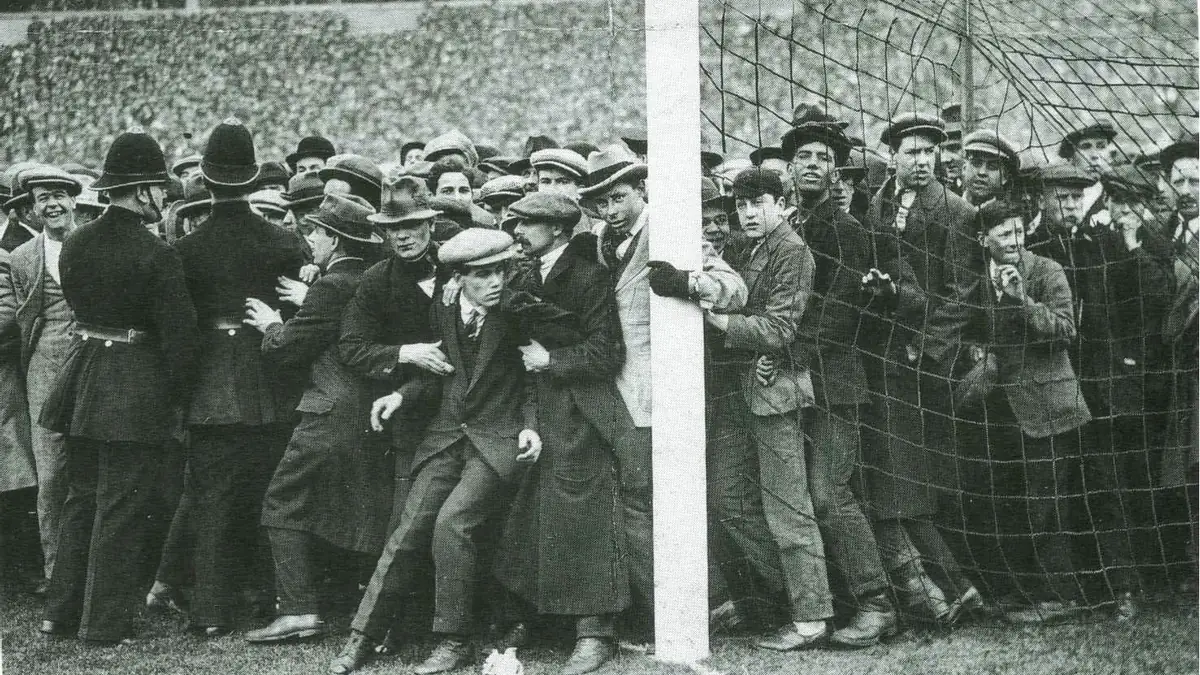
In 1923, Wembley Stadium became the permanent home of the final. Fans call the first final at Wembley the White Horse Final. Bolton Wanderers beat West Ham United 2-0. The official attendance was 126,047, but thousands more people were in the ground without tickets. The crowd spilled onto the pitch before the match. After that, a mounted policeman, PC George Scorey, rode his white horse Billy across the pitch to clear a space so the match could start. As a result, the picture of the white horse became one of the most famous images in English football. From that day, Wembley and the FA Cup final belonged together.
The Matthews Final and the 1950s
Fans know the 1953 final as the Matthews Final. In fact, Blackpool beat Bolton Wanderers 4-3 after coming from 3-1 down. Stanley Matthews, aged 38, won his first and only FA Cup. At the same time, Stan Mortensen scored a hat-trick in the final, the only FA Cup final hat-trick of the 20th century. Bill Perry scored the winner in injury time. Fans still talk about the match as one of the great finals, because Blackpool looked beaten and then turned the game around. It was the crowning moment of Matthews’ long career.
Giant-killings in the history of the FA Cup
Giant-killings are the most famous part of the history of the FA Cup. For example, they happen when a smaller club beats a much stronger one. In 1973, Sunderland, a Second Division side, beat Leeds United 1-0 in the final. Ian Porterfield scored the winner, while goalkeeper Jimmy Montgomery made a famous double save. In 1988, Wimbledon beat Liverpool 1-0 in the final. Lawrie Sanchez scored with a header, and Dave Beasant saved John Aldridge’s penalty, the first penalty a goalkeeper ever saved in an FA Cup final.
In 2013, Wigan Athletic beat Manchester City 1-0 in the final, with a late goal from Ben Watson. Wigan went down from the Premier League in the same season, the only club ever to win the Cup and go down in the same season. Still, the shocks are not only in finals. In January 2026, non-league Macclesfield beat the holders, Crystal Palace. Indeed, results like these explain why fans around the world love the Cup.
The history of the FA Cup: Cardiff, penalties and new winners
From 2001 to 2006, Cardiff’s Millennium Stadium hosted the final while builders rebuilt Wembley. The 2005 final set a first in the history of the FA Cup: a penalty shootout decided it, and Arsenal beat Manchester United. Fans know the 2006 final as the Gerrard Final. Liverpool beat West Ham United 3-3 after extra time, then 3-1 on penalties. After that, new names joined the list of winners in the 2020s. For example, Leicester City won their first FA Cup in 2021, beating Chelsea 1-0. In 2025, Crystal Palace beat Manchester City 1-0 on 17 May 2025, winning their first major trophy.
The history of the FA Cup in the 2020s
The 2026 final took place on 16 May 2026 at Wembley. In the end, Manchester City beat Chelsea 1-0. Antoine Semenyo scored the only goal in the 72nd minute, a backheel from Erling Haaland’s cross. It was City’s eighth FA Cup and the 145th final. It was also City’s fourth consecutive final appearance. Semenyo was the first Ghanaian to score in a men’s FA Cup final. From the 2024-25 season, the FA scrapped replays from the first round proper onwards, so every tie now ends on the day. As of November 2026, the 2026-27 FA Cup is under way. For more football stories, visit our Sports News page.
The record winners: Arsenal’s 14 titles
Arsenal hold the record with 14 wins. Their wins came in 1930, 1936, 1950, 1971, 1979, 1993, 1998, 2002, 2003, 2005, 2014, 2015, 2017 and 2020. Their most recent win was in 2020. Manchester United have 13, with their first win in 1909 and their most recent in 2024. Above all, Arsène Wenger holds the record for most wins as a manager, with seven. Yet no manager has matched Wenger’s seven wins in the history of the FA Cup. As of 2026, 45 clubs have won the Cup.
| Club | FA Cup wins |
|---|---|
| Arsenal | 14 |
| Manchester United | 13 |
| Chelsea | 8 |
| Liverpool | 8 |
| Tottenham Hotspur | 8 |
| Manchester City | 8 |
Also, follow the next matches on our free live scores page, and see ideas for upcoming matches on our free football predictions page.
Frequently asked questions about the history of the FA Cup
These are the questions fans ask most about the Cup.
When was the FA Cup founded?
In 1871, and clubs played the first season in 1871-72. It is the oldest national football competition in the world.
Who won the first FA Cup?
Wanderers, who beat Royal Engineers 1-0 in the final on 16 March 1872 at Kennington Oval.
Which club has won the FA Cup the most times?
Arsenal, with 14 wins. In fact, Manchester United are next with 13.
When did the FA Cup final move to Wembley?
In 1923. The first final at Wembley was the White Horse Final, which Bolton Wanderers won 2-0 against West Ham United.
Who won the most recent FA Cup?
Manchester City, who beat Chelsea 1-0 in the 2026 final. Antoine Semenyo scored the only goal, in the 72nd minute.
What is a giant-killing in the FA Cup?
When a smaller club beats a much stronger one. For example, Sunderland beat Leeds in the 1973 final and Wigan beat Manchester City in the 2013 final.
Conclusion
Overall, the history of the FA Cup runs from a 15-team tournament in 1871 to the 145th final in 2026. It has given football the White Horse Final, the Matthews Final, the Gerrard Final and a long list of giant-killings. Arsenal’s 14 wins lead the way, and 45 clubs have lifted the trophy. For the league story, read our guide to the history of the Premier League, and for the European story, read our guide to the history of the Champions League.