Paris Saint-Germain’s pursuit of consecutive European crowns remains alive, but not without scrutiny. The UEFA Champions League holders eliminated fellow Ligue 1 side AS Monaco to reach the round of 16 for a 14th consecutive season, settling for a tense 2-2 second-leg draw that ultimately secured progression in the tie.
For Monaco, the task was steep from the outset. They needed to overturn a first-leg deficit away from home for the first time in a European knockout tie, having failed in their previous seven attempts. Yet Adi Hütter’s men showed early conviction that suggested this might finally be their breakthrough night.
Inside the opening 10 minutes, Monaco were within inches of leveling the aggregate score. Maghnes Akliouche carved open space with impressive close control before slipping the ball toward Mamadou Coulibaly. The winger could not quite settle the bouncing delivery and sent his effort over the crossbar. It was a moment that encapsulated both Monaco’s intent and their frustration.
Shortly afterward, Thilo Kehrer glanced a header narrowly wide as the visitors continued to threaten. Monaco looked composed, aggressive, and confident in possession, mirroring the authority they displayed when taking the lead in the first leg.
PSG, meanwhile, needed time to find rhythm. Gradually, they grew into the contest, sparked by a sharp effort from Bradley Barcola that rattled the crossbar from a tight angle. It was a reminder of the hosts’ attacking quality, but beyond that flash of danger, the first half belonged largely to Monaco.
The breakthrough came just before the interval and it was crafted with precision. Caio Henrique, operating down the left flank, created just enough room to whip in a searching cross. Coulibaly redirected it intelligently into the path of Akliouche, who showed composure beyond his years. The young midfielder guided his finish beyond Matvey Safonov, the ball clipping the inside of the post before crossing the line. It was a technically accomplished strike and a deserved reward for Monaco’s assertive first-half display.
At that stage, PSG’s advantage in the tie had been wiped away. The mood inside the stadium shifted from expectation to anxiety.
Yet, much like the reverse fixture, Monaco’s promising position unraveled after the restart. The turning point arrived when Coulibaly, provider of the opening goal, received a second yellow card for a late challenge on Achraf Hakimi. Reduced to 10 men, Monaco faced an uphill battle against a side renowned for exploiting numerical superiority.
PSG responded immediately and ruthlessly. Désiré Doué was afforded far too much freedom on the right-hand side, strolling along the byline before delivering a precise pass across the face of goal. Marquinhos, ever alert, arrived to apply a simple finish from close range. The equalizer shifted the momentum decisively.
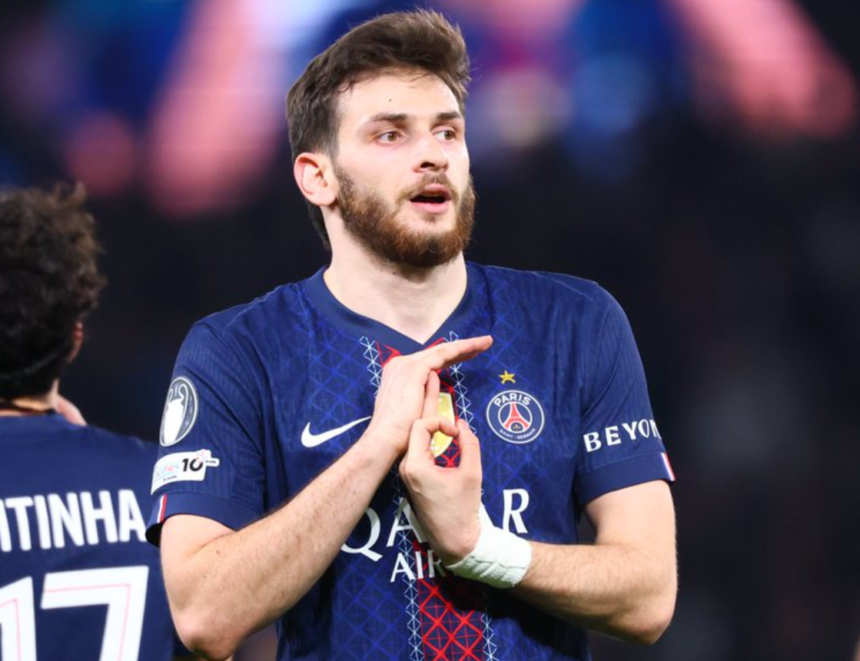
Moments later, Hakimi found himself in significant space and unleashed a powerful drive that Philipp Köhn failed to hold. The rebound fell invitingly to Khvicha Kvaratskhelia, who reacted quickest to fire home. In a matter of minutes, PSG had turned a precarious situation into a commanding one.
For Monaco, the dismissal had proven costly. Down to 10 men, chasing the tie against the reigning champions required both defensive resilience and attacking bravery. They attempted to rally, but PSG appeared to be managing the tempo comfortably, circulating possession and limiting clear opportunities.
Still, football often reserves its drama for the closing moments. In stoppage time, Simon Adingra delivered a cross that navigated its way through the penalty area to Jordan Teze. The Dutch defender showed composure to slot past Safonov and restore parity on the night. It injected brief tension into the closing seconds, yet there was insufficient time for Monaco to engineer another decisive moment.
When the final whistle sounded, PSG’s passage to the round of 16 was confirmed once more. Fourteen consecutive seasons at this stage of the competition underscore their sustained presence among Europe’s elite. However, the manner of this progression invites deeper analysis.
Coming from behind against 10 men in both legs will raise questions about PSG’s defensive structure and game management against full-strength opposition. Their attacking depth remains formidable, as evidenced by the contributions of Marquinhos and Kvaratskhelia in crucial moments. Yet their vulnerability when pressed by organized, high-intensity teams cannot be ignored.
From Monaco’s perspective, there is both disappointment and encouragement. The early phases of this contest demonstrated tactical clarity and individual quality. Akliouche’s intelligent movement, Henrique’s delivery from wide areas, and Coulibaly’s involvement in advanced positions reflected a side capable of competing at this level. Discipline, however, proved decisive.
For PSG, the broader narrative centers on expectations. Defending a UEFA Champions League title carries inherent pressure, particularly when domestic rivals push them to the brink. Advancing remains the primary objective, and in that sense the mission was accomplished. But the requirement to overturn adversity against reduced opposition suggests that sterner examinations await.
As the knockout rounds intensify, margins grow finer. PSG move forward with their ambitions intact, their European pedigree reinforced by consistency at this stage. Monaco exit with pride but also with the lingering sense that opportunity slipped away when composure mattered most.
The scoreboard reads 2-2 on the night. The tie belongs to PSG. The debate over their credentials as potential back-to-back champions is only beginning.