- What Is a Goalkeeper in Football?
- The Only Player Who Can Use Hands
- What Is a Goalkeeper in Football: The Back-Pass Rule
- Holding the Ball Too Long
- What Is a Goalkeeper in Football: The Main Jobs
- The Sweeper-Keeper
- What Is a Goalkeeper in Football in a Penalty Shootout
- The Skills a Goalkeeper Needs
- What Is a Goalkeeper in Football? Great Keepers of the Past
- Goalkeeper vs Outfield Player
- Frequently Asked Questions
- What is a goalkeeper in football?
- Can a goalkeeper score a goal?
- Can a goalkeeper handle the ball outside the penalty area?
- What happens if a goalkeeper holds the ball for too long?
- Can a goalkeeper pick up a back pass?
- Why do goalkeepers wear a different colour?
- Conclusion
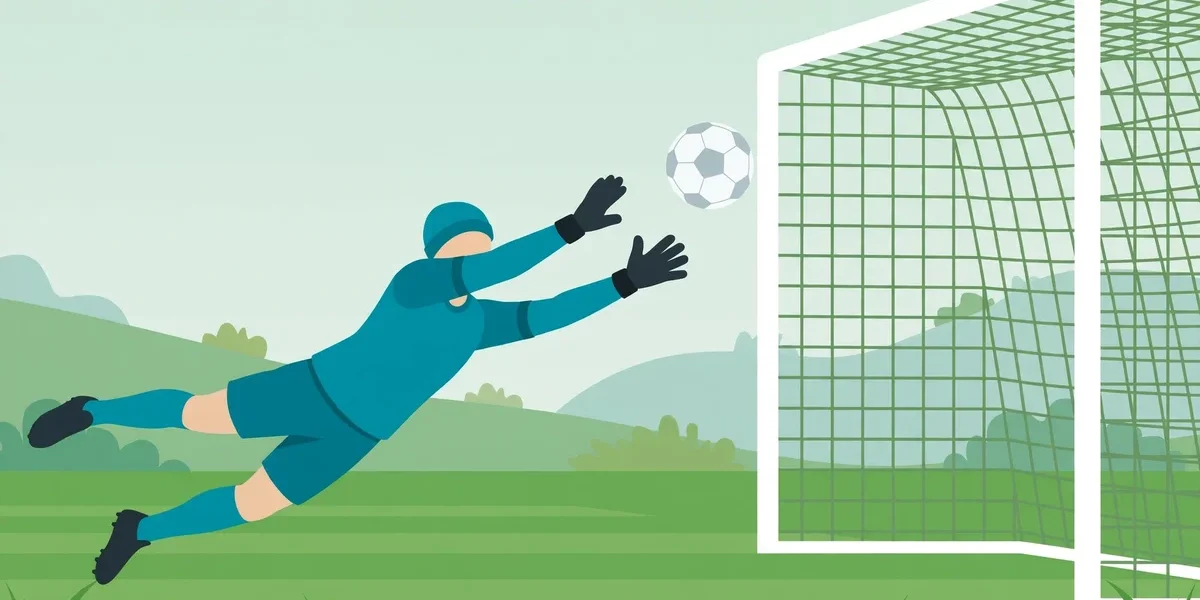
What is a goalkeeper in football? A goalkeeper is the last line of defence. The keeper’s job is to stop the ball from going into the net. Every team has one, and no other player does quite the same job.
Last updated: November 2026
Quick Answer
- A goalkeeper is the only player who may handle the ball, and only inside their own penalty area.
- The goalkeeper traditionally wears the number 1 shirt and must wear colours that stand out from the other players.
- A goalkeeper may not pick up a deliberate back pass from a team-mate, and may not hold the ball for more than eight seconds.
- The main jobs are shot-stopping, claiming crosses, organising the defence, and starting attacks with good distribution.
- Lev Yashin is the only goalkeeper ever to win the Ballon d’Or, in 1963.
What Is a Goalkeeper in Football?
The goalkeeper stands between the posts and guards the goal. While the other ten players chase the ball, the keeper stays close to home.
In short, the goalkeeper is a specialist. For instance, a striker scores goals, a midfielder passes the ball, and a defender blocks attacks. The goalkeeper does one thing above all else: keep the ball out of the net.
For every role on the pitch, read our guide to football positions explained.
The Only Player Who Can Use Hands
The goalkeeper is the only player on the pitch who may handle the ball. That right applies only inside their own penalty area, the large box in front of the goal. Inside that box, the keeper can catch the ball, hold it, punch it, or parry it away.
Outside the penalty area, the goalkeeper is just another outfield player. If the keeper handles the ball outside the box, it is a handball offence and a direct free kick to the other team. It can also be a red card if it denies an obvious goalscoring opportunity.
In addition, the goalkeeper must also look different from everyone else. The keeper traditionally wears the number 1 shirt, and the Laws of the Game say the keeper must wear colours that distinguish them from the other players and the officials. That handling right is the first thing to learn when you ask what is a goalkeeper in football.
What Is a Goalkeeper in Football: The Back-Pass Rule
The back-pass rule is one of the most famous rules in football. It exists because of the 1990 World Cup. That tournament was criticised for slow, time-wasting football, with defenders passing back to the keeper again and again to kill time. In 1992, IFAB changed Law 12 to stop it.
The rule is simple. A goalkeeper inside their own penalty area may not handle a ball deliberately kicked to them by a team-mate. If the keeper picks it up, the other team gets an indirect free kick.
In 1997, the rule was extended to throw-ins. A goalkeeper may not handle a ball received directly from a throw-in taken by a team-mate either. However, the rule only covers deliberate kicks and throw-ins. A header, chest pass, or knee pass from a team-mate can be handled. In the same way, a deflection or a miscued clearance is not a deliberate kick, so the keeper can handle it.
A player who uses a deliberate trick to get around the rule commits an offence. One example is flicking the ball up with the foot and then heading it back to the keeper. The referee awards an indirect free kick, and the player may be cautioned.
Holding the Ball Too Long
For many years, goalkeepers were told they could hold the ball for six seconds. The old six-second rule was written in the Laws, but referees almost never enforced it. IFAB decided to change that.
From 1 July 2025, for the 2025-26 Laws, a goalkeeper who controls the ball with the hands for more than eight seconds concedes a corner kick. IFAB approved the change on 1 March 2025, after trials in several competitions.
The referee counts down the last five seconds with a raised hand. If the keeper still holds the ball when the count ends, the referee points to the corner flag.
What Is a Goalkeeper in Football: The Main Jobs
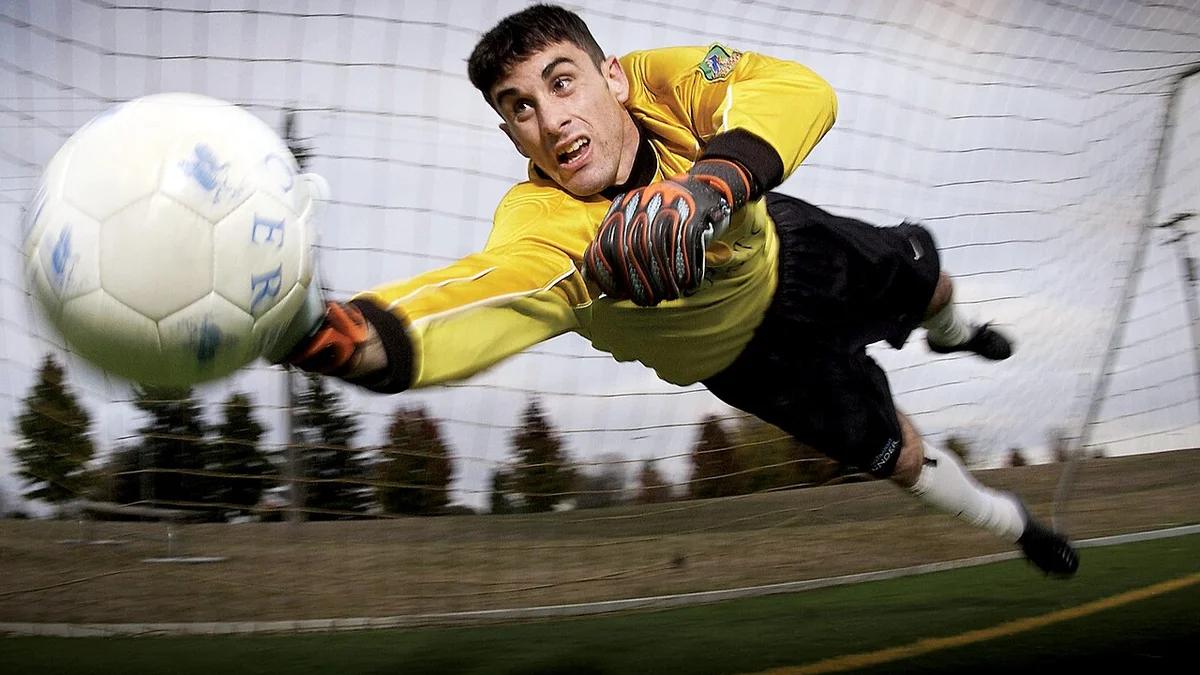
Shot-stopping comes first. A goalkeeper must read the shot, move fast, and make the save. Some saves are simple catches. Others need a dive at full stretch, a strong hand to push the ball around the post, or a brave block from close range.
Claiming crosses comes second. When the ball is crossed into the penalty area, the keeper must decide whether to come and catch it or stay on the line. Coming out and missing the ball leaves an empty goal behind. As a result, a keeper who claims crosses takes pressure off the defenders and helps the team keep clean sheets.
Distribution comes third. The modern goalkeeper starts attacks as well as stopping them. The keeper passes the ball out from the back, or kicks it long to the forwards. A poor pass can give the other team a chance.
Organising the defence comes fourth. From the back, the goalkeeper sees the whole pitch and tells the defenders where to stand.
The Sweeper-Keeper
In fact, the sweeper-keeper is a style of goalkeeping rather than a separate position. A sweeper-keeper plays high up the pitch behind a high defensive line, rushes out to clear through balls, and acts almost like an extra defender. In addition, the style needs pace, confidence, and excellent judgement.
What Is a Goalkeeper in Football in a Penalty Shootout
A penalty shootout is the hardest test of a goalkeeper. The shooter stands twelve yards from goal, and the keeper must guess which way to dive. The Laws set clear limits on what the keeper may do.
In a shootout, the goalkeeper must keep at least one foot on or behind the goal line until the kick is taken. Meanwhile, the keeper may move along the line and try to put the shooter off. The keeper may not step forward early. If the keeper comes off the line too soon and saves the kick, the referee may order the kick to be retaken.
The Skills a Goalkeeper Needs
Reflexes come first. A goalkeeper must react in a fraction of a second. Shots from close range give almost no time to think.
Courage comes second. A keeper must dive at the feet of an onrushing striker and jump into a crowd for a cross.
Concentration comes third. A goalkeeper may have nothing to do for twenty minutes, then face a sudden shot. The best keepers stay alert through the quiet spells.
Communication comes fourth. The keeper is the eyes of the defence. Short, clear calls keep the defenders organised.
Finally, a goalkeeper needs good footwork. These are the skills that answer what is a goalkeeper in football in practice. In addition, the modern game asks keepers to pass, control the ball, and play out from the back. A keeper who cannot use the feet is a weak link in the build-up.
What Is a Goalkeeper in Football? Great Keepers of the Past
Lev Yashin is the greatest name in goalkeeping history. The Soviet keeper was known as the “Black Spider” for his all-black kit and long reach. He is the only goalkeeper ever to win the Ballon d’Or, in 1963.
In addition, Gordon Banks is famous for one save. At the 1970 World Cup, Banks dived across his goal to push a powerful header from Pele over the bar. Banks won the World Cup with England in 1966.
Similarly, Manuel Neuer redefined the sweeper-keeper role. The German keeper played so high up the pitch that he often looked like an extra defender.
Goalkeeper vs Outfield Player
In contrast, the goalkeeper and the outfield player play different games. An outfield player runs for ninety minutes, passes, tackles, and shoots. A goalkeeper waits, watches, and acts in short bursts.
In addition, the rules treat them differently too. Only the keeper may handle the ball, and only inside the penalty area. The keeper alone must wear a different colour and faces the back-pass rule and the eight-second rule. In short, that is what is a goalkeeper in football: a footballer with a rule book of their own.
Frequently Asked Questions
What is a goalkeeper in football?
A goalkeeper is the player who defends the goal. Only the keeper may handle the ball, inside their own penalty area.
Can a goalkeeper score a goal?
Yes. A goalkeeper can score like any other player. It usually happens from a long kick up the pitch or a header at a corner in the last minutes of a match.
Can a goalkeeper handle the ball outside the penalty area?
No. Outside the penalty area, the goalkeeper is an outfield player. Handling the ball there is a handball offence and a direct free kick to the other team.
What happens if a goalkeeper holds the ball for too long?
From 1 July 2025, a goalkeeper who holds the ball with the hands for more than eight seconds concedes a corner kick. The referee counts down the last five seconds with a raised hand.
Can a goalkeeper pick up a back pass?
No, not if a team-mate deliberately kicked it to them. The other team gets an indirect free kick. A header, chest pass, or knee pass from a team-mate can be handled.
Why do goalkeepers wear a different colour?
The Laws of the Game say the goalkeeper must wear colours that distinguish them from the other players and the officials. That way, everyone on the pitch can tell the keeper apart at a glance.
Conclusion
So, what is a goalkeeper in football? It is the last line of defence, the only player who may use the hands, and the one whose saves and mistakes decide matches. The role takes skill, courage, and concentration.
To learn more, explore our football news section and our free football betting tips page. Next time you watch a match, keep an eye on the goalkeeper, and follow the action with our live scores page.