
Argentina has won the FIFA World Cup three times, in 1978, 1986 and 2022. That’s the short answer. But the longer story behind those three stars on the Argentina crest is one of the great sagas in football, spanning three different eras, two of the sport’s greatest players and some of the most dramatic finals the tournament has ever produced.
If you’re here for a quick number, you have it. If you want to understand how Argentina became one of the most decorated nations in World Cup history, keep reading.
How Many World Cups Has Argentina Won?
Three. Argentina lifted the trophy in 1978, 1986 and most recently in 2022. That puts them level with Germany’s rivals for the “second tier” of World Cup winners, behind only Brazil (five titles) and just ahead of nations like Uruguay and France.
What makes Argentina’s record stand out isn’t just the number of wins, it’s how each title reflects a completely different chapter of the country’s football identity. The first came on home soil during a politically turbulent era. The second was built almost entirely around one man’s brilliance. The third arrived after a 36-year wait and closed the book on the greatest individual career of the modern game.
Argentina has also reached the World Cup final six times total, meaning they’ve won half of every final they’ve played in. That’s a remarkably strong conversion rate for a country that has only ever hosted the tournament once.
Argentina’s First World Cup Victory in 1978
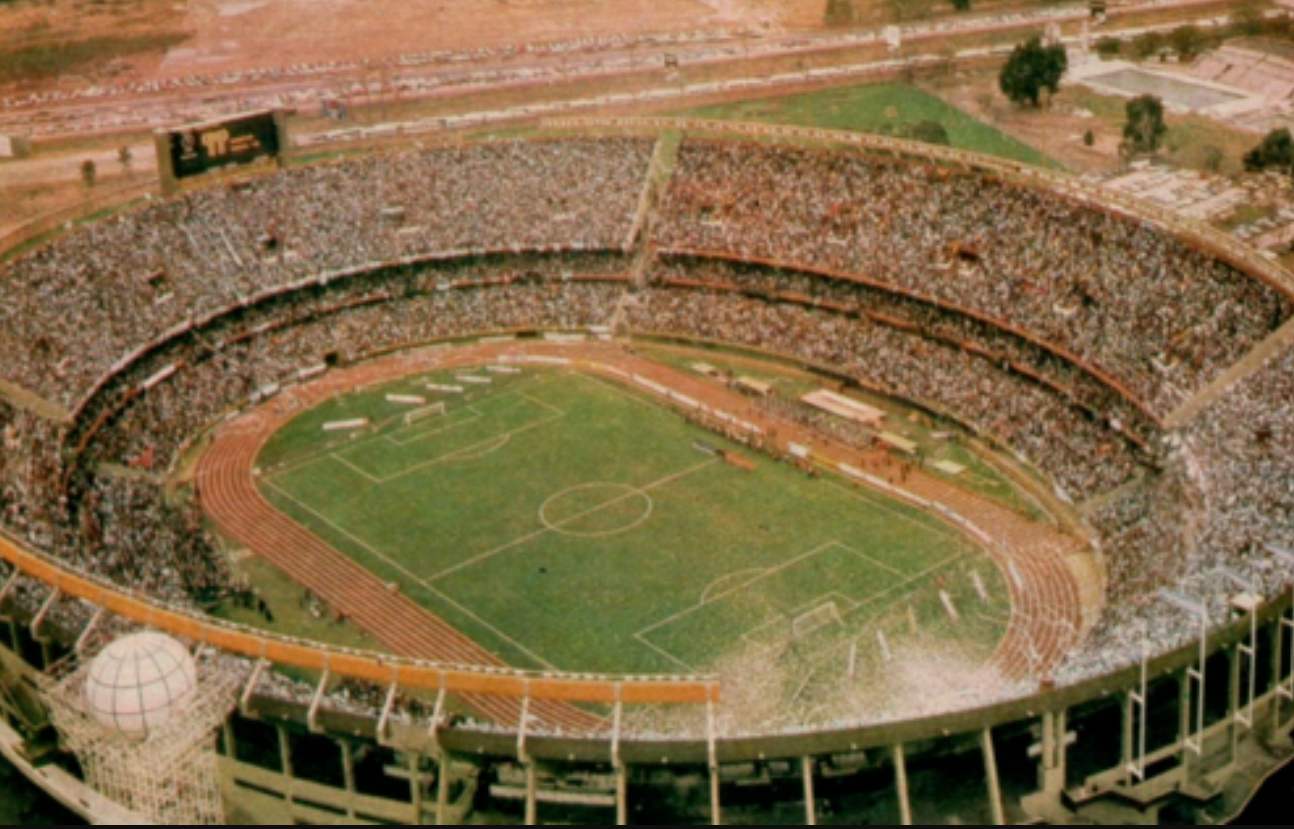
Argentina’s first World Cup title came in 1978, when the country hosted the tournament for the first and, so far, only time. Playing at home carried obvious advantages, from crowd support to familiarity with conditions and Argentina made the most of it.
The star of the tournament was Mario Kempes, a powerful, mustachioed forward who finished as the competition’s top scorer. Kempes wasn’t just prolific, he was the emotional center of the team, carrying Argentina through the group stage and into a final against the Netherlands.
That final, played at Estadio Monumental in Buenos Aires, went to extra time after finishing 1-1 in regulation. Kempes scored twice in the extra period and Daniel Bertoni added a third, sealing a 3-1 win. It was Argentina’s first taste of World Cup glory and it came in front of their own fans in a moment that’s still remembered as one of the most euphoric nights in the country’s sporting history.
It’s worth noting that the 1978 tournament has long been surrounded by political controversy, since Argentina was under military dictatorship at the time. That context doesn’t erase what happened on the pitch, but it’s part of why this title is remembered as complicated as well as historic.
Argentina’s Second World Cup Victory in 1986
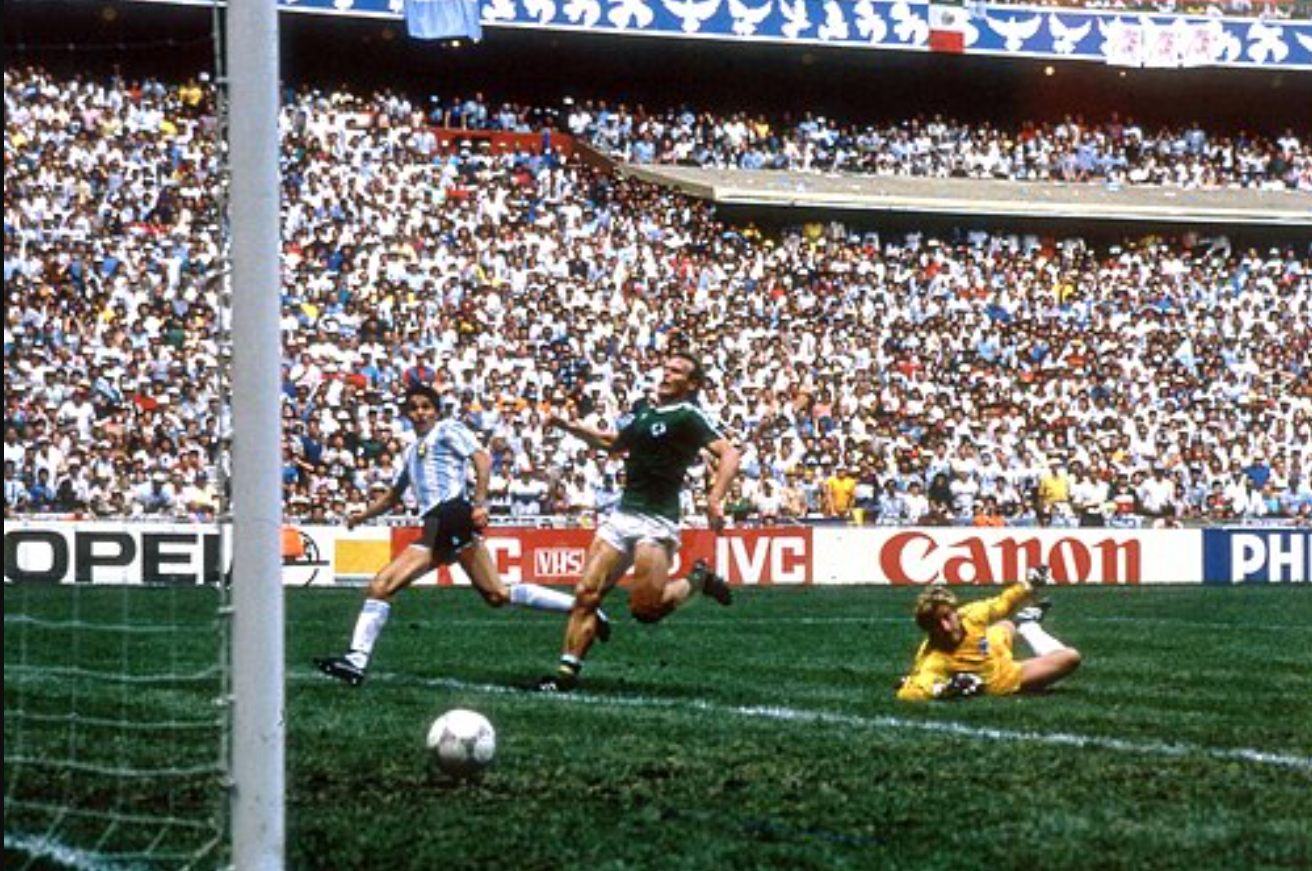
If 1978 introduced Argentina to World Cup glory, 1986 turned it into legend, largely because of one player: Diego Maradona.
The 1986 tournament in Mexico is often described as the “Maradona World Cup,” and for good reason. His quarterfinal performance against England produced two of the most famous goals in football history within the space of four minutes. The first was the “Hand of God,” a blatant handball that somehow went uncalled by the referee. The second, just minutes later, is still widely regarded as the greatest goal ever scored, a mesmerizing dribble past half the England team from inside his own half.
Maradona carried that form through the rest of the tournament, culminating in a final against West Germany. Argentina raced to a 2-0 lead, saw West Germany fight back to level the score at 2-2 and then snatched the win when Jorge Burruchaga scored the decisive goal in the closing minutes. The final finished 3-2 and Argentina had its second star.
Maradona’s tournament wasn’t just about skill, it was about will. He dragged a talented but not overwhelming Argentina squad to the title almost single-handedly and that performance cemented his status as one of the greatest players the game has ever seen.
Argentina’s Third World Cup Victory in 2022
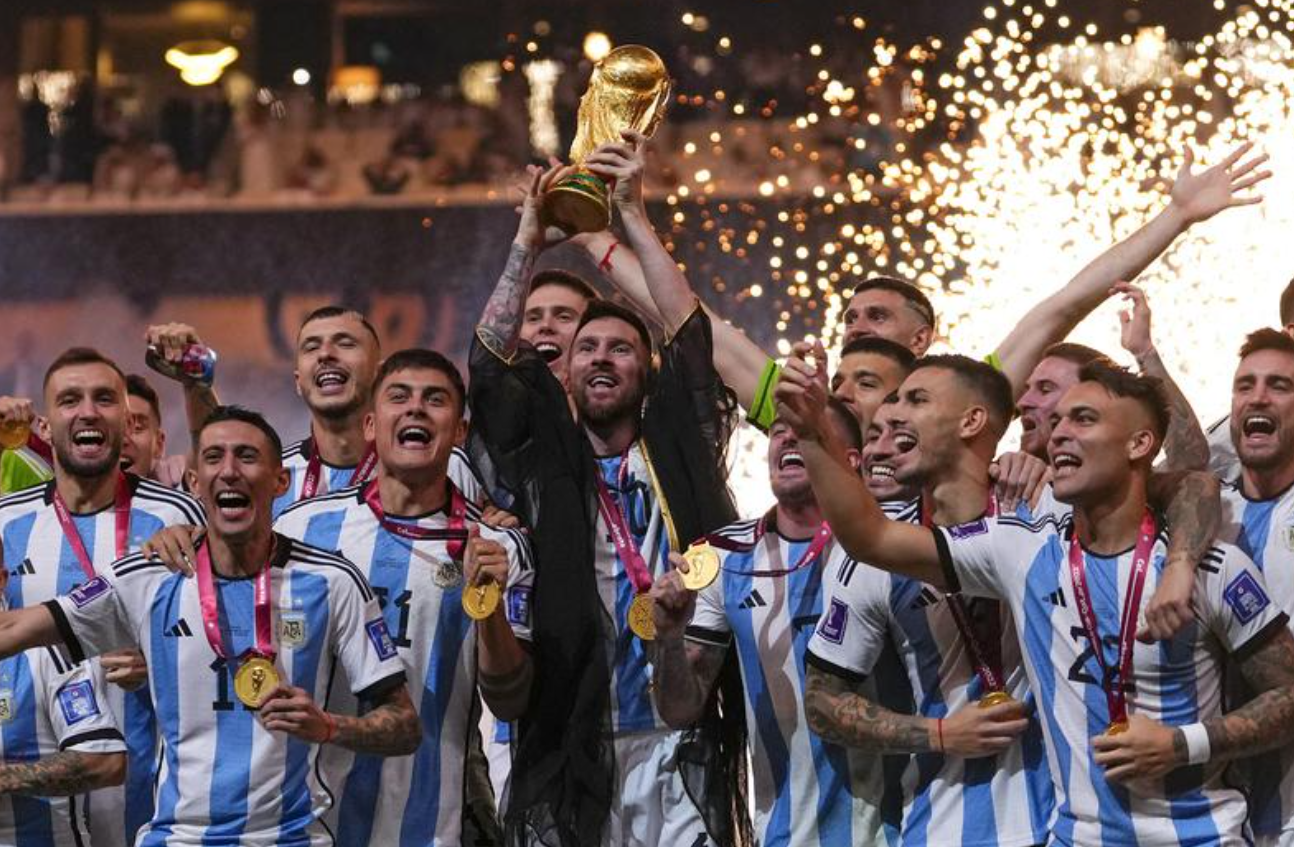
Argentina waited 36 years for their next title and when it finally arrived in Qatar in 2022, it did so in a way nobody could have scripted.
By this point, Lionel Messi had spent nearly two decades being compared to Maradona without ever winning the one trophy that could settle the argument. At 35 years old, in what was widely assumed to be his final World Cup, Messi led Argentina through a tournament that started with a shock opening loss to Saudi Arabia and somehow ended in triumph.
The final against France is already considered one of the greatest matches in World Cup history. Argentina raced to a 2-0 lead through Messi and Angel Di Maria, only for Kylian Mbappe to score twice in under two minutes to level it. Messi restored Argentina’s lead in extra time, Mbappe completed his hat-trick to tie it again and the match went to a penalty shootout. Argentina held their nerve, winning the shootout 4-2, with goalkeeper Emiliano Martinez playing a crucial role in the saves.
Messi finished the tournament with the Golden Ball as its best player and the World Cup trophy finally joined the rest of his honors. For Argentina, it was the perfect blend of individual brilliance and collective grit, closing the gap between Maradona’s 1986 heroics and a new generation’s own piece of history.
Argentina World Cup Final Record
Argentina has appeared in six World Cup finals, winning three and losing three:
- 1930: Lost to Uruguay
- 1978: Won vs Netherlands
- 1986: Won vs West Germany
- 1990: Lost to West Germany
- 2014: Lost to Germany
- 2022: Won vs France (penalties)
That’s a 50 percent win rate in finals, which is one of the best conversion rates among nations with multiple final appearances. It also shows a recurring theme in Argentina’s World Cup story, their finals are rarely one-sided. Four of their six championship matches were decided by a single goal, extra time, or penalties.
Argentina Compared With Other World Cup Winners
Three World Cup titles puts Argentina in a strong position historically, but they’re not at the top of the list. Here’s how the all-time winners compare:
- Brazil: 5 titles (1958, 1962, 1970, 1994, 2002)
- Germany: 4 titles (1954, 1974, 1990, 2014)
- Italy: 4 titles (1934, 1938, 1982, 2006)
- Argentina: 3 titles (1978, 1986, 2022)
- France: 2 titles (1998, 2018)
- Uruguay: 2 titles (1930, 1950)
Brazil remains the benchmark and it’s unlikely any nation catches them soon. But Argentina’s three titles, combined with the fact that all three came with genuinely iconic storylines attached, host nation glory in 1978, Maradona’s magic in 1986 and Messi’s redemption in 2022, arguably give them the most compelling trophy cabinet outside of Brazil.
Argentina also holds the distinction of being one of only a handful of countries whose World Cup wins are each closely tied to a single transcendent player, first Kempes, then Maradona, then Messi. That thread of individual brilliance running through team success is a big part of why Argentina’s football culture is held in such high regard globally.
Frequently Asked Questions
How many World Cups has Argentina won? Argentina has won the World Cup three times, in 1978, 1986 and 2022.
When did Argentina last win the World Cup? Argentina’s most recent World Cup win was in 2022, when they beat France on penalties in Qatar.
Who scored Argentina’s winning goal in World Cup finals? Different players have delivered the decisive moments across Argentina’s three wins. Mario Kempes scored twice in the 1978 final, Jorge Burruchaga scored the winning goal in 1986 and the 2022 final was ultimately settled by a penalty shootout after Lionel Messi and Kylian Mbappe traded goals through extra time.
Has Messi won a World Cup? Yes. Lionel Messi won the World Cup with Argentina in 2022, adding the one major trophy that had been missing from his career and cementing his status as one of the greatest players in football history.
For the full official record of World Cup winners and tournament history, FIFA’s own archive is a reliable reference point: FIFA World Cup Winners.
