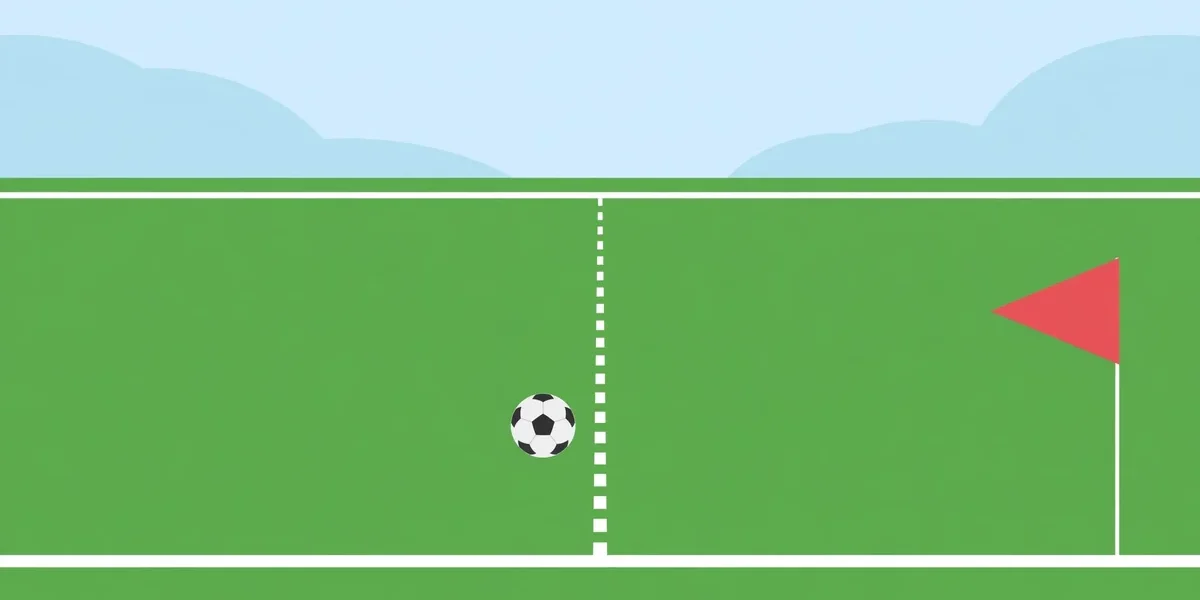
- Quick Answer: Offside Rule Explained in 30 Seconds
- Offside Rule Explained: What Is the Offside Rule?
- Offside Rule Explained: Why Does the Rule Exist?
- Offside Rule Explained: The Two-Part Test
- Part 1: Offside Position
- Part 2: Becoming Involved in Active Play
- When Is a Player Judged Offside?
- Offside Exceptions: Goal Kicks, Corners and Throw-Ins
- Deliberate Play vs Deflection: What Resets Offside?
- What Happens After an Offside Offence?
- Offside Rule Explained: VAR and Semi-Automated Offside
- Worked Scenarios: Offside or Not?
- Offside Rule Explained: Common Myths
- Offside Rule Explained: Frequently Asked Questions
- Is a player offside if the player is level with the last defender?
- Can a player be offside in the player's own half?
- Can a player be offside from a goal kick?
- What is the second-last opponent?
- What is the restart for offside?
- Conclusion
Offside rule explained here in simple words, so you can follow any match with confidence. For example, fans argue about it in the stands and at home.
You will learn what offside position means and when it becomes an offence. In addition, you will see clear examples and the main myths.
Quick Answer: Offside Rule Explained in 30 Seconds
- A player is in an offside position if part of the head, body, or feet is nearer the goal line than both the ball and the second-last opponent.
- Hands and arms do not count for offside.
- Level with the second-last opponent, or level with the ball, means onside.
- Offside position alone is not an offence. The player must take part in active play.
- There is no offside in your own half, or direct from a goal kick, a corner, or a throw-in.
- The restart for offside is an indirect free kick.
Offside Rule Explained: What Is the Offside Rule?
The offside rule sits in Law 11 of the Laws of the Game. IFAB writes the Laws of the Game.
A player is in an offside position when three facts line up. First, part of the head, body, or feet is in the opponents’ half. Second, that part is nearer the goal line than the ball. Third, that part is nearer the goal line than the second-last opponent. Also, all three facts must apply.
The second-last opponent is often the goalkeeper plus one defender. However, it can be two outfield players. For example, the goalkeeper may come out to claim a cross.
Hands and arms do not count. The law looks at the head, body, and feet only. As a result, a player can lean forward with an arm and stay onside.
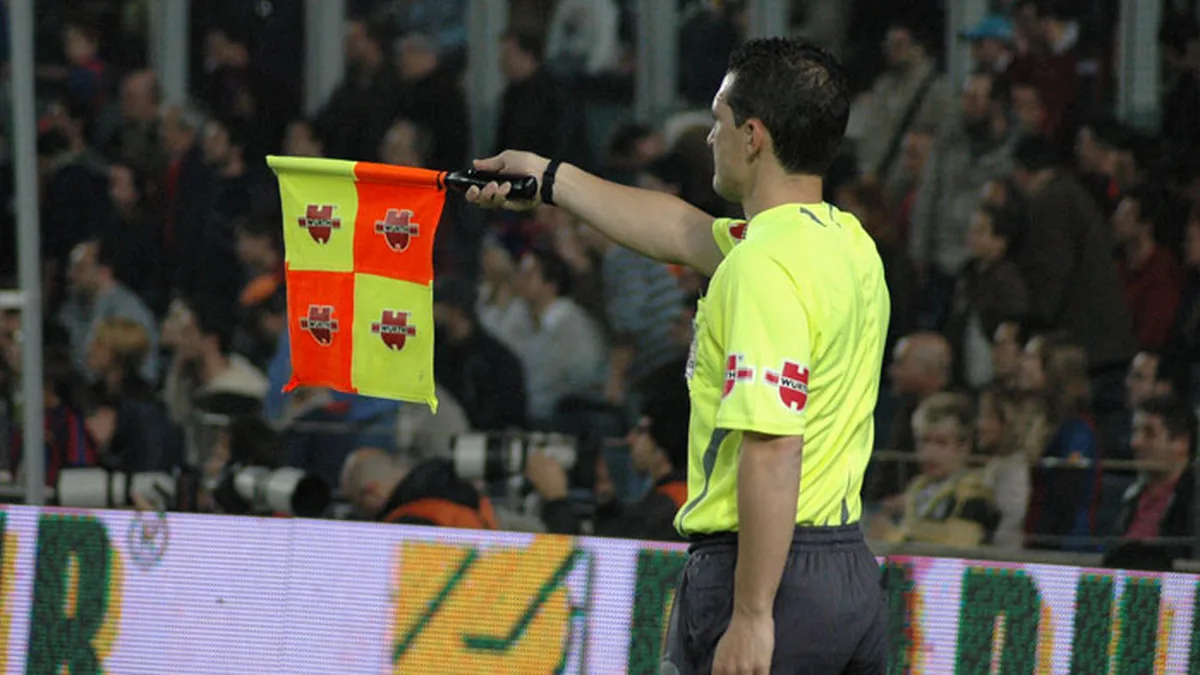
Offside Rule Explained: Why Does the Rule Exist?
Football needs space and balance between attack and defence. Without an offside rule, attackers could stand beside the goal and wait for a long pass. As a result, defenders would have to stay back with them, and the game would lose its flow.
Offside Rule Explained: The Two-Part Test
The offside rule explained in this section uses two steps. First, check the position. Second, check the action. Also, both steps matter. A player can be in an offside position and still avoid punishment.
Part 1: Offside Position
Offside position is a fact at one key moment. The moment is when a team-mate plays or touches the ball. The referee judges the position at that moment, not when the player receives the ball. For example, a striker may start onside and run past the last defender. After that, the pass may arrive late, but the striker stays onside.
The reverse also applies. A striker may start in an offside position and run back to receive the ball. However, the striker is still judged offside.
Part 2: Becoming Involved in Active Play
Offside position alone is not an offence. A player must become involved in active play. First, the player interferes with play by touching the ball. Second, the player interferes with an opponent. Third, the player gains an advantage from a rebound or a save.
Interfering with an opponent has clear forms. A player may block the line of vision of an opponent. Also, a player may challenge an opponent for the ball. For example, a player may jump for a header and force a defender to change course. As a result, the referee can call offside even if the player does not touch the ball.
When Is a Player Judged Offside?
The assistant referee watches the passer, not the receiver. The flag goes up based on the passer’s touch. After that, play can move fast. The receiver may be onside by the time the ball arrives. However, the call still stands if the position was offside at the pass.
Offside Exceptions: Goal Kicks, Corners and Throw-Ins
Three restarts have no offside at all. A player cannot be offside direct from a goal kick, a corner, or a throw-in. Also, the exception covers the first touch from that restart. After that, normal offside rules apply.
A player can also be safe in the player’s own half. There is no offside position in the player’s own half. For example, a striker may stand in the player’s own half and receive a pass. After that, the striker can run into the opponents’ half with the ball.
The offside rule explained in this guide also covers free kicks. A free kick has no special exception. For example, a quick free kick may find a striker beyond the last defender. The referee can call offside in that case.
Deliberate Play vs Deflection: What Resets Offside?
A defender can reset offside with a deliberate play. A deliberate play means the defender has control and chooses to play the ball. For example, a defender may control a pass with the chest. After that, an attacker in an offside position can play the ball.
A deflection does not reset offside. A deflection means the ball hits a defender with little time to react. For example, a defender may stretch to block a shot and the ball bounces off the leg. However, the attacker is still offside if the attacker plays the ball. A deliberate save also does not reset offside. As a result, an attacker who plays the ball after a save gains an advantage.
What Happens After an Offside Offence?
As a result, the restart is an indirect free kick. The referee awards the free kick to the defending team. The kick is taken from the place where the player became involved in active play. For example, a player may run back to the halfway line to play the ball. The free kick is taken from that spot.
An indirect free kick means the ball must touch another player before a goal can count. The taker cannot score direct from an indirect free kick.
Offside Rule Explained: VAR and Semi-Automated Offside
VAR is the video assistant referee. It checks goals, penalties, red cards, and mistaken identity. VAR also checks offside in the build-up to a goal.
In addition, semi-automated offside uses cameras and tracking to help VAR. Cameras track the ball and the players. The system maps key points on the body. After that, the system draws the offside line. As a result, the check is faster than a manual check.
The offside rule explained with VAR still uses the same law. The final call still rests with the match officials. As of November 2026, semi-automated offside is used in major competitions, including the Champions League and the Premier League. In addition, the tools make the line visible.
Worked Scenarios: Offside or Not?
Each case starts from the moment a team-mate plays the ball.
| Scenario | Offside? | Why |
|---|---|---|
| Striker level at pass, then runs clear and scores | No | Level means onside |
| Striker beyond last defender, but does not touch ball | No | Position alone is not an offence |
| Striker beyond last defender, then scores from pass | Yes | Player interfered with play |
| Striker receives ball direct from corner | No | No offside direct from corner |
| Shot rebounds to offside striker, who scores | Yes | Advantage from deflection |
Offside Rule Explained: Common Myths
The offside rule explained below clears up five common myths.
Myth 1: Any player beyond the last defender is offside. This is false. The player must also be ahead of the ball. In addition, the player must become involved in active play.
Myth 2: A player cannot be offside from a free kick. This is false. A free kick has no exception. Only a goal kick, a corner, and a throw-in have exceptions.
Myth 3: Hands and arms count for offside. This is false. The law counts the head, body, and feet only. For example, a striker may reach forward with an arm and stay onside.
Myth 4: Offside is judged when the player receives the ball. This is false. The key moment is when a team-mate plays the ball. After that, the player may move, but the call stays the same.
Myth 5: VAR changes the offside law. This is false. VAR only helps apply the law. The law stays the same. In addition, the tools give faster checks.
Offside Rule Explained: Frequently Asked Questions
Is a player offside if the player is level with the last defender?
No. Level means onside. Also, a player level with the ball is onside.
Can a player be offside in the player’s own half?
No. There is no offside position in the player’s own half.
Can a player be offside from a goal kick?
No. There is no offside direct from a goal kick, a corner, or a throw-in. However, a free kick has no such exception.
What is the second-last opponent?
The second-last opponent is often the goalkeeper plus one defender. However, it can be two outfield players.
What is the restart for offside?
The restart is an indirect free kick to the defending team. In addition, the ball must touch another player before a goal can count.
Conclusion
The offside rule has a clear shape when you break it into two steps. First, check the position when a team-mate plays the ball. Second, check if the player takes part in active play. If both steps point to an offence, the referee awards an indirect free kick.
A goal kick, a corner, and a throw-in have no offside. With the offside rule explained in plain words, you can watch the line, the pass, and the flag with far more confidence.
You can find more football guides in our Sports News section, and you can follow matches with our free live scores. For more learning, visit our Betting Academy and see our free football predictions.
Want the full picture? Read our guide to how VAR works.
Defenders use the offside trap to protect their goal, and a well-run trap is one way to keep a clean sheet — see what is a clean sheet in football.
Related: Free kicks carry their own offside twist — a player can be offside from a free kick, even though it feels like a fresh start. Read our guide to what is a free kick in football for the direct and indirect rules, the 10-yard wall and the famous takers.