- What Is a Free Kick in Football? The Basic Rules
- Direct Free Kicks
- What Is a Free Kick in Football? Indirect Free Kicks
- The 10-Yard Wall and the One-Yard Rule
- What Is a Free Kick in Football? Quick and Ceremonial Free Kicks
- Where Free Kicks Are Taken From
- What Is a Free Kick in Football? Fouls That Earn a Free Kick
- Can You Be Offside from a Free Kick?
- Famous Free Kicks and Great Takers
- What Is a Free Kick in Football? Frequently Asked Questions
- What is the difference between a direct and an indirect free kick?
- How far away must the wall stand?
- Can you score an own goal from a free kick?
- Can a player be offside from a free kick?
- What happens if the kicker touches the ball twice?
- What is a quick free kick?
- Conclusion
What is a free kick in football? It is a way of restarting play after the other team breaks a rule. The referee stops the game and points to the spot. One player kicks the ball back into play from there. Free kicks are one of the most common restarts in football. A good free kick from close range can become a goal. This guide explains the rules in plain English. It covers direct and indirect free kicks, the 10-yard wall, quick free kicks, and the famous takers.
Last updated: November 2026
Quick Answer
- What is a free kick in football? A restart that the referee awards after the other team breaks a rule, from the place where the offence happened.
- A player can kick a direct free kick straight into the goal. An indirect free kick must touch another player first.
- Opponents must stay at least 9.15 m (10 yards) from the ball until it is in play.
- The ball must be still when the kicker takes the kick, and the kicker must not touch it twice in a row.
- You CAN be offside from a free kick — the no-offside exception covers only goal kicks, throw-ins and corner kicks.
What Is a Free Kick in Football? The Basic Rules
The simplest answer to what is a free kick in football is a free, unopposed kick that the referee awards after an offence. After the whistle, a player places the ball where the offence happened, and play restarts with the kick. The fouled team takes the kick, and the other team must give them room.
IFAB Law 13 covers free kicks. It sets out the two types, where players must place the ball, and what the players around the ball may and may not do.
The ball must be stationary when a player takes the kick. That means still on the ground, not rolling. The kicker must not touch the ball again until another player has touched it. A second touch gives the other team an indirect free kick. If the second touch is a handball offence, they get a direct free kick instead.
Direct Free Kicks
A player can kick a direct free kick straight into the opponents’ goal, and the goal counts. That is what makes them so exciting. From 20 or 25 yards out, a good striker of the ball can curl it over the wall and past the goalkeeper.
Referees award direct free kicks for Law 12 penal offences: fouls that involve contact, such as tripping, pushing or holding an opponent, and handball. Outside the penalty area, these fouls give a direct free kick. Inside it, they give a penalty kick instead.
No one can score an own goal directly from a free kick. If the ball goes straight into the kicker’s own goal, the referee awards a corner kick to the opponents.
What Is a Free Kick in Football? Indirect Free Kicks
An indirect free kick counts as a goal only if the ball touches another player before it goes in. A player can pass it to a team-mate, who can then shoot. The ball can also touch any player on its way to the goal. If the ball goes straight into the opponents’ goal without touching anyone, the goal does not count and play restarts with a goal kick.
The referee signals an indirect free kick by raising one arm straight above the head. It stays raised until the ball touches another player or goes out of play.
If the referee fails to raise the arm and the ball goes directly into the goal, the referee orders a retake. The signal is part of the rule.
Referees award indirect free kicks for non-penal offences. These include dangerous play without contact and impeding an opponent without contact. Dissent, offensive language and stopping the goalkeeper from releasing the ball are also on the list. So are certain goalkeeper handling offences inside the penalty area.
The 10-Yard Wall and the One-Yard Rule
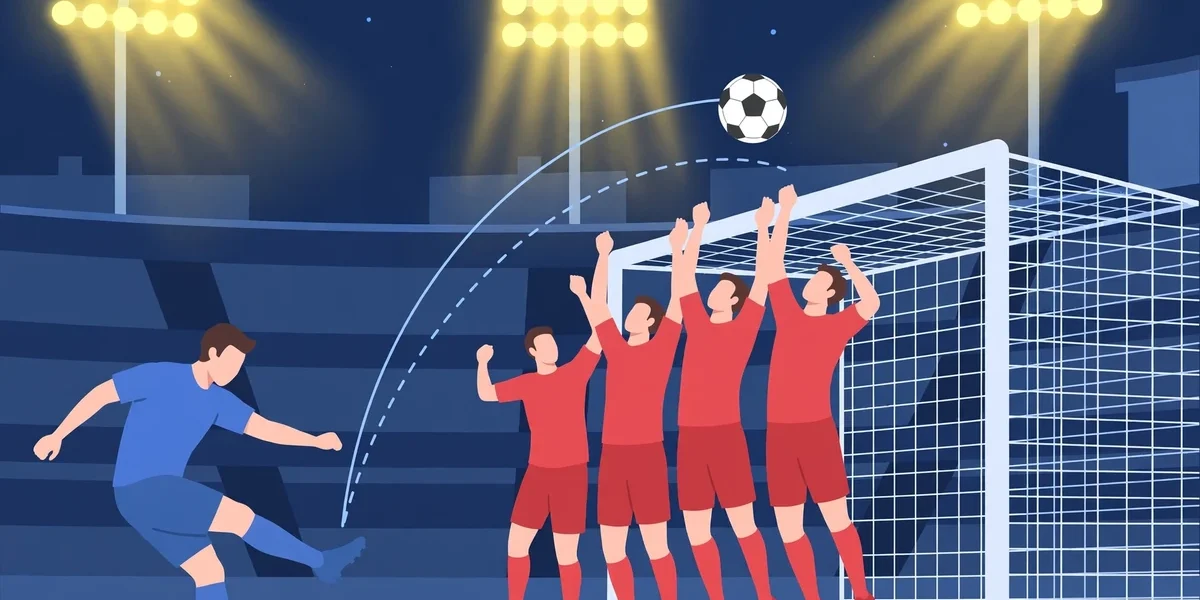
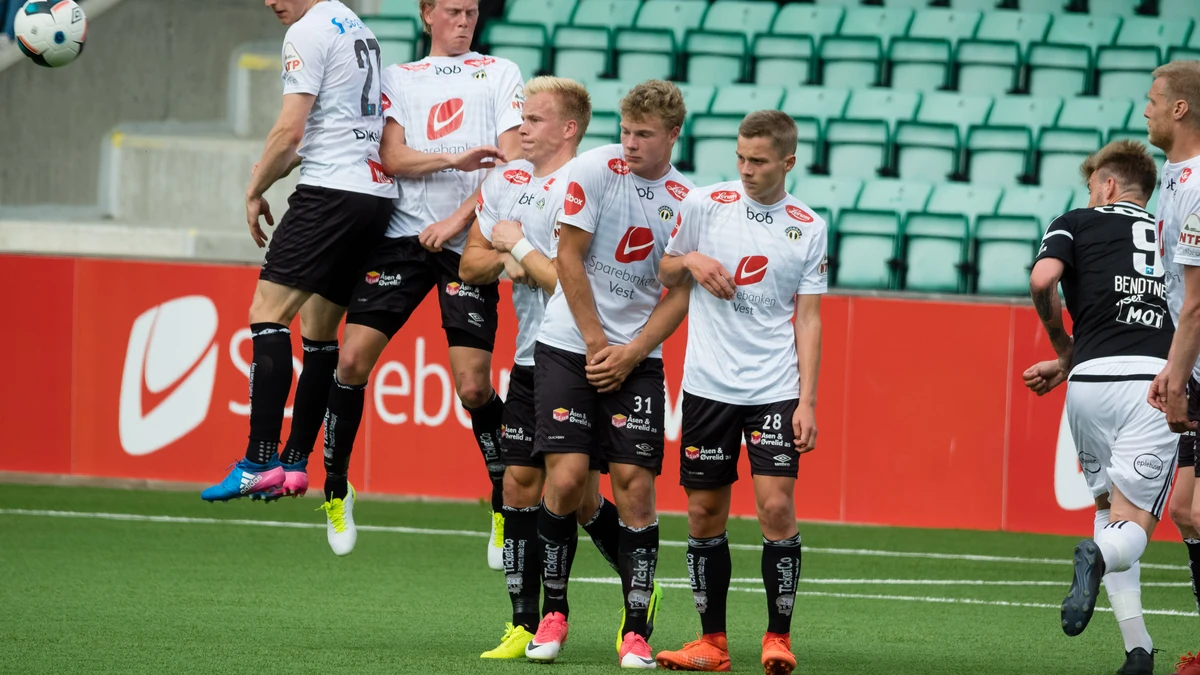
Opponents must stay at least 9.15 m (10 yards) from the ball until it is in play. The only exception is a defender on the goal line between the posts. In many matches, the referee marks the spot with spray.
Most defending teams form a wall of players to block the direct route to goal. The wall jumps as the taker kicks the ball. The goalkeeper stands behind it and covers the other side.
If three or more defenders form a wall, attackers must stay at least 1 m (1 yard) from it. This applies until the ball is in play. This stops attackers from standing inside the wall and blocking the defenders. If an attacker stands closer than 1 m, the referee awards an indirect free kick to the defending team.
What Is a Free Kick in Football? Quick and Ceremonial Free Kicks
Teams do not take every free kick slowly. A player takes a quick free kick at once, while the other team is still getting back into position. If the taker kicks quickly and an opponent closer than 9.15 m intercepts the ball, the referee allows play to continue. The quick taker accepts the risk to catch the defence unprepared.
A ceremonial free kick is the opposite. If the referee sets the wall or marks the spot with spray, the taker must wait for the whistle. The referee holds up play until everyone is in the right place. Kicking before the whistle brings the kick back.
Where Free Kicks Are Taken From
Players take free kicks from the place where the offence happened.
There is one exception. The attacking team takes indirect free kicks inside the opponents’ goal area from the nearest point on the goal area line. The goal area is the small box in front of the goal. The kick moves back to its edge so the defence has room to set up.
What Is a Free Kick in Football? Fouls That Earn a Free Kick
Whether a free kick is direct or indirect depends on the offence. Direct free kicks come from Law 12 penal offences: fouls with contact and handball. A trip, a push, a hold or a deliberate handball gives the other team a direct free kick.
Indirect free kicks come from a different list of offences. These include dangerous play without contact and impeding an opponent. Dissent, offensive language and stopping the goalkeeper from releasing the ball are also on the list.
The fouled team restarts play from the spot the referee points to, and the game goes on.
Can You Be Offside from a Free Kick?
Yes, you can be offside from a free kick. This is one of the most surprising parts of what is a free kick in football for new fans. Free kicks feel like a fresh start. But the rules say otherwise.
The no-offside exception in Law 11 covers only goal kicks, throw-ins and corner kicks. Free kicks are not on that list. If a player in an offside position gets involved in play when a team-mate takes the free kick, the referee penalises them.
That is why players line up carefully near the penalty area. Attackers must time their runs to be onside when a team-mate kicks the ball. To see how offside works in full, read our guide to the offside rule explained.
Famous Free Kicks and Great Takers
The most famous free kick in English football history came in October 2001. David Beckham curled a free kick into the top corner against Greece in stoppage time at Old Trafford. The goal made it 2-2 and sent England to the 2002 World Cup. It made Beckham’s name as a free-kick specialist.
Beckham is one of several players famous above all for free kicks. Juninho Pernambucano, Roberto Carlos and Sinisa Mihajlovic all built their names on dead-ball skill. Each had a different style: Beckham’s curl, Juninho’s dip, Roberto Carlos’s power, Mihajlovic’s accuracy from distance. Sources disagree on the exact figures for free-kick goals, so this guide makes no claim about who scored the most.
What made them great was practice. A free kick looks simple when it flies in. To see where each player stands on the pitch when the whistle goes, read our guide on football positions explained.
What Is a Free Kick in Football? Frequently Asked Questions
These are the questions fans ask most about what is a free kick in football.
What is the difference between a direct and an indirect free kick?
A direct free kick can go straight into the goal. An indirect free kick must touch another player first.
How far away must the wall stand?
At least 9.15 m (10 yards) from the ball, unless the defenders are on their own goal line between the posts.
Can you score an own goal from a free kick?
No. If the ball goes straight into the kicker’s own goal, the opponents get a corner kick.
Can a player be offside from a free kick?
Yes. The no-offside exception covers only goal kicks, throw-ins and corner kicks.
What happens if the kicker touches the ball twice?
The other team gets an indirect free kick, or a direct free kick if the second touch is a handball offence.
What is a quick free kick?
A free kick that a player takes at once, before the defence is set. If an opponent who is too close intercepts it, play goes on.
Conclusion
So what is a free kick in football? It is a restart that can change a match. Most free kicks simply keep the game moving. A few, from close range, are chances to score. The rules are simple once you know them. Direct kicks can go straight in. Indirect kicks need a touch. The wall stands 10 yards back, and the ball must be still. For more football stories, visit our Sports News page. You can follow the next matches on our free live scores page, and see ideas for upcoming matches on our free football predictions page.
For another set piece, read our guide on what is a corner kick in football.