
- What Is Extra Time in Football? The Basics
- What Is Extra Time in Football? Extra Time vs Stoppage Time
- The Golden Goal and Silver Goal: Rules That No Longer Exist
- What Happens If the Scores Are Still Level?
- What Is Extra Time in Football? Extra Substitutions
- Extra Time in League Matches
- What Is Extra Time in Football? Famous Extra-Time Matches
- Extra Time and Betting: What Counts?
- What Is Extra Time in Football? Frequently Asked Questions
- How long is extra time in football?
- Does extra time count in league matches?
- What is the difference between extra time and stoppage time?
- What happens if the match is still level after extra time?
- Does the golden goal still exist?
- Do goals in extra time count for football pools?
- Conclusion
What is extra time in football? It means teams play an extra 30 minutes when a knockout match is level after 90 minutes. A draw cannot settle a cup tie, so the two teams play on until there is a winner. This guide explains how long extra time lasts, how it differs from stoppage time, why the golden goal no longer exists, and what happens when the scores are still level after 120 minutes.
Last updated: November 2026
Quick Answer
- Extra time lasts 30 minutes: two 15-minute halves that teams play only when a knockout match is level after 90 minutes.
- It differs from stoppage time, which referees add at the end of each half for delays.
- Football’s lawmakers scrapped both the golden goal and the silver goal in 2004, so teams always play the full 30 minutes.
- If the scores are still level after extra time, a penalty shootout decides the match.
- In league matches there is no extra time: a draw stands and each team takes a point.
What Is Extra Time in Football? The Basics
The simplest answer to what is extra time in football is this: a match that must have a winner runs for 30 extra minutes. In a cup tie or a knockout round, a draw is not enough. One team has to go through to the next round, so the match cannot end level. When the teams finish level after 90 minutes plus stoppage time, the referee starts extra time.
Extra time has two halves of 15 minutes. The first half runs from the 90th minute to the 105th minute, and the second half runs from the 105th minute to the 120th minute. There is a short break between the two halves, and the teams change ends. Referees can also add stoppage time at the end of each extra-time half, for the same reasons they add it in normal time: injuries, substitutions and other delays. If one team is winning after 90 minutes, the match ends there, and the teams never play extra time.
What Is Extra Time in Football? Extra Time vs Stoppage Time
To understand what is extra time in football, it helps to compare it with stoppage time. Fans often mix the two up, but they are very different. Stoppage time, or injury time, is minutes that the referee adds at the end of each half for delays. The referee adds time for injuries, substitutions, goal celebrations and other breaks in play. Stoppage time happens in every match, in every half, and it is part of normal time.
Extra time is a separate 30-minute period. Teams play it only in knockout ties, and only when the match is level after 90 minutes. A match can have both: stoppage time at the end of the second half, then extra time, then more stoppage time at the end of each extra-time half. The key point is simple. Stoppage time makes up for lost minutes inside normal time. Extra time adds a whole new period of play to find a winner.
The Golden Goal and Silver Goal: Rules That No Longer Exist
For a few years, extra time worked differently. FIFA introduced the golden goal in 1993. Under that rule, the first team to score in extra time won the match at once. The game stopped as soon as the ball went in, and there was no chance for the other team to reply. The World Cups of 1998 and 2002 used the golden goal.
UEFA then tried a different idea, the silver goal. UEFA used it in 2002-2004. Under the silver goal, the team leading at the end of the first half of extra time won the match. If the scores were level at the end of that first half, the teams played the second half. Greece won their Euro 2004 semi-final by silver goal.
Football’s lawmakers scrapped both rules in 2004, and they have never come back. Teams always play the full 30 minutes, so a team that concedes early in extra time still has time to respond.
What Happens If the Scores Are Still Level?
If the scores are still level after extra time, a penalty shootout decides the match. Each team takes five kicks, one after the other in turn. The team that scores more of its five kicks wins the match. If the teams are still level after five kicks each, the shootout goes to sudden death. In sudden death, each team takes one kick at a time, and the first team to score while the other misses wins.
That is why extra time matters so much: the 30 minutes give both teams a real chance to win the match in open play, before the lottery of penalties begins.
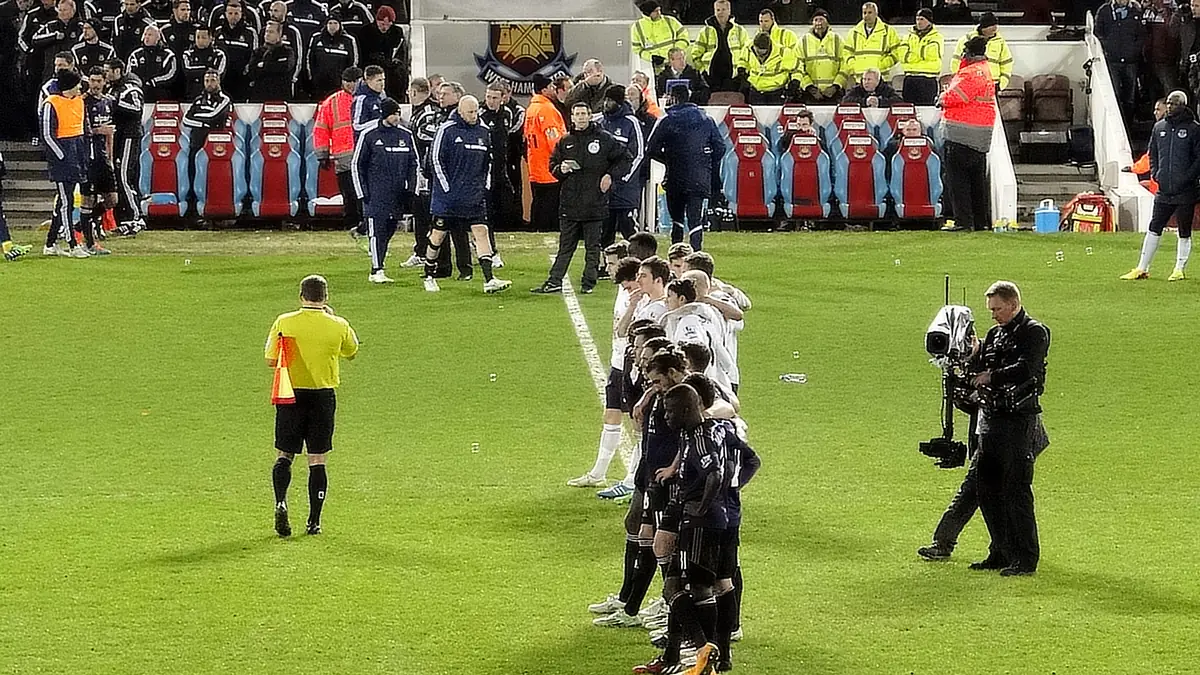
What Is Extra Time in Football? Extra Substitutions
The answer to what is extra time in football includes one more detail: extra substitutions. As of November 2026, most major competitions allow a sixth substitute if the match goes to extra time, on top of the five that the rules allow in normal time, plus an extra substitution opportunity.
The extra substitute matters because 90 minutes leaves players tired. Fresh legs can change a match in extra time, when space opens up and tired defenders make mistakes. Before the five-substitute rule, competitions allowed a fourth substitute in extra time. The idea was the same: give managers one more change for the extra 30 minutes.
Extra Time in League Matches
There is no extra time in league matches. A draw stands, and each team takes a point. The league table builds over a whole season, so no single match has to produce a winner. A point for a draw is part of the competition, and teams plan their season around it.
Extra time belongs to knockout football: cup ties, play-offs and tournament rounds where one team must go through and the other must go out.
What Is Extra Time in Football? Famous Extra-Time Matches
The best way to see what is extra time in football means in practice is to look at famous matches. Those extra 30 minutes decided some of the greatest games in the history of the sport.
The 1966 World Cup final is the most famous of all. England beat West Germany 4-2 after extra time, with Geoff Hurst scoring a hat-trick. Hurst’s goals made him the only player to score three goals in a World Cup final until Kylian Mbappé matched the feat in 2022. To learn more about that scoring feat, read our guide on what is a hat-trick in football.
Andrés Iniesta settled the 2010 World Cup final in the 116th minute, scoring the only goal for Spain against the Netherlands. Four years later, Mario Götze decided the 2014 final in the 113th minute, scoring for Germany against Argentina. The 2022 final went even further: Argentina and France were level at 3-3 after extra time, and Argentina won the match on penalties.
Extra Time and Betting: What Counts?
Extra time does not count for football pools. Only the 90-minute score counts, as our guide to football pools terms explained sets out. A coupon result uses the score after 90 minutes, even if the match goes on to extra time and penalties.
In most standard match-result betting, bookmakers also settle the result on the 90-minute score, before extra time. That means a team can lift a cup in extra time while the 90-minute result is still a draw. Anyone who bets on a knockout match should check whether the market uses the 90-minute score or the match winner, because the two are not the same.
What Is Extra Time in Football? Frequently Asked Questions
These are the questions fans ask most about extra time in football.
How long is extra time in football?
Extra time lasts 30 minutes: two halves of 15 minutes. Teams play it only when a knockout match is level after 90 minutes plus stoppage time.
Does extra time count in league matches?
No. League matches have no extra time. A draw stands and each team takes a point. Only knockout ties, where one team must go through, use extra time.
What is the difference between extra time and stoppage time?
Stoppage time is minutes that the referee adds at the end of each half for delays such as injuries, substitutions and goal celebrations. Extra time is a separate 30-minute period that teams play only when a knockout match is level after 90 minutes.
What happens if the match is still level after extra time?
A penalty shootout decides the match. Each team takes five kicks, one after the other in turn. If the teams are still level after five kicks each, the shootout goes to sudden death.
Does the golden goal still exist?
No. Football’s lawmakers scrapped the golden goal in 2004, along with the silver goal. Teams always play the full 30 minutes of extra time, so a team that concedes early still has time to respond.
Do goals in extra time count for football pools?
No. Only the 90-minute score counts for football pools. A goal in extra time does not change a coupon result.
Conclusion
So what is extra time in football? Thirty minutes — two 15-minute halves — that teams play when a knockout match is level after 90 minutes. It is not stoppage time, and league matches do not use it. The golden goal and the silver goal have gone, teams always play the full 30 minutes, and a shootout waits if the scores are still level. From England in 1966 to Argentina in 2022, extra time has produced some of the most famous moments in the history of the game. For more football stories, visit our Sports News page. You can follow the next matches on our free live scores page, and see ideas for upcoming matches on our free football predictions page.
Related: If the scores are still level after extra time, the match goes to a penalty shootout. Read our guide on what is a penalty shootout in football to learn the five-kick format, sudden death and the no-rebound rule.