
- What Is a Yellow Card in Football? The Basic Idea
- What Is a Yellow Card in Football? The Cautionable Offences
- What Happens After Two Yellow Cards
- What Is a Yellow Card in Football? Suspensions and Bans
- What Is a Yellow Card in Football? VAR and Yellow Cards
- The History of the Yellow Card: Ken Aston and 1966
- The First Yellow Card at a World Cup
- The Battle of Nuremberg: 16 Yellow Cards
- What Is a Yellow Card in Football? Frequently Asked Questions
- Does a yellow card send a player off?
- Can a goalkeeper get a yellow card?
- Can a substitute get a yellow card?
- Can a player get a yellow card after the final whistle?
- Does VAR check yellow cards?
- How many yellow cards bring a suspension?
- Conclusion
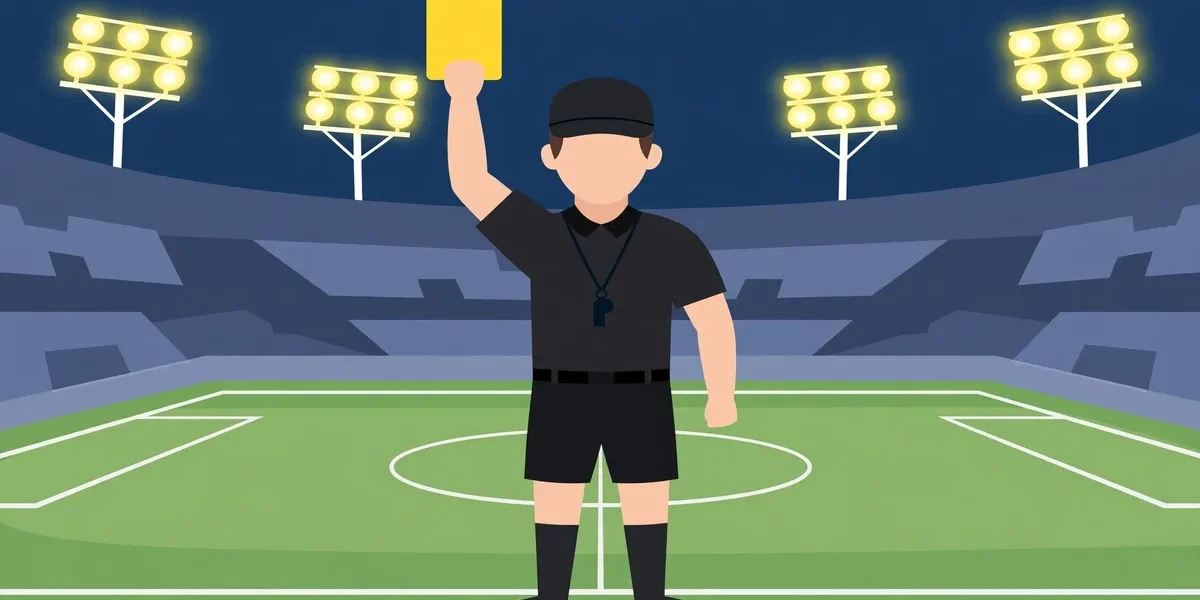
What is a yellow card in football? It is the referee’s way of warning a player who has broken the Laws of the Game. In fact, the referee holds up a yellow card, and the player stays on the pitch. After all, one yellow card alone never sends a player off. However, a second yellow in the same match ends the game for that player. Overall, this guide explains the cautionable offences, two yellows, suspensions, VAR, and the history of the card.
Last updated: November 2026
Quick Answer
- What is a yellow card in football? A caution shown by the referee under IFAB Law 12.
- A yellow card on its own never sends a player off and never forces a substitution.
- Two yellow cards in the same match mean a red card: the player leaves the field at once.
- Yellow cards can bring a suspension, but the exact rules vary from one competition to another.
- The card system comes from English referee Ken Aston, who invented it after the 1966 World Cup.
What Is a Yellow Card in Football? The Basic Idea
First, IFAB Law 12 covers fouls and misconduct. It sets out the two cards. The yellow card communicates a caution. In contrast, the red card communicates a sending-off. Only a player, substitute, substituted player or team official can receive a yellow or red card.
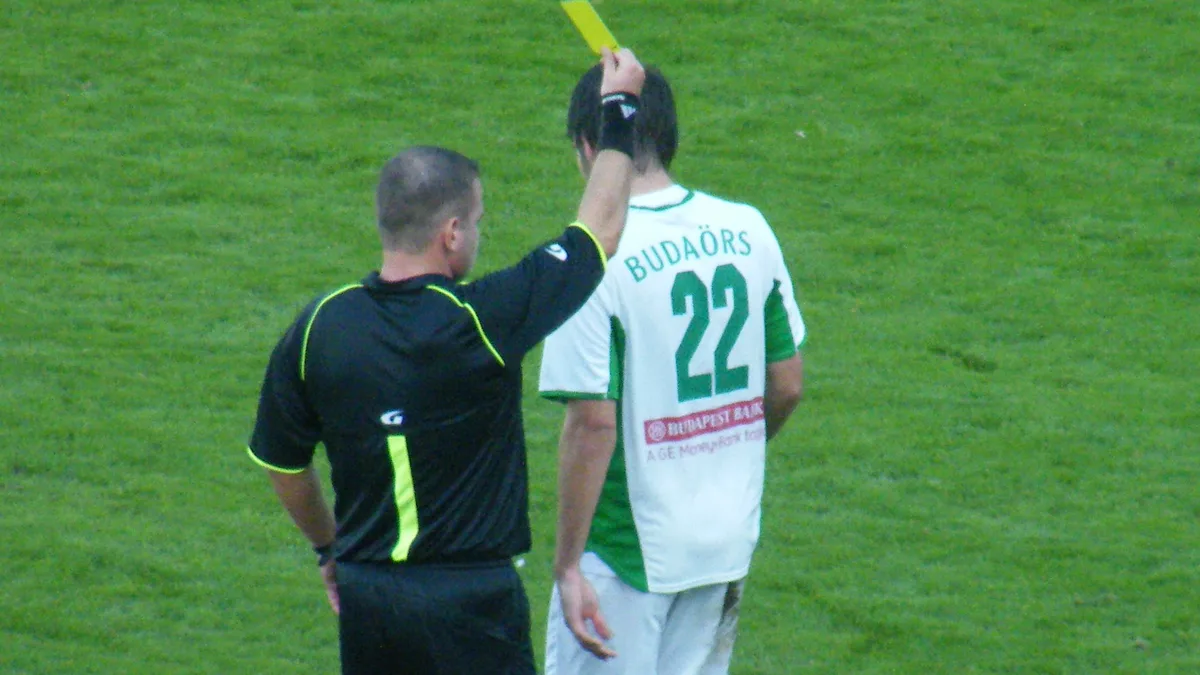
When the referee shows a yellow card, the player stays in the game. In fact, the card acts as a warning, and it stays on the referee’s record for the rest of the match. In other words, one yellow card gives the player a second chance. After that, a second yellow in the same match removes that chance.
What Is a Yellow Card in Football? The Cautionable Offences
To begin with, Law 12 names the offences that bring a yellow card. The referee cautions a player for one of these:
- Unsporting behaviour. This covers a wide range of acts, including simulation, which fans call diving, and removing the shirt when celebrating a goal.
- Dissent by word or action. A player who argues with the referee or shows clear disrespect receives a yellow card.
- Persistent offences. A player who repeatedly breaks the Laws, even with small fouls, receives a yellow card.
- Delaying the restart of play. A player who kicks the ball away, takes too long over a throw-in, or holds up a free kick receives a yellow card.
- Failure to respect the required distance when play restarts with a corner kick, free kick or throw-in. For example, a player who stands too close to the ball at a free kick receives a yellow card.
- Entering, re-entering or deliberately leaving the field of play without the referee’s permission. A player must ask the referee before stepping off the pitch or coming back on.
- Entering the video operation room (VOR). A player who enters the room where the video assistant referee works receives a yellow card.
Overall, the first offence, unsporting behaviour, covers the most cases. A reckless tackle, a deliberate handball to stop an attack, or a foul that breaks up a promising attack all count as unsporting behaviour. As a result, most yellow cards in a match come from this one offence.
What Happens After Two Yellow Cards
Two yellow cards in the same match mean a sending-off. The answer to what is a yellow card in football turns serious at this point. Next, the referee shows a second yellow card, then a red card, and the player leaves the field at once. As a result, the team plays the rest of the match with one fewer player. In addition, the team cannot replace the sent-off player.
The second yellow can come from a small offence. For example, a player who already has a yellow card for a foul can receive a second yellow for kicking the ball away. After that, the team plays a man down. For that reason, players on a yellow card often play more carefully. Therefore, managers sometimes substitute a booked player to protect the team.
The referee shows the second yellow and the red card together. The player walks off, and the team must reshape at once. To learn what happens after a sending-off, read our guide on what is a red card in football.
What Is a Yellow Card in Football? Suspensions and Bans
A yellow card can bring a suspension, but the exact rules vary from one competition to another. For example, in the Premier League five yellow cards bring a one-match ban. At the World Cup, two yellow cards in different matches bring a one-match ban, and yellow cards are wiped after the quarter-finals. In short, these are the usual rules in those competitions, not fixed rules for every competition.
As of November 2026, most leagues and tournaments use a similar system: a player collects yellow cards across matches, and a ban follows when the total reaches the limit. In some competitions, the limit rises later in the season, so a player who stays clean early in the season gains more room.
What Is a Yellow Card in Football? VAR and Yellow Cards
First, VAR does not review yellow cards. The video assistant referee checks goals, penalties, direct red cards and mistaken identity only. As a result, a yellow card shown in live play stands, even if the pictures later show a different story.
However, VAR does correct a case of mistaken identity. For example, if the referee books the wrong player, the video assistant referee can point out the error, and the referee can move the yellow card to the right player. In other words, VAR can fix who receives the card, but it cannot cancel a yellow card for a foul.
The History of the Yellow Card: Ken Aston and 1966
The story of what is a yellow card in football begins with English referee Ken Aston. In fact, he invented the yellow and red card system after the 1966 World Cup quarter-final between England and Argentina at Wembley. Argentine captain Antonio Rattín was sent off, and the language barrier caused confusion about who had been booked. Players and officials could not tell at once which player had received a caution.
Afterwards, driving home on Kensington High Street, Aston stopped at a traffic light and had the idea. Yellow means caution, and red means stop. The traffic-light colours gave every player, in every language, a clear signal. After that, FIFA introduced the card system at the 1970 World Cup in Mexico.
The First Yellow Card at a World Cup
The first yellow card at a World Cup came on 31 May 1970. Kakhi Asatiani of the Soviet Union received it against Mexico in the opening match at Estadio Azteca. German referee Kurt Tschenscher showed the card. In fact, it was the first time a referee had used a yellow card at a World Cup, and it marked the start of the system fans know today.
In contrast, no red card was shown at all during the 1970 World Cup. The first World Cup red card came four years later. Carlos Caszely of Chile received it against West Germany on 14 June 1974.
The Battle of Nuremberg: 16 Yellow Cards
The most famous yellow-card match in World Cup history is the Battle of Nuremberg. Portugal met the Netherlands in the 2006 World Cup, and Russian referee Valentin Ivanov produced 16 yellow cards and 4 red cards. No World Cup match has ever produced more cards. For example, the first yellow card came after just two minutes, and the cards kept coming for the rest of the match.
Overall, the match showed how quickly yellow cards can change a game. As a result, four players left the field after second yellows, and both teams finished with nine players. The game became a lesson in discipline, and fans still talk about it as the wildest match in World Cup history.
What Is a Yellow Card in Football? Frequently Asked Questions
These are the questions fans ask most about what is a yellow card in football.
Does a yellow card send a player off?
No. A yellow card on its own never sends a player off and never forces a substitution. Only a second yellow card in the same match, or a straight red card, sends a player off.
Can a goalkeeper get a yellow card?
Yes. A goalkeeper faces the same cautionable offences as any other player. If the referee books a goalkeeper, the card counts in the same way.
Can a substitute get a yellow card?
Yes. Only a player, substitute, substituted player or team official can receive a yellow or red card. That list includes substitutes on the bench.
Can a player get a yellow card after the final whistle?
Yes. The referee has authority to take disciplinary action from the pre-match inspection until leaving the field after the match. That period includes a penalty shootout.
Does VAR check yellow cards?
No, VAR does not review yellow cards. The one exception is mistaken identity: VAR can correct the card when the referee books the wrong player.
How many yellow cards bring a suspension?
It depends on the competition. As a general guide, five yellow cards bring a one-match ban in the Premier League, and two yellow cards in different matches bring a one-match ban at the World Cup.
Conclusion
So what is a yellow card in football? It is a warning. The referee shows it for a cautionable offence under Law 12, from unsporting behaviour and dissent to delaying the restart. However, one yellow card never sends a player off, but a second yellow in the same match brings a red card and a sending-off. In addition, yellow cards can also bring suspensions, and the rules vary from one competition to another. Overall, from Ken Aston’s traffic-light idea in 1966 to the first yellow card at the 1970 World Cup, the card has become one of football’s clearest signals. For more football stories, visit our Sports News page. You can follow the next matches on our free live scores page, and see ideas for upcoming matches on our free football predictions page.
