
- What Is a Substitution in Football?
- How a Substitution Works, Step by Step
- What Is a Substitution in Football? The Five-Sub Rule
- What Is a Substitution in Football? The History
- Types of Substitutions and Why Managers Make Them
- What Is a Substitution in Football? Concussion Substitutes
- What Is a Substitution in Football? Substitutions in Extra Time
- What Happens If a Player Refuses to Leave?
- Frequently Asked Questions
- How many substitutions can a team make?
- What is a substitution in football, and can a substituted player come back on?
- What is a concussion substitute?
- Does a substitution at half-time count as a window?
- Why do managers make substitutions late in a match?
- Conclusion
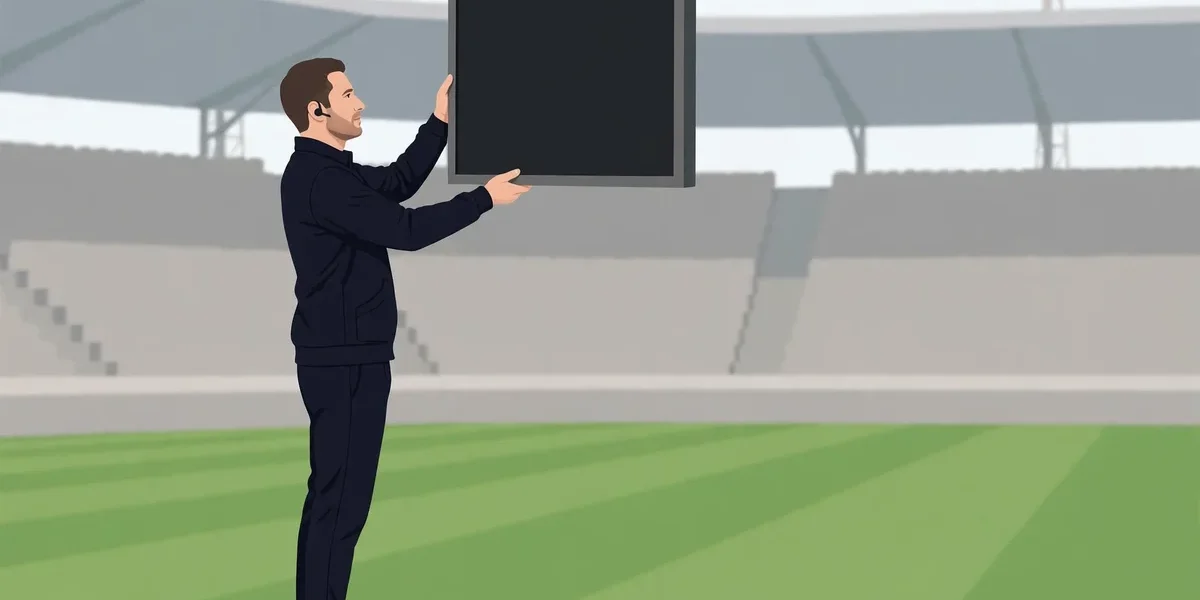
What is a substitution in football? It is when a team replaces a player on the pitch with a player from the bench during a match. For example, a manager may swap a tired striker for a fresh forward. In short, a substitution is the main way a manager changes the team during a match.
Last updated: November 2026
Quick Answer
- A substitution replaces a player on the pitch with a player from the bench.
- As of November 2026, teams may use up to five substitutes in official competitions.
- Each team has three substitution windows during a match, plus half-time and extra time where allowed.
- The player coming off leaves by the nearest boundary line and cannot return to the match.
- Managers make substitutions for tactics, injuries, fresh legs, or to protect a player on a yellow card.
What Is a Substitution in Football?
A substitution is a change of players during a match. First, the manager picks a player from the bench. Then, the player on the pitch leaves the field and the substitute takes the place, so the team keeps eleven players.
In official competitions, the bench players are the substitutes. The manager must give their names to the referee before the match starts. A player whose name is not on the list cannot take part. Competition rules allow three to fifteen named substitutes. For the full set of rules, see our guide to football rules explained.
The player who comes off takes no further part in the match: a substituted player cannot return later in the same game. Only youth, veterans, disability and grassroots football allow return substitutions.
How a Substitution Works, Step by Step
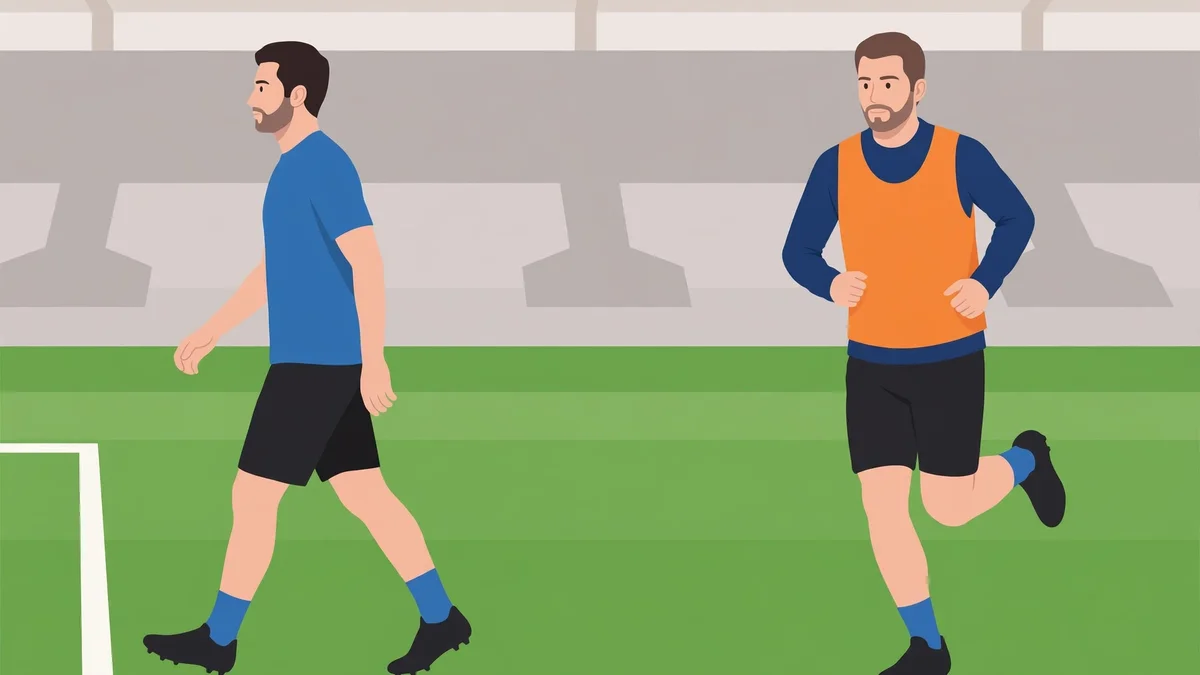
Many fans ask what is a substitution in football when they see the board go up at the side of the pitch. In fact, the change follows a clear procedure under Law 3 of the Laws of the Game.
- First, the manager or fourth official informs the referee that a change is coming.
- Next, the fourth official shows the change on an electronic board: the number of the player going off and the number of the player coming on.
- Then, the player being replaced must leave the field by the nearest point on the boundary line. This rule has applied since 2019. The referee may allow another exit point, for example for safety or injury.
- After that, the player coming off must leave the field within ten seconds of the fourth official showing the board. Safety or injury is the only exception.
- Meanwhile, the substitute waits at the halfway line. The substitute enters only during a stoppage in play, once the replaced player has left and the referee has signalled.
- Finally, the substitution becomes complete when the substitute enters the field of play. From that moment, the substitute becomes a player and the replaced player becomes a substituted player.
In short, the process is quick and strict.
What Is a Substitution in Football? The Five-Sub Rule
To understand what is a substitution in football in practice, look at the numbers. As of November 2026, each team may use up to five substitutes in an official competition. FIFA, the confederation or the national association decides the exact number: five is the ceiling.
However, a team cannot use all five substitutes whenever it likes. Each team has a maximum of three substitution opportunities, also called windows, during a match. In addition, substitutions at half-time do not count as a window. Above all, this limit stops teams from breaking up the game with constant changes.
Multiple substitutions during the same stoppage count as one used opportunity. For example, a manager may change two players at once, and that counts as one window. Therefore, a team can use all five substitutes in three windows.
Substitutions also affect the clock. The referee adds time lost through substitutions at the end of each half. That is why so many goals arrive in stoppage time. In other words, a substitution never steals time from the match.
What Is a Substitution in Football? The History
Substitutions are a fairly recent part of football. For the first ninety years of the organised game, a team played the whole match with the same eleven players.
| Year | Change |
|---|---|
| 1958 | One substitute per team enters the Laws of the Game |
| 1970 | First World Cup to permit substitutions: two per match, in Mexico |
| 1988 | The number rises to two substitutes per team |
| 1994 | Two substitutes plus one injured goalkeeper |
| 1995 | The number rises to three substitutes per team |
| 2016 | A fourth substitute in extra time, starting with Euro 2016 |
| 2020 | Five substitutes temporarily, during the COVID-19 pandemic |
| 2022 | Five-substitute rule made permanent |
First, the change in 1958 allowed one substitute. Then the number grew slowly: two in 1988, then two plus an injured goalkeeper in 1994, and three in 1995. In fact, three substitutes stayed the standard for more than two decades. Next, a fourth substitute arrived for extra time from Euro 2016. After that, the pandemic changed everything. In 2020, following a proposal from FIFA, IFAB temporarily allowed five substitutions. In 2022, the rule became permanent.
Types of Substitutions and Why Managers Make Them
Managers make substitutions for several reasons. First, a tactical substitution changes the formation or the approach. For example, a manager may add a striker when the team needs a goal, or a defender to protect a lead. For the full picture of how teams line up, see our guide to football formations.
Second, an injury substitution replaces a hurt player who cannot continue, so a fit player takes the place.
Third, a fresh-legs substitution replaces a tired player late in the game. For instance, a winger who has run for eighty minutes may give way to a quick substitute. Above all, fresh legs matter most in the last fifteen minutes.
Fourth, a like-for-like substitution swaps a player for someone in the same role, so the shape stays the same.
Fifth, a manager may protect a player on a yellow card, such as a defender one foul away from a second yellow.
Finally, some managers use substitutions to waste time. However, the ten-second rule and the three-window limit stop a team from stalling the game with endless changes. In addition, data shapes these calls more than ever. For the numbers side, see our guide to the analytics behind football substitutions.
What Is a Substitution in Football? Concussion Substitutes
Head injuries have their own rule. Competitions may add permanent concussion substitutions on top of the normal five. As a result, a team can replace a player with a suspected concussion without using one of its five.
Each team may use a maximum of one concussion substitute in a match. In addition, it does not count toward the five substitutes or the three opportunities, so the team keeps its full allowance.
The opposing team then has the option to use an additional substitute for any reason. Meanwhile, the player who leaves with a suspected concussion takes no further part in the match, including a penalty shoot-out.
What Is a Substitution in Football? Substitutions in Extra Time
Extra time brings one more change. Where competition rules permit, a team may use one additional substitute in extra time, with one additional opportunity. In other words, a team that has used all five substitutes can still make a sixth change.
This rule matters most in cup finals and knockout matches. For example, a manager may save a change for extra time, when tired legs decide the game. For the full guide, see what extra time is in football.
What Happens If a Player Refuses to Leave?
A substitution needs the player to cooperate. If a player who is to be replaced refuses to leave, play continues, because the referee has no power to force a player to be substituted. The manager must deal with the player after the match.
Frequently Asked Questions
How many substitutions can a team make?
A team may use up to five substitutes in an official competition, in a maximum of three windows during the match. Substitutions at half-time do not count as a window. Where the competition allows it, one extra substitute may be used in extra time, with one extra window.
What is a substitution in football, and can a substituted player come back on?
A substitution in football is when a team replaces a player on the pitch with a player from the bench. No, a substituted player cannot come back on in the same match, except for return substitutions, permitted only in youth, veterans, disability and grassroots football.
What is a concussion substitute?
A concussion substitute is an extra permanent replacement for a player with a suspected concussion. Each team may use one per match, and it does not count toward the five substitutes or the three windows. The player who leaves cannot return, even for a penalty shoot-out. In addition, the opposing team may use an extra substitute in reply.
Does a substitution at half-time count as a window?
No. Substitutions at half-time do not count as one of the three opportunities, so many managers use half-time to change the team without using a window.
Why do managers make substitutions late in a match?
Managers make late substitutions for fresh legs, to protect a lead, or to change tactics when the game is tight. For example, a quick winger may come on against a tired defence.
Conclusion
So what is a substitution in football, in the end? It is one of the simplest ideas in the game and one of the most powerful tools a manager has. Five substitutes, three windows, a clear procedure and a strict ten-second rule keep the game fair and moving. From one substitute in 1958 to five in 2022, the rule has grown with the game.
