
- What Is a Goal Kick in Football? The Basic Idea
- When Does the Referee Award a Goal Kick?
- What Is a Goal Kick in Football? How to Take One
- The 2019 Rule Change: No Need to Leave the Box
- What Is a Goal Kick in Football? Opponents and the Penalty Area
- Can You Score Directly From a Goal Kick?
- What Is a Goal Kick in Football? No Offside From a Goal Kick
- Tim Howard and the Goalkeeper Who Scored
- What Is a Goal Kick in Football? Frequently Asked Questions
- Who can take a goal kick?
- Does the ball have to leave the penalty area?
- Where must opponents stand?
- Can you score direct from a goal kick?
- Can a player be offside from a goal kick?
- What happens if the kicker touches the ball twice?
- Conclusion
What is a goal kick in football? It is the restart the defending team takes when the ball goes out of play behind their own goal line. The goalkeeper places the ball inside the six-yard box and kicks it back into play. This guide explains the rules in plain English: when the referee awards one, how to take one, the 2019 rule change, and scoring direct.
Last updated: November 2026
Quick Answer
- What is a goal kick in football? A restart for the defending team when the ball crosses their goal line after last touching an attacker.
- The ball goes inside the six-yard box, and any player of the defending team may take the kick.
- The ball enters play as soon as the kicker kicks it and it clearly moves.
- Opponents must stay outside the penalty area until the ball is in play.
- A player can score direct from a goal kick, but only against the other team.
What Is a Goal Kick in Football? The Basic Idea
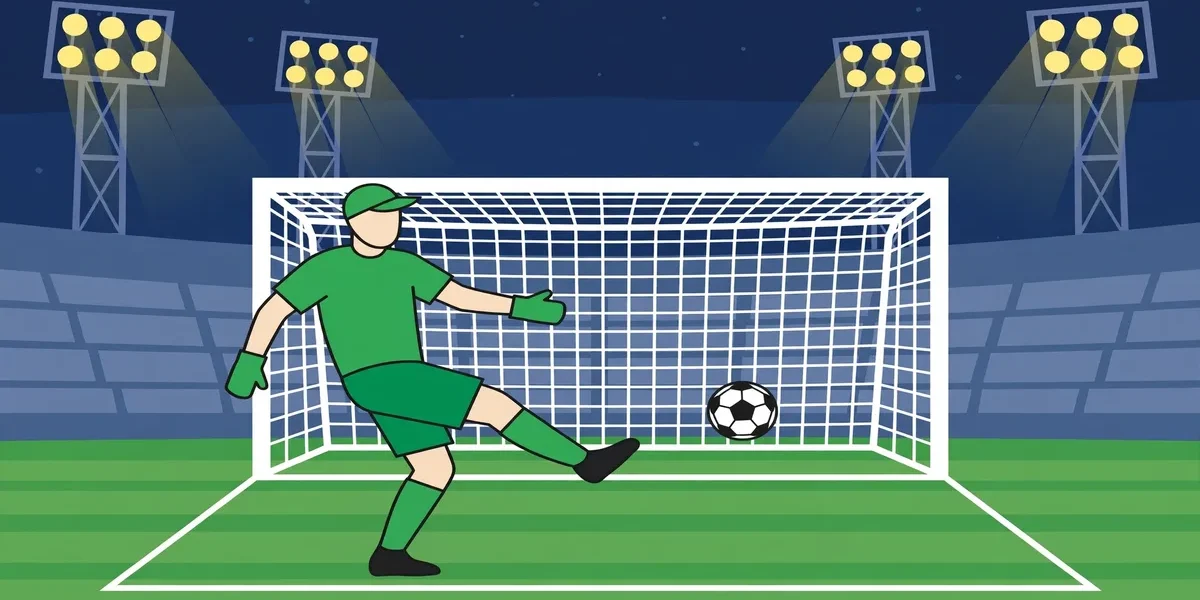
IFAB Law 16 governs the goal kick. The goal kick restarts play when the whole of the ball passes over the goal line. It can cross on the ground or in the air. It must have last touched a player of the attacking team, and no goal can come from it. For example, an attacker shoots wide or heads the ball over the bar, and the defending team takes a goal kick.
In addition, the kick comes from the goal area, which fans call the six-yard box. The goalkeeper usually takes the kick, but the Laws do not force the goalkeeper to take it. In fact, any player of the defending team may take a goal kick.
However, the goal kick also applies in one unusual case. If the attacking team kicks an indirect free kick straight into the goal, the referee awards a goal kick to the defending team. The goal does not count, because an indirect free kick must touch another player first. To learn how indirect free kicks work, read our guide on what is a free kick in football.
When Does the Referee Award a Goal Kick?
The referee awards a goal kick when the attacking team puts the ball out of play behind the defending goal line without scoring. For example, a striker shoots wide of the post, a winger crosses the ball too long, or a header flies over the crossbar.
When fans ask what is a goal kick in football, they often mix it up with a corner kick. However, the difference is simple. If the ball last touched a defender before it crossed the goal line, the referee awards a corner kick to the attacking team. If the ball last touched an attacker, the referee awards a goal kick to the defending team. To learn how corners work, read our guide on what is a corner kick in football.
What Is a Goal Kick in Football? How to Take One
The rules for taking a goal kick are simple. First, the ball must be stationary. Second, a player of the defending team kicks the ball from any point within the goal area, the six-yard box. The kicker may place the ball anywhere inside the box. Third, the ball enters play when the kicker kicks it and it clearly moves.
The goalkeeper usually takes the goal kick, because the goalkeeper has the strongest kick and the best view of the pitch. After that, the goalkeeper may pass the ball short to a defender, or kick it long towards the forwards.
However, the kicker must not touch the ball again until another player has touched it. If the kicker touches it again first, the other team receives an indirect free kick. A handball on the second touch gives the other team a direct free kick. If it happened inside the kicker’s penalty area, the other team receives a penalty kick. In fact, if the kicker was the goalkeeper, the restart is an indirect free kick instead.
The 2019 Rule Change: No Need to Leave the Box
The goal kick rule changed in 2019, and many fans still believe the old rule. Before 2019, the ball had to leave the penalty area before it was in play. If a defender received the ball inside the penalty area from a goal kick, the referee ordered a retake. As of November 2026, that rule no longer applies.
Since 2019, the ball enters play as soon as the kicker kicks it and it clearly moves. In other words, the ball does not have to leave the penalty area. As a result, the goalkeeper can pass the ball short to a defender standing inside the penalty area. Play carries on.
What Is a Goal Kick in Football? Opponents and the Penalty Area
Opponents must be outside the penalty area until the ball is in play.
However, the Laws allow one exception. If opponents are inside the penalty area because they did not have time to leave it, the referee allows play to continue.
In addition, the referee can order a retake in one case. An opponent may stand in the penalty area when the kicker takes the goal kick, or enter it before the ball is in play. If that opponent then touches or challenges for the ball, the referee orders a retake. In other words, an opponent cannot gain an advantage by standing inside the area early.
Team-mates of the kicker follow a different rule. They may stand inside the penalty area when the kicker takes the kick.
Can You Score Directly From a Goal Kick?
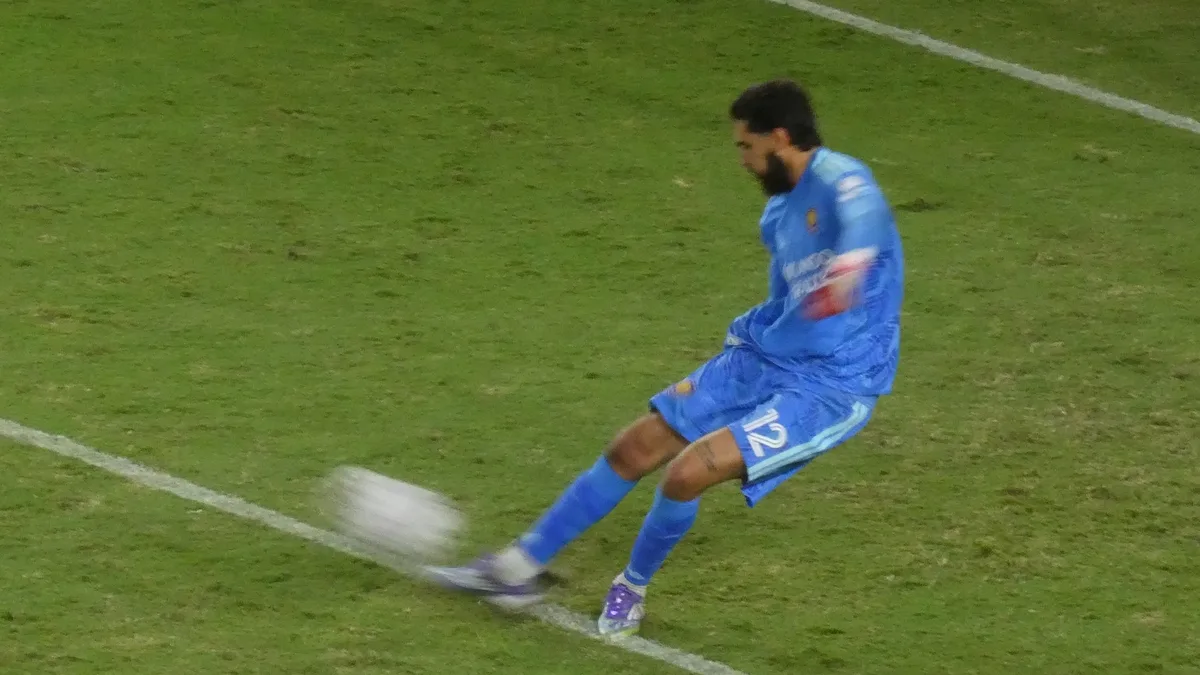
Yes, a player can score directly from a goal kick, but only against the opposing team. The goalkeeper can kick the ball from the six-yard box, and it can fly the length of the pitch. If it goes into the opponents’ goal, the goal counts.
However, a player can never score an own goal directly from a goal kick. If the ball directly enters the kicker’s own goal, the referee awards a corner kick to the opponents. For example, a goalkeeper may mishit a goal kick backwards into their own net. In that case, the other team gets a corner, not an own goal.
What Is a Goal Kick in Football? No Offside From a Goal Kick
A player cannot be offside when receiving the ball directly from a goal kick. The offside law does not apply to a goal kick, a corner kick or a throw-in. As a result, a forward can stand beyond the last defender and receive a long goal kick without any offside flag.
This rule makes the long goal kick a useful weapon. The goalkeeper kicks the ball long towards a tall striker. The striker can hold the ball up or flick it on to a team-mate. For that reason, teams with a tall striker use it to move the ball up the pitch fast.
However, the rule applies only to the player who receives the ball directly. After that touch, the offside law applies as normal.
Tim Howard and the Goalkeeper Who Scored
The most famous goalkeeper goal in the Premier League shows what a goalkeeper can do from his own half. On 4 January 2012, Everton goalkeeper Tim Howard scored from inside his own penalty area against Bolton Wanderers at Goodison Park. A wind-assisted clearance from a back-pass bounced about 30 yards from the Bolton goal. It sailed over goalkeeper Ádám Bogdán in the 63rd minute.
Howard became only the fourth goalkeeper to score in the Premier League. He refused to celebrate out of respect for his fellow goalkeeper. Everton lost the match 2-1, so the goal did not win the game.
This example needs a clear warning. Howard’s goal was a clearance from open play, NOT a goal kick. The ball came from a back-pass during play, and Howard cleared it up the pitch. It shows a goalkeeper can score from his own half, but it was not a goal kick goal.
What Is a Goal Kick in Football? Frequently Asked Questions
These are the questions fans ask most about what is a goal kick in football.
Who can take a goal kick?
Any player of the defending team, from any point inside the six-yard box. The goalkeeper usually takes it.
Does the ball have to leave the penalty area?
No. Since the 2019 rule change, the ball enters play as soon as the kicker kicks it and it clearly moves.
Where must opponents stand?
Opponents must stay outside the penalty area until the ball is in play. If they are inside because they did not have time to leave, the referee allows play to continue.
Can you score direct from a goal kick?
Yes, but only against the other team. If the ball goes directly into the kicker’s own goal, the referee awards a corner kick to the opponents instead.
Can a player be offside from a goal kick?
No. A player cannot be offside when receiving the ball directly from a goal kick. The same exception applies to corner kicks and throw-ins.
What happens if the kicker touches the ball twice?
The other team receives an indirect free kick. If the second touch is a handball, the other team receives a direct free kick, or a penalty kick inside the kicker’s penalty area, unless the kicker was the goalkeeper.
Conclusion
So what is a goal kick in football? It is the defending team’s restart from the six-yard box. The ball goes on the spot, and the opponents wait outside the penalty area. The ball enters play as soon as the kicker kicks it and it clearly moves. Since the 2019 change, teams can build from the back. A long kick can still reach a striker without any offside flag. For more football stories, visit our Sports News page. Follow the next matches on our free live scores page, and see ideas for upcoming matches on our free football predictions page.
