
- What Is the Offside Trap in Football?
- The Offside Rule Behind the Trap
- How the Trap Works Step by Step
- Why Coaches Set the Trap
- What Is the Offside Trap in Football: A Short History
- The Ingredients of a Good Trap
- What Is the Offside Trap in Football When It Goes Wrong?
- How Attackers Beat the Trap
- What Is the Offside Trap in Football vs the Offside Rule?
- The Trap in the Modern Game
- What Is the Offside Trap in Football? Your Questions Answered
- Is the offside trap legal?
- What happens when the offside trap works?
- Can a goalkeeper set the offside trap?
- Why do teams not use the offside trap all the time?
- What is the difference between the offside trap and a high line?
What is the offside trap in football? It is a defensive move where the whole back line steps up the pitch together just before the ball is played, so the attacker is left beyond the second-last opponent and caught offside. The flag goes up, the attack ends, and the defending team wins an indirect free kick. Yet it is one of the riskiest moves in the game, because one slow defender can ruin everything.
Last updated: November 2026
Quick Answer
- The offside trap is a defensive move where the back line steps up together to catch an attacker offside.
- It works only when every defender moves at the same moment, just before the pass is played.
- A successful trap wins the defending team an indirect free kick.
- If one defender is slow, the attacker stays onside and may run clean through.
- The trap is legal, but it is risky and it depends on the offside rule in Law 11.
What Is the Offside Trap in Football?
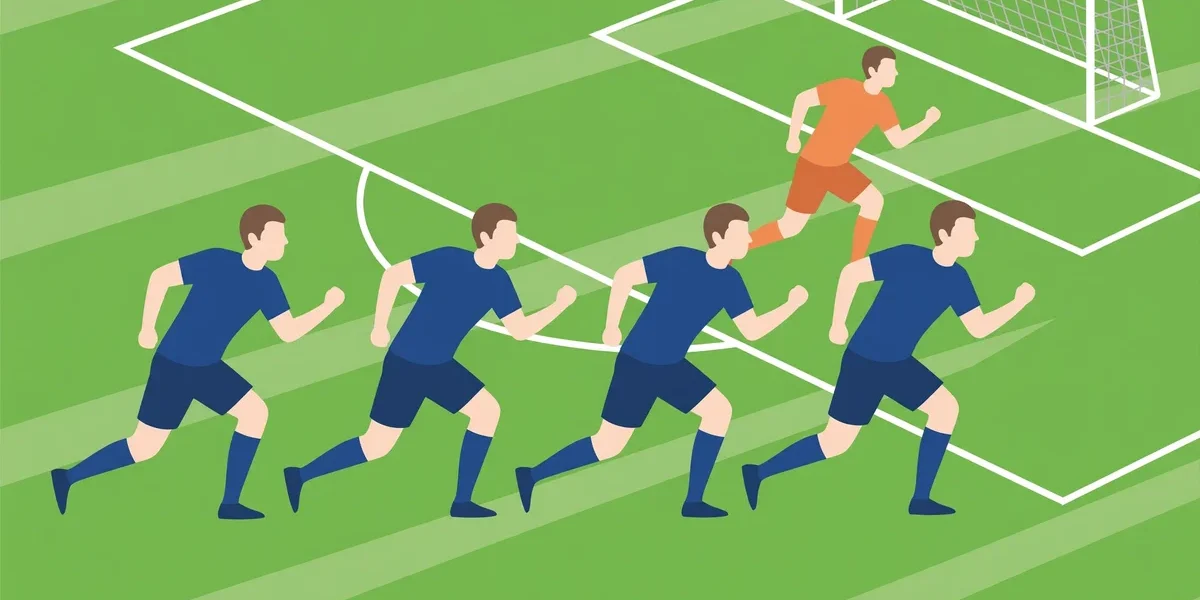
Picture a striker standing on the shoulder of the last defender, ready to sprint onto a through ball. The midfielder shapes to pass. At that exact moment, the four defenders take three quick steps forward. The pass is played, the striker runs onto it, and the flag goes up. The striker was onside a second ago, but the defenders moved first.
In short, the defending team uses the offside law as a weapon. Instead of dropping back, the defenders push up and leave the attacker in an offside position. The move needs nerve, because the defenders trust the timing of the whole line.
The Offside Rule Behind the Trap
You cannot understand the trap without the offside rule, so here is the simple version. A player is in an offside position when any part of the head, body or feet is in the opponents’ half and nearer to the goal than both the ball and the second-last opponent. In most cases, the second-last opponent is a defender, while the last opponent is the goalkeeper.
However, standing in an offside position is not an offence on its own. The player must interfere with play, for example by receiving the ball. In addition, a player cannot be offside from a goal kick, a throw-in or a corner. For the full version of the law, read our guide to the offside rule explained.
How the Trap Works Step by Step
If you ask what is the offside trap in football, the answer is a team move. It runs in five steps:
- Hold a high line. The defenders stand well up the pitch, near the halfway line, so there is little space behind them.
- Watch for the trigger. The line watches the player with the ball. The trigger is the moment the passer shapes to play the ball forward.
- Step up together. All four defenders move forward at the same moment, in one straight line. One voice leads the move, often a centre-back or the goalkeeper.
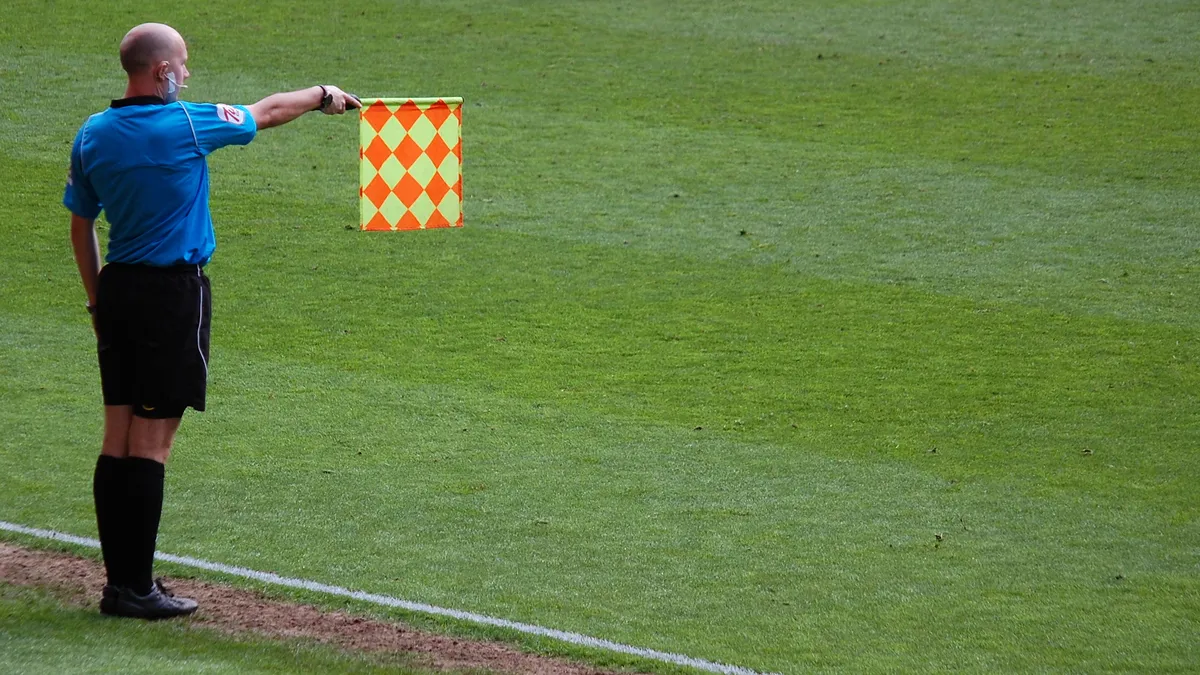
- Leave the attacker stranded. When the pass is played, the striker is beyond the second-last opponent, so the assistant referee raises the flag.
- Win the free kick. The defending team takes an indirect free kick and the attack is over.
The key word is together. If three defenders step up and one stays back, the trap fails, because the slow defender keeps the striker onside.
Why Coaches Set the Trap
Fans often ask what is the offside trap in football good for, and the answer is simple: it turns defence into attack. First, it kills attacks before they reach the penalty area. A striker who is caught offside cannot shoot, so the danger ends early. Second, it squeezes the space the opposition can play in. With a high line, the midfield and the defence stay close together. Third, it helps a team press high up the pitch and win the ball back far from its own goal. Finally, a successful trap wins a free kick and slows the game down, which gives the defence time to organise. Teams that keep clean sheets often use a high line and a trap as part of their plan.
What Is the Offside Trap in Football: A Short History
The trap is far older than most fans think. It is often traced to Notts County in the early 1900s, when defenders first learned to step up together. Argentine coach Osvaldo Zubeldia used it with success, and it became a hallmark of his teams.
The tactic became famous under Arrigo Sacchi at AC Milan. Sacchi took charge in 1987 and built a team that played a 4-4-2 with zonal marking, a high defensive line and the three lines kept only 15 to 20 metres apart. His defenders stepped up as a unit and caught striker after striker offside. That Milan side won one Serie A title, two European Cups and two Intercontinental Cups, and coaches around the world copied the system. Jurgen Klopp has cited Sacchi as an influence, and Liverpool use a similar high-line trap.
The Ingredients of a Good Trap
A good trap needs five things. First, coordination: every defender must move at the same time, like one player. Second, timing: the step must come just before the pass, not after it. Third, communication: one leader must call the move clearly. Fourth, pace: the defenders need speed to recover if the trap fails. Fifth, a compact shape: the midfield must stay close to the defence.
What Is the Offside Trap in Football When It Goes Wrong?
When the trap fails, it fails badly. If one defender is a step slow, the striker stays onside and runs clean through on goal, often with only the goalkeeper to beat.
The trap can also fail because of the modern law. A player who is not interfering with play is not penalised, so a runner who arrives from an onside position can take a ball meant for an offside team-mate. In that case, the defenders have stepped up for nothing.
There is another risk too. The attacker with the ball can see the line step up and hold the ball. He waits for his striker to drop back onside, then plays the pass. Finally, the trap depends on the assistant referee. If the official misses the call, the goal stands.
How Attackers Beat the Trap
Attackers who study what is the offside trap in football learn its weak points first. The most common answer is the timed run from deep. A striker starts the run from an onside position and arrives as the ball is played, so the trap cannot catch him. Another answer is the early through ball. If the pass comes before the defenders step up, the striker is onside and in behind. A third answer is to hold the ball and let the runner come back onside. Pace also helps: a fast striker can beat the line even when the timing is close.
What Is the Offside Trap in Football vs the Offside Rule?
The two ideas are linked, but they are not the same thing. Law 11 sets out the offside rule, which stops attackers from standing next to the goal and waiting for the ball. The trap is a tactic that uses that law. In other words, the rule is the law, and the trap is a clever way of using it.
The Trap in the Modern Game
If you still wonder what is the offside trap in football doing in the modern game, the answer is that it is still there, but it has changed. The modern offside law only punishes players who interfere with play, so defenders cannot rely on catching any forward beyond the line. Video checks also mean tight calls are reviewed, so a trap that is a fraction late is punished more often than in the past. As a result, teams use the trap as one tool among many, rather than as their whole defensive plan. A high line with a trap still works for teams that press hard, but it needs constant practice, clear communication and fast defenders.
What Is the Offside Trap in Football? Your Questions Answered
Is the offside trap legal?
Yes. The trap is a legal tactic that uses the offside law in Law 11, and no rule forbids defenders from stepping up together.
What happens when the offside trap works?
The assistant referee raises the flag, the attack stops, and the defending team is awarded an indirect free kick.
Can a goalkeeper set the offside trap?
The goalkeeper cannot step up like an outfield defender, but the goalkeeper often leads the trap. From the back, the goalkeeper sees the whole pitch and can shout the call for the line to step up. If the trap fails, the goalkeeper also acts as the last line of defence.
Why do teams not use the offside trap all the time?
Because it is risky. One slow defender, one well-timed run or one missed call can leave the striker clean through on goal. Most teams use it in certain moments, rather than on every attack.
What is the difference between the offside trap and a high line?
A high line is a defensive position: the defenders stand well up the pitch. The trap is an action: the defenders step up together at the moment the ball is played. A trap needs a high line to work, but a team can hold a high line without setting a trap.
So, what is the offside trap in football? It is a simple idea and a hard skill. Four defenders move as one, the striker is caught beyond the line, and the attack ends with a flag. When it works, it looks like a work of art. When it fails, it can cost a goal. That balance of risk and reward is why coaches keep using it. For more football rules explained in plain English, visit our sports news section, check the free live scores page, or read our free football predictions.
