
- Why Data Is Essential for Accurate Football Predictions
- Why League Position Alone Can Be Misleading
- Results Often Hide Underlying Performance
- Which Football Statistics Improve Prediction Accuracy?
- Expected Goals (xG)
- Expected Goals Against (xGA)
- Shot Quality Matters More Than Shot Quantity
- Home and Away Performance
- How Professional Football Clubs Use Data Analysis
- Recruitment and Player Scouting
- Tactical Match Preparation
- Performance Monitoring
- Why Tactical Analysis Should Support Football Data
- Injuries, Suspensions and Squad Rotation
- Common Mistakes People Make When Predicting Football Matches
- Overvaluing Club Reputation
- Ignoring Underlying Performance Trends
- Using Head-to-Head Records Without Context
- How Winonbetonline Analyses Football Predictions
- Recent Performance Data
- Tactical Match Analysis
- Squad Availability
- Competition Context
- Frequently Asked Questions About Data-Driven Football Predictions
- Can Data Predict Football Results Perfectly?
- Is Expected Goals (xG) Enough?
- Why Do Professional Clubs Invest So Much in Analytics?
- Final Thoughts
Every football match generates opinions long before kick-off. Supporters debate recent form, pundits highlight star players and social media quickly builds narratives around favourites and underdogs. While these discussions make football engaging, they rarely provide the strongest foundation for predicting a match.
Professional clubs, analysts and recruitment departments have moved beyond intuition. They increasingly rely on performance data to evaluate players, understand tactical trends and prepare for opponents. The same principle applies to football predictions. Reliable analysis should begin with objective evidence before opinions are formed.
At Winonbetonline, football predictions start with data because statistics help explain how teams are performing, not simply what their latest results show. Data alone cannot guarantee outcomes, but it significantly improves the quality of football analysis when combined with tactical understanding, squad news and competition context.
Why Data Is Essential for Accurate Football Predictions

Modern football is more analytical than ever. Clubs invest millions in performance analysis departments that examine every aspect of the game, from pressing intensity to chance creation and defensive positioning. Data has become an essential decision-making tool for coaches, scouts and sporting directors because it identifies patterns that traditional observation may overlook.
Football predictions benefit from the same approach. Instead of relying on club reputation or league position, analysts can examine measurable indicators that provide a clearer picture of current performance.
For example, two teams may both have won their previous three matches. One may have dominated every game, consistently creating high-quality chances while limiting opportunities for opponents. The other may have relied on late goals, goalkeeping heroics or moments of individual brilliance despite being second best for long periods.
Although both teams collected the same number of points, the underlying data tells two very different stories.
Why League Position Alone Can Be Misleading
League tables remain an important reference point, but they rarely explain how those positions were achieved.
A club sitting fourth may have played several newly promoted teams, while another occupying eighth may already have faced multiple title contenders. Looking only at the standings ignores fixture difficulty, squad availability and underlying performance levels.
Football is also a relatively low-scoring sport where small moments often determine results. A deflected goal, missed penalty or red card can dramatically change a match despite having little connection to overall team quality.
This is why analysts increasingly examine longer-term performance trends rather than focusing exclusively on recent scorelines.
Results Often Hide Underlying Performance
Winning does not always indicate dominance.
Likewise, losing does not always mean a team performed poorly.
A side that creates numerous high-quality chances while conceding very little may lose because of outstanding goalkeeping or poor finishing. Over a larger sample of matches, those performances are generally more sustainable than results influenced by unusual circumstances.
Performance data helps separate temporary variance from genuine improvement or decline.
Which Football Statistics Improve Prediction Accuracy?

Not every football statistic has predictive value.
Raw possession numbers, for example, often reveal little without understanding tactical intent. A team comfortable defending deep and attacking on the counter may deliberately allow opponents more possession while remaining the more dangerous side.
The most useful metrics focus on chance quality, defensive organisation and attacking consistency.
Expected Goals (xG)
Expected Goals (xG) has become one of football’s most widely used analytical tools because it measures the probability of each shot resulting in a goal based on historical data from similar opportunities. Factors such as shooting angle, distance from goal, body part used and type of assist all contribute to the probability assigned to each chance.
Importantly, xG does not predict the exact outcome of an individual match. Instead, it measures the quality of chances created and conceded, helping analysts evaluate whether performances are likely to be sustainable over time.
Expected Goals Against (xGA)
While attacking statistics receive most attention, defensive performance is equally important.
Expected Goals Against (xGA) measures the quality of opportunities a team allows opponents to create. Clubs consistently limiting high-quality chances usually maintain stronger defensive records across an entire season than teams relying solely on goalkeepers to prevent goals.
Shot Quality Matters More Than Shot Quantity
A team recording twenty speculative attempts from outside the penalty area may actually create fewer dangerous opportunities than another producing eight clear chances inside the box.
Professional analysts therefore evaluate the quality of opportunities rather than simply counting shots.
This distinction explains why advanced metrics often provide a more accurate reflection of attacking performance than traditional statistics.
Home and Away Performance
Venue remains one of football’s most influential variables.
Some clubs maintain exceptional home records through tactical familiarity, crowd support and travel advantages, while struggling significantly away from home.
Comparing overall season statistics without separating home and away performances can produce misleading conclusions.
How Professional Football Clubs Use Data Analysis
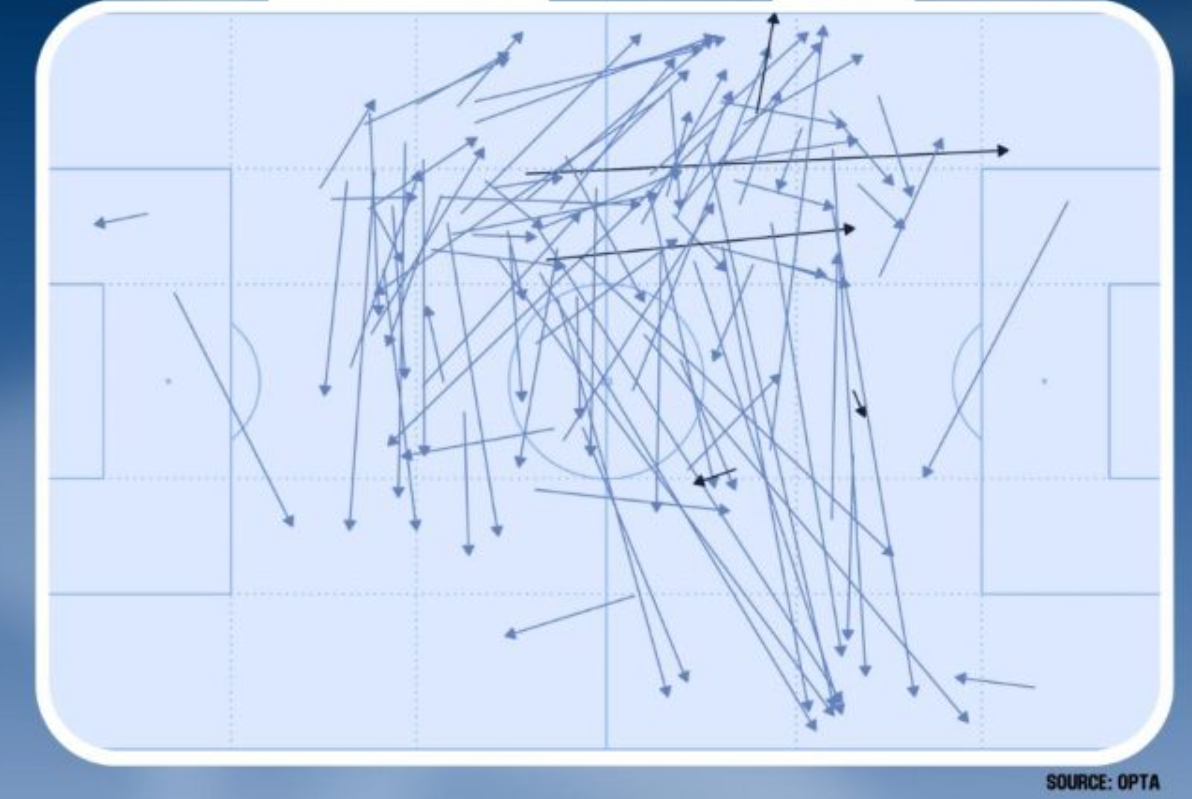
Data analysis now influences almost every department within elite football organisations.
Recruitment and Player Scouting
Scouting has evolved beyond watching individual matches.
Recruitment departments compare players using detailed performance metrics, helping identify footballers whose contributions extend beyond goals and assists.
Liverpool’s recruitment strategy has frequently demonstrated how clubs use contextual performance data rather than headline statistics alone when evaluating transfer targets.
Tactical Match Preparation
Coaching staffs analyse opponents to identify pressing triggers, defensive weaknesses, passing patterns and preferred attacking zones.
Instead of preparing only for individual players, managers increasingly prepare for collective tactical behaviours supported by extensive performance data.
Performance Monitoring
Throughout a season, analysts monitor whether teams are improving or declining based on underlying metrics rather than simply results.
This allows coaching staffs to identify emerging issues before they become visible in league standings.
Why Tactical Analysis Should Support Football Data
Statistics are powerful, but they require context.
Numbers explain what happened.
Tactical analysis explains why it happened.
A possession-based side may dominate the ball but struggle to penetrate compact defensive blocks. Another team may deliberately concede possession while creating dangerous counter-attacking opportunities through rapid transitions.
Understanding formations, pressing systems, defensive structures and player roles allows analysts to interpret statistics correctly rather than viewing them in isolation.
The strongest football predictions combine objective performance data with tactical evaluation.
Injuries, Suspensions and Squad Rotation
Even the most reliable statistical model becomes less useful if important team news is ignored.
The absence of a key playmaker may reduce chance creation.
Missing centre-backs can weaken defensive organisation.
Fixture congestion often forces squad rotation, particularly during European competitions.
Professional football analysis therefore combines historical data with the latest verified squad information before reaching conclusions.
Common Mistakes People Make When Predicting Football Matches
Many prediction errors stem from relying too heavily on narrative rather than evidence.
Overvaluing Club Reputation
Large clubs naturally attract more public confidence, even during periods of inconsistent performance.
Smaller clubs producing stronger underlying statistics are often underestimated simply because they receive less attention.
Ignoring Underlying Performance Trends
A short winning run can create the impression that a team has dramatically improved.
However, performance data sometimes reveals those victories were achieved despite allowing numerous high-quality chances or benefiting from unusually efficient finishing.
Evaluating longer-term trends provides a more balanced assessment.
Using Head-to-Head Records Without Context
Historical meetings can provide useful background but rarely predict future matches on their own.
Managers change.
Players leave.
Tactical systems evolve.
Results from several seasons ago often have limited relevance when analysing current squads.
How Winonbetonline Analyses Football Predictions
At Winonbetonline, our analysis begins with objective performance indicators before considering tactical match-ups, confirmed team news and competition context.
Every fixture is assessed using multiple factors, including:
Recent Performance Data
Rather than focusing exclusively on results, we evaluate how teams have performed over several matches to identify consistent trends.
Tactical Match Analysis
We examine playing styles, formations, pressing structures, defensive organisation and attacking patterns to understand how two teams may interact.
Squad Availability
Confirmed injuries, suspensions and expected line-ups are considered because individual absences can significantly influence match dynamics.
Competition Context
Motivation also matters.
Title races, relegation battles, domestic cup commitments and European fixtures all affect team selection and tactical priorities.
Combining these elements creates a more balanced prediction process than relying on reputation or recent headlines alone.
Frequently Asked Questions About Data-Driven Football Predictions
Can Data Predict Football Results Perfectly?
No. Football remains unpredictable because isolated moments, refereeing decisions, injuries and finishing variance all influence results.
Data improves probability assessment rather than eliminating uncertainty.
Is Expected Goals (xG) Enough?
No.
Expected Goals is one of football’s most valuable analytical tools, but it should be interpreted alongside tactical analysis, defensive performance, squad availability and current team form.
Why Do Professional Clubs Invest So Much in Analytics?
Modern football organisations use data to improve recruitment, tactical preparation, player development and long-term decision-making because objective analysis helps reduce subjective bias.
Final Thoughts
Football predictions should begin with data because evidence provides a stronger foundation than opinion alone. League tables, recent results and public narratives offer useful context, but they rarely explain the complete picture.
Performance metrics such as Expected Goals, defensive efficiency and chance creation help reveal underlying trends that ordinary scorelines often conceal. When these insights are combined with tactical analysis, verified team news and competition context, predictions become more informed and more balanced.
No analytical model can remove football’s unpredictability, but starting with objective data reduces guesswork and encourages evidence-based analysis. That philosophy underpins how modern clubs evaluate performance and how Winonbetonline approaches football predictions.
