
- March Madness Betting Strategy Starts With the Bracket
- Seeds and Upsets in March Madness Betting Strategy
- First-Round Picks: Where March Madness Betting Strategy Finds Value
- Later Rounds: Favourites Tighten in March Madness Betting Strategy
- Neutral Courts Change March Madness Betting Strategy
- Futures and Bracket Pools in March Madness Betting Strategy
- March Madness Betting Strategy: Worked Examples
- Common Mistakes in March Madness Betting Strategy
- Frequently Asked Questions
- What is the best March Madness betting strategy for beginners?
- How often do 12 seeds beat 5 seeds in March Madness?
- How does March Madness betting strategy differ from regular-season betting?
- Should I bet on a team to win the March Madness title before the tournament?
- What is the First Four in March Madness?
- Bet Responsibly
March Madness betting strategy starts with one fact: 68 teams enter, one survives, and every game is single elimination.
Most bettors fill in a bracket and back the famous names. Our guide to betting on basketball for beginners covers the moneyline, the spread and totals. This guide turns those markets into a tournament system.
Quick Answer: March Madness betting strategy in short: back underdogs early, when seeds are closest and upsets are common. Trust favourites late. Remember every game is on a neutral court. Price futures before the field is set, and hedge when your team reaches the final.
Last updated: November 2026
March Madness Betting Strategy Starts With the Bracket
March Madness betting strategy starts with the bracket. The NCAA Division I men’s tournament takes 68 teams. Eight of them play in the First Four. From there it is single elimination. Win and advance, lose and go home. So a champion must win six games in a row.
The rounds have their own names. The first round is the Round of 64, then the Round of 32, the Sweet 16, the Elite Eight, the Final Four and the championship game. There are four regions, each seeded 1 to 16. The 1 seed plays the 16 seed, the 2 plays the 15, and so on down the list.
The bracket matters because the path matters. A 1 seed that meets a tired 8 seed in the second round has an easier road than a 1 seed that meets a fresh 9 seed that just upset an 8. So read the whole region, not just the first game.
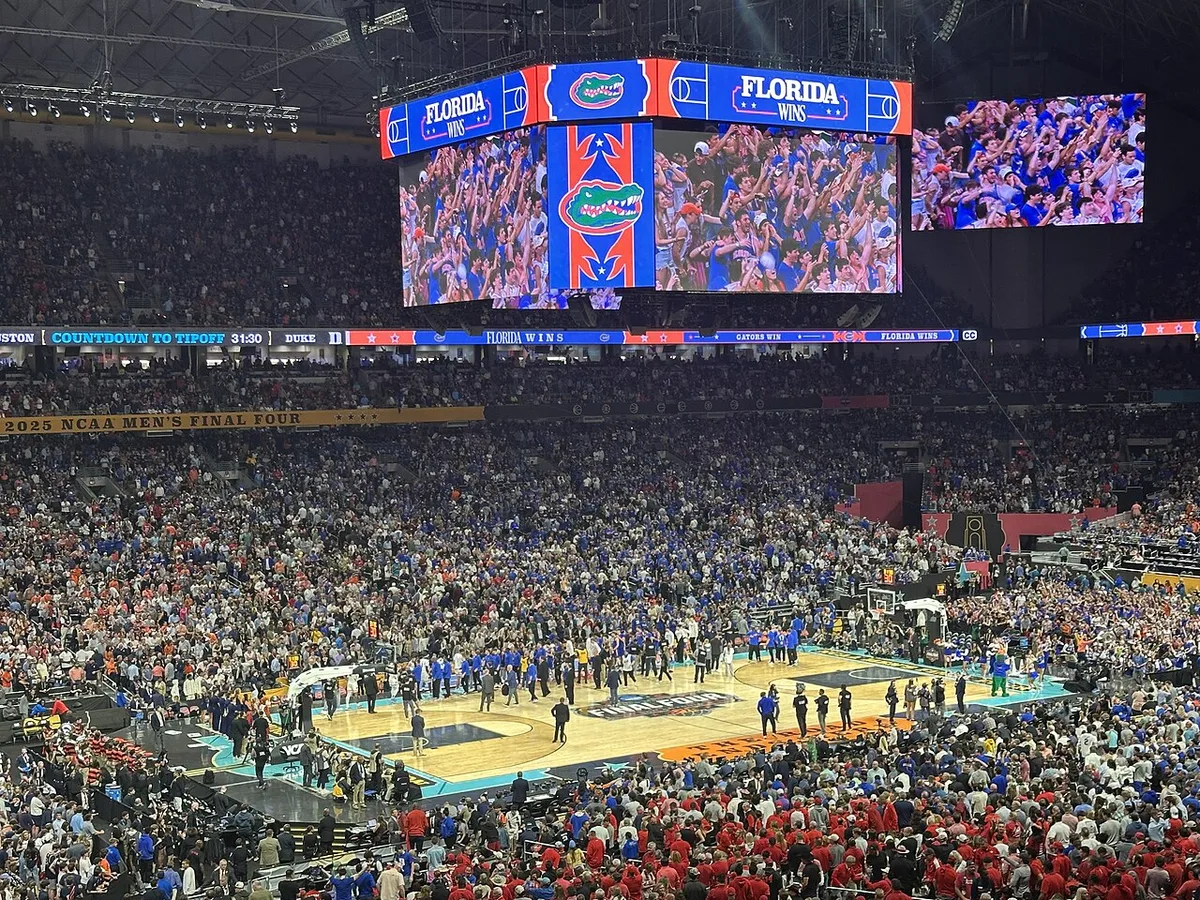
The 2026 tournament shows how the bracket plays out. Michigan, a 1 seed, beat UConn 69-63 in the final on April 6 at Lucas Oil Stadium in Indianapolis. The Final Four was Michigan, Arizona, UConn and Illinois. That is why the tournament pays underdogs.
Seeds and Upsets in March Madness Betting Strategy
Seeds and upsets sit at the heart of March Madness betting strategy. Since the field expanded to 64 teams in 1985, the first-round records by seed tell a clear story.
| First-round matchup | Higher seed record | Higher seed win rate |
|---|---|---|
| 1 vs 16 | 158-2 | 98.8% |
| 2 vs 15 | 149-11 | 93.1% |
| 3 vs 14 | 137-23 | 85.6% |
| 4 vs 13 | 127-33 | 79.4% |
| 5 vs 12 | 103-57 | 64.4% |
| 6 vs 11 | About 61% | About 61% |
| 7 vs 10 | About 61% | About 61% |
| 8 vs 9 | About 53% | About 53% |
Overall, the table covers the tournaments from 1985 to 2025. 12 seeds have won 57 of 160 games, about 35.6%. At least one 12 seed has won in 34 of the last 40 tournaments. The 1 seed against the 16 seed is the opposite story. Only two 16 seeds have ever won: UMBC over Virginia in 2018 and Fairleigh Dickinson over Purdue in 2023.
In fact, about six first-round upsets happen every year, not counting 8 vs 9 games. It is the round where underdogs pay.
But an upset win is not the same as a good bet. A 12 seed at 3.40 implies a 29.4% chance, while history says 12 seeds win 35.4% of the time. That gap is value. A 12 seed at 2.50 implies 40%, which is above the historical rate. The seed history sets your baseline. The price decides the bet.
First-Round Picks: Where March Madness Betting Strategy Finds Value
First-round picks are where March Madness betting strategy finds its best value. The market overrates famous names and underrates the teams that beat them. A 5 seed from a power conference often carries a short price on reputation alone. Meanwhile, the 12 seed is usually a conference champion that has won 25 games or more.
Look for three things in a first-round underdog. Firstly, experience: a senior-heavy team with a point guard who protects the ball travels well in March. Secondly, shooting: a team that hits over 38% from three-point range can beat anyone in one game. Thirdly, defence: a team that forces turnovers can keep a favourite uncomfortable for 40 minutes.
The 11 seed against the 6 seed is the quiet value line. It wins about 39% of the time, close to the 12 seed’s rate, but it gets far less attention.
Finally, avoid the 8 vs 9 game for value. It is nearly a coin flip, about 53% for the 8 seed, and the prices reflect that. Save your stakes for the lines where history and price disagree. Our guide to what is a moneyline bet explains the moneyline in full.
Later Rounds: Favourites Tighten in March Madness Betting Strategy
Later rounds are where March Madness betting strategy flips. The underdogs thin out, the favourites tighten up, and the value moves from the moneyline to the spread. A 12 seed that won in the first round wins its second-round game only about 38% of the time. Only 22 of the 58 first-round 12-seed winners since 1985 have reached the Sweet 16.
The reason is simple. The second round pairs the upset winner against a better team, often a 4 or 5 seed that is rested and prepared. However, the smart play in round two is often the favourite on the spread, not the underdog on the moneyline.
By the Sweet 16, the field is mostly 1 to 4 seeds, and the games are decided by matchups, not magic. Overall, check tempo and efficiency, the same numbers that drive the regular season.
The Final Four is a different game again. Favourites still win most semifinals, but the margins are small. In 2026, Michigan beat Arizona 91-73 and UConn beat Illinois 71-62. Bet the spread and the total, not the moneyline. The prices on favourites are too short to be worth it.
Neutral Courts Change March Madness Betting Strategy
Neutral courts change March Madness betting strategy more than any other factor. Every tournament game is played on a neutral floor. So the three to four points of home court that shape the regular season simply disappear. A team that is 15-1 at home and 6-6 on the road is not a 15-1 team in March. It is a 6-6 team, because the building is gone.
However, the shooting backdrop is the hidden edge. Tournament courts sit in big arenas with deep backgrounds behind the baskets. Shooters who rely on the backdrop struggle. Teams that score from the paint and the free throw line travel better than teams that live on three-pointers. Check how each team scores before you back it. A team that gets 30% of its points from three is a risk on a neutral floor.
Finally, the crowd is neutral but not silent. When an underdog takes a lead, the whole arena often gets behind it. Neutral fans love an upset. That energy is worth a point or two in a close game. It is one more reason the first round pays underdogs.
Futures and Bracket Pools in March Madness Betting Strategy
Futures and bracket pools are the two long-term ways to play March Madness betting strategy, and they work differently. A futures bet is a wager on the champion. Our guide to what is an outright winner bet explains the market in full. A bracket pool is a contest where you pick every game’s winner.
In fact, futures are priced on reputation. The value sits with teams priced at 8.00 or longer that have a real path. A team at 8.00 implies a 12.5% chance of winning the title. If your ratings put its true chance at 20%, the expected value is (0.20 × 7.00) − (0.80 × 1.00) = +0.60 per ₦1 staked.
Hedging is the way to protect a future. Suppose you bet ₦10,000 on a team at 8.00, and it reaches the final. You can bet ₦20,000 on the opponent at 2.00. If your team wins, you profit ₦50,000. If the opponent wins, the hedge returns ₦40,000, less the two stakes, for a profit of ₦10,000.
Bracket pools reward a different skill: picking the most likely winner of each game, not the best value. A 12 seed with a 35% chance is a bad bracket pick even when it is a good bet. So play the two games separately. Bet value on the games, and pick probability in the pool.
March Madness Betting Strategy: Worked Examples
Next, work through three examples with naira stakes.
Firstly, a first-round underdog. A 12 seed is priced at 3.40 against a 5 seed. History says 12 seeds win about 35.4% of these games, while the price implies only 29.4%. You bet ₦10,000. The underdog wins. Your bet returns ₦10,000 × 3.40 = ₦34,000, which is ₦24,000 profit.
Secondly, a later-round favourite on the spread. A 1 seed is -7.5 at 1.91 against a 4 seed in the Sweet 16, and your efficiency ratings put the gap near 10 points. You bet ₦10,000. The favourite wins by 11. Your bet returns ₦10,000 × 1.91 = ₦19,100, which is ₦9,100 profit.
Thirdly, a title future. You back a team at 8.00 before the tournament with a ₦10,000 stake. It reaches the final, and you hedge ₦20,000 on the opponent at 2.00. Your team wins the title. You collect ₦80,000 from the future, less the ₦30,000 staked in total, for a profit of ₦50,000.
| Bet | Price | Stake | Return if it wins | Profit |
|---|---|---|---|---|
| First-round 12-seed moneyline | 3.40 | ₦10,000 | ₦34,000 | ₦24,000 |
| Sweet 16 favourite -7.5 | 1.91 | ₦10,000 | ₦19,100 | ₦9,100 |
| Title future at 8.00, hedged in final | 8.00 | ₦30,000 | ₦80,000 | ₦50,000 |
Common Mistakes in March Madness Betting Strategy
The most common mistake in March Madness betting strategy is backing every underdog. Upsets are common, but most underdogs still lose. A 12 seed wins 35% of the time, which means it loses 65% of the time. Bet the underdogs whose price is below their true chance, and leave the rest alone.
Another mistake is trusting the regular season without adjusting for the neutral court. Home records mean nothing in March. A team that is unbeaten at home and average on the road is an average team in the tournament. A team that won a weak conference by 15 points a game has not been tested.
A third mistake is betting the moneyline on heavy favourites late in the tournament. A 1 seed at 1.20 in the Elite Eight needs an 83.3% win rate to break even. Even the best teams lose one game in five at that stage. Take the spread, or pass.
Finally, many bettors chase losses across the weekend. A bad Friday can tempt a bettor into doubling up on Saturday. Do not. Our bankroll management and staking plans guide covers the full method.
Frequently Asked Questions
What is the best March Madness betting strategy for beginners?
Back underdogs early and favourites late. In the first round, look for 12, 11 and 10 seeds priced below their historical win rate. From the Sweet 16 on, back favourites on the spread.
How often do 12 seeds beat 5 seeds in March Madness?
About 35%: 58 wins in 164 games since 1985, including High Point over Wisconsin 83-82 in 2026.
How does March Madness betting strategy differ from regular-season betting?
The regular season rewards tempo, efficiency, home court and conference knowledge. The tournament removes home court and plays every game on a neutral floor. Underdogs pay early, favourites pay late.
Should I bet on a team to win the March Madness title before the tournament?
Only at a price that beats your true chance. A team at 8.00 implies 12.5%. If your ratings put it at 20%, the future has value. Hedge it in the final, so a loss still pays.
What is the First Four in March Madness?
Four games between eight teams that decide the last four places in the bracket. The winners advance to the first round.
Bet Responsibly
March Madness betting strategy can sharpen your thinking, but no strategy removes the risk. The margin means the odds are always slightly against you, and one cold shooting night ends any team’s season.
Betting is for adults aged 18 and over only. Set a limit before you bet and stick to it. If betting stops being fun, take a break and seek help.