- What Is a False Nine?
- How the False Nine Works
- The Dilemma for Defenders
- The History of the Role
- The Modern Game
- Messi and the 6-2 at the Bernabeu
- Other Famous Examples
- The Players Around the False Nine
- The Role vs a False 10
- When the False Nine Fails
- Frequently Asked Questions
- What is a false nine?
- Who invented the role?
- Why is it called a false nine?
- What is the difference between this role and a false 10?
- Can any striker play the role?
- Which teams use the role?
- Conclusion
What is a false nine? A false nine is a centre-forward who does not stay up front. The player starts in the striker’s position, then drops deep into midfield to collect the ball and link the play. The name comes from the Spanish “falso nueve”. Pep Guardiola made the idea famous when he used Lionel Messi in the role in 2009.
Last updated: November 2026
Quick Answer
- A false nine is a striker who drops deep into midfield instead of staying near the goal.
- The move drags a centre-back out of position and opens space behind him for runners.
- The idea is old: Sindelar played it in the 1930s, and Hidegkuti used it in 1953.
- Lionel Messi made it famous at Barcelona from 2009, scoring 73 goals in 2011-12.
- The role needs runners and passers, or the team has nobody in the box.
What Is a False Nine?
A false nine looks like a striker on the team sheet, but the player does not play like one. By contrast, a traditional number 9 stays high, close to the opposing goal, and waits for chances. It does the opposite. It starts in the striker’s position, then drops deep into the space between the opposing midfield and defence.
From there, the player turns with the ball and faces the goal. In addition, the player can pass to a runner, carry the ball forward, or shoot from distance. In short, that is what is a false nine: a striker who creates as much as the player scores.
A normal striker holds the centre-forward space and pins the centre-backs. The role gives it up on purpose, and the whole attack changes because of it. For the traditional version of the job, read our guide to the striker.
How the False Nine Works
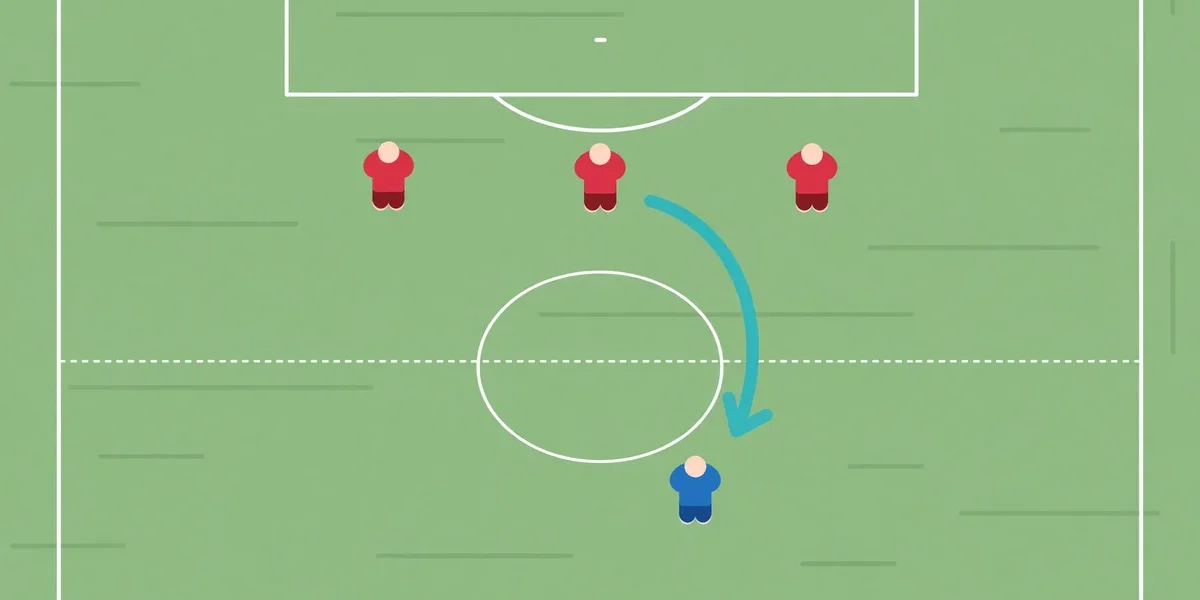
The player stands high, on the shoulder of the last defender. Then the player drops into midfield to receive it as the ball moves forward.
First, the player finds room between the lines, where the player can turn and pick a pass. Second, the space the player left behind becomes a gap for a team-mate to run into.
For example, a winger can cut inside into the empty centre-forward space. An attacking midfielder can break forward from deep. As a result, the attack has runners in places the defence did not expect.
With the back to goal, the player receives the ball under pressure, shields it, and lays it off cleanly. In addition, the player must read the game and choose the right moment to drop.
The Dilemma for Defenders
The role gives the opposing centre-backs a problem. If a centre-back follows the player into midfield, the centre-back leaves a gap. As a result, a winger or midfielder can run into the gap.
If the centre-back stays put instead, the player turns freely in space. Meanwhile, the player has time to pick a pass or drive at the defence.
The midfielders face a problem too. If one steps up to mark the player, the midfield loses its shape. However, if nobody steps up, the player plays with freedom. Therefore, the role forces the whole opposing team to make hard choices, not just one defender.
The History of the Role
The role is older than its modern fame.
First, Matthias Sindelar played a version of it for Austria in the 1930s. Sindelar was a centre-forward who dropped deep to link the play. In turn, his movement pulled defenders out of position and opened space for his team-mates.
Second, Nandor Hidegkuti did the same for Hungary against England in 1953. He started as the centre-forward, then dropped into midfield to collect the ball. The English defenders did not know whether to follow him.
Third, Juan Peregrino Anselmo of Uruguay is cited as an even earlier example at the 1930 World Cup. He dropped deep from the centre-forward position years before the role had a name. In short, it is a new name for an old idea.
The Modern Game
If you ask what is a false nine in the modern game, the answer is simple. In short, the role is a striker who plays like a midfielder. The role became famous through Pep Guardiola and Lionel Messi. In 2009, Guardiola moved Messi from the right wing into the middle.
Other teams copied the idea. In short, the role lets a team overload the midfield. The striker becomes an extra midfielder when the team has the ball. As a result, the team can keep possession in tight spaces and pass through the opposing midfield.
The modern role also presses hard after losing the ball. In addition, the player starts the press from the front and forces mistakes. In this way, the player defends as well as attacks.
Messi and the 6-2 at the Bernabeu
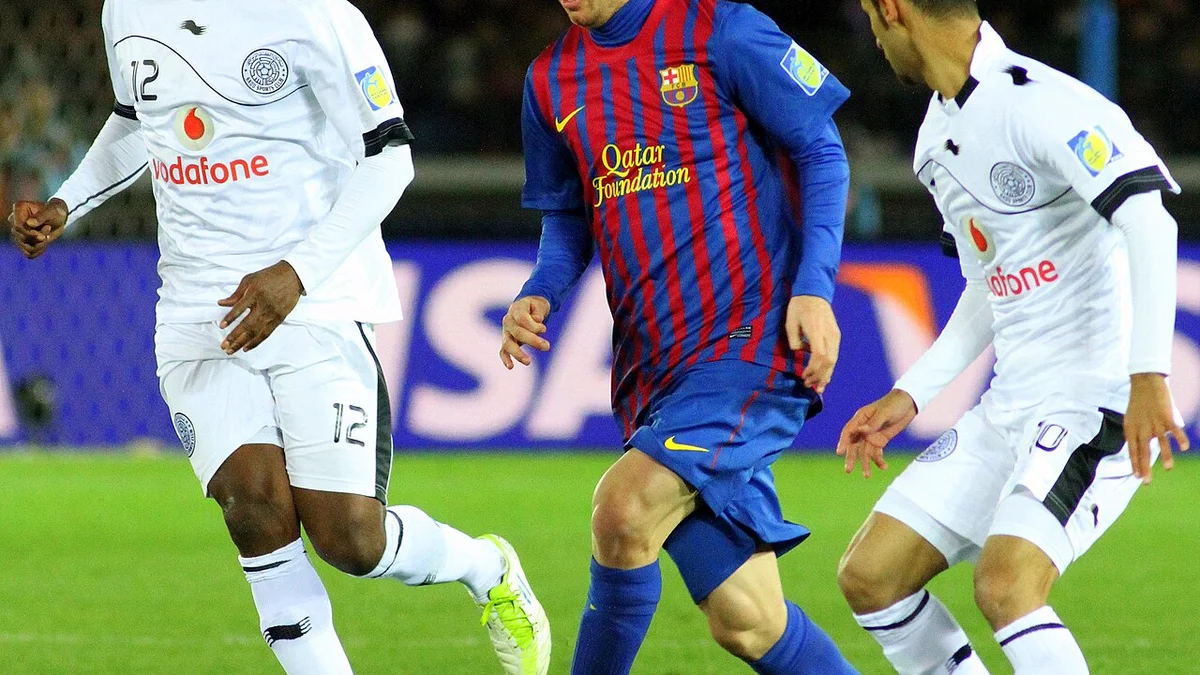
The most famous performance in the role came on 2 May 2009. In fact, before Barcelona’s match at Real Madrid, Guardiola moved Messi from the right wing into the middle. Messi dropped deep and dragged the centre-backs with him.
Barcelona won 6-2 at the Bernabeu. Messi scored twice and assisted the first goal.
Messi stayed in the role from 2009 to 2012. In 2011-12 he scored 73 goals in all competitions, 50 of them in La Liga. Under Guardiola, from 2008 to 2012, Messi scored 211 goals.
Other Famous Examples
Messi is the most famous example of the role, but other players have played it well. For example, Roberto Firmino played it at Liverpool under Jurgen Klopp. He dropped deep and pressed hard to create space for the wide forwards. Firmino scored less than a normal striker, but his work made the players around him better.
Similarly, Carlos Tevez played the role at times for Manchester United in 2007-09. He dropped into midfield to collect the ball and link the play.
In both cases, the player was not the team’s main goalscorer. Instead, the player was the link that made the attack work.
The Players Around the False Nine
First, the players around the role must do their jobs. The wide forwards must cut inside into the space the player leaves behind. If they stay wide, the centre stays empty.
Second, the attacking midfielders must break forward. When the player drops deep, a midfielder can run beyond the role into the penalty area. In addition, the full-backs must advance and give the team width.
Finally, the passers behind the player must be good on the ball. The player needs quick passes into feet. Without good passers, the player never receives the ball in dangerous places. In short, that is what is a false nine in practice: a team system.
The Role vs a False 10
This role and the false 10 are different roles, even though the names sound alike. A false 10 is a playmaker who drops from the number 10 position into deeper areas. In contrast, a false nine is a striker who drops from the number 9 position into midfield. For the playmaker’s version of the role, read our guide to the playmaker.
When the False Nine Fails
The role can fail. First, the role needs runners. Without wide forwards cutting inside and midfielders breaking forward, the team has nobody in the penalty area.
Second, the role needs a player who can both create and finish. A player who only passes becomes easy to mark. One who only shoots becomes a normal striker.
Third, the role needs good passers behind it. If the midfield cannot pass the ball into the player’s feet, the player drops deep for nothing. As a result, the role is a team system. It only works when every part of the team plays its part.
Frequently Asked Questions
What is a false nine?
A false nine is a centre-forward who drops deep into midfield instead of staying near the goal. The player starts as a striker, then drops to collect the ball and link the play.
Who invented the role?
Matthias Sindelar played a version of it for Austria in the 1930s. Nandor Hidegkuti used it for Hungary in 1953. Pep Guardiola and Lionel Messi made it famous in 2009.
Why is it called a false nine?
The name comes from the Spanish “falso nueve”. The player starts in the number 9 position but is not a real striker, so the nine is “false”.
What is the difference between this role and a false 10?
This role is a striker who drops from the number 9 position. The false 10 is a playmaker who drops from the number 10 position.
Can any striker play the role?
No. The role needs passing, movement and finishing in one player. A striker who only scores in the box will not suit the role.
Which teams use the role?
Teams that want to overload the midfield and have runners use it. Barcelona under Pep Guardiola from 2009 to 2012 is the most famous example.
Conclusion
So what is a false nine? It is a striker who refuses to stay a striker. The player drops deep, drags defenders out of position, and opens space for the runners around the role.
To learn more about the game, explore our football news section and our free football betting tips page. Next time you watch a match, keep an eye on the centre-forward. Follow the action with our live scores page.
