- What Is a Sweeper Keeper?
- The Two Jobs: Cover and Build-Up
- What Is a Sweeper Keeper: A Short History
- Why Teams Use the Role
- What Is a Sweeper Keeper in the Modern Game
- The Skills Needed
- The Risks of Playing So High
- What Is a Sweeper Keeper vs a Traditional Goalkeeper
- Sweeper Keeper vs Ball-Playing Keeper
- The Famous Keepers
- Frequently Asked Questions
- What is a sweeper keeper?
- Who is the best at the role?
- Is a sweeper keeper the same as a ball-playing keeper?
- What are the risks of playing so high?
- Does every team need a sweeper keeper?
- Can the keeper handle the ball outside the box?
- Conclusion
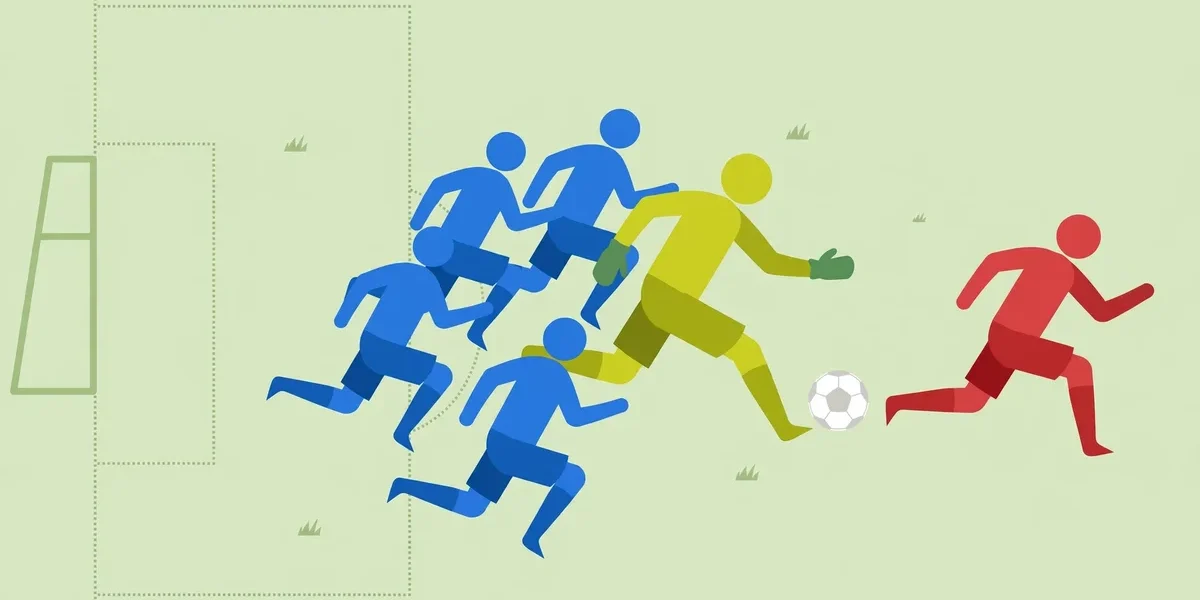
What is a sweeper keeper? A sweeper keeper is a goalkeeper who plays like an extra defender, and the role has changed how the best teams defend and attack. Instead of standing close to the goal line, the keeper steps high up the pitch, guards the space behind the defence, and starts attacks with the feet. In short, the keeper is part goalkeeper, part defender, and part playmaker.
For many years, goalkeepers stayed in the penalty area and waited for the ball to come to them. The keeper turns that old idea upside down, and the whole team plays higher up the pitch because of it.
Last updated: November 2026
Quick Answer
- A sweeper keeper is a goalkeeper who plays high up the pitch like an extra defender.
- The role has two jobs: cover the space behind a high defensive line, and build attacks with the feet.
- The 1992 back-pass rule and the rise of possession football made the role possible.
- Manuel Neuer is the most famous example of the role, and Ederson is the model ball-playing keeper.
- The role is risky: one mistake can leave an empty goal behind the keeper.
What Is a Sweeper Keeper?
A sweeper keeper is a goalkeeper who leaves the penalty area and plays like a sweeper, while a normal goalkeeper stays close to the goal and reacts to danger. In contrast, the keeper acts first. The keeper reads the game, steps out to cut off through balls, and sweeps up loose passes before a striker can reach them. For example, when an opponent plays a long ball over the defence, the keeper rushes out to clear it.
The name comes from the sweeper, the old defensive role that cleaned up danger behind the back line. The keeper stands well outside the penalty area and acts as the last defender. For the full rules on what a keeper may do with the hands, read our guide to the goalkeeper.
The Two Jobs: Cover and Build-Up
The first job is cover. A team that presses high leaves a large gap behind its defence, because the defenders push up and the space behind them becomes a danger zone. The keeper guards that space. As a result, the defence can hold a high line without fear.
The second job is build-up. When the team plays out from the back, the keeper becomes an extra passing option, because the opponents mark the outfield players yet often leave the keeper free. For that reason, the keeper can receive the ball, beat the first press with a pass, and start an attack. In short, that is what is a sweeper keeper in attack: an extra man who turns defence into attack.
What Is a Sweeper Keeper: A Short History
The idea is older than most fans think. In the 1950s, Hungary’s Gyula Grosics and the Soviet Union’s Lev Yashin came off their lines and played like extra defenders.
The big change came in 1992, when the back-pass rule stopped goalkeepers from picking up a deliberate back pass from a team-mate, so keepers had to use their feet. At Barcelona, Cruyff asked his goalkeeper to build from the back. Pep Guardiola later turned it into a principle: at his teams, the goalkeeper was the first attacker, not the last defender.
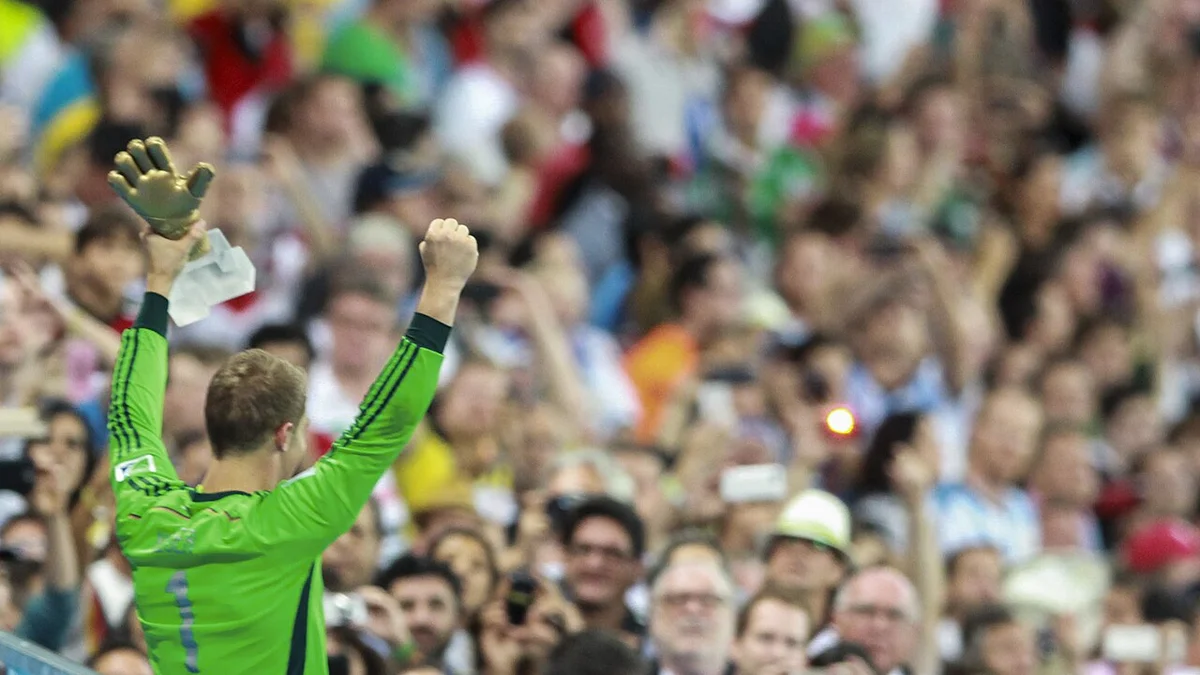
Manuel Neuer brought the role into the spotlight. At the 2014 World Cup, he played well outside his penalty area and acted almost like a sweeper and a playmaker.
Why Teams Use the Role
Teams use the role because it lets them defend higher up the pitch. A high line squeezes the game into the opponent’s half, but it only works if someone guards the space behind it, and the keeper is that someone. In addition, the keeper’s presence lets the defenders step up and press, because they know the keeper will cover them.
The role also helps in attack. A team that builds from the back needs an extra man, and the keeper is the free man. For example, a keeper who can pass well can break the first line of the press with one ball. Our guide to football formations explains how each system uses the goalkeeper.
What Is a Sweeper Keeper in the Modern Game
In the modern game, the keeper is a normal part of possession football, and teams that press high need a keeper who can play. The keeper joins the build-up and covers the space behind the defence. In fact, some coaches judge a goalkeeper by the feet as much as by the hands. A keeper who cannot pass is a weak link in the build-up.
The role has also changed how teams train goalkeepers. Young keepers practise passing and playing under pressure, just like outfield players. Above all, the modern keeper is a footballer first and a shot-stopper second.
The Skills Needed
Reading the game comes first: the keeper must see danger before it happens. The keeper watches the striker’s run, the pass, and the space behind the defence.
Pace and timing come second. The keeper must sprint out fast and arrive at the right moment. If the keeper goes too early, the striker can chip the ball over the top. Therefore, timing matters as much as speed. Confidence comes third: the keeper must decide in a split second and commit. In addition, good feet and passing are vital, and one-on-one ability matters when a striker does get through. These are the skills that answer what is a sweeper keeper in practice.
The Risks of Playing So High
The role is risky. If the keeper misjudges a run or a pass, the goal stands empty. The other team can then score from distance into an open net. As a result, one mistake can cost a goal. That risk is the first thing to learn when you ask what is a sweeper keeper.
The role does not suit every goalkeeper or every team. A keeper with poor judgement or slow feet will struggle. In addition, a team that sits deep has no need for one, because there is no space behind the defence to guard. A team that presses high cannot play without one, though. In short, the role works only when the keeper, the defence, and the plan fit together.
What Is a Sweeper Keeper vs a Traditional Goalkeeper
A traditional goalkeeper is reactive: the keeper stays in the penalty area, waits for the shot, and makes the save, and rarely leaves the box. In contrast, the keeper is proactive. The keeper roams outside the box, cuts out danger early, and shapes the game with the feet. The traditional keeper reacts to the game, while the keeper tries to control it.
Neither style is better in every case: a traditional keeper suits a deep defence, and the keeper suits a high line that needs cover.
Sweeper Keeper vs Ball-Playing Keeper
Fans often mix up the two roles. The sweeper’s main job is covering space behind the defence. The ball-playing keeper’s main job is build-up with the feet. In practice, the two jobs often belong to the same player. For example, Ederson is a ball-playing keeper who also sweeps. Similarly, Neuer sweeps and plays. In other words, the labels describe jobs, not separate positions. The best modern keepers do both.
The Famous Keepers
Manuel Neuer is the archetype of the role, and fans often call him the godfather of the role. At the 2014 World Cup, he played well outside his penalty area and acted almost like a sweeper and a playmaker.
Ederson is the model of the ball-playing keeper. He stands out for his distribution and long accurate passes that start attacks.
The early pioneers matter too. Gyula Grosics and Lev Yashin showed in the 1950s that a keeper could leave the line and play. In fact, the modern role is their idea, played at a faster pace.
Frequently Asked Questions
What is a sweeper keeper?
A sweeper keeper is a goalkeeper who plays like an extra defender: the keeper plays high up the pitch, covers the space behind the defence, and builds attacks with the feet.
Who is the best at the role?
Manuel Neuer is the most famous example of the role, and fans often call him the godfather of the role.
Is a sweeper keeper the same as a ball-playing keeper?
No. The first job is covering space behind the defence, while the ball-playing keeper’s main job is build-up with the feet. In practice, the same player often does both jobs.
What are the risks of playing so high?
If the keeper misjudges a run or a pass, the goal is empty and the other team can score from distance.
Does every team need a sweeper keeper?
No. The role suits teams that press high and keep the ball.
Can the keeper handle the ball outside the box?
No. Outside the penalty area, the goalkeeper is an outfield player, and handling the ball there is a handball offence.
Conclusion
So, what is a sweeper keeper? It is a goalkeeper who plays like a defender, guards the space behind a high line, and starts attacks with the feet. It takes reading of the game, pace, confidence, and good feet.
To learn more, explore our football news section and our free football betting tips page. Next time you watch a match, keep an eye on the goalkeeper, and follow the action with our live scores page.