- What Is a Full-Back in Football?
- Where the Name Comes From
- The Traditional Job: Defending the Flank
- What Is a Full-Back in Football in the Modern Game
- The Overlapping Full-Back
- The Inverted Full-Back
- What Is a Full-Back in Football vs a Wing-Back?
- Skills a Full-Back Needs
- What Is a Full-Back in Football? Great Full-Backs in History
- What Is a Full-Back in Football? Frequently Asked Questions
- What is a full-back in football?
- What number does a full-back wear?
- What is the difference between a full-back and a wing-back?
- What is an inverted full-back?
- Do full-backs need to attack?
- Who are the most famous full-backs in football history?
- Conclusion
What is a full-back in football? A full-back is the wide defender in a back four. The full-back guards one flank of the defence. They stop the opposing winger, block crosses, and join the attack when the team has the ball.
Last updated: November 2026
Quick Answer
- A full-back is a wide defender in a back four: a right-back (RB) on the right and a left-back (LB) on the left.
- The traditional shirt numbers are 2 for the right-back and 3 for the left-back.
- The first job is to defend the flank: mark the winger one-on-one, block crosses and cover the centre-backs.
- The modern full-back also attacks, overlapping the winger, crossing the ball and pressing high up the pitch.
- A full-back is not a wing-back: the wing-back plays in a back three or back five.
What Is a Full-Back in Football?
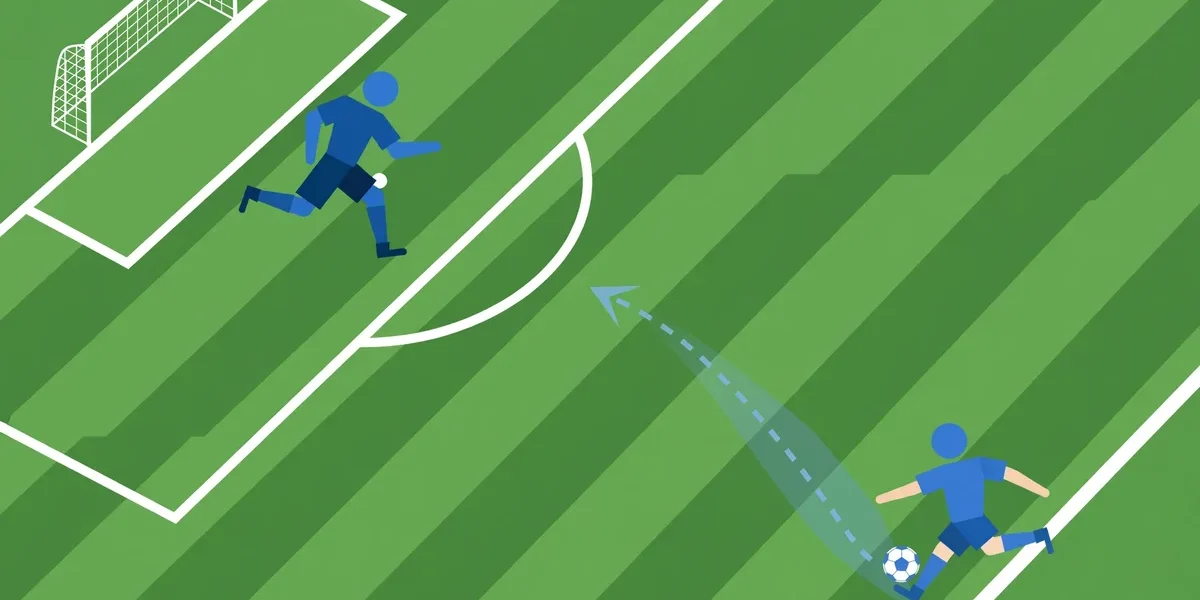
In fact, the simplest answer to what is a full-back in football is that the full-back is the wide defender. In a back four, the two centre-backs guard the middle, while the two full-backs guard the flanks.
For example, a full-back lives on the touchline. When the other team attacks, the full-back is the first player the winger meets. When the team has the ball, the full-back pushes up the flank and gives the attack width. For every role on the pitch, read our football positions explained guide.
On a team sheet, RB stands for right-back and LB stands for left-back. The classic shirt numbers are 2 for the right-back and 3 for the left-back.
Where the Name Comes From
In fact, the name “full-back” is older than the back four. In the old 2-3-5 formation, the two full-backs were the furthest-back players. They stood behind the “half-backs” and in front of the goalkeeper. In that system, the full-backs played in the centre, not out wide.
As formations changed, the full-backs moved out to the flanks. The WM formation in the 1920s and 1930s pushed them wider. Then the back four turned them into the wide defenders we know. In short, the name stayed, even though the job changed.
The Traditional Job: Defending the Flank
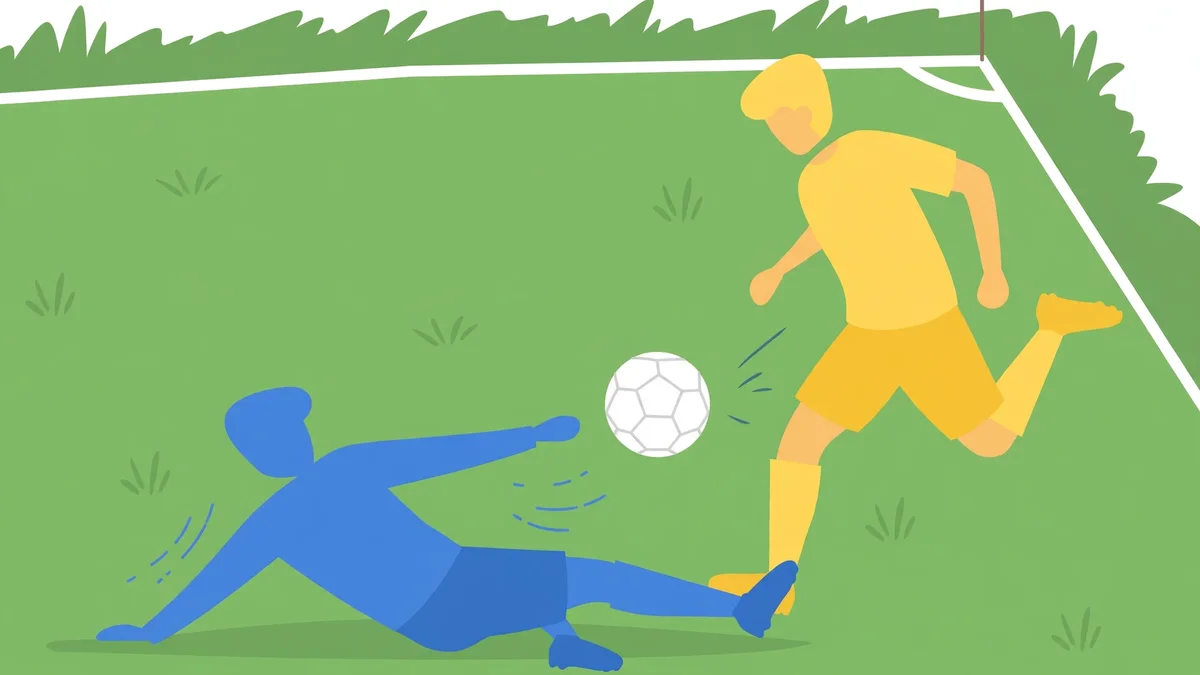
First, a full-back must defend the flank. The opposing winger runs at the full-back one-on-one. The full-back holds the line and forces the winger wide. A good full-back stays on the feet and shows the winger outside towards the touchline. The full-back does not dive into a tackle the winger can beat.
Second, a full-back must block crosses. When the winger reaches the byline, the cross into the penalty area is the main danger. The full-back gets a body in the way and stops the cross at the source. Third, a full-back must clear the ball when it drops into the box. Fourth, a full-back must cover the centre-backs. The full-back tucks inside to guard the space behind when a centre-back steps out to tackle.
In contrast, the traditional full-back rarely crossed the halfway line. Defence came first, and the full-back stayed home while the wingers attacked.
What Is a Full-Back in Football in the Modern Game
However, the modern full-back does far more than defend. If you ask what is a full-back in football in the modern game, the answer is simple. The full-back is a defender who is also an attacker. He overlaps the winger and crosses from deep or from the byline. He also carries the ball forward and presses high up the pitch.
In many teams, the full-back is one of the main sources of width. When the winger cuts inside, the full-back runs into the space left on the outside. That stretches the defence, because the opposing full-back must guard two players at once.
The modern full-back also contributes goals and assists. A full-back who crosses well can set up the striker. One who arrives late at the far post can score. As a result, teams want full-backs who are fast and good on the ball. Our guide to football formations explains how each system uses full-backs.
The Overlapping Full-Back
For example, the overlapping full-back is the most common type. This full-back stays wide and bombs forward on the outside of the winger. Then the full-back crosses into the penalty area. The overlap works best when the winger cuts inside.
In fact, timing is the key skill. If the full-back goes too early, the team loses its defensive cover. If the full-back goes too late, the winger has no passing option on the outside. Therefore, a good overlapping full-back reads the game and picks the moment well.
The Inverted Full-Back
In contrast, the inverted full-back is a newer idea. Instead of staying wide, this full-back steps into central midfield when the team has the ball. That gives the team an extra midfielder. It also gives cover against counter-attacks, because the full-back is already in the middle when the ball is lost.
Pep Guardiola popularised the role. At Bayern Munich, he moved Philipp Lahm from the flank into midfield, and Lahm ran the game from the centre. The idea spread. Arsenal later used it with Oleksandr Zinchenko and Ben White, who tucked inside from the full-back spot.
In addition, an inverted full-back needs different skills from an overlapping full-back. The inverted full-back must pass well under pressure and read the game from the middle. The full-back must also defend in tight spaces. However, the role leaves the flank open, so the winger must hold the width alone.
What Is a Full-Back in Football vs a Wing-Back?
In fact, fans often mix up the full-back and the wing-back, but they are different roles. A full-back plays in a back four and has more defensive duties. A wing-back plays in a back three or back five. The wing-back has far more attacking freedom, acting almost like a winger when the team has the ball.
In addition, the wing-back is often the team’s only width on that side. In a back three, there is no winger in front of the wing-back. The wing-back must run the whole flank, from defence to attack, for the full match. The full-back, by contrast, has a winger ahead to share the flank.
However, an inverted full-back is a role, not a separate position. A full-back can play as an overlapping full-back in one match. In the next match, the same player can play as an inverted full-back, depending on the plan. The wing-back, by contrast, is a fixed position in a back three or back five.
Skills a Full-Back Needs
In fact, a full-back needs pace above all else. A slow full-back will be beaten again and again. Pace lets the full-back recover when the winger gets past. It also lets the full-back overlap and get back in time.
Stamina comes next. A full-back runs the whole flank for the full match. The run goes from the corner flag to the halfway line and back. In addition, a full-back needs to defend one-on-one. The full-back faces the winger more than any other defender, so tackling and timing matter a great deal.
Crossing and passing are also vital. The full-back must deliver a cross the striker can attack. The full-back must also pass the ball out from the back under pressure. Finally, a full-back needs a football brain. They must know when to stay and when to go.
What Is a Full-Back in Football? Great Full-Backs in History
For example, some of the greatest players in football history played at full-back. Cafu, the Brazilian right-back, won the World Cup twice. Roberto Carlos was famous for his powerful shots and free kicks. Ashley Cole was one of the finest left-backs of his generation.
In addition, Philipp Lahm showed how much the role could grow. He won the World Cup as a full-back and then moved into midfield, where he ran the game. Dani Alves set the standard for the attacking full-back.
Similarly, Trent Alexander-Arnold took the attacking full-back further. He set a Premier League record for assists by a defender in a season: 13 league assists in 2019-20. That record shows how far the full-back has come. The full-back went from a defender who stayed home to a player who creates goals.
What Is a Full-Back in Football? Frequently Asked Questions
What is a full-back in football?
A full-back is the wide defender in a back four. In short, what is a full-back in football? It is the defender who guards the flank and marks the opposing winger. The full-back also blocks crosses and joins the attack when the team has the ball.
What number does a full-back wear?
The traditional numbers are 2 for the right-back and 3 for the left-back.
What is the difference between a full-back and a wing-back?
A full-back plays in a back four and has more defensive duties. A wing-back plays in a back three or back five. The wing-back has far more attacking freedom, acting almost like a winger when the team has the ball.
What is an inverted full-back?
An inverted full-back steps into central midfield when the team has the ball. That gives the team an extra midfielder and cover against counter-attacks. It is a role, not a separate position.
Do full-backs need to attack?
Yes. In the modern game, a full-back is expected to overlap, cross and press high up the pitch. A full-back who never attacks leaves the team short of width.
Who are the most famous full-backs in football history?
Cafu, Roberto Carlos, Ashley Cole, Philipp Lahm, Dani Alves and Trent Alexander-Arnold are among the most famous full-backs.
Conclusion
So what is a full-back in football? It is the player who guards the flank and drives the team forward. From the defender who stayed home to the inverted full-back, the role has changed. Yet it keeps its heart. Overall, a great full-back defends one-on-one, blocks crosses and overlaps with pace.
If you want to learn more about the game, explore our football news section. You can also read our free football betting tips page. Next time you watch a match, keep an eye on the flanks and follow the action with our live scores page.