- What Is a Header in Football?
- What Is a Header in Football? The Basic Technique
- Types of Headers in Football
- Headers from Crosses and Corners
- What Is a Header in Football? Famous Headed Goals
- What Is a Header in Football? Safety Rules
- What Is a Header in Football in Betting?
- Frequently Asked Questions
- Is heading the ball legal?
- What is a header in football, and does a headed goal count?
- Can a goalkeeper head the ball?
- Why do players head the ball instead of using their feet?
- Is heading safe for children?
- Conclusion
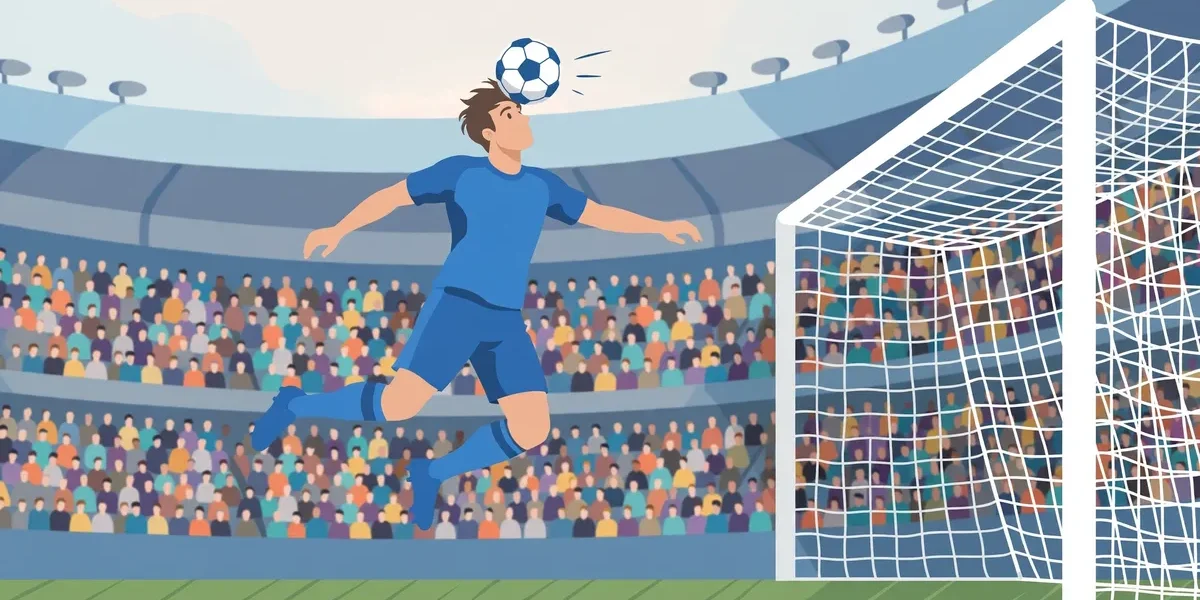
What is a header in football? It is the skill of playing the ball with the head on purpose. A player meets the ball with the forehead and sends it where they want it to go. In short, heading turns the head into a tool for passing, clearing and scoring. As a result, fans see headers in almost every match, from a defender clearing a cross to a striker nodding in a late winner.
Last updated: November 2026
Quick Answer
- A header is a deliberate play of the ball with the head, and it is fully legal.
- Meet the ball with the flat forehead just below the hairline, and keep your eyes open all the way.
- An attacking header aims at goal, a defensive header clears danger, and a flick-on redirects the ball to a teammate.
- Zidane scored two headers in the 1998 World Cup final, and Ronaldo’s 2019 header for Juventus reached 2.56 metres.
- Deliberate heading is phased out for the youngest age groups in England, and any player with signs of concussion must leave the pitch.
What Is a Header in Football?
A header is one of the oldest skills in football. Ask what is a header in football, and the short answer is a deliberate play of the ball with the head. For example, a player meets a high ball with the head instead of letting it drop or trying to control it with the chest. In fact, the ball may come from a cross, a corner, a goal kick or a long pass. In each case, the head gives the player a way to play a ball that is too high for the feet.
Heading is a legal part of the game. In other words, a header is not handball, because handball covers only the arm and the hand. In fact, a headed goal counts like any other goal.
What Is a Header in Football? The Basic Technique
Good heading starts before the ball arrives. First, watch the ball from the moment it leaves the passer’s foot. Then, move into line with the ball early, so you meet it instead of chasing it. After that, time your jump to reach the ball at the highest point you can control.
Next, the contact point matters most. Meet the ball with the flat forehead just below the hairline. Do not use the crown, temple or face: those parts give poor control and can hurt. In addition, keep your eyes open all the way in. Meanwhile, brace your neck and shoulders before contact, so your head stays firm.
Above all, power comes from the body, not from a flick of the head. Use controlled movement of the upper body to direct the ball. For example, lean back slightly to lift the ball over a defender, or lean forward to drive it down toward goal.
Follow these steps to head the ball well:
- Watch the ball early and keep your eyes open until contact.
- Move into line with the flight of the ball before you jump.
- Time your jump to meet the ball at the highest point you can reach.
- Brace your neck and shoulders, and meet the ball with the flat forehead just below the hairline.
- Steer the ball with your upper body, aim for a teammate or a corner of the goal, and land on both feet.
Types of Headers in Football
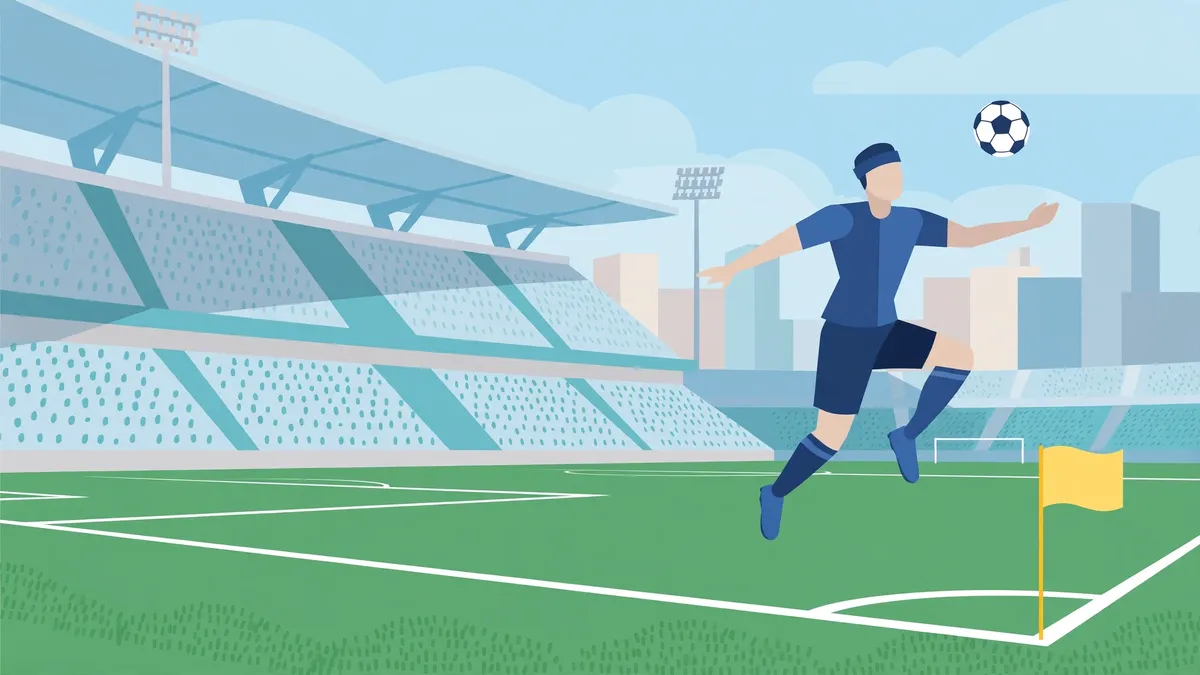
There are five main types of headers. Each one shows what is a header in football used for: scoring, clearing, redirecting, reaching or passing.
An attacking header aims at goal. For example, a striker meets a cross at the near post and powers it home. Above all, attacking headers need power and placement.
A defensive header is a clearance. In other words, the defender heads the ball high and wide, away from danger. Centre-backs use defensive headers more than any other players.
A flick-on is a glancing header that redirects the ball on to a teammate. For instance, a target man jumps at the near post and glances a long ball to a running winger. In short, the flick-on needs soft contact and good timing.
A diving header is the most dramatic type: the player leaves the ground head-first to reach a low ball.
Finally, a headed pass is a controlled header to a teammate, such as a defender heading the ball back to the goalkeeper. As a result, the team keeps the ball instead of giving it away.
Headers from Crosses and Corners
In fact, most headers come from crosses and corners. For example, a winger beats a defender and swings the ball into the box, where strikers and defenders jump to meet it. Similarly, a corner kick works in the same way, with the ball curled into a crowded area.
Above all, timing and movement decide who wins the header. First, the attacker tries to lose the marker with a short run. Then, the attacker jumps at the right moment and meets the ball first, while the defender tries to stay goal-side. In short, the player who reads the flight of the ball best usually wins it.
What Is a Header in Football? Famous Headed Goals
The most famous pair belongs to Zinedine Zidane. In the 1998 World Cup final at the Stade de France, France faced Brazil. Zidane rose twice to head home two corners, in the 27th minute and in first-half stoppage time. His two headers were a brace, and France won 3-0 to lift their first World Cup. So what is a header in football worth on the biggest stage? Two corners, two goals, one World Cup.
Cristiano Ronaldo produced one of the most talked-about headers. For example, on 18 December 2019, Juventus played Sampdoria in Serie A. Alex Sandro crossed from the left just before half-time, and Ronaldo met it at the far post, jumping 71 cm to connect at a height of 2.56 metres. Juventus won the match 2-1.
Didier Drogba scored the most important header in Chelsea history. In the 2012 Champions League final against Bayern Munich, Chelsea trailed 1-0 late in the match. In the 88th minute, Drogba met a corner with a powerful header and scored the equaliser. Chelsea then won the final on penalties to lift their first Champions League trophy.
What Is a Header in Football? Safety Rules
However, heading is part of the game, and the rules protect young players. In England, the FA has phased out deliberate heading in grassroots youth football: under-7 to under-9 from the 2024-25 season, under-10 from 2025-26, and under-11 from 2026-27. The change followed an IFAB trial. A deliberate header in those age groups gives the other team an indirect free kick.
Furthermore, in February 2026, the Professional Footballers’ Association (PFA) recommended no more than 10 headers per week, including practice, for professional players. The same guidance says there should be no heading at all for children under 12.
Finally, concussion rules are clear. If a player shows signs of concussion, remove them and have a doctor check them before they return. In short, no match is worth the risk of playing on with a head injury.
What Is a Header in Football in Betting?
If you understand what is a header in football, you can spot the betting markets built around it. For example, some bookmakers offer a “player to score a header” market, which pays out if your chosen player scores with the head. There is also a “first headed goal” market.
In addition, a header counts as a normal goal for full-time markets. For example, if you back over 2.5 goals and the third goal is a header, your bet wins. In the same way, a headed goal counts for both teams to score bets.
Here is a worked example. Imagine you stake ₦1,000 on a player to score a header at odds of 3.00. If the player scores with the head, your return is ₦3,000, and your profit is ₦2,000. On the other hand, if the player scores with the foot or does not score at all, the bet loses. Therefore, check the team news first: a tall striker who attacks crosses is a better header candidate than a winger who rarely enters the box.
Frequently Asked Questions
Is heading the ball legal?
Yes, heading the ball is legal. It is not handball, because handball covers only the arm and the hand. A goal scored with the head counts like any other goal.
What is a header in football, and does a headed goal count?
A header in football is a deliberate play of the ball with the head. Yes, a headed goal counts like any other goal, on the scoreboard and in full-time betting markets.
Can a goalkeeper head the ball?
Yes, any player on the pitch can head the ball, including the goalkeeper. In practice, goalkeepers rarely need to head it, because they can catch the ball with their hands. However, if a high ball is out of reach, a header is a legal way to play it.
Why do players head the ball instead of using their feet?
Players head the ball when it is too high to control with the feet. For example, a cross or a corner arrives at head height, so heading is the fastest way to play it. In addition, a header can redirect the ball in one touch.
Is heading safe for children?
Young players in England face heading restrictions. The FA has phased out deliberate heading for under-7 to under-11 age groups, and the PFA recommends no heading at all for children under 12. If a child shows signs of concussion, they must leave the pitch and see a doctor before playing again.
Conclusion
In short, a header in football is a simple skill with a big role in the game. It wins matches from crosses and corners, clears danger at the back, and produces famous goals. Learn the technique and keep your eyes open. Above all, respect the safety rules.
