- What Is a Target Man in Football? The Basics
- The Skills of the Role
- Hold-Up Play: The Heart of the Role
- What Is a Target Man in Football? How the Role Works in a Match
- The Big-Man–Little-Man Partnership
- What Is a Target Man in Football? In Direct Football
- Crosses, Flick-Ons and Knock-Downs
- What Is a Target Man in Football? As a Plan B
- Target Man Versus Other Striker Types
- What Is a Target Man in Football? The Great Target Men
- Frequently Asked Questions
- What does a target man do?
- Is a target man the same as a poacher?
- Why do teams still use a target man?
- Who is the best target man in football?
- Can a short striker be a target man?
- Conclusion
What is a target man in football? It is a type of striker whose main job is to win high balls, hold the ball up, and bring teammates into play. In fact, the target man is the physical focal point of the attack. This guide explains the role in plain English.
Last updated: November 2026
Quick Answer
- A target man is a type of striker who wins high balls, holds the ball up and creates chances for teammates.
- What is a target man in football? The big striker who plays with his back to goal and links the attack.
- Target men are usually tall and strong, good in the air and strong at shielding the ball.
- Famous examples include Olivier Giroud, Didier Drogba and Peter Crouch.
- The role is less common in possession teams, but it is still vital as a plan B.
What Is a Target Man in Football? The Basics
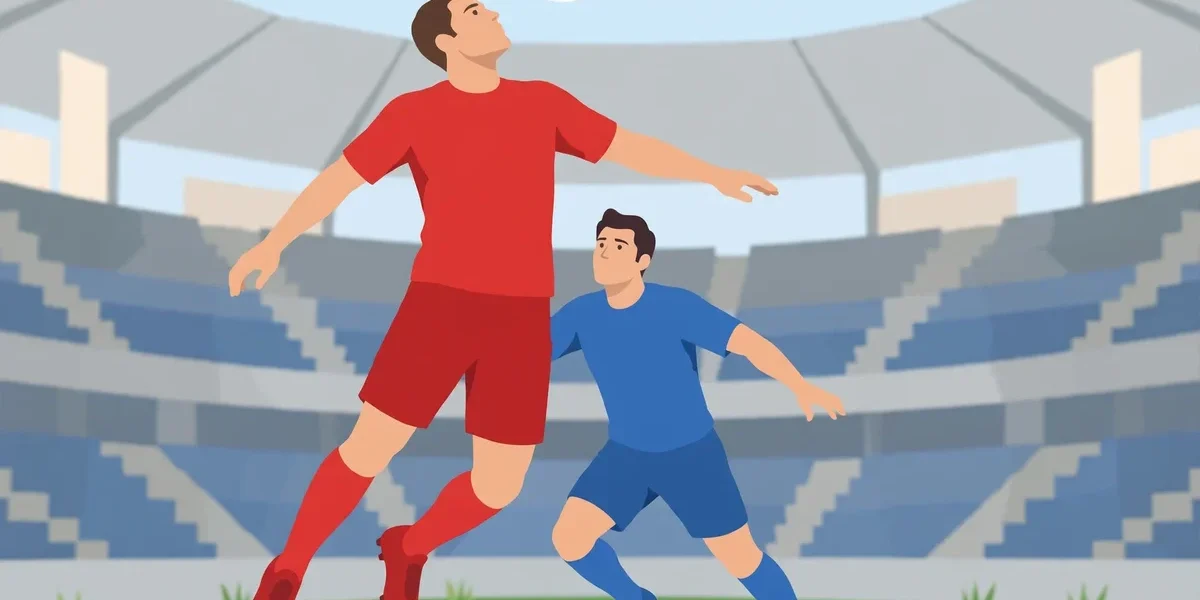
A target man (also called a target forward or target striker) is a type of striker whose main role is to win high balls in the air, hold up the ball, and create chances for other members of the team, in addition to scoring goals himself. That is what is a target man in football at its simplest: a physical focal point for the attack.
Target men are usually tall and physically strong. In addition, they are good at heading and comfortable playing with their back to goal in the final third of the pitch. For example, a long ball forward is aimed at the target man, and the team moves up around him. As a result, the attack has a fixed point to build around. There are many roles in football positions, and the target man is one of the most physical.
The Skills of the Role
The role needs a clear set of skills. First, a first touch under pressure: the ball often arrives at speed, and the target man must control it with one touch. Second, chest control: he brings high balls down with his chest so the team can keep the ball. Third, heading accuracy: he wins headers and directs them to a teammate, not just anywhere.
In addition, he needs the strength to shield the ball from a defender. For example, he uses his body to keep the defender behind him while he waits for support. Similarly, he needs the awareness to lay the ball off: a quick pass to a runner is often better than a shot. Finally, he works hard in pressing the defence, chasing lost causes and forcing mistakes.
Hold-Up Play: The Heart of the Role
Hold-up play is the heart of the role. It means receiving the ball with a defender close behind and keeping it until a teammate arrives. First, the target man shows for the ball, often with his back to goal. Second, he controls it and shields it. Third, he lays it off to a midfielder or a runner.
As a result, the whole team can move up the pitch. In addition, hold-up play buys time: the defence cannot win the ball back, and the attack can set its shape. However, it is a hard skill, because the target man works alone against one or two defenders. For that reason, strength and balance matter as much as technique.
What Is a Target Man in Football? How the Role Works in a Match
In a match, the target man is the first outlet. When the defence is under pressure, the goalkeeper or a defender plays a long ball towards him. The target man wins it in the air or holds it up on the ground, and the midfielders push up to support him.
In contrast to a poacher, who waits in the box for a chance, the target man comes deep to link play. For example, he may drop to the halfway line to win a header, then lay it off to a runner. In fact, that is why the role suits direct teams: one long ball can move the whole team up the pitch.
The Big-Man–Little-Man Partnership
The classic use of a target man is the 4-4-2 big-man–little-man partnership. A tall target man plays beside a quicker, smaller striker. The big man wins the ball and lays it off, and the little man runs in behind the defence.
For example, the target man flicks a header on, and his partner chases it into the box. Similarly, the little striker benefits from the space the target man creates, because defenders focus on the big man. As a result, the pair can be more dangerous than either player alone. In short, the partnership is about balance: power beside pace.
What Is a Target Man in Football? In Direct Football
Direct football, also called long-ball football, is built around the target man. Instead of passing through midfield, the team plays long balls forward to the big striker. The target man wins the ball and brings the midfielders into the game.
In addition, the role is useful against a high press. When the other team presses high, a long ball to the target man bypasses the press in one kick. However, direct football needs the right players: without a strong target man, long balls simply give the ball away. For that reason, teams that play this way build their attack around the role. That is what is a target man in football in a direct team: the first outlet.
Crosses, Flick-Ons and Knock-Downs
Crosses from wide areas are a second way to use a target man. A winger or full-back crosses into the box, and the target man attacks the ball in the air. His height and heading make him the main threat from crosses.
Flick-ons and knock-downs are a third way. A flick-on is a header that changes the direction of a long ball towards a teammate. A knock-down is a header played down to a runner. In both cases, the target man does not need to score himself: the header is the assist. For example, a knock-down to a midfielder arriving late is a classic target-man goal for someone else.
What Is a Target Man in Football? As a Plan B
Even teams that do not start with a target man keep one as a plan B. When a team is chasing a game, the manager can bring a big striker off the bench and play long balls into the box. The target man changes the shape of the game in minutes.
In fact, this is where the role is most visible. A team that has passed the ball all game suddenly goes direct, and the target man gives the attack a new target. As a result, defenders who have had an easy game must deal with high balls and physical duels. In short, the target man is the classic plan B.
Target Man Versus Other Striker Types
A target man is one of several striker types. A poacher scores inside the box and lives on the last touch: examples are Filippo Inzaghi and Javier Hernández. By contrast, the false nine drops deep into midfield to link play: the famous example is Lionel Messi. A complete forward does a bit of everything: examples are Harry Kane and Robert Lewandowski.
In contrast, a target man is the physical focal point of the attack. He wins the ball, holds it up and brings others into play. Similarly, a complete forward may also hold the ball up, but the target man is defined by his physical presence. For that reason, the role suits teams that play direct football or need a plan B.
What Is a Target Man in Football? The Great Target Men
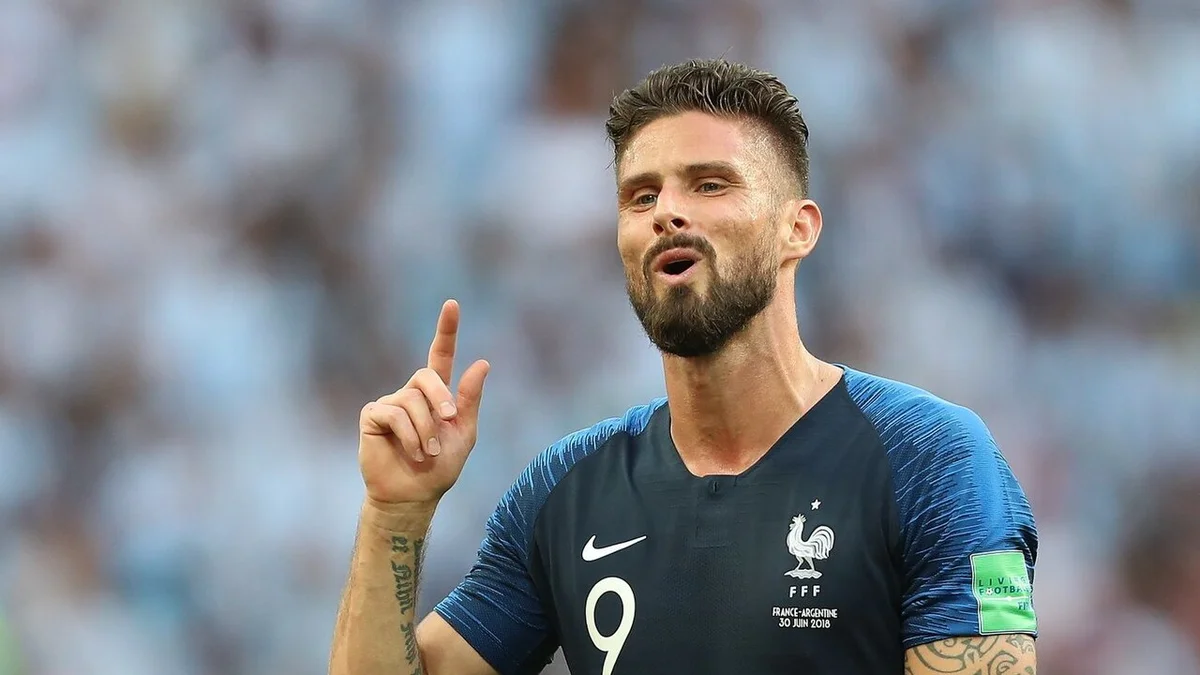
Olivier Giroud is the clearest modern example of what is a target man in football. At the 2018 World Cup in Russia, he played every game as France’s starting forward. He did not score a goal in the tournament, yet he was crucial: he pressed, won high and loose balls, and fed quicker teammates such as Antoine Griezmann and Kylian Mbappé as France won the trophy.
Didier Drogba showed the role at its best at Chelsea. His hold-up play in the 2012 Champions League semi-final against Barcelona and in the final against Bayern Munich kept Chelsea in both games. In addition, other well-known examples are Fernando Llorente, Wout Weghorst, Darwin Núñez, Victor Osimhen and Peter Crouch, who stands 2.01 m tall.
Frequently Asked Questions
What does a target man do?
A target man wins high balls, holds the ball up with his back to goal, and lays it off to teammates, in addition to scoring goals himself.
Is a target man the same as a poacher?
No. A poacher scores inside the box, while a target man holds the ball up and brings teammates into play. The roles are different, although one player can do both at times.
Why do teams still use a target man?
Because the role gives a team a direct route up the pitch and a plan B off the bench. It is also useful against a high press, since a long ball to the target man bypasses the press.
Who is the best target man in football?
There is no single answer, but Olivier Giroud, Didier Drogba and Peter Crouch are among the most famous examples.
Can a short striker be a target man?
Height helps, since the role is built on winning high balls. However, a shorter striker with great strength and hold-up play can do the job, although the classic target man is tall and physical.
Conclusion
That is what is a target man in football: a big, strong striker who wins high balls, holds the ball up and brings teammates into play. The role is as old as the game itself and a staple of English direct football. It is less common in possession-based teams, but it is still vital — especially as a plan B. For more explainers like this one, visit our sports news section and check the free live scores page.