
- What Is a Penalty Kick in Football? The Basic Idea
- When Does the Referee Award a Penalty Kick?
- The 11-Metre Spot and the Goalkeeper's Line
- What Is a Penalty Kick in Football? The Run-Up and the Feint
- What Happens After the Kick? Rebounds and Retakes
- What Is a Penalty Kick in Football? Encroachment Explained
- What Is a Penalty Kick in Football? How It Differs from a Shootout
- The History of the Penalty Kick
- The Panenka: The Most Famous Penalty Kick Ever
- What Is a Penalty Kick in Football? Frequently Asked Questions
- Can the goalkeeper move before the kick?
- What happens if the kicker feints after the run-up?
- Can the kicker score from a rebound off the post?
- What is the difference between a penalty kick and a penalty shootout?
- Does VAR check penalty decisions?
- Who invented the penalty kick?
- Conclusion
What is a penalty kick in football? It is the best scoring chance in the game: a free shot at goal from 11 metres, with only the goalkeeper to beat. The referee awards it when a player commits a direct free kick offence inside their own penalty area. As a result, one kick can win a match, save a point or decide a cup final. This guide explains the rules in plain English: the spot, the goalkeeper’s line, the run-up, rebounds, retakes and the famous Panenka.
Last updated: November 2026
Quick Answer
- What is a penalty kick in football? A free shot at goal from the penalty mark, 11 metres from the goal line, with only the goalkeeper to beat.
- The referee awards it when a player commits a direct free kick offence inside their own penalty area.
- Only the kicker and the goalkeeper take part at the moment of the kick. Every other player waits outside the penalty area.
- The kicker may play a rebound off the goalkeeper, but not off the post or crossbar.
- The penalty kick was introduced in 1891, and the Panenka made it famous in 1976.
What Is a Penalty Kick in Football? The Basic Idea
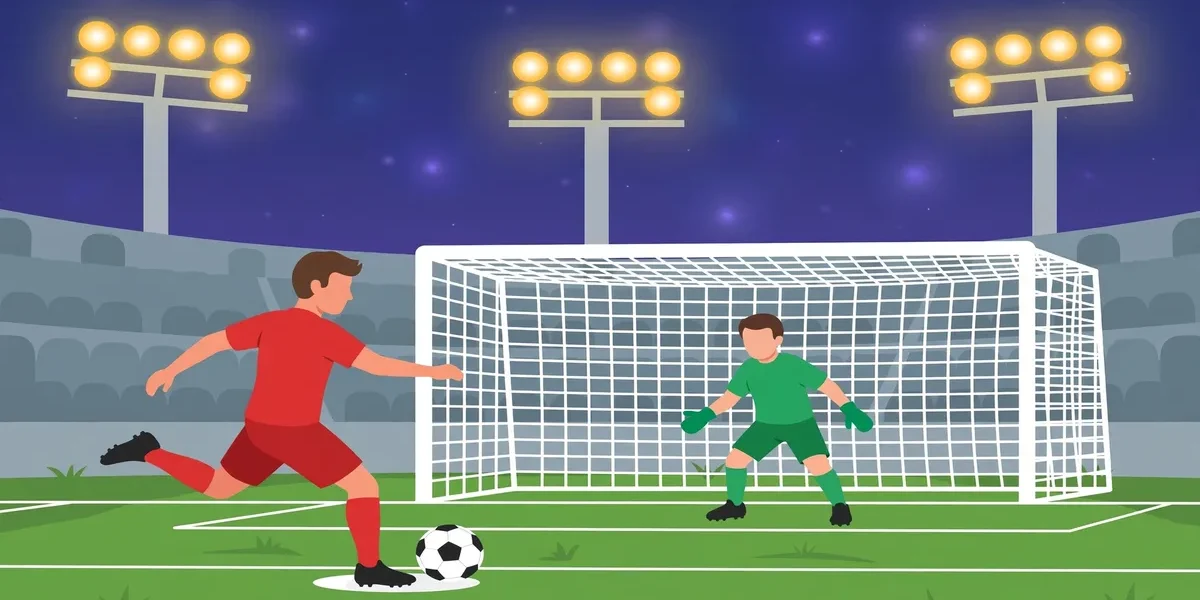
IFAB Law 14 governs the penalty kick. The ball sits on the penalty mark, 11 metres (12 yards) from the goal line, in the centre of the goal. The ball must be stationary, and the kicker must tell the referee who will take it. Only the kicker and the defending goalkeeper take part at the moment of the kick. Every other player waits outside the penalty area, behind the penalty mark, and at least 9.15 metres (10 yards) from the mark. The kicker kicks the ball forward, and the kick counts as a goal if the ball crosses the goal line between the posts and under the crossbar.
When Does the Referee Award a Penalty Kick?
The referee awards a penalty kick when a player commits a direct free kick offence inside their own penalty area. Direct free kick offences include tripping, pushing, holding, jumping at an opponent, charging, striking, tackling, and handling the ball. Outside the penalty area, however, the same offence brings a direct free kick instead. Inside the area, the punishment is a penalty kick, because the foul stops a scoring chance close to goal. The referee can also award a penalty for an offence committed off the field of play as part of play, under Laws 12 and 13. VAR can review penalty decisions, and the video assistant referee can correct a wrong call. Penalty decisions are one of the four reviewable categories. For the full story, read our guide on how VAR works.
The 11-Metre Spot and the Goalkeeper’s Line
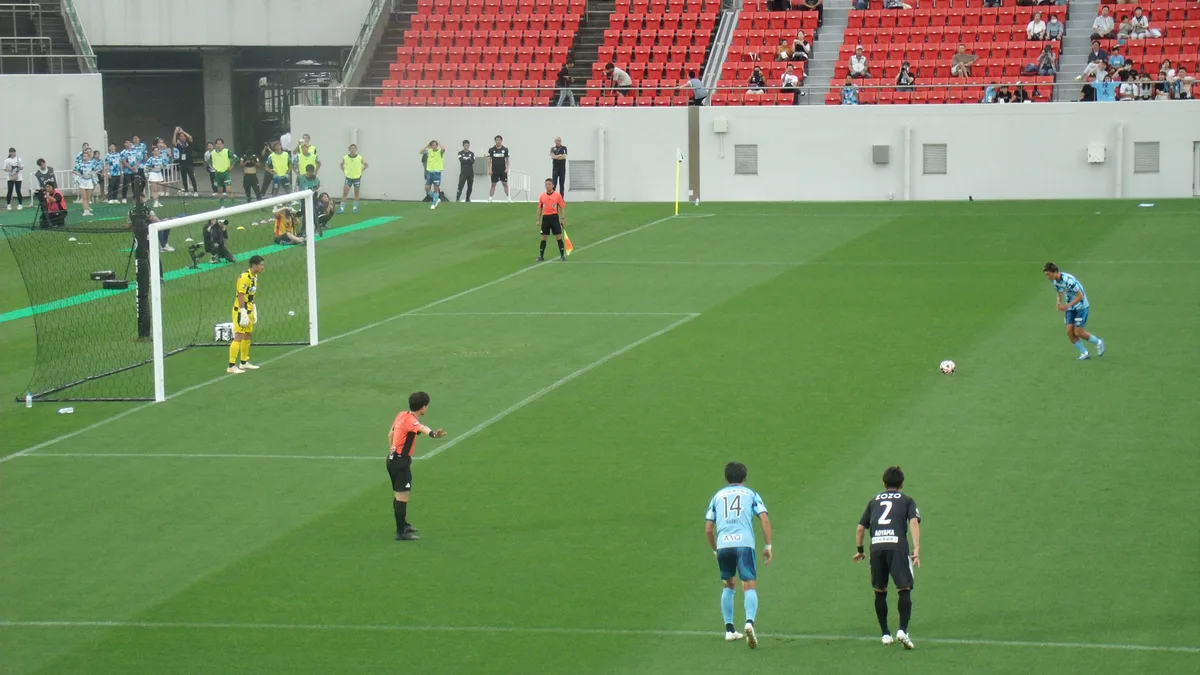
The ball goes on the penalty mark, 11 metres from the goal line, in the centre of the goal. The defending goalkeeper must remain on the goal line, facing the kicker, between the goalposts, until the kicker strikes the ball. At the moment of the kick, the goalkeeper must have at least part of one foot touching, in line with, or behind the goal line. IFAB clarified this foot-on-the-line rule in 2019. The goalkeeper may move sideways along the line and wave their arms to put the kicker off. However, the goalkeeper must not touch the goalposts, crossbar or net, and must not behave in a way that unfairly distracts the kicker, for example by delaying the kick. In addition, all other players must stay outside the penalty area, behind the penalty mark, and at least 9.15 metres from the penalty mark until the kicker strikes the ball.
What Is a Penalty Kick in Football? The Run-Up and the Feint
The kicker kicks the ball forward. The kicker may feint during the run-up, with stutter steps, a pause or a change of pace. However, once the kicker completes the run-up, feinting becomes an offence. If the kicker feints after completing the run-up, the referee awards an indirect free kick to the defending team and cautions the kicker for unsporting behaviour. After that, the kicker must not play the ball again until it has touched another player. For that reason, the kicker has one clean strike at goal, and the goalkeeper has one chance to stop it.
What Happens After the Kick? Rebounds and Retakes
A penalty kick counts as a goal if the ball crosses the goal line between the posts and under the crossbar. If the goalkeeper saves the kick and the ball stays in play, the kicker may play the rebound, because the goalkeeper has touched the ball. If the ball rebounds off the post or crossbar without touching anyone, the kicker cannot play it. The kicker must not touch the ball again until another player has touched it. When the ball goes out of play, the game restarts as normal, with a goal kick or a corner kick.
The goalkeeper may come off the line early. A scored kick still counts as a goal. If the kicker misses or the goalkeeper saves the kick and the goalkeeper’s offence clearly affected the kicker, the referee orders a retake. For a first offence in the game, the referee warns the goalkeeper. A later offence brings a caution.
What Is a Penalty Kick in Football? Encroachment Explained
Encroachment means players entering the penalty area too early, before the kicker strikes the ball. The referee only punishes encroachment when it clearly impacts play. The rules work like this. If a defending player encroaches and the kicker misses or the goalkeeper saves the kick, the referee orders a retake. The goal stands when the kicker scores. An attacking player encroaches and the kicker scores, so the referee orders a retake. The defending team gets an indirect free kick when the kicker misses. In short, encroachment only changes the result when it changes what happened on the kick.
What Is a Penalty Kick in Football? How It Differs from a Shootout
A penalty kick is not the same as a penalty shootout kick. In a normal penalty kick, the kicker may play a rebound off the goalkeeper, and other players can rush in. In a shootout, there are no rebounds at all. The kicker touches the ball only once, and the kick is over whether the goalkeeper saves it or the ball hits the woodwork. In addition, a shootout follows a different format, with five kicks each and sudden death if the scores stay level. For the full rules on shootouts, read our guide on what is a penalty shootout in football.
The History of the Penalty Kick
The story behind what is a penalty kick in football starts in 1891. Before that year, defenders could foul attackers near the goal and give away only a free kick. Irish goalkeeper and administrator William McCrum proposed a stronger punishment: a free shot at goal from 11 metres. The football authorities accepted the idea, and football introduced the penalty kick in 1891. That change transformed the game at once, because defenders could no longer stop a certain goal with a cheap foul. The penalty kick has kept the same basic shape ever since: one kicker, one goalkeeper, 11 metres.
The Panenka: The Most Famous Penalty Kick Ever
Antonín Panenka of Czechoslovakia took the most famous penalty kick ever in the 1976 European Championship final. With Czechoslovakia leading 4-3 in the shootout, Panenka stepped up and chipped the ball gently down the middle, past the diving West Germany goalkeeper Sepp Maier. Fans call the chip the Panenka, and the kick carries his name. The Panenka is the bravest and riskiest penalty of all. If the goalkeeper stays put, the soft chip becomes an easy catch. In the end, Panenka trusted his nerve, and the goal won the European Championship for Czechoslovakia.
What Is a Penalty Kick in Football? Frequently Asked Questions
These are the questions fans ask most about what is a penalty kick in football.
Can the goalkeeper move before the kick?
Yes. The goalkeeper may move sideways along the goal line and wave their arms. However, at the moment of the kick, the goalkeeper must have at least part of one foot touching, in line with, or behind the goal line.
What happens if the kicker feints after the run-up?
The referee awards an indirect free kick to the defending team and cautions the kicker for unsporting behaviour. The Laws allow feinting during the run-up, but not after the kicker completes it.
Can the kicker score from a rebound off the post?
No. The kicker must not play the ball again until it has touched another player. If the ball rebounds off the post or crossbar without touching anyone, the kicker cannot play it. If the goalkeeper touches it first, the kicker may play the rebound.
What is the difference between a penalty kick and a penalty shootout?
A normal penalty kick allows rebounds off the goalkeeper, and other players can follow up. A shootout kick has no rebounds at all, and the kicker touches the ball only once.
Does VAR check penalty decisions?
Yes. Penalty decisions are one of the four reviewable categories, so VAR can check them and correct a wrong call.
Who invented the penalty kick?
Irish goalkeeper and administrator William McCrum proposed it, and football introduced the penalty kick in 1891.
Conclusion
So what is a penalty kick in football? It is the best scoring chance in the game: one kicker, one goalkeeper, 11 metres, and a whole match on the line. Overall, the rules are simple once you know them. The ball goes on the spot, the goalkeeper stays on the line, the kicker shoots forward, and rebounds follow the rules on who touched the ball first. From William McCrum’s idea in 1891 to Panenka’s chip in 1976, the penalty kick has given football some of its greatest moments. For more football stories, visit our Sports News page. Follow the next matches on our free live scores page, and see ideas for upcoming matches on our free football predictions page.
