- What Is a Through Ball in Football?
- How Does a Through Ball in Football Work?
- The Through Ball in Football and the Offside Rule
- Types of Through Ball in Football
- Famous Examples of a Through Ball in Football
- Through Ball Leaders: The Modern Data
- What a Through Ball Is Not
- How to Spot a Through Ball While Watching
- Frequently Asked Questions
- What is a through ball in football?
- Can a through ball beat the offside trap?
- What is the difference between a through ball and a long ball?
- Who has played the most through balls in the Premier League?
- Is a through ball the same as a key pass?
- Conclusion
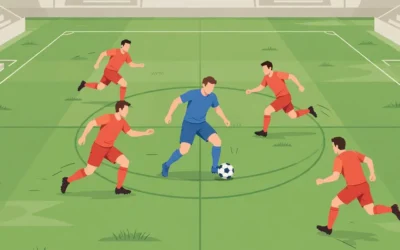
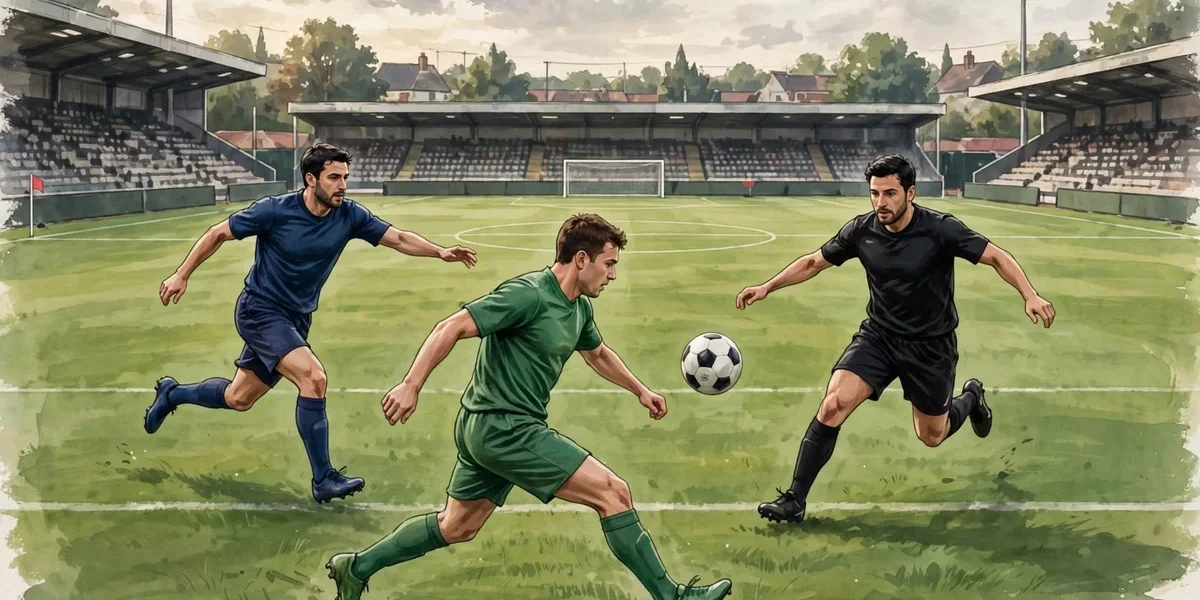
A through ball in football is a pass that splits the defence and sends a team-mate running into space behind it. It turns a quiet build-up into a sudden chance. For example, a midfielder spots a gap between two defenders, slides the ball through it, and a forward races clear on goal. In short, the through ball rewards vision, timing and courage.
Last updated: November 2026
Quick Answer
- A through ball is a forward pass played into space, between or behind defenders, for a team-mate to run on to.
- Opta defines it as “a pass splitting the defence for a team mate to run on to.”
- The receiver can end up beyond the last defender, as long as the receiver was onside when the pass came.
What Is a Through Ball in Football?
Opta collects the Premier League’s performance data. It defines a through ball as “a pass splitting the defence for a team mate to run on to.” In plain terms, a through ball in football is a pass into space, not a pass to a team-mate’s feet. The passer aims at the area the runner will reach.
The Premier League lists “Through balls” as a standard team and player statistic. In addition, coaches and commentators use several other names for the same pass: a defence-splitting pass, a killer pass, or a penetrating pass. However, all of those names describe the same idea: a pass that breaks the defensive line and creates a chance.
How Does a Through Ball in Football Work?
Three things must come together: space, timing and weight. First, the space must exist: a common coaching rule of thumb is roughly 15 yards or more of clear space behind the back line. Without that gap, the pass has nowhere to go.
Second, the timing must be right. The passer must release the ball just before or as the forward starts the run, and the runner must anticipate the pass. In other words, both players must read the same moment. If it comes too late, the gap has closed.
Third, the weight of the pass must be perfect. The ball needs just the right pace to reach the receiver. Too soft, and a defender cuts it out. Too hard, and it runs through to the goalkeeper.
The team’s playmaker usually supplies the pass. That creative midfielder sees the opening before anyone else does. Great through-ball players also hide the pass. For example, Cesc Fàbregas, on his Premier League debut for Chelsea against Burnley in August 2014, shaped to shoot. Instead, he played a first-time through ball that fooled everybody and set up André Schürrle.
The Through Ball in Football and the Offside Rule
A through ball in football often looks offside. For example, the receiver sprints beyond the last defender and collects the ball in space. However, Law 11 judges offside at the moment a team-mate plays or touches the ball, not when the receiver gets it.
In practice, a receiver can be beyond the last defender when the ball arrives, provided the receiver was onside at the moment of the pass. For instance, a player level with the second-last opponent counts as onside. In addition, a player behind the ball when a team-mate plays it cannot be offside at all.
Being in an offside position is not an offence by itself. It only becomes one if the player gets involved in active play.
Types of Through Ball in Football
Coaches describe several types, and each one suits a different situation.
Straight through ball. This pass goes between the two central defenders, or just wide of them.
Diagonal through ball. The passer angles this pass into the path of an attacker. For example, it often finds wingers or outside forwards running into space.
Ground through ball. The ground through ball is the most common form. In fact, it is fast, accurate and hard for defenders to reach.
Lofted or chipped through ball. When defenders block the ground route, the passer chips the ball over them. It drops into the runner’s path behind the line.
Ball into the channel. This pass goes into the space between the full-back and the centre-back, known as the channel.
Famous Examples of a Through Ball in Football

Some through balls decided huge matches. The runner is often a striker. Four examples show the pass at its best.
Cesc Fàbregas announced himself at Chelsea with a perfect through ball. On 18 August 2014, on his Premier League debut, he played a first-time through ball to André Schürrle. Schürrle finished from close range in the 21st minute of a 3-1 win at Burnley.
The most famous of all decided a World Cup final. In the 116th minute of the 2010 final, substitute Cesc Fàbregas slotted Andrés Iniesta in inside the penalty area. Then, Iniesta took one touch and volleyed low past Maarten Stekelenburg for the only goal. Spain won 1-0 after extra time in Johannesburg, their first World Cup. In fact, the ball reached Fàbregas after a Dutch clearance, so he played the pass from inside the area rather than from deep.
Dennis Bergkamp produced one of the great through balls on the final day of Arsenal’s unbeaten season. On 15 May 2004, against Leicester City, he played a brilliantly deft ball through the Leicester backline for the onrushing Patrick Vieira, who rounded the goalkeeper and scored. The goal won the match 2-1, sealing the day Arsenal made history as the Invincibles. Previously, Bergkamp starred against Leicester in February 1999, when he became the first player to assist four goals in one Premier League match — a different game.
Kevin De Bruyne produced two celebrated through balls in the same match. On 14 October 2017, against Stoke City, he played a disguised through ball to Leroy Sané in the 19th minute of a 7-2 win. After that, Sané squared for Raheem Sterling to make it 2-0. In the 62nd minute, De Bruyne curled a through ball into Sané’s path. Finally, Sané finished through Jack Butland’s legs for 6-2.
Through Ball Leaders: The Modern Data
Kevin De Bruyne is the modern benchmark for the through ball. Since his Premier League debut in August 2015, he has produced over 209 through balls, according to Opta figures reported in May 2025. In the same period, only four other players in the division attempted even half as many. In addition, he created a Premier League-high 197 big chances.
His best season for through balls was 2022-23, when he completed 29, the most in the Premier League. Meanwhile, Bruno Fernandes finished second that season with 18.
Fernandes leads the 2025-26 Premier League through-ball chart, with 18 through balls after the first 21 matchweeks, as of November 2026.
Similarly, Cesc Fàbregas sits second on the Premier League’s all-time assists list, with 111 assists in 350 appearances, behind Ryan Giggs on 162.
What a Through Ball Is Not
A through ball is easy to confuse with other passes, so it helps to know what it is not.
A cross is different. Instead, it comes from wide, across the face of goal into the penalty area, usually to a team-mate’s head or feet. Opta counts crosses as a separate event from passes.
A long ball is different too. In contrast, it is a long pass, often in the air to a target player. The Premier League lists “Long balls” separately from “Through balls”. A long ball does not have to split the defence or find a runner in space.
A pass to feet is not a through ball either. For example, a pass played directly to a team-mate’s feet is a different thing, even if it goes forward.
Finally, a through ball is not the same as a key pass. An Opta key pass is the final pass leading to a shot attempt. A through ball that leads to a shot is a key pass, but most key passes are not through balls.
How to Spot a Through Ball While Watching
Watch the passer, not the ball. For example, the passer plays the best through balls a split second before the runner moves. In addition, watch the defensive line: when the back four steps up together, the space behind it is the danger zone. The pass can come from several football positions. The live scores show the result a moment later.
Frequently Asked Questions
What is a through ball in football?
A through ball in football is a forward pass played into space, between or behind defenders, for a team-mate to run on to. Opta defines it as “a pass splitting the defence for a team mate to run on to.”
Can a through ball beat the offside trap?
Yes. In short, offside depends on where the receiver stood when a team-mate played the ball. As a result, a forward who starts the run onside can collect the ball beyond the last defender and score legally.
What is the difference between a through ball and a long ball?
A through ball splits the defence and goes into space for a runner. In contrast, a long ball is simply a long pass, often in the air to a target player. It does not have to split the defence.
Who has played the most through balls in the Premier League?
Kevin De Bruyne is the modern benchmark. Since his Premier League debut in August 2015, he has produced over 209 through balls, according to Opta.
Is a through ball the same as a key pass?
No. In short, an Opta key pass is the final pass leading to a shot attempt. A through ball that leads to a shot counts as a key pass, but most key passes are not through balls.
Conclusion
The through ball is football’s most direct attacking pass. First, it needs space behind the defence, a runner who times the move, and a passer who can weight the ball perfectly. Overall, a through ball in football has decided World Cup finals and sealed unbeaten seasons.