- What Is a Bet?
- The Four Parts of Every Bet
- How to Place a Bet
- What Is a Bet Settlement?
- What Is a Bet Worth? Reading the Odds
- Types of Bet at a Glance
- What Is a Bet? Worked Examples
- What Is a Bet? Common Mistakes
- Frequently Asked Questions
- What is a bet in football?
- What is a bet slip?
- What is a bet settlement?
- Can a bet be cancelled after it is placed?
- What happens to a bet if a match is postponed?
- Bet Responsibly
What is a bet? A bet is an agreement to risk money on the outcome of an uncertain event. If the outcome you picked happens, you are paid. If not, you lose the money you risked.
Every bet works the same way, whether you place it on football, horse racing or dice. The names change, but the parts stay the same.
Quick Answer: What is a bet? A bet means putting money behind a prediction. You pick an outcome, you risk a stake on it, and the odds set your payout if you are right. A bet has four parts: a selection, odds, a stake and a settlement.
Last updated: November 2026
What Is a Bet?
What is a bet, in the simplest terms? A bet is a deal between you and a bookmaker. You say an outcome will happen, and you put money behind that claim. The bookmaker takes the other side of the deal and offers you a price for it.
A bet is not a guess with nothing at stake. Without a stake, a prediction is only an opinion. With a stake, it has a cost when it is wrong and a reward when it is right.
In other words, a bet turns a view into a contract, with the terms set before the event starts. After the event, the result decides the payout.
For example, a football bet asks who wins, a horse racing bet asks which horse finishes first, and a craps bet asks what the next roll will be. In each case, the same four parts decide what happens.
The Four Parts of Every Bet
Every bet is built from the same four parts.
| Part | What it is | Example |
|---|---|---|
| Selection | The outcome you pick | Arsenal to win |
| Odds | The price on that outcome | 2.00 |
| Stake | The money you risk | ₦5,000 |
| Settlement | How the result is worked out | Arsenal win, so the bet wins |
The selection is the outcome you choose inside a market. A market names the question you are betting on, such as “which team wins the match”.
In addition, the odds give your selection its price. They set your payout and they reflect how likely the outcome looks. Short odds mean a likely outcome with a small payout. Long odds mean an unlikely outcome with a big payout.
The stake is the money you put at risk. It leaves your balance while the bet is open. In short, if the bet wins, the stake comes back with the profit. If the bet loses, the stake is gone.
Finally, settlement closes the bet. After the event, the bookmaker checks the official result against the rules of the market. Then the bookmaker marks the bet as a win, a loss, a push or a void, and updates your balance.
Two more words matter here. The return is the total amount you get back after a win, including your stake. The profit is only the extra amount above your stake. For example, a ₦5,000 stake at 2.00 returns ₦10,000, but the profit is ₦5,000. As a result, many beginners overstate their winnings by confusing the return with the profit.
How to Place a Bet
Placing a bet follows the same steps on almost every betting site. Firstly, you choose an event and a market. That could be a football match and the match winner market, or a horse race and the winner market.
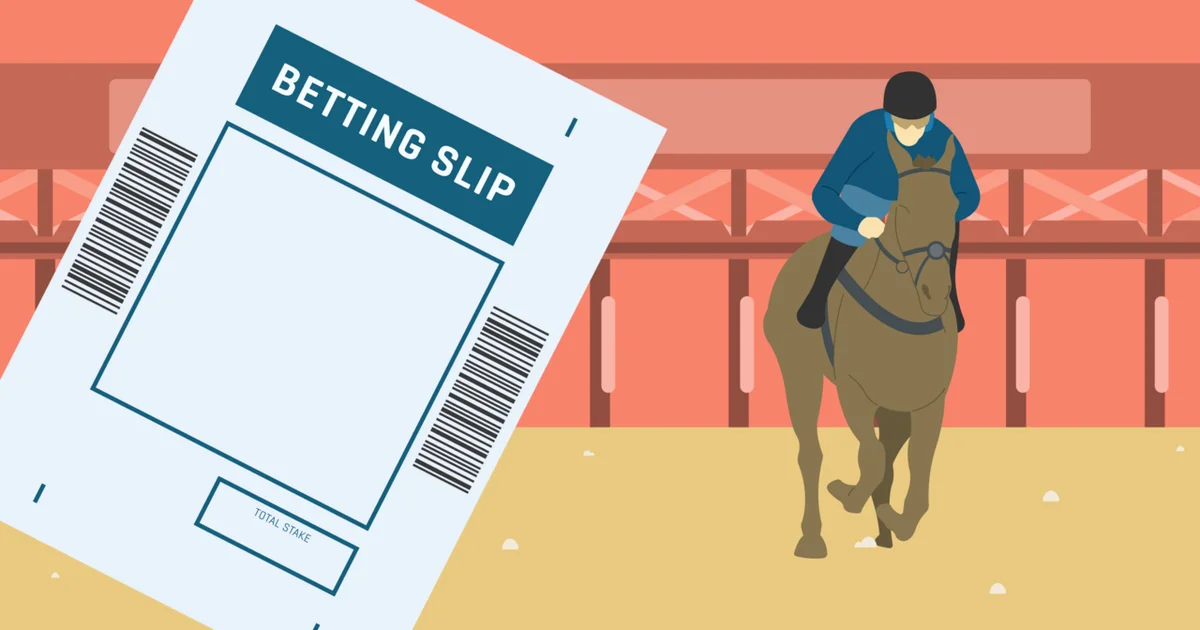
Secondly, you pick your selection inside that market. The selection goes onto your bet slip, which is the panel that shows the selection, the odds, the stake and the potential return before you confirm.
Thirdly, you enter your stake. The slip shows the potential return at once, so check the numbers before you confirm.
Finally, you confirm the bet. At that point the stake leaves your balance and the bet is live. With fixed odds, you keep the price you took, even if the odds move afterwards. The bookmaker cannot change your price once you confirm the bet.
Our step-by-step guide to how to bet on football in Nigeria walks through the same process on a real betting site, from opening an account to placing a first bet.
What Is a Bet Settlement?
Settlement is how a bet is worked out after the event ends. Most bets end in one of four ways.
| Outcome | What it means | What happens to your stake |
|---|---|---|
| Win | Your selection happened | Stake returned plus profit |
| Loss | Your selection did not happen | Stake is lost |
| Push | The result lands exactly on the line | Stake is returned |
| Void | The bet cannot be decided | Stake is returned |
For example, a push happens when the result lands exactly on the line. For example, a bet on over 2.5 goals cannot push, because a match cannot have 2.5 goals. However, a bet on a team at -3 goals can push if the team wins by exactly 3.
In contrast, a void happens when the event cannot be settled under the market rules. If officials call off a match before it starts, most bookmakers void the bets on it and return the stakes. If a player retires early in a tennis match, most bookmakers void the bets on that match too.
A dead heat is a special case: two or more selections finish tied, such as two horses crossing the line together. The bookmaker divides the stake into equal parts, one for each winner, and pays only one part at the full odds. The rest counts as a losing bet.
In short, settlement follows the official result, not the live score on your screen. If a result is later changed by the league, most bookmakers still settle on the result as it stood at the end of the event. Always check the settlement rules on the site you use.
What Is a Bet Worth? Reading the Odds
Odds tell you two things at once: how much you could win, and how likely the outcome looks. Three formats are used around the world, and they all describe the same price.
Decimal odds are the format most Nigerian bettors see. They show the total return per unit staked, including the stake. A stake of ₦5,000 at 2.00 returns ₦10,000. A stake of ₦5,000 at 1.50 returns ₦7,500.
Fractional odds are common in the United Kingdom: 1/1 means you win ₦1 for every ₦1 staked, the same as 2.00 in decimal.
American odds use a plus and minus sign. A minus price, such as -110, shows how much you must risk to win ₦100, while a plus price, such as +175, shows how much you win from a ₦100 stake. Our guide to how to read sports betting odds explains all three formats and how to convert between them.
Odds also carry an implied probability. You can work it out by dividing 1 by the decimal odds. Odds of 2.00 imply a 50% chance. At 1.50, the implied chance is 66.7%. At 3.50, it is 28.6%. The implied chances across all outcomes in a market always add up to more than 100%, because the extra is the bookmaker’s margin.
Types of Bet at a Glance
To begin with, a single bet is the simplest type of bet. It has one selection and one outcome. If the selection wins, you are paid. If it loses, you lose the stake. Our guide to what is a single bet explains it in full.
On the other hand, combined bets join two or more selections into one bet. A double has two selections, a treble has three, and an accumulator has four or more. Every leg must win for the bet to pay out, but the odds multiply together, so the payout is bigger.
| Bet type | Selections | How it pays |
|---|---|---|
| Single | 1 | One selection wins, the bet wins |
| Double | 2 | Both selections must win |
| Treble | 3 | All three selections must win |
| Accumulator | 4 or more | Every leg must win |
| Each-way | 1 horse or golfer | Pays for a win, and for a place |
In contrast, an each-way bet is really two bets in one. Half the stake goes on the selection to win, and half goes on it to place, usually in the top three or four. It costs double the stake, but it pays something back if the selection finishes placed without winning.
The glossary in our Mastering the Game guide defines every one of these bet types.
What Is a Bet? Worked Examples
Work through three examples with naira stakes.
Firstly, a single bet. You back Arsenal to win at 2.00 with a ₦5,000 stake. Arsenal win the match. Your bet wins and returns ₦5,000 × 2.00 = ₦10,000, which is ₦5,000 profit.
Secondly, a longer price. You back a horse to win at 3.50 with a ₦2,000 stake. The horse wins the race. Your bet wins and returns ₦2,000 × 3.50 = ₦7,000, which is ₦5,000 profit.
Thirdly, an accumulator. You combine three selections at 1.50, 2.00 and 1.80. The combined odds come to 1.50 × 2.00 × 1.80 = 5.40. You stake ₦5,000. If all three legs win, your bet returns ₦5,000 × 5.40 = ₦27,000, which is ₦22,000 profit. If any leg loses, the whole bet loses.
| Example | Stake | Odds | Return if it wins | Profit |
|---|---|---|---|---|
| Single at 2.00 | ₦5,000 | 2.00 | ₦10,000 | ₦5,000 |
| Single at 3.50 | ₦2,000 | 3.50 | ₦7,000 | ₦5,000 |
| Three-leg accumulator | ₦5,000 | 5.40 | ₦27,000 | ₦22,000 |
As a result, the accumulator shows why combined bets are tempting and dangerous at the same time. The payout is much bigger, but one losing leg wipes out the whole stake.
What Is a Bet? Common Mistakes
The most common mistake is confusing the return with the profit. A ₦5,000 stake at 2.00 returns ₦10,000, but only ₦5,000 of that is profit. The other ₦5,000 is your own stake coming back.
For instance, treating the odds as a guarantee is a mistake. Odds are a price, not a promise. A selection at 1.20 still loses about one time in six. Short odds mean likely, not certain.
Thirdly, forgetting the margin is a mistake. The implied chances in a market always add up to more than 100%. That extra is the bookmaker’s edge, and it means the odds are always slightly against you. In other words, you need to be right more often than the odds suggest just to break even.
Finally, many beginners bet without checking the settlement rules. Markets have different rules for extra time, retirements and dead heats, and a bet that looks like a winner can be voided or halved if you did not read them first.
Frequently Asked Questions
What is a bet in football?
What is a bet in football? It is a wager on something that happens in a football match, most often which team wins. You can also bet on goals, corners, cards and many other markets.
What is a bet slip?
What is a bet slip? It is the panel on a betting site or the paper slip at a betting shop that shows your selection, the odds, your stake and the potential return. You check the slip and confirm it to place the bet.
What is a bet settlement?
What is a bet settlement? It is the process of working out a bet after the event ends. The bookmaker checks the official result against the market rules, then marks the bet as a win, a loss, a push or a void.
Can a bet be cancelled after it is placed?
In most cases, no. Once you confirm a bet, the bookmaker takes the stake and the bet goes live. Some bookmakers offer cash-out, which settles the bet early for a smaller amount, but that is not the same as cancelling it.
What happens to a bet if a match is postponed?
If a postponed match does not take place within the time limit in the rules, usually 24 to 48 hours, most bookmakers void the bets and return the stakes. If it is played within the limit, the bet stands.
Bet Responsibly
A bet is a prediction with money on it, and the money is real. Keep the stakes small, set a limit before you bet, and never chase a loss with a bigger bet.
Betting is for adults aged 18 and over only. Set a limit before you bet and stick to it. If betting stops being fun, take a break and seek help.