- What Is a Libero in Football?
- How the Libero Works on the Pitch
- What Is a Libero in Football? The Origins of the Role
- What Is a Libero in Football? Beckenbauer and Baresi
- What Is a Libero in Football? Why the Role Faded
- What Is a Libero in Football? The Modern Echoes
- Libero vs Centre-Back vs Sweeper-Keeper
- Frequently Asked Questions
- What is a libero in football, and is it the same as a sweeper?
- Is the libero the same as a sweeper-keeper?
- Who was the greatest libero?
- Why did teams stop using a libero?
- Conclusion
What is a libero in football? It is the name for a defender who plays behind the main defensive line, free from marking any single opponent. In Italian, the word “libero” means “free”, and that freedom is the whole point of the role. Instead of picking up one striker, the libero reads the game, sweeps up loose balls, covers for teammates, and starts attacks from deep. In short, the libero is the free man at the back.
Last updated: November 2026
Quick Answer
- A libero is a defender who plays behind the back line, free from marking a specific opponent.
- The role began in 1930s Switzerland, became famous in 1960s Italy, and reached its peak with Franz Beckenbauer in the 1970s.
- The libero sweeps up danger, covers for teammates, and carries the ball out of defence to start attacks.
- The role faded in the 1990s as teams moved to flat back fours, zonal marking and high pressing lines.
- As of November 2026, the libero’s jobs are shared between ball-playing centre-backs, deep-lying midfielders and sweeper-keepers.
What Is a Libero in Football?
The libero is also called a sweeper, and the two words mean the same role. In a normal back line, each defender has a job. One marks a striker, another holds a zone, and a third covers the flank. By contrast, the libero has no direct opponent. Instead, the libero sits a few metres behind the other defenders and watches the whole game unfold.
For example, a striker may beat the centre-back and run through on goal. At that moment, the libero steps across and clears the danger. As a result, the libero acts as a safety net for the whole defence.
The job does not end with clearing danger. In fact, the libero also starts attacks. After winning the ball, the libero carries it out of defence and passes it into midfield. Therefore, the best liberos were calm on the ball and good passers. For the full picture of where the role fits, see our guide to football positions.
How the Libero Works on the Pitch
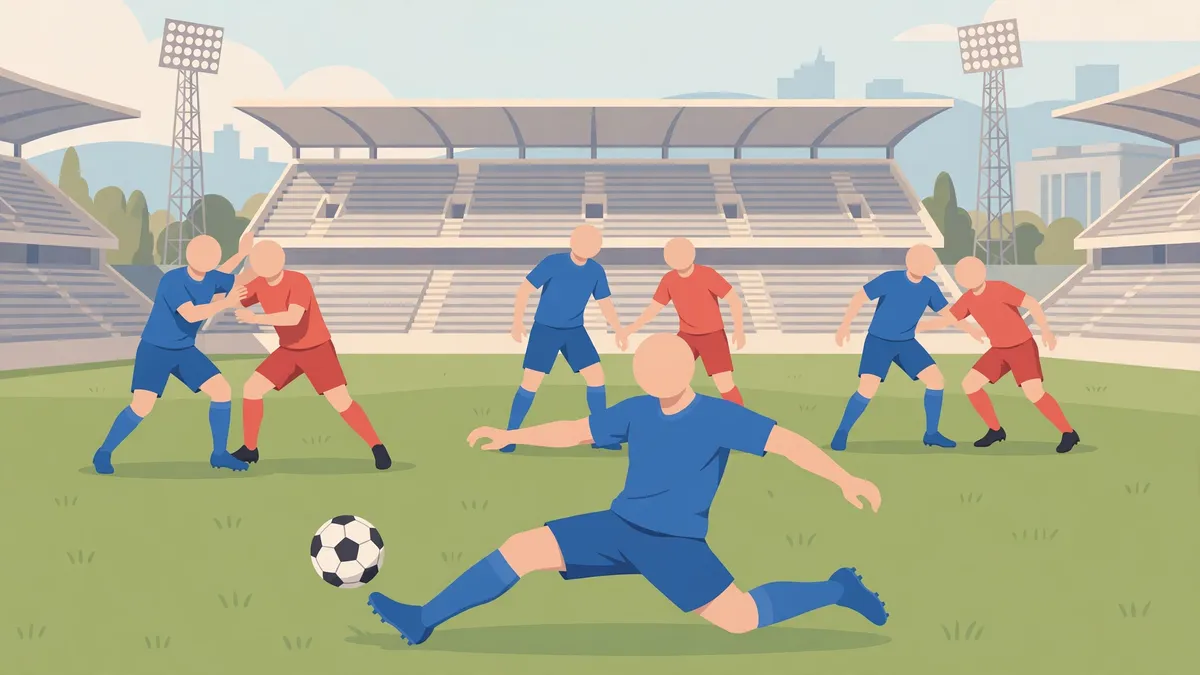
The libero’s position is the key to the whole role. Many fans ask what is a libero in football when they see a defender sitting so deep. First, the libero lines up behind the two centre-backs, or behind a back three. Then, as the game moves, the libero stays deep and keeps the whole pitch in view. Meanwhile, the other defenders push up to meet their opponents. Because the libero stays free, the libero can react to danger anywhere across the back line.
In addition, the libero covers for teammates. For instance, a centre-back may step out to press a striker. If the striker beats that challenge, the libero fills the gap.
With the ball, the libero turns defence into attack. After a clearance, the libero takes a touch, looks up, and passes forward into midfield or carries the ball out of defence. Above all, the libero needs composure, because the libero starts play from the most dangerous area of the pitch. One mistake at the back can lead straight to a goal.
What Is a Libero in Football? The Origins of the Role
First, the role began in Switzerland in the 1930s. Austrian coach Karl Rappan devised a system called “verrou”, the French word for “bolt” or “lock”. Rappan used it at Servette and with the Swiss national team.
Meanwhile, in Italy, coach Nereo Rocco took the idea further. At Triestina, Rocco developed Ivano Blason into arguably the first celebrated libero. Blason played behind the defence, swept up loose balls, and started attacks.
In time, the system became famous under a new name in the 1960s: catenaccio. In Italian, the word means “door-bolt”. Helenio Herrera’s Grande Inter made the system famous, with Armando Picchi as the libero. Inter won the European Cup in 1964 and 1965.
What Is a Libero in Football? Beckenbauer and Baresi
Franz Beckenbauer reinvented the libero in the 1970s. At Bayern Munich and for West Germany, Beckenbauer played the role as an attacking libero. Instead of staying deep and clearing danger, Beckenbauer carried the ball out of defence and dictated play from the back. In other words, Beckenbauer turned the sweeper into a playmaker.
Later, in 1974, Beckenbauer captained West Germany to World Cup victory, playing as a libero. Fans nicknamed him “Der Kaiser”.
Later still, Franco Baresi became the defining libero of the 1980s and 1990s. Baresi spent a 20-year one-club career at AC Milan, winning 4 European Cups and 6 Serie A titles. Baresi also won the 1982 World Cup with Italy. Under coach Arrigo Sacchi, Milan moved toward zonal marking and pressing. Therefore, Baresi stands as a transitional figure between the old libero and the modern ball-playing centre-back.
What Is a Libero in Football? Why the Role Faded
The libero began to fade in the 1990s. First, the offside law changed in 1990, and deep, passive defending became riskier. Teams could no longer afford to keep a defender sitting deep behind the line.
Next, tactics moved on. Teams switched to flat back fours, zonal marking and high pressing lines. Instead of one free defender, teams wanted four defenders in a line. In addition, formations such as 4-4-2, 4-2-3-1 and 4-3-3 became dominant from the 1990s. For the full story of how teams line up, see our guide to football formations.
As a result, teams split the libero’s jobs between three roles. Ball-playing centre-backs took over the passing from deep. Deep-lying midfielders took over the job of starting attacks. Sweeper-keepers took over the job of sweeping up behind the line. In short, the role faded as the game found new ways to do the same jobs.
What Is a Libero in Football? The Modern Echoes
If you ask what is a libero in football in the modern game, the honest answer is that the classic role has gone from the top level of football. As of November 2026, the ideas behind the role live on in new forms. The clearest echo is the ball-playing centre-back. Instead of clearing the ball, the modern centre-back steps into midfield and starts the attack. For example, John Stones has stepped from centre-back into midfield for club and country, doing the libero’s old job from a higher starting position.
In addition, modern full-backs have taken on part of the role. Many full-backs push high or tuck into midfield to help build attacks. For the full picture, see our guide to what a full-back is in football. Meanwhile, the sweeper-keeper has taken the other half of the job, coming off the line to clear danger and pass the ball out.
These are echoes, not a return. In other words, no single player does the whole libero job today. Instead, the jobs are shared across the team. Above all, the libero’s legacy is a defender who reads the game, stays calm on the ball, and starts attacks from deep.
Libero vs Centre-Back vs Sweeper-Keeper
The libero is often mixed up with two other roles. First, the centre-back plays in the defensive line and marks an opponent or defends a zone. The libero, by contrast, plays behind the line and has no direct opponent. For the full guide, see what a centre-back is in football.
Second, the sweeper-keeper is a goalkeeper, not a defender. The sweeper-keeper comes off the line to clear danger and pass with the feet. The libero, on the other hand, is an outfield player who works behind the back line. Manuel Neuer is the example most fans name. For the full guide, see what a sweeper-keeper is in football.
The table below sums up the three roles.
| Libero | Centre-back | Sweeper-keeper | |
|---|---|---|---|
| Position | Behind the defensive line | In the defensive line | In goal, often off the line |
| Direct opponent | None — free to read the game | A striker, or a zone to defend | None — free to read the whole pitch |
| Main defensive job | Sweep up loose balls and cover teammates | Stop the striker or hold the zone | Rush out to clear danger |
| Main job with the ball | Carry it out of defence and start attacks | Pass short or clear it | Pass with the feet and start play |
Frequently Asked Questions
What is a libero in football, and is it the same as a sweeper?
Yes. The two words describe the same role. “Sweeper” is the English name, while “libero” is the Italian name. In both cases, the player sits behind the defensive line, sweeps up danger, and starts attacks from deep.
Is the libero the same as a sweeper-keeper?
No. They are very different roles. The libero is an outfield defender who works behind the back line. The sweeper-keeper is a goalkeeper who comes off the line to clear danger and pass the ball out. Manuel Neuer is the example most fans name.
Who was the greatest libero?
Franz Beckenbauer is the name that comes up first. Beckenbauer reinvented the role as an attacking libero and captained West Germany to the 1974 World Cup. Franco Baresi, Gaetano Scirea and Lothar Matthäus also belong in the same conversation.
Why did teams stop using a libero?
The offside law changed in 1990, and deep, passive defending became riskier. At the same time, teams moved to flat back fours, zonal marking and high pressing lines. As a result, formations such as 4-4-2, 4-2-3-1 and 4-3-3 became dominant from the 1990s, and teams shared the libero’s jobs between other roles.
Conclusion
So what is a libero in football, in the end? The free man at the back. From Karl Rappan’s verrou in 1930s Switzerland to Herrera’s Grande Inter and Beckenbauer’s attacking sweeper, the role shaped how teams defended and attacked. The game moved on in the 1990s, and the classic libero faded. Above all, the ideas behind the role never went away. Every time a centre-back steps into midfield, the libero’s spirit lives on.
