- What Is an If Bet?
- How an If Bet Works
- If-Win-Only vs If-Win-or-Push: Which If Bet Setting to Pick
- If Bet Worked Examples: Naira Stakes
- Example 1: Both Legs Win
- Example 2: The First Leg Loses
- Example 3: The First Leg Wins and the Second Loses
- Example 4: A Push on an If-Win-or-Push Ticket
- What Is a Reverse Bet?
- Reverse Bet Worked Example
- If Bet vs Parlay: How the Two Compare
- When an If Bet Makes Sense
- Frequently Asked Questions
- What happens if the first leg of an if bet loses?
- Can an if bet have more than two legs?
- What is the difference between an if bet and a reverse bet?
- Does an if bet pay more than a parlay?
- What does if win or push mean on an if bet slip?
- Bet Responsibly
An if bet is a conditional wager that links two or more selections on one slip. The second bet is only placed if the first one meets a set condition, usually a win.
Most bets stand alone: you stake your money, the event runs, and the bet wins or loses on its own. This wager chains your selections in a set order instead, and each link depends on the one before it.
Quick Answer: An if bet chains two or more bets together on one slip. The next bet only runs if the previous one wins, or wins or pushes, depending on the setting you pick. Each leg pays its own odds, and on a standard if-win-only ticket your maximum loss is the first stake. A reverse bet is two if bets on the same selections running in opposite orders.
Last updated: November 2026
What Is an If Bet?
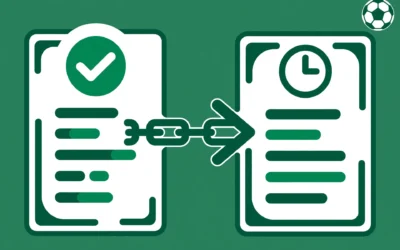
An if bet is a single ticket that holds two or more wagers in a fixed order. A condition applies to each step after the first. The condition is simple: if the first selection wins, the bookmaker places the second bet. If the first selection loses, the chain stops and the second bet never runs.
Think of it as a queue rather than a bundle. In a parlay, every leg must win or the whole ticket loses. Here, on the other hand, the legs settle one at a time. Each one only starts if the leg before it passed its test. Our guide to the different types of bets compares this conditional style with singles and accumulators.
The order matters more than anything else. If your first pick loses, your second pick never gets a chance to pay, even if it goes on to win comfortably. That ordering problem is exactly what the reverse bet was built to solve.
How an If Bet Works
Firstly, pick your selections and put them in order. The selection you trust most usually goes first, because it acts as the trigger for everything behind it.
Secondly, pick your stake and your condition. The stake is the amount you risk on the first leg, and it also funds each later leg if the chain keeps going. The condition decides what counts as a pass: win only, or win or push.
Thirdly, the bookmaker settles the legs one by one. If the first leg wins, the second bet goes on. If any leg fails its condition, the chain stops at once, and the legs behind it are never placed. In other words, you never pay for a bet that never ran. Not every bookmaker offers this wager, so check your slip options first.
If-Win-Only vs If-Win-or-Push: Which If Bet Setting to Pick
The condition you pick changes what happens when a leg neither wins nor loses. That middle outcome is called a push: the result lands exactly on the line, so the bookmaker refunds the stake. A bet on over 2 goals pushes when the match ends with exactly two goals, for example.
An if-win-only ticket is the strict version: the next leg runs only when the previous leg wins outright. A push stops the chain, and the stake for the pushed leg comes back to you. Your maximum loss stays at one stake.
An if-win-or-push ticket, sometimes called a double-action if bet, is the looser version. The next leg runs when the previous leg wins or pushes. Only an outright loss stops the chain, so it survives a push that would have killed the strict version.
| Setting | Next leg runs if the first leg… | Chain stops when… | Maximum loss |
|---|---|---|---|
| If win only | Wins | First leg loses or pushes | One stake |
| If win or push | Wins or pushes | First leg loses | One stake |
If you want the tightest control, pick if win only. If you want your ticket to survive a push on a goals or points line, pick if win or push. In addition, check the default on your slip before you confirm.
If Bet Worked Examples: Naira Stakes
Four examples with naira stakes show exactly how this wager settles. Each one uses decimal odds and a stake of ₦5,000 per leg.
Example 1: Both Legs Win
You place an if-win-only ticket with ₦5,000 per leg: Arsenal to win at 1.80, then Chelsea to win at 2.00. Arsenal win, so the first leg returns ₦5,000 x 1.80 = ₦9,000. That win releases the second bet, and Chelsea also win, so the second leg returns ₦5,000 x 2.00 = ₦10,000. The ticket pays back ₦19,000 on ₦10,000 staked, for a profit of ₦9,000. Note that the odds did not multiply: a parlay on the same two picks would have paid at combined odds of 3.60.
Example 2: The First Leg Loses
You place the same ticket, ₦5,000 per leg, Arsenal at 1.80 then Chelsea at 2.00. This time Arsenal lose, so the chain stops at once and the Chelsea bet is never placed. You lose only the ₦5,000 from the first leg: a losing first leg costs one stake, not two.
Example 3: The First Leg Wins and the Second Loses
You place the same ticket again. Arsenal win at 1.80, so the first leg returns ₦9,000 and the second bet goes on. Chelsea lose at 2.00, so the second leg returns nothing. Your ticket staked ₦10,000 and returned ₦9,000, so the net loss is ₦1,000. A parlay on the same two picks, by contrast, would have lost the full ₦5,000 stake.
Example 4: A Push on an If-Win-or-Push Ticket
You place an if-win-or-push ticket with ₦5,000 per leg. The first leg is over 2 goals at 2.00 in a match that ends 1-1. Exactly two goals land, so the bet pushes. The second leg is Chelsea to win at 2.00. Because you picked if win or push, the push does not stop the chain. The ₦5,000 stake comes back to you, and the second bet still goes on. Chelsea win, so the second leg returns ₦5,000 x 2.00 = ₦10,000. Your ticket staked ₦10,000 and returned ₦15,000, so the profit is ₦5,000. On an if-win-only ticket, the same push would have stopped the chain.
| Example | First leg | Second leg | Staked | Returned | Profit or loss |
|---|---|---|---|---|---|
| 1. Both win | Arsenal win at 1.80 | Chelsea win at 2.00 | ₦10,000 | ₦19,000 | +₦9,000 |
| 2. First loses | Arsenal lose at 1.80 | Never placed | ₦5,000 | ₦0 | -₦5,000 |
| 3. First wins, second loses | Arsenal win at 1.80 | Chelsea lose at 2.00 | ₦10,000 | ₦9,000 | -₦1,000 |
| 4. Push, then win | Over 2 goals pushes at 2.00 | Chelsea win at 2.00 | ₦10,000 | ₦15,000 | +₦5,000 |

What Is a Reverse Bet?
A reverse bet is two if bets on the same selections running in opposite orders. It exists to fix the one weakness of a single ticket: the order you pick can be wrong.
Take two selections, A and B. The first ticket runs A then B, and the second runs B then A. Both sit live at once, so whichever selection settles first acts as the trigger. If A loses, the A-then-B chain stops, yet the B-then-A chain still runs, because B leads it.
Do not confuse this with a reverse forecast, which is a horse racing wager. A reverse bet in this guide means two if bets, nothing to do with horses.
A reverse bet costs twice as much as a single ticket, because you are placing two complete if bets. If each one risks ₦5,000, the reverse risks ₦10,000 in total. Our guide to system betting explains other wagers that cover several combinations at once.
Reverse Bet Worked Example
Use the same two picks, with ₦5,000 risked on each if bet, so ₦10,000 in total.
When both teams win, each chain pays. The A-then-B chain returns ₦14,000. Arsenal win pays ₦9,000, ₦5,000 of it funds Chelsea, and Chelsea win pays ₦10,000. The other ₦4,000 of the Arsenal profit stays in your hand. The B-then-A chain returns ₦14,000 in the same way, so the ticket returns ₦28,000 on ₦10,000 staked, for a profit of ₦18,000.
When Arsenal win and Chelsea lose, the A-then-B chain returns ₦4,000: Arsenal win pays ₦9,000, yet the ₦5,000 Chelsea bet loses. The B-then-A chain returns nothing, because Chelsea lose first and the chain stops. Your ticket returns ₦4,000 on ₦10,000 staked, so the net loss is ₦6,000. A single ticket on the same outcome would have lost only ₦1,000. When both teams lose, both chains stop at the first leg, and the whole ₦10,000 is gone.
| Outcome | A-then-B chain | B-then-A chain | Total returned | Profit or loss |
|---|---|---|---|---|
| Both win | ₦14,000 | ₦14,000 | ₦28,000 | +₦18,000 |
| A wins, B loses | ₦4,000 | ₦0 | ₦4,000 | -₦6,000 |
| B wins, A loses | ₦0 | ₦4,000 | ₦4,000 | -₦6,000 |
| Both lose | ₦0 | ₦0 | ₦0 | -₦10,000 |
If Bet vs Parlay: How the Two Compare
An if bet and a parlay both hold more than one selection on one ticket, yet they settle in very different ways.
| Feature | If bet | Parlay |
|---|---|---|
| Legs must all win | No, legs settle one by one | Yes, one loss kills the ticket |
| Odds | Each leg pays its own odds | Odds multiply together |
| Maximum loss | One stake on a standard ticket | The full stake |
| First leg loses | Second leg never runs, loss is one stake | Whole ticket loses |
| Best payout if all legs win | Lower than a parlay | Higher, because odds multiply |
A parlay pays more when everything wins, because the odds multiply. This wager, on the other hand, protects you when the chain breaks early. A losing leg further down the ticket never costs you money. If you want the biggest payout, a parlay fits better. If you want to cap your loss at one stake, an if bet fits better.
Multiples such as a Yankee sit somewhere between the two. A Yankee covers every combination of four selections, so it keeps paying when some legs lose. Yet it costs far more, because every combination carries its own stake.
When an If Bet Makes Sense
An if bet makes sense when you like two selections yet you trust the first one far more than the second. Put the stronger pick first, and it acts as a gate: the weaker pick only gets your money if the stronger one delivers. That suits a Saturday coupon where one match kicks off early and a second starts later.
It also makes sense when you want to limit a bad day. A standard ticket can never lose more than its first stake. That caps the damage when the chain breaks early.
This wager makes less sense when both selections are equally strong and you want the biggest payout. In that case the odds would have multiplied in a parlay.
Frequently Asked Questions
What happens if the first leg of an if bet loses?
The chain stops at once and the later legs are never placed. You lose only the stake from the first leg.
Can an if bet have more than two legs?
Yes. It can chain three or more selections, and each later leg only runs if every leg before it passed its condition. Longer chains stop early more often, however, so most bettors keep their tickets to two legs.
What is the difference between an if bet and a reverse bet?
An if bet runs in one direction only, such as A then B. A reverse bet is two if bets on the same selections running in opposite directions. The reverse removes the ordering problem, yet it costs twice as much.
Does an if bet pay more than a parlay?
No. A parlay multiplies the odds of every leg together, so it pays more when all legs win. An if bet pays each leg at its own odds, so its payout is lower, yet it loses less when the chain breaks early.
What does if win or push mean on an if bet slip?
It means the next leg runs when the previous leg wins or pushes. A push happens when the result lands exactly on the line, so the stake comes back and the chain carries on. Only an outright loss stops the ticket.
Bet Responsibly
An if bet is a way to order your wagers, not a way to beat the odds. It caps your loss at one stake on a standard ticket, yet it also deletes winners that sat behind a losing first leg. Use it when the order genuinely matters to you, and keep your stakes small.
Betting is for adults aged 18 and over only. Set a limit before you bet and stick to it. If betting stops being fun, take a break and seek help.