- Quick Answer
- What Is Dutching and How Does It Work?
- How to Calculate Dutching Stakes
- Worked Example: Two Horses at 3.00 and 5.00
- Worked Example: Three Football Correct Scores
- When Dutching Makes Sense
- The Risks of Dutching
- Dutching vs Accumulators and System Bets
- Common Dutching Mistakes
- Frequently Asked Questions
- What is dutching in betting?
- Is dutching a guaranteed profit?
- How many selections should I dutch?
- What is dutching's biggest risk?
- Can I dutch in football betting?
- The Bottom Line
What is dutching? It is a way of splitting one stake across several selections in the same event. As a result, any winner returns the same profit. In other words, you stop betting on one outcome and start betting on a small group. For example, instead of picking one horse, you back two or three.
This guide explains the idea, shows the maths, and covers the mistakes that catch most beginners.
Last updated: November 2026
Quick Answer
- What is dutching in simple terms? It is splitting one stake across two or more selections in the same event. You size each stake so that any winner pays the same profit.
- The shorter-priced selection gets the bigger share of the stake. Meanwhile, the longer-priced one gets the smaller share.
- The stake on each selection is worked out from its odds, not guessed.
- It only pays if one of your selections wins. Unfortunately, if none of them wins, the whole stake is gone.
- It is not a guaranteed profit: the margin can eat the return, and dutching longshots can leave tiny profits.
What Is Dutching and How Does It Work?
So, what is dutching in practice? It is arithmetic, not prediction. Firstly, you pick the outcomes you think can win. Secondly, you split one total stake between them in proportion to their odds. As a result, the payout is level, whichever of your picks comes in.
For example, take two horses you like, one priced at 3.00 and the other at 5.00. Clearly, you do not put the same amount on both. Instead, you put more on the 3.00 horse and less on the 5.00 horse. As a result, either winner returns the same total.
In contrast, a normal single bet is all or nothing on one outcome. In other words, dutching spreads the risk across your group, but it does not remove it. Indeed, you win more often, but each win is smaller. Therefore, you trade bigger payouts for a better strike rate.
Indeed, the name comes from horse racing, where dutching is one of the oldest staking methods. It is commonly said to be named after Dutch Schultz, a Prohibition-era figure said to have used it at the track. However, that is not a documented fact.
How to Calculate Dutching Stakes
The formula looks fussy at first. In practice, it is three short steps. Firstly, turn each price into its implied probability. Secondly, add those probabilities together. Thirdly, split your total stake in proportion to them.
In short, here is the formula. Each stake is the total stake × (1 ÷ its odds) ÷ the sum of (1 ÷ odds) for all selections. Shorter odds mean a bigger share.
Follow these steps:
1. Write down the decimal odds for each selection. 2. Work out 1 divided by the odds for each one (the implied probability). 3. Add all the implied probabilities together. 4. Divide each implied probability by the total to get its share of your stake. 5. Multiply each share by your total stake.
Finally, a quick check. Divide your total stake by the sum of the implied probabilities. That is what any winner returns. If the sum is under 1.00, a winner returns more than you staked. If it is over 1.00, even a winner returns less. Therefore, always add the probabilities up first.
Worked Example: Two Horses at 3.00 and 5.00
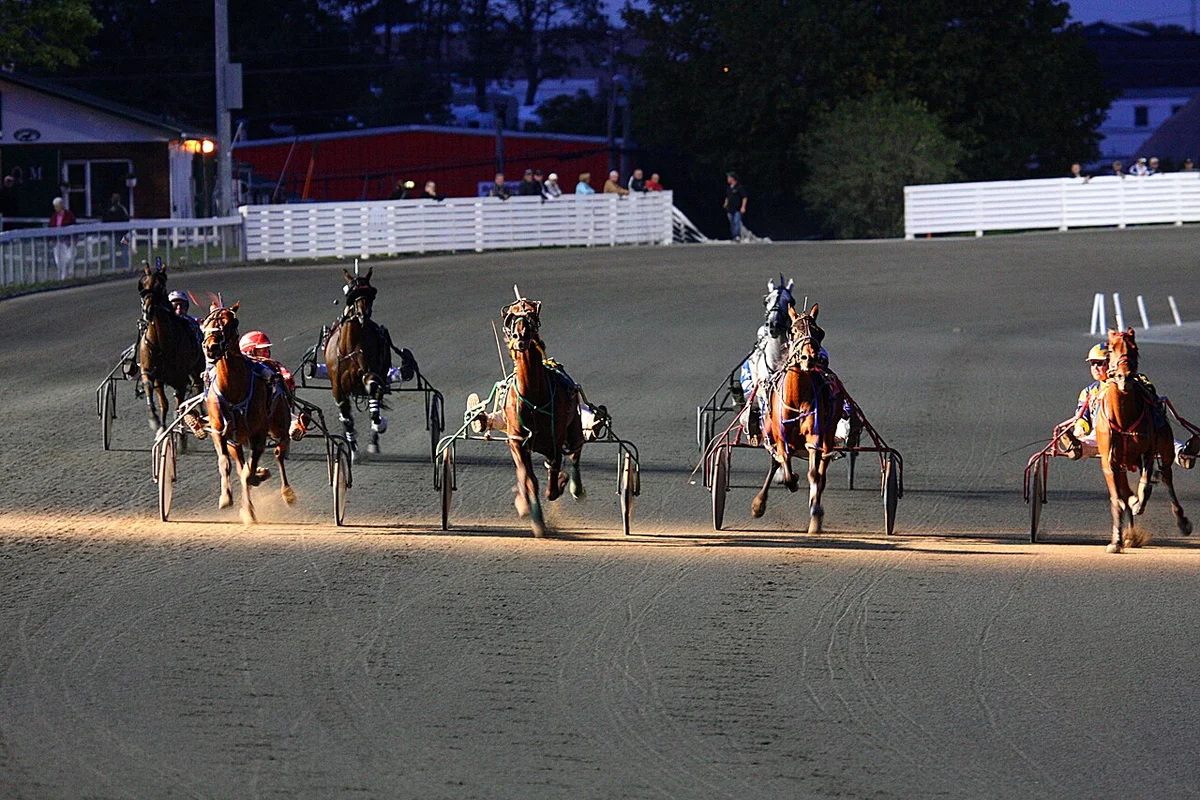
This is what is dutching in action. For example, you have ₦10,000 to stake on a race. You like two horses: Horse A at 3.00 and Horse B at 5.00. You want the same profit whichever one wins.
Firstly, work out the implied probabilities. Horse A is 1 ÷ 3.00 = 0.3333. Horse B is 1 ÷ 5.00 = 0.2000. The sum is 0.5333 (53.33%), so a winner will show a profit.
Secondly, split the stake. Horse A gets ₦10,000 × 0.3333 ÷ 0.5333 = ₦6,250. Horse B gets ₦10,000 × 0.2000 ÷ 0.5333 = ₦3,750. Altogether, that is your ₦10,000.
| Selection | Odds | Implied probability | Stake | Return if it wins |
|---|---|---|---|---|
| Horse A | 3.00 | 0.3333 | ₦6,250 | ₦18,750 |
| Horse B | 5.00 | 0.2000 | ₦3,750 | ₦18,750 |
| Total | — | 0.5333 | ₦10,000 | ₦18,750 |
Next, check the return. ₦6,250 at 3.00 returns ₦18,750. Similarly, ₦3,750 at 5.00 also returns ₦18,750. As a result, the profit is ₦8,750 either way. In other words, the result is the same whichever horse wins.
Worked Example: Three Football Correct Scores
Similarly, dutching works in football. Correct score is a good fit, because a match has several plausible scorelines. For example, you can dutch the three most likely home-win scorelines. That works when you expect a home win but are not sure by how much.
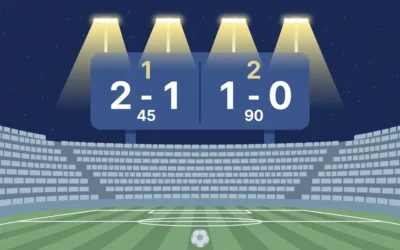
For example, say the prices are 1-0 at 7.00, 2-0 at 9.00 and 2-1 at 9.00. Your total stake is ₦10,000. Firstly, work out the implied probabilities. 1-0 is 1 ÷ 7.00 = 0.1429. Meanwhile, 2-0 and 2-1 are each 1 ÷ 9.00 = 0.1111. The sum is 0.3651 (36.51%).
Secondly, divide your total stake by that sum: ₦10,000 ÷ 0.3651 = ₦27,391. Next, work out each stake by dividing the return by the odds. 1-0 gets ₦27,391 ÷ 7.00 = ₦3,913. Meanwhile, 2-0 and 2-1 each get ₦27,391 ÷ 9.00 = ₦3,043.
| Scoreline | Odds | Implied probability | Stake | Return if it lands |
|---|---|---|---|---|
| 1-0 | 7.00 | 0.1429 | ₦3,913 | ₦27,391 |
| 2-0 | 9.00 | 0.1111 | ₦3,043 | ₦27,391 |
| 2-1 | 9.00 | 0.1111 | ₦3,043 | ₦27,391 |
| Total | — | 0.3651 | ₦9,999 | ₦27,391 |
In fact, the stakes add up to ₦9,999, not ₦10,000, because of rounding. If any scoreline lands, the return is about ₦27,391. However, if the match ends in any other score, all three stakes are lost.
When Dutching Makes Sense
In short, what is dutching best for? It suits situations where you have a strong view about what cannot win, but you are unsure which contender will. In horse racing, you might rule out most of a field. Then dutch the two or three live chances left.
Similarly, it suits short-priced favourites. Two horses at 2.50 and 3.00 can be dutched for a modest but steady return. Football correct score is another good fit, as is first goalscorer.
As a rule, dutching works best with two to four genuine contenders. Two or three picks keep the maths simple and the profit meaningful. Each extra selection pushes the return down. It also helps when prices offer value. The method only pays when your picks together are more likely to win than their prices suggest.
The Risks of Dutching
At first, dutching feels safe. It is not. Firstly, it still needs one winner: if all of your selections lose, the whole stake is gone. For instance, a horse can be beaten by a rival you ruled out. A match can end in a scoreline you did not cover.
Secondly, the margin is built into the odds. If you dutch every outcome in a market at one bookmaker, you guarantee a loss. The combined probability is always over 100%. For example, three outcomes at 2.00, 3.00 and 4.00 sum to 1.0833. A ₦10,000 dutch would return only ₦9,231. That is a ₦769 loss, even though one of your three picks won.
| Outcome | Odds | Implied probability |
|---|---|---|
| Outcome 1 | 2.00 | 0.5000 |
| Outcome 2 | 3.00 | 0.3333 |
| Outcome 3 | 4.00 | 0.2500 |
| Total | — | 1.0833 |
Thirdly, thin profits on longshots are a risk. Dutch five horses at long prices and the combined probability climbs close to 100%. As a result, a win might return barely more than the stake. In other words, you risked ₦10,000 to win a few hundred naira.
Finally, dutching is not a guaranteed profit. Indeed, no staking method is, and it does not turn losing picks into winning ones. If your judgement is wrong, you lose the same money, just spread across more bets.
Dutching vs Accumulators and System Bets
Indeed, dutching is often confused with accumulators and system bets. But the three are different tools. An accumulator links selections from different events, and every leg must win. Dutching does the opposite: it covers several selections in one event, and only one needs to win.
Meanwhile, system bets sit in between. A Yankee bet combines four selections into 11 bets. A Lucky 15 combines four into 15 bets, including singles. A Patent bet combines three selections into seven bets. In each case the selections come from different events, and the payout depends on how many win.
| Method | Selections | Events | Winners needed | Return |
|---|---|---|---|---|
| Dutching | 2 or more | One event | One | Same profit from any winner |
| Accumulator | 2 or more | Different events | All of them | Odds multiplied together |
| Yankee | 4 | Different events | Two or more | Varies with winners |
| Lucky 15 | 4 | Different events | One or more | Varies, singles pay too |
Unlike an accumulator, what is dutching really doing? It buys a wider chance of winning in one event, at the cost of a smaller payout. An accumulator buys a bigger payout, at the cost of needing every leg to win.
Common Dutching Mistakes
Firstly, the most common mistake is staking equal amounts instead of proportional stakes. That is not dutching. For example, put ₦5,000 on the 3.00 horse and ₦5,000 on the 5.00 horse. If the first wins, the profit is ₦5,000. If the second wins, the profit is ₦15,000. The profit swings by ₦10,000 depending on the winner. The whole point of dutching is to remove that swing.
Secondly, forgetting the margin is the next mistake. Beginners add selections until the combined probability passes 100%, and then even a win loses money. Always check the sum first.
Thirdly, dutching too many selections is a mistake. Five or six picks feel safe. But the profit usually becomes too small to matter. You may risk ₦10,000 to win ₦500. Two or three well-chosen picks are usually enough.
Finally, dutching without a view is a mistake. Some punters dutch the favourites in every race, which is just betting the favourites with extra steps. It works only when you have a reason to fancy your group.
Frequently Asked Questions
What is dutching in betting?
What is dutching in betting? In short, it is a staking method. You split one stake across two or more selections in the same event, sized by their odds. As a result, any winner returns the same profit. It is most common in horse racing and correct score markets.
Is dutching a guaranteed profit?
No. Unfortunately, if none of your selections wins, you lose the whole stake. If the combined implied probability of your picks is over 100%, you lose money even when one of them wins. It spreads risk; it does not remove it.
How many selections should I dutch?
Generally, two to four is the usual range. Two or three picks keep the maths simple and the profit meaningful. More picks shrink the profit and push the combined probability towards 100%.
What is dutching’s biggest risk?
Clearly, the biggest risk is that every selection loses, which wipes out the whole stake. The second risk is the margin. Dutching too many outcomes at poor prices can mean a winner still returns less than the total stake.
Can I dutch in football betting?
Yes. Correct score is the most popular market, because several scorelines can look likely in one match. First goalscorer markets can also work. The same maths applies: split the stake by the odds, and check the combined probability first.
The Bottom Line
What is dutching, then? It is a simple idea. Split one stake across a small group of selections, in proportion to their odds. As a result, any winner pays the same profit. It suits markets where you like several outcomes but cannot pick one.
However, it is not a shortcut to easy money. It still needs one winner. The margin still takes its cut. Too many picks leave profits too small to matter. Used with a real view and checked maths, it is a useful tool. Used without one, it is just several bets at once.
Bet Responsibly: Betting is entertainment, not a way to make money. Only bet what you can afford to lose, and never chase losses. If betting stops being fun, take a break. For help and advice, see our Responsible Gambling page. 18+ only.