- Quick Answer
- What is a patent bet: the 7 bets explained
- What is a patent bet: what it costs
- What is a patent bet: worked examples with ₦1,000 stakes
- Example A — All three win at 2.00
- Example B — All three win at 3.00
- Example C — Only one winner at 3.00
- Example D — Two winners at 2.50
- What is a patent bet: how to place one
- What is a patent bet: Patent vs Trixie vs Yankee
- Patent bet mistakes to avoid
- Patent betting in Nigeria
- Frequently asked questions
- What is a patent bet in simple terms?
- How many bets are in a Patent?
- How much does a Patent cost?
- Can a Patent pay out with only one winner?
- What is the difference between a Patent and a Trixie?
- What is the difference between a Patent and a Yankee?
- Conclusion
What is a patent bet? It is a multiple bet that turns three selections into seven separate bets. In fact, it is a popular system bet in horse racing and football. In short, this guide explains the seven bets, the cost, and worked examples with ₦1,000 stakes.
Last updated: November 2026
Quick Answer
- A Patent uses 3 selections and creates 7 bets: 3 singles, 3 doubles and 1 treble.
- Total cost equals the unit stake times 7.
- Only one winner is needed for a return.
- For example, ₦1,000 per bet costs ₦7,000 in total.
- Only bet what you can afford to lose.
What is a patent bet: the 7 bets explained
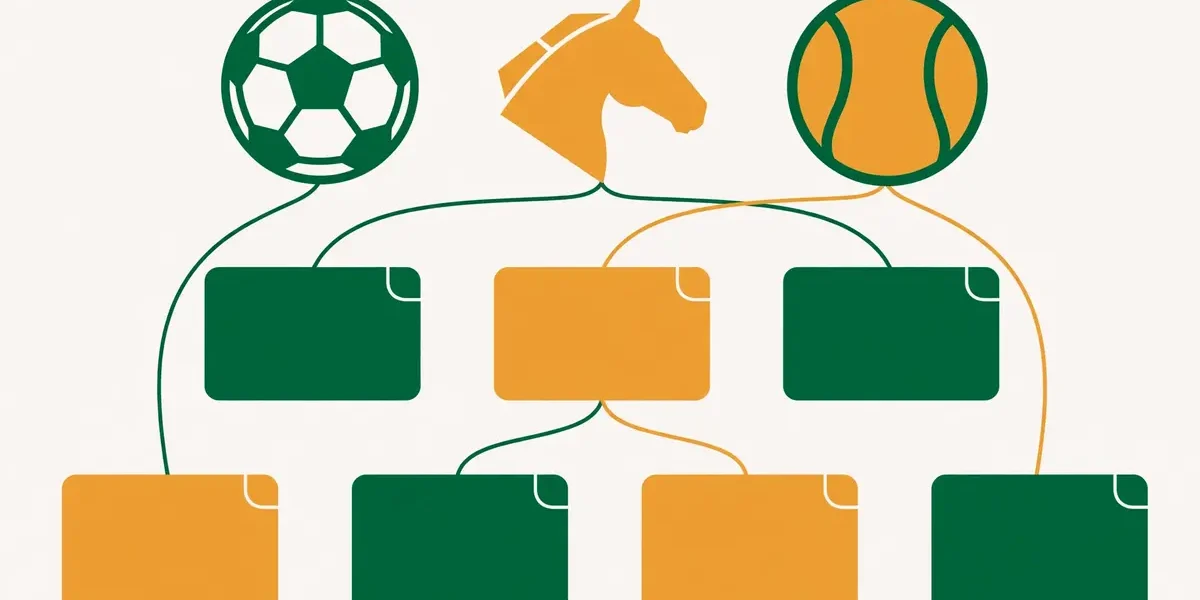
The heart of a Patent is the seven-bet breakdown. A Patent starts with three selections, called A, B and C. The slip then builds every single, double and treble from those picks. In short, the three picks create three singles, three doubles and one treble.
| Bet type | Combinations | Number of bets |
|---|---|---|
| Singles | A, B, C | 3 |
| Doubles | AB, AC, BC | 3 |
| Treble | ABC | 1 |
| Total | 7 |
In practice, each of the seven bets settles on its own. Winning lines pay out and losing lines pay nothing, with the returns added together at the end. In other words, a Patent packs seven bets into one slip, not one bet with three legs.
The singles are the key part of a Patent. Each single can win on its own, so one winner still produces a return. In addition, the three selections must come from different events: you cannot put two selections from the same race or the same match into one Patent. Finally, the Patent is popular in horse racing: it covers three races without needing all three horses to win.

What is a patent bet: what it costs
The cost is the first surprise in what is a patent bet for most beginners. The stake you enter is the unit stake: the amount on EACH of the seven bets. Therefore, the total cost equals the unit stake times 7.
| Unit stake (per bet) | Total cost |
|---|---|
| ₦100 | ₦700 |
| ₦500 | ₦3,500 |
| ₦1,000 | ₦7,000 |
| ₦2,000 | ₦14,000 |
| ₦5,000 | ₦35,000 |
In fact, the slip shows the unit stake first, with the total below it. Above all, budget for the total, not the unit stake: a ₦1,000 Patent costs ₦7,000.
In addition, an each-way Patent doubles everything: two Patents side by side, one to win and one to place. As a result, it has 14 bets, and a ₦1,000 unit stake costs ₦14,000 in total. In short, each-way doubles the cover and doubles the cost.
What is a patent bet: worked examples with ₦1,000 stakes
These examples use ₦1,000 per bet, so each Patent costs ₦7,000 in total. All odds are decimal odds.
Example A — All three win at 2.00
Each single: ₦1,000 × 2.00 = ₦2,000. Three singles pay ₦6,000. Each double: 2.00 × 2.00 = 4.00, so ₦1,000 × 4.00 = ₦4,000. Three doubles pay ₦12,000. The treble: 2.00 × 2.00 × 2.00 = 8.00, so ₦8,000. Total return = ₦6,000 + ₦12,000 + ₦8,000 = ₦26,000. Profit = ₦26,000 − ₦7,000 = ₦19,000.
Example B — All three win at 3.00
Each single: ₦1,000 × 3.00 = ₦3,000. Three singles pay ₦9,000. Each double: 3.00 × 3.00 = 9.00, so ₦9,000. Three doubles pay ₦27,000. The treble: 3.00 × 3.00 × 3.00 = 27.00, so ₦27,000. Total return = ₦9,000 + ₦27,000 + ₦27,000 = ₦63,000. Profit = ₦63,000 − ₦7,000 = ₦56,000.
Example C — Only one winner at 3.00
Only one line wins: the single on the winning selection. ₦1,000 × 3.00 = ₦3,000. Total return = ₦3,000 against ₦7,000 staked. That is a net loss of ₦4,000. In short, one winner produces a return but rarely a profit. For example, the winning single needs odds of 7.00 to cover the full stake on its own: ₦1,000 × 7.00 = ₦7,000. In other words, a lone winner at short odds still loses money — the lesson most beginners miss.
Example D — Two winners at 2.50
Two winners create two winning singles and one winning double. Singles: 2 × ₦2,500 = ₦5,000. Double: 2.50 × 2.50 = 6.25, so ₦1,000 × 6.25 = ₦6,250. Total return = ₦5,000 + ₦6,250 = ₦11,250. Profit = ₦11,250 − ₦7,000 = ₦4,250. In fact, even two winners at 2.00 still leave a profit: 2 × ₦2,000 + ₦4,000 = ₦8,000, so ₦1,000 profit.
What is a patent bet: how to place one
Firstly, pick three selections from three different events. Do not pick two selections from the same race or match.
Secondly, add all three to the bet slip. The slip will list them as three singles at first.
Thirdly, open the multiples section of the slip and choose “Patent”. The slip will show the seven bets it creates.
Moreover, enter the unit stake: the amount per bet, not the total. Check that the total is the unit stake times 7.
Finally, review the selections, the unit stake and the total, then confirm the bet. For more detail on slips, read our betting slip guide.
What is a patent bet: Patent vs Trixie vs Yankee
In short, a Patent is one member of the system-bet family. The table below compares it with its closest relatives at a ₦1,000 unit stake.
| Bet type | Selections | Bets | Total cost | Minimum winners for a return |
|---|---|---|---|---|
| Treble (3-fold) | 3 | 1 | ₦1,000 | 3 (all must win) |
| Trixie | 3 | 4 | ₦4,000 | 2 |
| Patent | 3 | 7 | ₦7,000 | 1 |
| Yankee | 4 | 11 | ₦11,000 | 2 |
Overall, a straight treble is the cheapest option and pays the most when all three win, because the whole stake rides on one line. In contrast, it pays nothing if even one selection loses. On the other hand, a Patent costs seven times more but pays on partial success.
In other words, a Trixie is a Patent without the singles, so it pays nothing with a single winner. As a result, it costs ₦4,000 at a ₦1,000 unit stake, against ₦7,000 for a Patent. For the full guide, read our Trixie guide. A Yankee adds a fourth selection and four more bets, so it costs ₦11,000 and needs two winners for any return — see our Yankee guide.
Finally, when does a Patent make sense? Firstly, when you fancy three selections but doubt all three will win. Secondly, when the odds are long enough that one or two winners still cover the ₦7,000 cost. Thirdly, when you want insurance against one or two losers without paying for a fourth selection. Moreover, medium-to-long odds suit a Patent best, since short-priced favourites leave the singles barely covering their own stake.
Patent bet mistakes to avoid
Firstly, forgetting the times-7 cost: a ₦1,000 Patent costs ₦7,000, and a ₦5,000 unit stake costs ₦35,000.
Secondly, picking three short-priced favourites: one winner at short odds can still lose money (see Example C).
Thirdly, putting two selections from the same event into a Patent: the slip will not allow it.
Moreover, treating a Patent like a treble: it pays less than a straight treble when all three win, because the stake is spread across seven lines.
Furthermore, chasing losses with bigger Patents: raising the unit stake multiplies the total by 7.
Finally, skipping the slip total: always read the total cost before confirming.
Patent betting in Nigeria
Nigeria regulates betting at state level. The Supreme Court nullified the National Lottery Act 2005 on 22 November 2024. As a result, the National Lottery Regulatory Commission framework applies only in the Federal Capital Territory (FCT). State regulators license betting in their states, for example the Lagos State Lotteries and Gaming Authority.
Betting is 18+ only. Registration uses the National Identification Number (NIN) slip and Bank Verification Number (BVN), both 11 digits long. Therefore, register with the name that matches the BVN-linked bank account. Above all, never share a password or one-time code with anyone.
Frequently asked questions
What is a patent bet in simple terms?
A Patent is seven bets from three selections: three singles, three doubles and one treble. In short, it pays when at least one of the three selections wins.
How many bets are in a Patent?
Seven: three singles, three doubles and one treble. The singles are the part that pays with only one winner.
How much does a Patent cost?
The total cost equals the unit stake times 7. For example, ₦1,000 per bet costs ₦7,000 in total. An each-way Patent costs twice as much.
Can a Patent pay out with only one winner?
Yes. One winner returns the single on that selection. However, the return can fall short of the ₦7,000 total stake when the odds are short.
What is the difference between a Patent and a Trixie?
A Trixie is a Patent without the singles: four bets, needing two winners for a return. As a result, it costs less: ₦4,000 at a ₦1,000 unit stake, against ₦7,000 for a Patent.
What is the difference between a Patent and a Yankee?
A Yankee uses four selections and 11 bets, with no singles. Therefore, it needs two winners for a return and costs ₦11,000 at the same unit stake.
Conclusion
In short, what is a patent bet? It is seven bets from three selections, and it pays when at least one of them wins. The cost is the unit stake times 7, so a ₦1,000 Patent costs ₦7,000. Above all, check the slip total before confirming, and pick odds long enough that one or two winners cover the cost. For more guides, visit the Betting Academy.
Bet Responsibly: Betting is 18+ only. Betting is entertainment, not income. Only stake what you can afford to lose. Above all, if betting stops being fun, stop, and seek help. See our responsible gambling page.