- Why Running Is Worth Starting
- How to Start Running for Beginners: The Walk-Run Method
- How to Start Running for Beginners: Your First Four Weeks
- How to Start Running for Beginners Without the Wrong Shoes
- Breathing and Form: How to Start Running for Beginners With Ease
- Warm-Up, Cool-Down and Rest Days
- How to Start Running for Beginners in Hot Weather
- Common Beginner Mistakes
- When to See a Doctor First
- Frequently Asked Questions
- How long does it take to go from walking to running for 30 minutes?
- What is the best way to learn how to start running for beginners?
- How often should a beginner run each week?
- Do I need expensive running shoes to start?
- Is it normal to feel sore after my first runs?
- Can I run in hot weather?
- Conclusion
Learning how to start running for beginners is easier than most people think. Above all, you need no speed, no fitness and no fancy gear.
Last updated: November 2026
Quick Answer
- Start with the walk-run method: short runs mixed with walking breaks, three times a week.
- Follow the NHS Couch to 5K plan, which builds to 30 minutes of continuous running in nine weeks or longer.
- Run at a pace where you can still speak in short sentences.
- Wear proper running shoes and replace them every 300–500 miles (about 480–800 km).
- Take a rest day between runs, and see a doctor first if you have a health condition.
Why Running Is Worth Starting
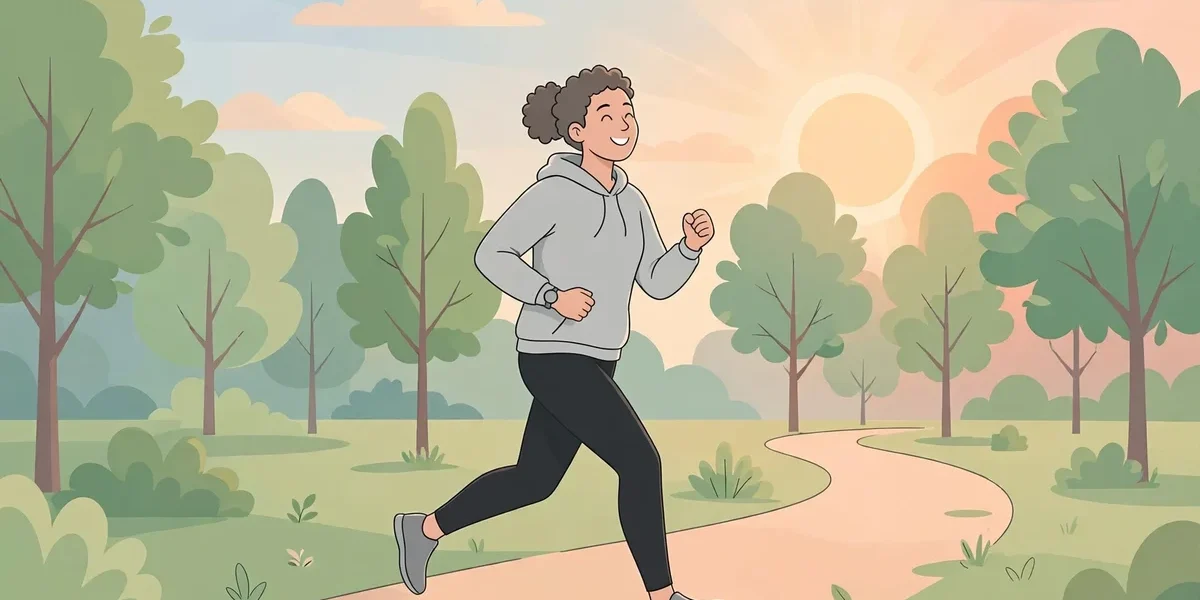
To begin with, running is one of the simplest ways to meet the official activity targets. The World Health Organization advises adults aged 18 to 64 to do 150 to 300 minutes of moderate activity each week, or 75 to 150 minutes of vigorous activity, or a mix of the two.
In fact, running counts as vigorous activity, because the CDC classes activity at 6.0 METs or more as vigorous. As a result, your running minutes count toward the 75 to 150 vigorous-minute target. Still, running builds fitness, but health and fitness differ. For the difference, read our guide on health vs fitness.
How to Start Running for Beginners: The Walk-Run Method
The walk-run method is the standard way for absolute beginners to start running. You alternate short runs with walking breaks, three times a week, and never on consecutive days.
For example, the best-known plan is the NHS Couch to 5K. It takes a complete beginner to 30 minutes of continuous running in nine weeks. In fact, you can take longer, and repeating a week is normal.
To find the right pace, use the talk test from the CDC. At moderate intensity you can talk but not sing. By contrast, at vigorous intensity you cannot say more than a few words without pausing for breath. If you cannot talk, you are going too fast, so slow down or walk until you can. The endpoint is 30 minutes of continuous running, not a guaranteed 5 km. In short, judge your progress by time, not distance.
How to Start Running for Beginners: Your First Four Weeks

| Week | Session pattern (each of the 3 runs) | Running per session | Session total |
|---|---|---|---|
| 1 | 8 × (1 min run / 1 min 30 s walk) | 8 min | 28 min 30 s |
| 2 | 6 × (1 min 30 s run / 2 min walk) | 9 min | 29 min |
| 3 | 1:30 run, 1:30 walk, 3 min run, 3 min walk, 1:30 run, 1:30 walk, 3 min run | 9 min | 25 min |
| 4 | 3 min run, 1:30 walk, 5 min run, 2:30 walk, 3 min run, 1:30 walk, 5 min run | 16 min | 31 min 30 s |
In fact, your first week is smaller than it looks. Three sessions add up to 85 minutes 30 seconds of activity for the week, of which only 24 minutes is actual running.
The running minutes build slowly: 24 in Week 1, 27 in Week 2, 27 in Week 3, and 48 in Week 4. However, Week 3 adds no running minutes at all, yet the longest single run doubles from 1 minute 30 seconds to 3 minutes. Finally, Week 4 is the biggest jump, with 21 extra minutes.
After that, the plan keeps building. Week 9 is three 30-minute continuous runs, giving you 90 minutes of vigorous activity per week, which alone meets the World Health Organization’s 75 to 150 minute vigorous target.
How to Start Running for Beginners Without the Wrong Shoes
Buy proper running shoes, not fashion trainers or flat gym shoes. Leave about a thumb’s width of space in front of your longest toe. Fortunately, you do not need the most expensive pair.
Replace your shoes every 300 to 500 miles, or about 480 to 800 km. Treat it as a checkpoint rather than an expiry date. For example, a beginner running about 15 km a week will reach the 480 to 800 km replacement range in about 32 to 53 weeks. Finally, watch for the signs: flat or dead cushioning, a worn-smooth outsole, a deeply creased midsole, a torn upper, or new aches in knees, shins or feet.
Breathing and Form: How to Start Running for Beginners With Ease
Above all, good form is mostly about staying relaxed. Keep your head up and your back straight, and relax your shoulders. Do not hunch over or clench your fists.
For breathing, match your breath to your stride: inhale for 3 steps, then exhale for 2. If you cannot speak in short sentences, you are going too fast, so slow down until the words come back. Do not overstride. Specifically, land with your foot roughly under your body rather than reaching far ahead of it. Keep your arms relaxed too.
Warm-Up, Cool-Down and Rest Days
Every run starts with a 5-minute brisk-walk warm-up and ends with a 5-minute cool-down walk. That routine is part of how to start running for beginners safely.
In addition, the NHS suggests stretching after the cool-down walk, which may help your muscles recover.
However, one common habit needs correcting. Holding a long static stretch before a run does not prevent injury. A 2013 meta-analysis of 25 trials and more than 26,000 people found no protective effect from stretching. Instead, warm up with movement and save long stretches for after the run.
Meanwhile, the NHS plan puts a rest day between every run, because rest days give your body time to recover.
Strength work belongs beside running, not instead of it. Train each major muscle group on at least 2 non-consecutive days per week, with at least 48 hours between sessions for the same group. For the detail, see our guide to resistance training. If you want strength work at home, read our guide on how to start working out at home. Adults aged 18 to 60 should also sleep 7 or more hours per night.
How to Start Running for Beginners in Hot Weather
Running in Nigeria means running in heat and humidity. Drink during exercise to avoid losing more than about 2% of your body weight through sweat. There is no single daily water figure that fits everyone.
For short sessions under 60 to 90 minutes at easy to moderate effort, drinking to thirst is usually enough. However, do not overdrink either, because drinking far more than you sweat can cause low blood sodium.
For example, heat exhaustion brings heavy sweating, weakness, headache, dizziness, nausea and cramps. If you feel those signs, stop, rest in the shade, cool down and drink water. Heat stroke is a medical emergency, with signs such as confusion, strange behaviour, slurred speech, collapse or seizure. If you see those signs, stop activity, call for help and cool the person fast.
Run in the cooler parts of the day, early in the morning or in the evening, and wear light, loose clothing. Take water with you and sip when thirsty. Slow down or shorten the run on very hot days.
Common Beginner Mistakes
Most people learning how to start running for beginners make the same few mistakes.
Firstly, running too fast, too soon is the most common error. If you cannot talk, slow down or walk.
Secondly, skipping rest days breaks the plan.
Thirdly, jumping the volume too fast causes trouble. For instance, you may have heard of the “10% rule”, but it has never been validated as a safety rule. A 2008 trial of 532 runners found injury rates of 20.8% and 20.3% for 10% and 24% weekly increases. A 2025 study of 5,205 runners found the real risk was a single long run much longer than the previous month’s longest. So treat the 10% idea only as a rough guide.
Next, static stretching as a warm-up does not protect you, so warm up with movement instead. After that, wrong shoes cause avoidable pain. Similarly, skipping the warm-up or cool-down hurts. In addition, chasing speed in week one ruins the plan. Finally, ignoring pain turns a small problem into a long break. Sharp pain is a stop signal, not something to run through.
When to See a Doctor First
In general, healthy adults with no symptoms usually do not need a doctor’s visit before light to moderate exercise. The list below follows American College of Sports Medicine and NHS guidance.
Get a check first if you have a known heart, lung, kidney or metabolic condition. Also get a check if you have chest pain, breathlessness, dizziness, fainting or palpitations. Talk to your GP if you are pregnant or recently gave birth. Ask for medical advice if you take heart or blood-pressure medication. Stop and seek help immediately for chest pain that does not go away with rest, fainting, or severe breathlessness.
Frequently Asked Questions
How long does it take to go from walking to running for 30 minutes?
Nine weeks, with three sessions a week. You can take longer.
What is the best way to learn how to start running for beginners?
Alternate short runs with walking breaks, three times a week, at a pace where you can still talk.
How often should a beginner run each week?
In short, three times a week, with a rest day between runs.
Do I need expensive running shoes to start?
No. You need proper running shoes that fit well.
Is it normal to feel sore after my first runs?
Yes, some ache is normal at first. However, sharp pain is different — stop and see a doctor.
Can I run in hot weather?
Yes, with care. Run early or late in the day, take water, and slow down in the heat.
Conclusion
Overall, learning how to start running for beginners is a simple project with a clear path. Walk and run in short bursts, follow a plan that builds slowly, and listen to your body. Ultimately, you can run for 30 minutes without stopping in nine weeks or a little longer.
Medical disclaimer: See a doctor before starting a new exercise programme if you have a health condition. This article is general information, not medical advice.