- Quick Answer
- What Is Matched Betting and How Does It Work?
- The Three Steps: Qualifying Bet, Free Bet, Lay Bet
- How Much Does Matched Betting Pay?
- Matched Betting and Nigeria: The Exchange Problem
- The Risks: Why Matched Betting Is Not Risk-Free
- How to Start Matched Betting
- Betting Law in Nigeria
- Frequently Asked Questions
- What is matched betting?
- Is matched betting legal?
- Can I do it in Nigeria?
- How much money do I need to start?
- What is a qualifying loss?
- Can bookmakers stop me?
- The Bottom Line
Matched betting is a technique for turning a bookmaker’s free bet into cash. In other words, it pairs two opposing bets that cancel each other out. One bet backs an outcome at a bookmaker. The other lays the same outcome at a betting exchange. For example, you back Team A to win at the bookmaker and lay Team A to win at the exchange. In other words, the match result stops mattering. The profit comes from the free bet, not from predicting the winner.
This guide shows how it works, what it pays, why it is not risk-free, and the exchange problem facing readers in Nigeria.
Last updated: November 2026
Quick Answer
- A technique that pairs a back bet at a bookmaker with a lay bet at an exchange.
- The two bets cancel each other out, so the match result does not decide the profit.
- The profit comes from the bookmaker’s free bet, not from the prediction.
- A qualifying bet with your own money unlocks the free bet, for a small loss.
- It is low risk when done correctly — not risk-free.
- In Nigeria, the hard part is the exchange: Betfair lists Nigeria as a banned territory.
What Is Matched Betting and How Does It Work?
What is matched betting in practice? It is arithmetic, not prediction. Firstly, you place a back bet at a bookmaker: you bet that an outcome will happen. Secondly, you place a lay bet at a betting exchange: you bet that the same outcome will NOT happen. Thirdly, the two bets cancel each other out, so almost any result returns roughly the same amount.
For example, you back Team A to win at 2.00 with ₦5,000, and lay Team A to win at 2.30 on an exchange. If Team A wins, your back bet pays out and your lay bet loses roughly the same amount. However, if Team A loses, the reverse happens. Either way, the two legs nearly cancel, and the small gap is the cost of the exercise.
By contrast, the profit arrives when the back leg is a free bet. In fact, a free bet’s stake never comes back: only the winnings are paid. Therefore, that breaks the symmetry in your favour: the lay leg only has to cover the winnings. As a result, the free bet comes out as a locked-in gain, whichever way the match goes.
The Three Steps: Qualifying Bet, Free Bet, Lay Bet
Meanwhile, the technique runs in three steps. Firstly, the qualifying bet: a real-money back bet at the bookmaker unlocks its offer, usually “bet ₦5,000, get a ₦5,000 free bet”. Next, you lay the same outcome at the exchange. The small gap between the two prices is your qualifying loss.
Secondly, the free bet lands in your account: a bonus token, not cash. If it wins, the bookmaker pays the profit only. For instance, a ₦5,000 free bet at 3.00 returns ₦10,000 of profit, not ₦15,000.
Thirdly, you lay the free bet at the exchange too, with a smaller stake, because it only has to cover the profit. Therefore, the difference stays in your pocket as a locked-in profit, no matter which team wins.
How Much Does Matched Betting Pay?
So what is the technique worth in naira? Next, work through the two stages, and the answer falls out of the maths.
Firstly, the qualifying bet. You back ₦5,000 at 2.20 and lay ₦4,783 at 2.30, with 5% exchange commission. For instance, if the team wins, the back bet returns ₦11,000 (a profit of ₦6,000) and the lay loses ₦6,218 (4,783 x 1.30). The net result is a loss of ₦218. By contrast, if the team loses, the back bet loses ₦5,000 and the lay wins ₦4,783 minus 5% commission, which is ₦4,544. The net result is a loss of ₦456. In short, the qualifying loss is a few hundred naira either way: about ₦218 if the team wins, about ₦456 if it loses.
Secondly, the free bet. You place the ₦5,000 free bet at 3.00 and lay ₦3,226 at 3.10, again with 5% commission. For example, if the team wins, the back bet pays ₦10,000 of profit and the lay loses ₦6,775 (3,226 x 2.10). The net result is a profit of ₦3,225. However, if the team loses, the back bet pays nothing and the lay wins ₦3,226 minus 5% commission, which is ₦3,065. The net result is a profit of ₦3,065. Either way, the free bet locks in about ₦3,065 to ₦3,225 — roughly 60% of its ₦5,000 face value.
| Stage | Back bet | Lay bet | If the team wins | If the team loses |
|---|---|---|---|---|
| Qualifying bet | ₦5,000 at 2.20 | ₦4,783 at 2.30 | -₦218 | -₦456 |
| Free bet | ₦5,000 free bet at 3.00 | ₦3,226 at 3.10 | +₦3,225 | +₦3,065 |
| Combined | — | — | +₦3,007 | +₦2,609 |
In short, the table shows the technique in one line: a small qualifying loss buys a free bet, and the free bet pays out as profit on either result. However, the figures depend on the odds gap and the commission.
Matched Betting and Nigeria: The Exchange Problem
For readers in Nigeria, the technique has one large practical problem: it needs a betting exchange account, and the biggest exchange does not accept Nigerians. In fact, Betfair’s General Terms, clause 4.1.6, list Nigeria as a Prohibited Territory. For example, the terms require you to confirm that you are “not located in a country where the use of the Services is prohibited, including … Nigeria …”. As a result, a Nigerian cannot open or use a Betfair account under those terms.
Meanwhile, a VPN is not a workaround. In fact, Betfair treats a disguised location as a prohibited activity. It can suspend the account, void the bets and withhold the balance. Therefore, do not try to reach Betfair through a VPN: the account, and any money in it, is at risk.
What about Smarkets, the other large exchange? Its terms name the countries where you cannot bet with Smarkets — Australia, France, Hong Kong, Switzerland, China, South Africa, Denmark, Czech Republic, Belgium, Turkey, the United States, Italy, Portugal, Russia, Belarus, Ukraine, Kazakhstan, Norway and the Netherlands — and Nigeria is NOT on that list. However, Smarkets’ accepted countries are only the UK, Gibraltar, Isle of Man, Jersey, Guernsey, Ireland, Malta and Sweden, and Nigeria is NOT on that list either. In short, Smarkets’ position on Nigeria is unverified: the country sits in neither list. Above all, do not assume an account will be accepted. Check directly with Smarkets before you deposit anything.
The Risks: Why Matched Betting Is Not Risk-Free
The technique is low risk when it is done correctly, but it is not risk-free. In fact, the risks are real, and most of them have nothing to do with the match result.
Firstly, human error is the biggest risk. A wrong selection, a mistyped lay stake, a lay placed after the odds have moved, or a forgotten lay can turn a small gain into a real loss. For example, if you back a team and forget to lay it, you hold a plain bet. As a result, a loss then costs the full stake.
Secondly, bookmakers restrict accounts. Operators watch for patterns that look like promotion-only betting. For example, they can cut your maximum stake to tiny amounts, remove you from offers, or close the account. The trade calls this “gubbing”, and it happens to most people who do this seriously for a few months. It does not usually cause an instant loss, but it ends the supply of free bets.
Thirdly, settlement can differ. A bookmaker and an exchange can settle the same bet in different ways, and one side of your bet can stand alone. Fourthly, offer terms can bite: free bets often carry minimum odds (usually 1.50 to 2.00), payment-method exclusions and expiry windows (often 7 days). For example, miss the window or break a term, and you lose the free bet. Finally, exchange liquidity matters: if nobody will take the other side of your lay at the price you need, you cannot place the lay at all.
How to Start Matched Betting
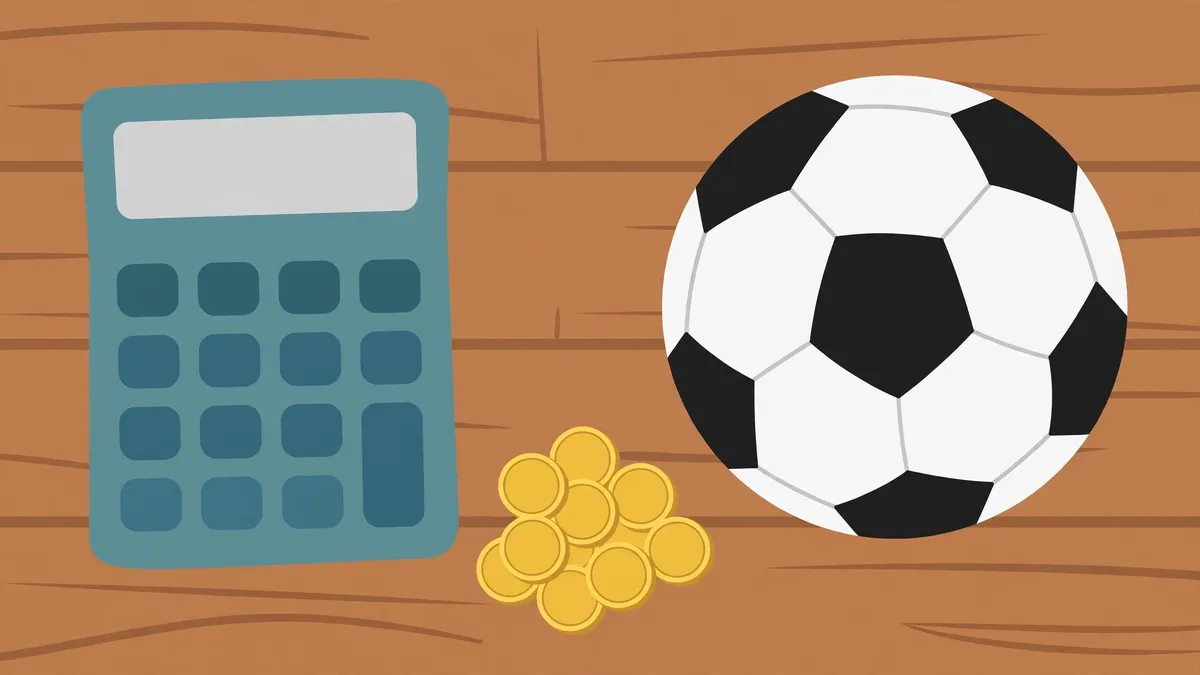
Starting takes five steps. Firstly, check whether you can open an exchange account where you live. In Nigeria, start with the exchange question above. Secondly, find a bookmaker offer with clear terms: a “bet ₦X, get a ₦X free bet” deal with minimum odds you can meet. Thirdly, use a calculator to size the lay stake exactly. Do not guess it. Fourthly, add the back bet to the betting slip and confirm it, then place the lay bet immediately, before the odds move. Fifthly, repeat the pair with the free bet, and withdraw the profit.
Before you start, read the offer terms twice: minimum odds, expiry date, payment-method exclusions and whether the free bet stake is returned. For example, a free bet that expires in 7 days is worthless on day 8. Above all, never place a back bet you have not laid. An unmatched back bet is a plain gamble, and that is not the technique at all.
Betting Law in Nigeria
Betting in Nigeria is for adults only — 18+ only. Regulation is state-led. The Supreme Court nullified the National Lottery Act 2005 on 22 November 2024, and the National Lottery Regulatory Commission framework applies only in the Federal Capital Territory. As a result, check that a bookmaker holds a licence in your own state. Expect identity checks before any payout, usually a Bank Verification Number or a National Identity Number.
Frequently Asked Questions
What is matched betting?
In short, it pairs a back bet at a bookmaker with a lay bet at an exchange, so the two cancel out and the profit comes from the free bet rather than from the match result.
Is matched betting legal?
It is legal in the UK and Ireland, where licensed bookmakers and exchanges operate under the rules. No claim is made here about Nigeria — check the law where you live.
Can I do it in Nigeria?
Only if you can open an exchange account. Betfair lists Nigeria as a Prohibited Territory, so it does not accept Nigerians. Smarkets’ position is unverified — it lists the country in neither its accepted nor its banned list — so check with Smarkets first.
How much money do I need to start?
You need enough to place the qualifying bet and to cover the lay liability. In the example above, a ₦5,000 qualifier needed about ₦6,218 of lay liability if the team won. Never start with money you cannot afford to lose.
What is a qualifying loss?
In short, it is the small loss on the qualifying bet: the gap between the back odds and the lay odds, plus commission. It is the price of unlocking the free bet. In the example above it was about ₦218 to ₦456 on a ₦5,000 qualifier.
Can bookmakers stop me?
Yes. Bookmakers can restrict your stakes, remove you from promotions or close your account under their terms. This is known as gubbing, and it happens to most people who do this seriously for a few months.
The Bottom Line
In short, what is this technique? It turns a bookmaker’s free bet into cash. In other words, you back an outcome and lay the same outcome, so the match result stops mattering. For instance, a ₦5,000 free bet at 3.00 can lock in about ₦3,065 to ₦3,225 after a few hundred naira of qualifying loss. Above all, remember two things. Firstly, it is low risk, not risk-free: mistakes, restrictions and settlement differences can all cost you money. Secondly, in Nigeria, the first question is the exchange account, because Betfair does not accept Nigerians and Smarkets’ position is unverified.
Bet Responsibly: Betting is entertainment, not a way to make money. Only bet what you can afford to lose, and never chase losses. If betting stops being fun, take a break. For help and advice, see our Responsible Gambling page. 18+ only.