- What Is an Online Slot?
- How Online Slots Work: The RNG Decides Every Spin
- How Online Slots Work: Reels, Symbols and Paylines
- Ways to Win and Megaways
- How Online Slots Work: RTP and the House Edge
- Volatility in One Short Paragraph
- Hit Frequency: How Often Wins Land
- How Online Slots Work: Bonus Features and Jackpots
- Fixed Jackpots and Progressive Jackpots
- How Online Slots Work: Myths That Are Not True
- Frequently Asked Questions
- How Online Slots Work: The Short Answer
- Is there a way to win at online slots every time?
- What does RTP mean on a slot?
- Do online slots pay out more at certain times?
- Conclusion
Learning how online slots work takes away the mystery behind the spinning reels. For example, a slot looks simple: press spin, the reels turn, and symbols land. Behind that screen sits a random number generator and a maths model. In short, every part follows rules you can understand. This guide explains each part in plain English, from the RNG to the bonus round.
Last updated: November 2026
Quick Answer
- An RNG fixes the result of every spin the instant you press the button.
- Matching symbols must land on an active payline, or on adjacent reels in a ways-to-win game.
- RTP is the long-term average return: a 96% RTP slot returns ₦96 per ₦100 wagered, on average.
- Volatility shapes how wins spread out; hit frequency measures how often any win lands.
- No spin is ever “due” — the RNG has no memory.
What Is an Online Slot?
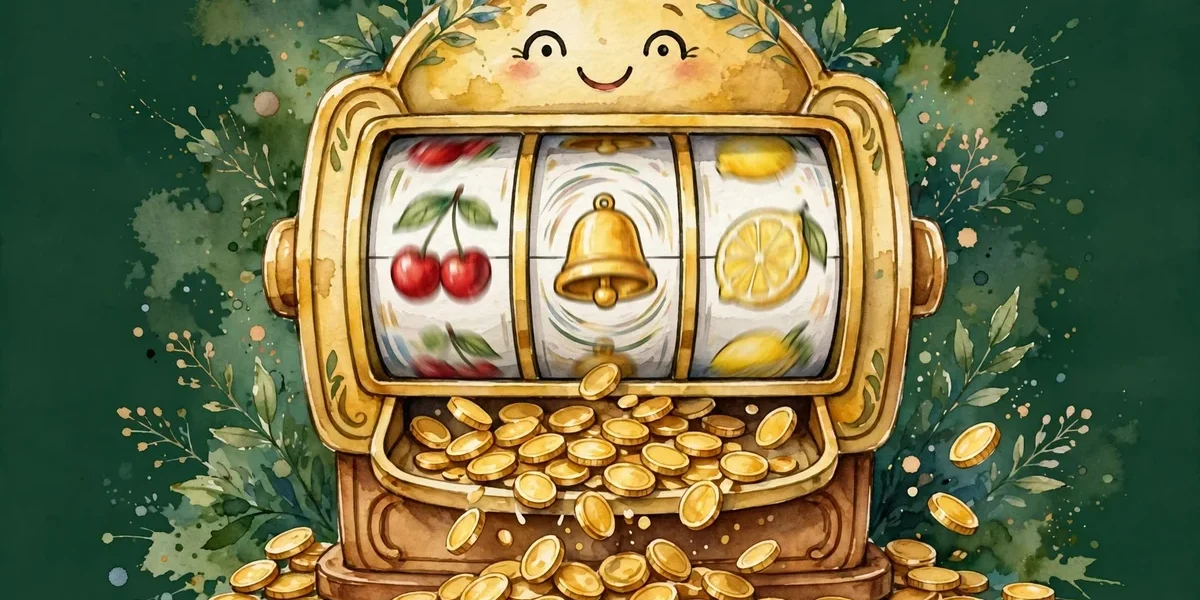
First, an online slot is a digital casino game of spinning reels and matching symbols. You choose a stake, press spin, and see the result in seconds. The paytable lists every symbol, the paylines, the bonus features, and the RTP. In addition, the game runs on software, so the reels you see are a visual display, not physical wheels. Understanding how online slots work starts with that software: the random number generator decides the result, and the screen simply shows it. Finally, if you are new to casino games, start with our guide to online casino games for beginners.
How Online Slots Work: The RNG Decides Every Spin
Every online slot runs on a random number generator (RNG). In other words, the RNG is software that produces numbers non-stop. When you press spin, the game takes the number the RNG has reached at that moment and maps it to a result. As a result, the game fixes the outcome the instant you press spin, before the reels finish turning. The spinning reels are purely visual — the result is already set.
Every spin is independent. In fact, the RNG has no memory, so a win does not make another win more or less likely. Similarly, a long losing streak does not raise the chances on the next spin. Finally, independent test labs check and certify the RNG before a game goes live, and confirm that results are unpredictable and evenly spread.
How Online Slots Work: Reels, Symbols and Paylines
A payline is a set path across the reels, and matching symbols must land on it for a spin to pay. Symbols that land anywhere else do not pay, even if three identical symbols appear. In contrast, modern video slots can have anywhere from 1 to over 1,024 paylines, in many patterns.
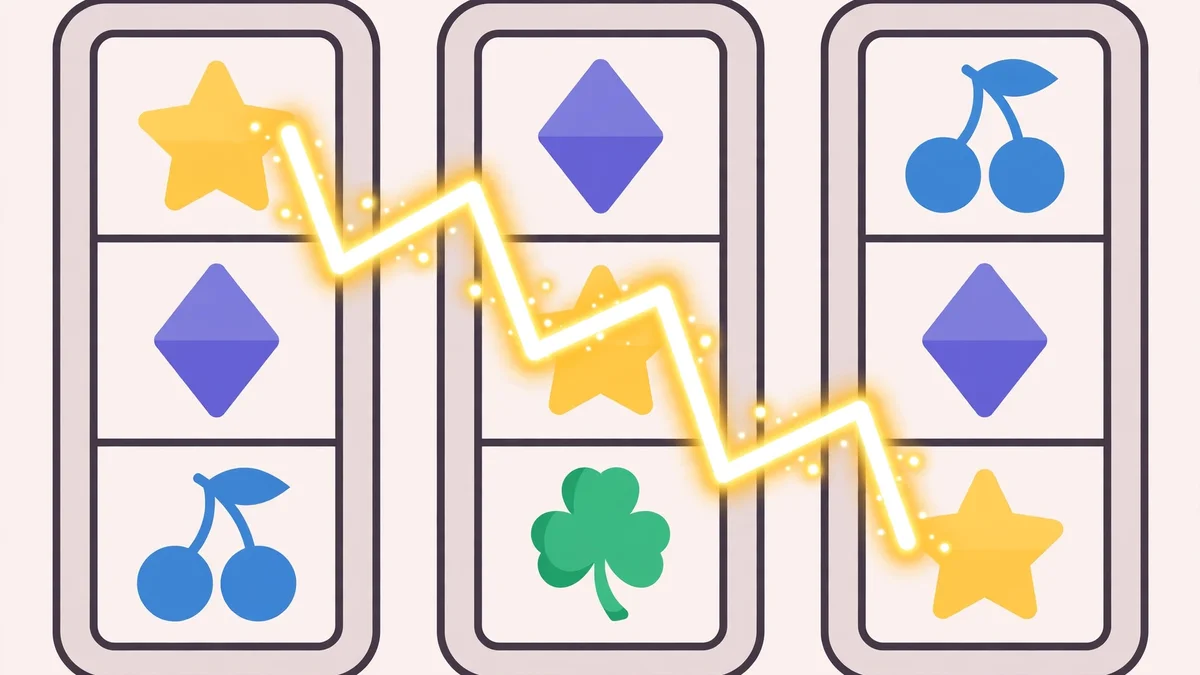
Here is a worked example. Take a fixed 20-payline slot with a total stake of ₦2,000. First, divide the stake by the number of lines: ₦2,000 ÷ 20 = ₦100 per line. Next, suppose a symbol pays 10 times the line bet for four of a kind. As a result, that line pays 10 × ₦100 = ₦1,000. Finally, if three lines win at once, the three line wins add together for the spin total.
Most modern video slots use fixed paylines, so every line stays active. In addition, adjustable paylines let you choose how many lines are active, and the total stake changes with it. However, a winning combination on a line you switched off pays nothing.
Ways to Win and Megaways
Some games drop paylines and use ways to win instead. In other words, matching symbols on adjacent reels count. For example, on a standard five-reel game with three rows, that gives 3 × 3 × 3 × 3 × 3 = 243 ways to win. Megaways takes the idea further: each reel shows a random number of symbols on every spin, up to 117,649 ways on a six-reel game. In addition, cluster pays: wins land when a group of matching symbols touches. Whatever the format, the RNG still decides every result — that is how online slots work.
How Online Slots Work: RTP and the House Edge
First, RTP stands for return to player. It is the theoretical share of all money wagered that a game pays back over the long run. For example, a slot with 96% RTP returns, on average, ₦96 for every ₦100 wagered. Meanwhile, the remaining 4% is the house edge. In other words, house edge = 100% − RTP.
RTP is a long-term theoretical average, not a promise. For example, in any single session you can win more than you stake, or lose your whole budget. As of November 2026, most online slots sit between 94% and 97% RTP. That long-term average sits at the heart of how online slots work. In practice, no bet strategy and no choice of paylines can change a game’s RTP or guarantee a profit.
Volatility in One Short Paragraph
Volatility, also called variance, describes how a slot spreads its payouts. For example, low-volatility slots pay smaller wins more often, so sessions feel steadier. In contrast, high-volatility slots have longer dry spells, but a big share of the return sits inside rare wins worth hundreds or thousands of times the stake. Finally, our guide to volatility in slots explains it in full, including how it differs from RTP.
Hit Frequency: How Often Wins Land
Hit frequency, also called hit rate, is the percentage of spins that produce any win. For example, a 25% hit frequency means a win on roughly one spin in four. However, hit frequency says nothing about win size: a “hit” can pay less than the stake. In short, RTP measures how much a game returns over the long run, while hit frequency measures how often any win lands.
How Online Slots Work: Bonus Features and Jackpots
First, wild symbols substitute for most standard symbols to help complete a winning combination, like a joker in a card game. In addition, expanding wilds cover a whole reel, sticky wilds stay locked for several spins, and multiplier wilds carry a built-in multiplier.
Second, scatter symbols ignore paylines entirely: they pay, or trigger a feature, based on how many appear anywhere on the grid. For example, three or more scatters usually trigger free spins or a bonus round. Free spins are a set number, commonly 8, 10, or 12.
Third, multipliers increase a qualifying win by a stated factor — for example, a ₦5 win with a 3× multiplier becomes ₦15. Bonus rounds are a separate game phase, usually triggered by scatters or bonus symbols. They can be free spins, pick-and-win games, or prize wheels, and no bonus round guarantees a profit.
Finally, cascading reels remove winning symbols and drop new symbols into the empty spaces, for further wins from the same spin. Some games also offer a bonus buy — commonly 50× to 100× the stake — to jump straight into a bonus round, although it only changes how fast you reach the feature.
Fixed Jackpots and Progressive Jackpots
First, a fixed jackpot is a set amount or a fixed multiple of the stake. It never changes: a 5,000× jackpot pays 5,000 times the qualifying bet. In contrast, a progressive jackpot grows continuously as players place qualifying bets: a small slice of each qualifying bet, typically 1% to 3%, flows into a shared pool. In addition, networked progressives pool contributions across many games and casinos, so the prize grows faster. After a win, the jackpot resets to a set seed amount. Finally, a large or “overdue” jackpot is no more likely to hit on the next spin — every spin is independent.
How Online Slots Work: Myths That Are Not True
Every one of these myths falls apart once you know how online slots work. First, there are no “hot” or “cold” machines. Regulated slots have no built-in hot or cold cycles — streaks are volatility in action, because the RNG does not track results. Second, no machine is ever “due” to pay. In other words, each spin has the same odds as every other spin, whatever happened before.
Third, timing does not matter. The time of day has no effect on the RNG. Fourth, you cannot time the spin or stop the reels. The game decides the outcome the moment you press spin, so stopping the reels early cannot change it.
Fifth, betting the maximum does not improve your odds or the RTP. There is one genuine exception: some progressive jackpots require a maximum or qualifying bet simply to be eligible for the top prize. In short, that changes eligibility, not the odds.
Frequently Asked Questions
How Online Slots Work: The Short Answer
An online slot uses a random number generator to fix the result of every spin. Next, matching symbols on an active payline decide what the spin pays, while the RTP sets the long-term average return.
Is there a way to win at online slots every time?
No. Overall, the RNG makes every spin independent and unpredictable, and no strategy or timing trick can change the odds. Slots are entertainment, so set a budget and stick to it.
What does RTP mean on a slot?
RTP stands for return to player. It is the theoretical share of all money wagered that a game pays back over the long run. For example, a 96% RTP slot returns ₦96 for every ₦100 wagered, on average.
Do online slots pay out more at certain times?
No. Meanwhile, the RNG runs non-stop, and the time of day has no effect. A spin at noon has the same odds as a spin late at night. In short, any pattern you think you see is volatility, not a schedule.
Conclusion
How online slots work comes down to three ideas. First, the RNG fixes every result the instant you press spin. Next, the paylines, or ways to win, decide what a spin pays. Finally, the RTP sets the long-term average, while volatility and hit frequency shape how it arrives. You can find more plain-English guides in our Betting Academy.
If you prefer a real dealer on camera to a machine, read our guide to what a live casino is.
Bet Responsibly: Only play if you are 18 or older. Slots are entertainment, not a way to make money. Only stake what you can afford to lose, and set a budget before you play. If gambling stops being fun, read our Responsible Gambling page.