- What Is Post and Crossbar in Football Betting?
- Post and Crossbar in Football Betting: When a Hit Counts as a Goal
- Post and Crossbar in Football Betting: How the Woodwork Affects Common Bets
- Post and Crossbar in Football Betting: The "To Hit the Woodwork" Markets
- Post and Crossbar in Football Betting: What Happens After the Ball Hits the Frame
- Famous Woodwork Moments
- Worked Example: A Woodwork Bet at Odds of 3.00
- Frequently Asked Questions
- What does post and crossbar in football betting mean?
- Does a shot off the post count as a goal?
- Does a shot off the crossbar count as a shot on target?
- Can a player score from a rebound off the post?
- Do woodwork bets count in extra time or penalty shootouts?
- Conclusion
Post and crossbar in football betting is about one simple question: what happens to your bet when the ball hits the goal frame? Moreover, the rules are not always the same from one bookmaker to the next, so this guide explains exactly how the woodwork works.
Last updated: November 2026
Quick Answer:
- The post and the crossbar together are called “the woodwork”.
- A shot that hits the woodwork and goes in IS a goal; a shot that hits the woodwork and stays out is NOT a goal.
- A woodwork hit that stays out does not count towards over/under goals, BTTS or shots on target.
- Some bookmakers offer a “to hit the woodwork” market, but the settlement rules vary — always check the bookmaker’s own rules.
- In open play any player can score from a rebound off the frame, but a penalty taker cannot touch a rebound off the frame alone.
What Is Post and Crossbar in Football Betting?
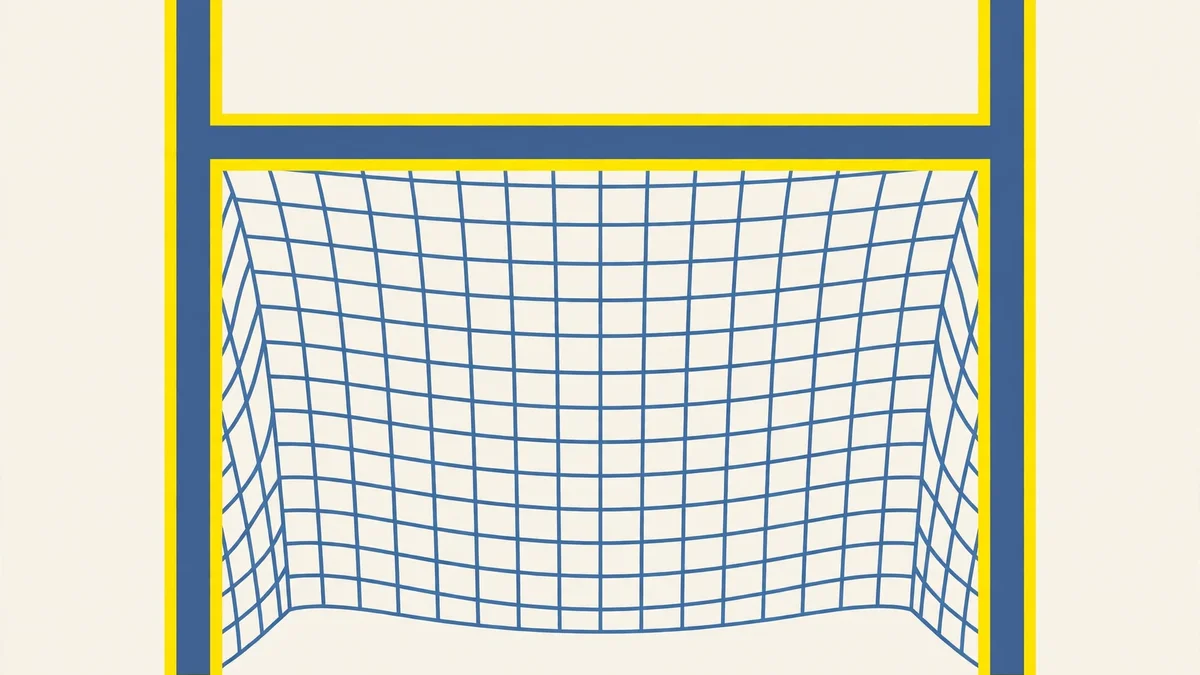
A goal consists of two vertical posts, joined at the top by a horizontal crossbar. Firstly, the distance between the inside of the posts is 7.32 m (8 yards). Secondly, the distance from the lower edge of the crossbar to the ground is 2.44 m (8 ft). In addition, the posts and the crossbar must be white, and they must have the same width and depth, which must not exceed 12 cm (5 ins).
Football calls the two upright posts and the horizontal crossbar “the woodwork”.
Post and Crossbar in Football Betting: When a Hit Counts as a Goal
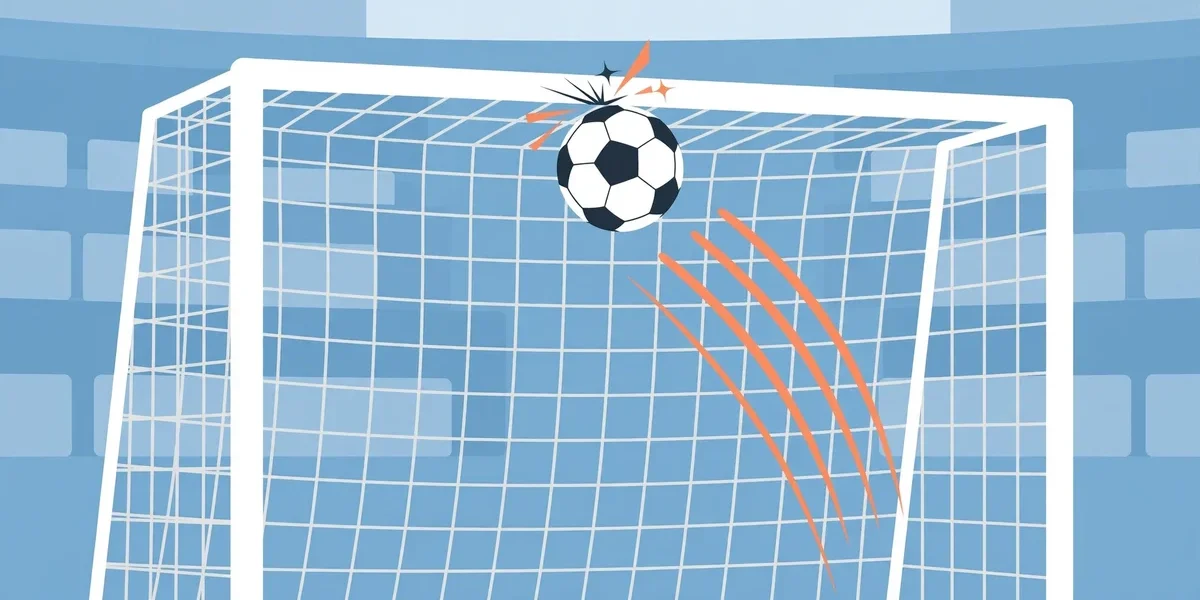
A team scores a goal when the whole of the ball passes over the goal line, between the goalposts and under the crossbar, provided that no offence has been committed by the team scoring the goal. For example, a shot that hits the post or the crossbar and then goes into the goal IS a goal, because the ball crossed the line after touching the frame. In contrast, a shot that hits the post or the crossbar and stays out is NOT a goal.
In fact, FIFA introduced goal-line technology in time for the 2014 World Cup.
Post and Crossbar in Football Betting: How the Woodwork Affects Common Bets
Bookmakers settle standard football markets on 90 minutes of play plus any injury or stoppage time added by the referee. In contrast, extra time and penalty shootouts do not count.
Over/under goals asks whether the total number of goals scored in the match will be over or under the stated line. For example, over 2.5 wins with three or more goals, while under 2.5 wins with two or fewer. Meanwhile, both teams to score (BTTS) “Yes” wins only if both teams score at least one goal each in the match.
A woodwork hit that stays out does NOT count towards over/under goals or BTTS, because no goal was scored. Similarly, a shot that hits the post or the crossbar and stays out is NOT a shot on target. It only counts as on target if the ball then goes into the goal.
A goalscorer market only credits a player with a goal when the ball crosses the line. In addition, goalscorer markets ignore own goals for that purpose. Finally, a goal that bounces in off the post can change the whole match result, so it can also decide a 1X2 bet.
Post and Crossbar in Football Betting: The “To Hit the Woodwork” Markets
Some bookmakers offer a market on the ball hitting the post or the crossbar. The usual name is “hit the woodwork” or “Woodwork/Crossbar”, offered for the match or for a named player. In general, the definition is the ball making contact with any part of the posts or crossbar from an attempt on the opponent’s goal during active play.
Some bookmakers count a shot that hits the woodwork on its way into the goal as a woodwork hit. In contrast, other bookmakers count that same shot as a goal, not as woodwork. Above all, the rule varies by bookmaker, so always check the bookmaker’s own rules before you place the bet.
A shot that hits the frame more than once in the same effort counts as hitting the woodwork only once. In addition, the contact must happen during active play. If the ball hits the woodwork after the referee has stopped play, it does not count.
A woodwork hit always counts for the attacking team, and for the player who performed the last action. Meanwhile, bookmakers usually settle woodwork markets on regular time only, that is 90 minutes plus injury time, not extra time or a penalty shootout.
Bookmakers can also offer the market as over/under lines. For example, over/under 0.5 woodwork hits in a match: over 0.5 wins with one or more counted hits, while under 0.5 wins with none.
Post and Crossbar in Football Betting: What Happens After the Ball Hits the Frame
In open play, the ball stays in play when it rebounds off a goalpost, crossbar or corner flagpost and remains on the field of play. As a result, any player may play the rebound, and a goal scored from it counts.
The rules change at a penalty kick. The kicker must not play the ball again until it has touched another player. In other words, if the ball rebounds off the post or the crossbar only, the taker may NOT play it again. The referee punishes a deliberate second touch with an indirect free kick to the defending team. However, if the second touch is a handball offence, the punishment is a direct free kick instead.
The goalkeeper counts as another player. As a result, if the penalty rebounds off the goalkeeper, the taker MAY play the rebound. In contrast, a rebound off the goal frame alone does not reset the restriction.
In a penalty shootout, each kicker can kick the ball only once. Neither the kicker nor any other player may touch the ball again after the kick, so there are no rebounds at all. Meanwhile, the ball may touch the goalkeeper, the goalposts or the crossbar any number of times before going into the goal, as long as the referee believes the ball’s motion is the result of the initial kick.
Famous Woodwork Moments
In the 1966 World Cup final, England played West Germany at Wembley Stadium on 30 July 1966. In the 101st minute, the 11th minute of extra time, Geoff Hurst’s shot hit the underside of the crossbar and bounced down near the goal line. Linesman Tofiq Bahramov signalled that it had crossed, and referee Gottfried Dienst awarded the goal, making it 3–2.
People still dispute whether the whole ball crossed the line. In fact, modern studies using film analysis and computer simulation have concluded that the whole ball never crossed the line. So call the goal awarded but disputed, never a settled fact.
Italy played France at the Olympiastadion in Berlin on 9 July 2006. Firstly, Zinedine Zidane opened the scoring in the 7th minute with a Panenka penalty that glanced off the underside of the crossbar and into the goal. Secondly, Italy’s Luca Toni struck the crossbar with a header in the 36th minute. Thirdly, in the penalty shootout, France’s David Trezeguet hit the crossbar, the only miss of the shootout. The match finished 1–1 after extra time and Italy won 5–3 on penalties.
Zidane’s 104th-minute header did NOT hit the crossbar. Italy goalkeeper Gianluigi Buffon tipped it over the crossbar, and the ball never touched the frame.
Worked Example: A Woodwork Bet at Odds of 3.00
This worked example shows how post and crossbar in football betting pays out, using simple arithmetic only. Take a “to hit the woodwork” bet at odds of 3.00, with a stake of ₦1,000. If the ball hits the post or the crossbar and stays out, the bet wins. The return is ₦3,000, which includes the stake, so the profit is ₦2,000. In contrast, if the ball does not hit the woodwork at all, you lose the ₦1,000 stake. In short, the return on a winning bet always includes the stake: stake multiplied by odds gives the total return.
Frequently Asked Questions
What does post and crossbar in football betting mean?
It means the goal frame, known as the woodwork, and how a shot off that frame affects a bet.
Does a shot off the post count as a goal?
Only if the whole ball crosses the whole goal line after touching the post. A shot that hits the post and stays out is not a goal.
Does a shot off the crossbar count as a shot on target?
No. A shot that hits the crossbar and stays out is not a shot on target. It only counts as on target if the ball then goes into the goal.
Can a player score from a rebound off the post?
In open play, yes. Any player may play a rebound off the post or crossbar, and a goal scored from it counts. However, a penalty taker may not play a rebound off the frame alone, and in a penalty shootout there are no rebounds at all.
Do woodwork bets count in extra time or penalty shootouts?
No. Bookmakers usually settle woodwork markets on regular time only, that is 90 minutes plus injury time. Extra time and penalty shootouts do not count, so a woodwork hit in extra time does not win the bet.
Conclusion
In short, post and crossbar in football betting decides more bets than most people expect. Above all, remember that bookmakers settle the “to hit the woodwork” market differently from one another, so always check the bookmaker’s own rules before you bet. For more guides like this one, visit our Betting Academy section.
Bet Responsibly: Betting is for adults aged 18 and over only. Betting is entertainment, not a source of income. Only stake money you can afford to lose. In Nigeria, the states regulate betting and gambling. If betting stops being fun, take a break. Learn more on our Responsible Gambling page.