
- What Is a Live Casino?
- How a Live Casino Works
- The Main Games You Find in a Live Casino
- Live Roulette
- Live Blackjack
- Live Baccarat
- Live Game Shows
- Live Casino vs RNG Games: What Actually Changes
- Table Limits and Minimum Bets in a Live Casino
- What Your Internet Connection Needs
- Fairness, Licensing and How Games Are Checked
- Playing From Nigeria
- Risks and Responsible Gambling
- Frequently Asked Questions
- Is a live casino the same as a normal online casino?
- Can I play live dealer games for free?
- Do I need a fast internet connection for a live casino?
- Which live game has the lowest house edge?
- Conclusion
A live casino is an online casino section where a real human dealer runs a real game on camera. You place bets through a digital interface on your screen. In other words, you watch real cards being dealt and a real wheel spinning.
Last updated: November 2026
Quick Answer
- A live casino streams real dealers and real tables on video, and you bet through an on-screen interface.
- The main games are roulette, blackjack, baccarat and game shows.
- Live tables are real-money only, with no free demo mode, although you can watch a table without betting.
What Is a Live Casino?
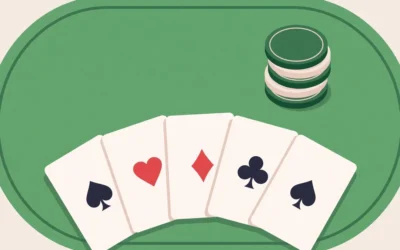
A live casino, also called a live dealer casino, is a section of an online casino. Real dealers run real games there on live video. The games are filmed in purpose-built studios.
First, the dealer works for the studio provider, not for the betting site you logged into. For example, Evolution, Pragmatic Play Live and Playtech run the studios, while the betting site holds your money.
Above all, remember that the dealer does not watch you. Your camera is never switched on.
How a Live Casino Works
Each table has several HD cameras showing the dealer, the cards and the wheel. In addition, OCR (optical character recognition) reads each physical card and each roulette result as it happens.
Next, a Game Control Unit (GCU) sits on every table. It encodes the video feed and synchronises it with the game data.
First, you join a table and place a bet during a short timed betting window. Then the dealer deals or spins, and the software settles winning bets automatically.
The Main Games You Find in a Live Casino

Most live casino lobbies offer four kinds of game: roulette, blackjack, baccarat and game shows.
Live Roulette
In live roulette, a real dealer spins a real wheel on camera. You bet on numbers, red or black, odd or even, and other spots. For example, the European wheel has 37 pockets, numbered 0 to 36. A straight-up bet on one number pays 35 to 1. As a result, the house edge is 2.70% on every standard bet.
In contrast, the American wheel adds a second zero, so it has 38 pockets and the edge nearly doubles to 5.26%. Similarly, French roulette uses the same wheel, but ‘la partage’ cuts the edge on even-money bets to 1.35%.
For example, a ₦1,000 straight-up bet on a European wheel pays ₦35,000 in profit if it wins. However, the chance is only 1 in 37. For instance, staking ₦100,000 in total loses ₦2,700 on average on European roulette, and ₦5,260 on American.
Live Blackjack
The aim is simple: finish closer to 21 than the dealer, without going over 21. The best hand is “blackjack”: an ace plus a ten-value card. Above all, you compete only against the dealer.
Standard tables seat seven players and use eight decks. At standard tables, the dealer must hit on 16 or less and stands on soft 17. Soft 17 means an ace counted as 11 totalling 17.
Blackjack pays 3 to 2 at standard tables. For example, a ₦1,000 stake with blackjack pays ₦1,500 in profit. In contrast, some tables pay only 6 to 5, so the same hand pays just ₦1,200. Read our guide to the house edge in blackjack.
Live Baccarat
In live baccarat, the dealer deals two hands, called Player and Banker — just labels, not people. You bet on which hand finishes closest to 9, or on a tie. Tens and face cards count zero, aces count one, and the rest count their face value. Only the last digit counts, so 7 + 8 = 15, which counts as 5.
A first-two-card total of 8 or 9 is a “natural”, and the round ends at once.
Player pays 1 to 1, Banker pays 1 to 1 less a 5% commission, and Tie usually pays 8 to 1. For example, a winning ₦1,000 Banker bet returns ₦950 in profit, while a winning ₦1,000 Player bet returns ₦1,000. In contrast, a ₦1,000 Tie bet returns ₦8,000 in profit, but ties are rare.
Over the long run, Banker wins about 45.86% of hands and Player about 44.62%. In addition, tied Banker and Player bets are returned, not lost.
Live Game Shows
Game shows are live casino games built like TV game shows, with a host, a money wheel and bonus rounds. In other words, they are chance-based entertainment, not table games with strategy.
Evolution created the category with Dream Catcher, launched in 2017. For example, Dream Catcher is a money wheel with number segments (1, 2, 5, 10, 20, 40) and 2x and 7x multipliers. Its published RTP is about 96.5%.
Game shows run continuously with no seat limits, so you can join at any time. However, their best spots return around 96%, below a European roulette wheel’s 97.30%.
Live Casino vs RNG Games: What Actually Changes
RNG stands for Random Number Generator. In an RNG game, software generates an unpredictable result. In contrast, a live game uses physical equipment handled by a human dealer, and the result happens on camera.
Above all, the format does not change the maths. A game with the same rules has the same house edge in both formats.
First, RNG games are usually faster. Similarly, RNG games commonly offer free play with virtual credits, while live games do not. For example, our guide to how online slots work explains the RNG format.
In short, neither format is inherently fairer when regulators test both properly.
| Live dealer games | RNG games | |
|---|---|---|
| Result | Real cards, wheel or dice | Software generates the result |
| Minimum bets | Usually higher | Usually lower |
| Free play | No demo; watching is free | Commonly offered with virtual credits |
| Fairness | Equipment tested by independent labs | Generator tested by independent labs |
Table Limits and Minimum Bets in a Live Casino
A table limit is the minimum and maximum bet one table accepts for one round. In fact, the game shows it in a limits panel. Above all, limits apply per bet spot, not per player.
Standard live blackjack tables take minimums around $1–$5 and maximums up to $5,000 per hand. In contrast, VIP tables start at $50–$100 minimums, with maximums of $50,000 or more per hand.
As a result, higher limits do not change the odds. The dealing, the rules and the house edge stay the same at every limit tier. For example, keep the minimum bet at no more than 2–5% of your session budget. In short, a $5 minimum on a $100 budget is 5% of the budget.
What Your Internet Connection Needs
A live casino is a video stream, so it needs a stable connection, not just a fast one. For example, a standard-definition stream needs about 5 Mbps download, while an HD (1080p) stream needs about 10 Mbps.
Fairness, Licensing and How Games Are Checked
Two separate licences are involved. First, the betting site holds a licence to accept players and payments. Second, the live studio provider holds its own licence to run studios and supply games.
The two regulators most live studios operate under are the UK Gambling Commission (UKGC) and the Malta Gaming Authority (MGA).
Independent labs check fairness, not the casino itself. For instance, eCOGRA, GLI, iTech Labs and BMM Testlabs test the RNG and equipment. Above all, eCOGRA is a testing agency, not a licensing body. Finally, a licence is not a guarantee: unlicensed sites offer no consumer protection.
Playing From Nigeria
As of November 2026, gambling regulation in Nigeria is state-led. On 22 November 2024, the Supreme Court nullified the National Lottery Act 2005, so the National Lottery Regulatory Commission’s remit is confined to the Federal Capital Territory. Do not treat “licensed by the NLRC” as the general rule.
In practice, operators verify identity through KYC, usually with BVN and NIN. Above all, only play on sites licensed by the regulator in your state. In addition, live casino is 18+ only. Finally, the UK’s GamStop register covers UK-licensed sites only.
Risks and Responsible Gambling
Every live casino game has a house edge, so the casino keeps a percentage of all stakes over the long run. In fact, no betting system, such as Martingale or Fibonacci, can remove the edge. Above all, chasing losses by jumping to higher stakes drains a bankroll fast.
Frequently Asked Questions
Is a live casino the same as a normal online casino?
No. A live casino is a section inside an online casino. In an RNG game, software produces the result. In a live game, a real dealer runs real equipment on camera.
Can I play live dealer games for free?
No. Live tables are real-money only, because a real dealer and a staffed studio cost money every round. However, most tables let you watch without betting.
Do I need a fast internet connection for a live casino?
You need a stable connection more than a fast one. For example, standard definition needs about 5 Mbps and HD needs about 10 Mbps, with latency under 50 ms ideal.
Which live game has the lowest house edge?
Blackjack with basic strategy, at 0.70–0.72%, is the lowest of the main live games. Baccarat Banker follows at 1.06%, while the Tie bet is one of the worst in the casino at 14.36%.
Conclusion
A live casino brings the real table to your screen: real dealers, real cards and real wheels. Above all, the maths is the same in both formats. Choose the game and table that fit your budget — and find more guides in our Casino & iGaming section.
Bet Responsibly: Live casino games are for adults aged 18 and above only. Betting is entertainment, not a way to make money, so only stake what you can afford to lose. If betting stops being fun, take a break and visit our Responsible Gambling page.