

- How Esports Tournaments Work: The Basics
- The Main Tournament Formats
- Single elimination (knockout)
- Double elimination
- Round robin
- Swiss system
- How Esports Tournaments Work: Match Formats
- How Esports Tournaments Work: Qualification
- Open qualifiers
- Closed qualifiers and direct invites
- Regional leagues
- Franchised and partnered leagues
- Points systems
- LAN and Online Events
- How Esports Tournaments Work: Prize Pools
- How Esports Tournaments Work in Practice: Four Real Events
- The International (Dota 2, Valve)
- League of Legends World Championship (Worlds, Riot Games)
- Counter-Strike 2 Majors (Valve)
- Valorant Champions (Riot Games)
- Frequently Asked Questions
- How esports tournaments work: where should a new fan start?
- How esports tournaments work: how long do they last?
- How esports tournaments work: do losing teams get a second chance?
- How do teams qualify for big esports tournaments?
- How esports tournaments work: are they played online or on LAN?
- Conclusion
How esports tournaments work is simple at heart: teams or players compete in matches under a set format, and the winner takes the title. In other words, a tournament is an organised contest with a clear path to the grand final. Overall, most major events follow the same shape: qualifiers, a group or Swiss stage, a playoff bracket and a grand final.
Last updated: November 2026
Quick Answer:
- An esports tournament is an organised competition with a set format, usually qualifiers, a group or Swiss stage, a playoff bracket and a grand final.
- The main formats are single elimination, double elimination, round robin and Swiss.
- Matches are played as best-of-one, best-of-three or best-of-five series.
- Teams reach big events through open qualifiers, regional leagues, direct invites or season points.
- Prize pools come from publishers, sponsors, crowdfunding, media rights and ticket sales.
How Esports Tournaments Work: The Basics
In short, an esports tournament is an organised competition in which teams or players compete under a set format. For example, the biggest events in a game are usually run by the game’s developer. In contrast, independent organisers such as ESL, BLAST, PGL and DreamHack run events. In practice, a tournament’s rulebook controls the format, seeding, tiebreakers, protests and schedule changes. That is how esports tournaments work. For the bigger picture, read our guide to the rising popularity of esports in the iGaming industry.
The Main Tournament Formats
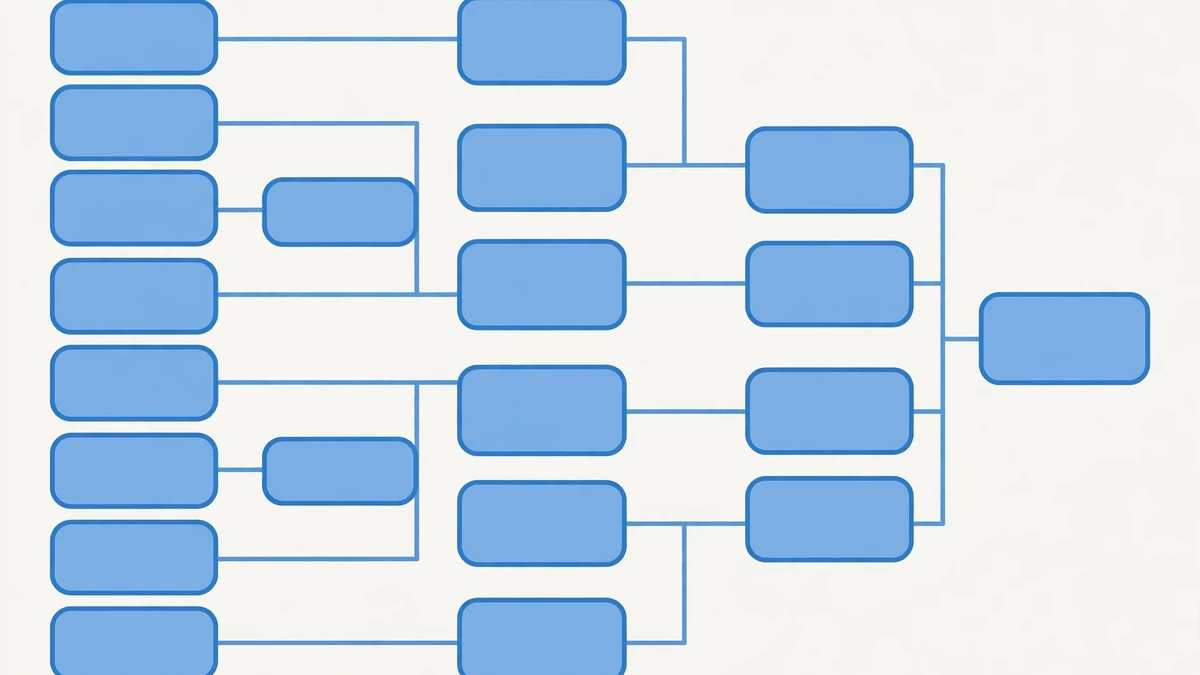
Firstly, every tournament uses a format that decides how teams progress and how many losses they can survive. In addition, most big events mix formats — one for the early stage and another for the playoffs.
Single elimination (knockout)
Lose once and you are out. In fact, a single-elimination tournament with N teams needs exactly N − 1 matches. For example, a 16-team bracket needs 15 matches, and an 8-team bracket needs 7. As a result, it is the fastest and most dramatic format. However, one bad match ends a team’s run, so it is the most dependent on luck.
Double elimination
Firstly, teams start in an upper bracket. Next, a first loss drops a team to a lower bracket, and a second loss eliminates it. For example, a double-elimination tournament with N teams needs roughly 2N − 2 matches — about 30 for 16 teams. In some events, a lower-bracket win in the grand final forces a second series (a ‘reset’).
Round robin
Firstly, every team plays every other team once or twice. A standings table decides who advances, with no eliminations during the stage. As a result, it is the fairest format, because one bad match does not end a team’s tournament. However, it is also the slowest, so it suits leagues and small groups.
Swiss system
Firstly, teams are paired each round against opponents with the same win-loss record. In the esports version used by Worlds and Counter-Strike Majors, 16 teams play up to five rounds: three wins sends a team through, and three losses sends it home. Consequently, exactly eight teams advance and eight go home from each Swiss stage. Finally, Swiss suits fields too large for a full round robin.
How Esports Tournaments Work: Match Formats
Firstly, ‘best of’ describes how many games a match can have: BO1 means one game decides it, BO3 means first to two game wins, and BO5 means first to three. In addition, organisers use BO1 early because it is fast, and it suits opening rounds, group rounds and Swiss stages. BO3 is the common middle ground: it gives teams room to adapt after a loss. BO5 is usually reserved for grand finals and major knockouts. Finally, the same event usually mixes formats: BO1 in an opening stage, BO3 for elimination matches and BO5 for the grand final.
How Esports Tournaments Work: Qualification
There is no single worldwide qualification system. Instead, teams reach big events through several routes.
Open qualifiers
Firstly, an open qualifier is open to any eligible team — no invitation needed. Teams fight through open brackets to reach a closed qualifier or the main event. As a result, open qualifiers are the bottom rung of the ladder: unknown teams start here and must win consistently to climb.
Closed qualifiers and direct invites
In contrast, a closed qualifier is by invitation or by surviving the open qualifier. Top teams often skip the open stage and enter here, or receive a direct invite based on their season results. For example, The International 2025 gave direct invites to 8 of its 16 teams.
Regional leagues
In games with a league system, teams qualify for the world championship through their regional league: they play a season at home, and the best teams go to the global event. League of Legends regional leagues include the LCK (South Korea), LPL (China), LEC (Europe, Middle East and Africa), LCS (North America), LCP (Asia-Pacific) and CBLOL (Brazil).
Franchised and partnered leagues
In a franchised or partnered league, teams hold permanent partner slots instead of qualifying fresh each season. For example, Valorant’s VCT ran this model from 2023: 30 partner organisations in three regional leagues, with China added as a fourth. As of November 2026, Riot has announced that the VCT league system ends after the 2026 season: from 2027, open qualifiers and regional Cups replace the leagues, and partner teams keep a stipend, bonuses and seeding but no guaranteed place.
Points systems
Meanwhile, in season-long circuits, teams collect ranking points at every event across the year, and the points decide who qualifies for the season-ending championship and seeding. Bigger events award more points. Valorant’s Championship Points work this way: half the 16-team Champions field qualifies through the points standings.
LAN and Online Events
Firstly, LAN (Local Area Network) means players share a venue and a local network, with equal ping and standardised equipment. In contrast, online events have players competing from home or team facilities, connecting over the internet with their own computers. Online events are cheaper and more frequent, so they suit qualifiers, league weeks and smaller tournaments. As a result, the biggest events — Majors, The International, the Worlds final — are almost always LAN events in arenas.
How Esports Tournaments Work: Prize Pools
Prize pools are usually funded by a mix of sources: a base amount from the game publisher, brand sponsorships, crowdfunding through in-game purchases, broadcast and media rights, and ticket sales and merchandise. For example, crowdfunding is the Dota 2 model: Valve seeds The International with a $1.6 million base pool, then adds 25% of Battle Pass sales.
The record stands at $40,018,195, set by The International 2021 (TI10, Bucharest, 7–17 October 2021). After Valve retired the Battle Pass model, the pool fell sharply: $3,380,455 in 2023 and $2,776,566 in 2024.
How Esports Tournaments Work in Practice: Four Real Events
The formats above come together differently in each game.
The International (Dota 2, Valve)
Dota 2’s annual world championship has run every year since 2011, apart from 2020, when COVID-19 forced its cancellation. As of 2025, the format is 16 teams: eight receive direct invites from Valve, and eight come through regional qualifiers in six regions. For example, the 2025 edition took place in Hamburg, Germany, at the Barclays Arena, and Team Falcons won it, beating Xtreme Gaming 3–2 in the final.
League of Legends World Championship (Worlds, Riot Games)
Riot Games’ annual world championship for League of Legends is the biggest event in the game’s calendar. Since 2023 the format has been a Play-In stage, then a 16-team Swiss stage, then an eight-team single-elimination knockout bracket. Finally, Worlds 2024: T1 beat Bilibili Gaming 3–2 in the final on 2 November 2024 at the O2 Arena in London. The final peaked at 6.94 million viewers (6,941,610, excluding China), a record at the time, according to Esports Charts.
Counter-Strike 2 Majors (Valve)
The Majors are Valve’s top Counter-Strike events, held twice a year. As of 2025, the format is 32 teams, three consecutive 16-team Swiss stages, then an eight-team single-elimination playoff. The grand final was best-of-three at every Major until the StarLadder Budapest Major 2025, which was the first Major with a best-of-five grand final. Team Vitality beat FaZe Clan 3–1 in that final on 14 December 2025 at the MVM Dome in Budapest.
Valorant Champions (Riot Games)
Valorant Champions is Riot Games’ world championship for Valorant and the last event of each VCT season. The format is 16 teams, four from each of the four VCT leagues (Americas, EMEA, Pacific, China). EDward Gaming beat Team Heretics 3–2 in the 2024 final — China’s first Champions title. NRG beat Fnatic 3–2 in the 2025 grand final.
Frequently Asked Questions
How esports tournaments work: where should a new fan start?
Start with one game you enjoy watching, then learn its format: how teams qualify, whether matches are best-of-one or best-of-five, and how the bracket works.
How esports tournaments work: how long do they last?
A one-day online cup can finish in hours, while a world championship runs for weeks. For example, Valorant Champions 2024 ran 1–25 August 2024.
How esports tournaments work: do losing teams get a second chance?
In single elimination, one loss ends the run. In contrast, in double elimination, a first loss drops a team to a lower bracket, and only a second loss eliminates it.
How do teams qualify for big esports tournaments?
Through open qualifiers, closed qualifiers, direct invites, regional leagues, franchised or partnered league slots, or season-long points standings. The route depends on the game and the event.
How esports tournaments work: are they played online or on LAN?
Both. Qualifiers and league weeks are often online, while the biggest events are LAN.
Conclusion
How esports tournaments work comes down to three ideas: a format, a match length and a qualification path. Once you know those three things, any bracket makes sense. For more guides, visit our Esports section. In addition, if you want the betting side of these events, read our guide to what is esports betting.