- How to Bet on Golf for Beginners: The Basics
- How to Bet on Golf for Beginners: The Main Markets
- How to Bet on Golf for Beginners: Each-Way Betting Explained
- How to Bet on Golf for Beginners: Playoffs, Ties and Dead Heats
- How to Bet on Golf for Beginners: What Happens When a Player Misses the Cut
- The Four Majors and the Main Tours
- How to Bet on Golf for Beginners: Frequently Asked Questions
- How to Bet on Golf for Beginners: What Is the Simplest First Bet?
- What does each-way mean in golf betting?
- What happens if my player misses the cut?
- What is a dead heat in golf betting?
- Conclusion
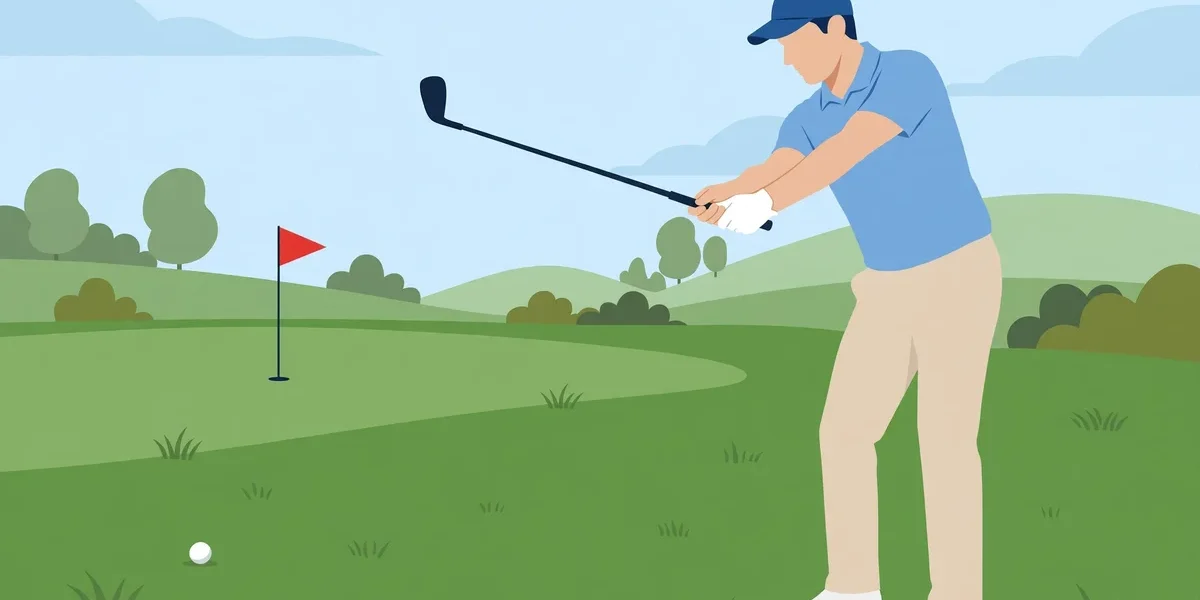
How to bet on golf for beginners starts with one simple idea: you bet on how players finish in a tournament. Golf tournaments usually run over four days.
Last updated: November 2026
Quick Answer
- A golf tournament usually lasts 72 holes over four days, with a cut after 36.
- The main markets are the outright winner, each-way betting, top finishes and head-to-head matchups.
- Each-way betting is two bets in one: half on the win and half on a place finish.
- A player who misses the cut loses outright and each-way bets.
- Golf betting is for adults only: 18+.
How to Bet on Golf for Beginners: The Basics
Firstly, learn how a tournament works. Most professional stroke-play events on the PGA Tour and the DP World Tour last 72 holes, four rounds of 18, usually from Thursday to Sunday. In addition, a standard full field holds roughly 144 to 156 players. As a result, even the favourite carries long odds.
Secondly, learn the cut. The cut falls after 36 holes, two rounds played on Friday. Only players at or below the cut line play the weekend. On the PGA Tour, the top 65 players and ties advance. In other words, every player tied with the 65th-place score also plays on. Once a player makes the cut, they play all four rounds.
Finally, majors cut harder. The Masters cuts to the top 50 and ties. Meanwhile, the PGA Championship and The Open cut to the top 70 and ties. The US Open cuts to the low 60 and ties.
How to Bet on Golf for Beginners: The Main Markets
The outright winner is the simplest market. You back one player to win it. Importantly, fields are large, so even the favourite usually carries long odds. For example, as an illustration only, a ₦1,000 stake at odds of 12.00 returns ₦12,000 if your player wins. That is a ₦11,000 profit.
Top 5, top 10 and top 20 finish bets work differently. In practice, you back a player to finish inside the named range, without needing them to win. In addition, the odds run shorter than outright odds.
Head-to-head matchups pair two named players against each other. In short, your bet wins if your player finishes ahead of the other. Moreover, a matchup can cover the full tournament or a single round. Unlike football, golf has no draw, so there is no direct equivalent of a 1X2 bet. Instead, you pick one player to beat another. In contrast, two-ball and three-ball betting covers one round only, while group betting covers the whole event. For example, other markets include first-round leader, make or miss the cut, and hole-in-one, a yes-or-no bet on whether any player makes one during the tournament.
How to Bet on Golf for Beginners: Each-Way Betting Explained
Each-way betting confuses most beginners. In practice, one each-way bet is two equal bets on the same player. Moreover, half the stake goes on the win at full odds, and the other half goes on a place finish. As a result, a ₦1,000 each-way bet costs ₦2,000 in total.
In short, standard each-way terms are 5 places at 1/4 of the win odds on a regular PGA Tour or DP World Tour event. In addition, at the majors, bookmakers often offer more places, commonly 6, 7, 8 or even 10 to 12 places at 1/5 odds. Terms vary by bookmaker and by tournament, so check them on the ticket.
Importantly, if the player wins, both halves pay out. However, if the player places without winning, only the place half pays. Finally, outside the places, both halves lose.
For instance, here is a worked example, as an illustration only. Take a ₦1,000 each-way bet at odds of 12.00, with terms of 5 places at 1/4 odds. Firstly, the bet costs ₦2,000 in total. Secondly, the place odds are 3.75, from 1 plus (12.00 minus 1) times 1/4. If the player wins, both halves pay: ₦12,000 plus ₦3,750 is ₦15,750. If the player finishes 3rd, the place half returns ₦3,750, a ₦1,750 profit. In the end, if the player misses the cut, both halves lose and the whole ₦2,000 is gone.
How to Bet on Golf for Beginners: Playoffs, Ties and Dead Heats
In a stroke-play tournament, a tie after 72 holes goes to a playoff, usually sudden death on the PGA Tour: tied players play extra holes one at a time, and the first to win a hole outright wins the tournament. Outright winner bets include the playoff result, so the playoff winner wins the bet.
The majors use different playoff formats. Firstly, the Masters uses sudden death from the 18th hole, then alternating the 18th and the 10th. Secondly, the PGA Championship uses a three-hole aggregate playoff. Thirdly, the US Open uses a two-hole aggregate playoff, then sudden death. Finally, the Open uses a four-hole aggregate playoff, usually, then sudden death.
In short, dead-heat rules apply when a place bet ends in a tie. If more players tie for a paying place than there are places left, bookmakers divide the stake among the tied players and pay it at the full odds. For example, if your player ties for 5th with one other player, half your place stake settles at the place odds and you lose the other half. As an illustration only, with the same ₦1,000 each-way bet at 12.00, half the ₦1,000 place stake is ₦500, and that ₦500 settles at 3.75 for ₦1,875. Dead-heat rules also cover the place part of each-way bets, top 5, top 10 and top 20 bets, and three-ball bets.
Importantly, bad weather can shorten a tournament. If at least 36 holes are complete and officials declare a winner, outright bets stand. If fewer are complete, outright bets are void.
How to Bet on Golf for Beginners: What Happens When a Player Misses the Cut
Firstly, a player who misses the cut cannot win the tournament. As a result, an outright bet on them loses, and an each-way bet on them loses too. Before you bet, it helps to know what a free bet is and how its terms work.
In practice, a player counts as having played once they tee off. If a player does not start at all, bookmakers void bets on them. Moreover, a withdrawal after teeing off loses your stakes on outright, group, match and 18-hole bets.
In a head-to-head matchup, the cut still decides the bet. If one player misses the cut, the other player wins the matchup. In addition, if both miss it, the lowest score after the cut wins.
Finally, watch out for Rule 4: if a fancied player withdraws after you bet but before play starts, bookmakers may cut your winnings. Importantly, Rule 4 applies only before play starts.
The Four Majors and the Main Tours
Firstly, the majors are the four most prestigious tournaments in men’s professional golf, with the biggest fields and the most betting markets. The Masters takes place every April at Augusta National in Georgia, USA, the only major at the same course every year. It began in 1934. Secondly, the PGA Championship takes place in May, since 2019, at rotating courses in the USA, run by the PGA of America. It began in 1916.
In addition, the US Open takes place in June at rotating courses in the USA, run by the USGA. It has a reputation as the toughest test in golf, with narrow fairways, thick rough and fast greens. It began in 1895. Finally, the Open Championship, often called the British Open, takes place in July on coastal links courses in the UK, run by The R&A. It is the oldest major, first played in 1860.
Meanwhile, the PGA Tour is the main men’s professional tour in North America, with weekly stroke-play events and a FedEx Cup points race. Similarly, the DP World Tour is the main men’s professional tour based in Europe, formerly the European Tour, closely aligned with the PGA Tour. Finally, LIV Golf is a separate league, launched in 2022, outside the PGA Tour and the DP World Tour. In LIV Golf, players compete individually and in teams, with no cut. A tournament lasts four days, so a live bet is one way to follow the action.
How to Bet on Golf for Beginners: Frequently Asked Questions
How to Bet on Golf for Beginners: What Is the Simplest First Bet?
The simplest first bet is an outright winner bet on one player. Alternatively, a top 10 finish gives you more room for error at shorter odds.
What does each-way mean in golf betting?
In short, each-way means two bets in one: half on the win, half on a place finish, usually 5 places at 1/4 odds.
What happens if my player misses the cut?
Your outright and each-way bets lose. In a head-to-head matchup, the other player wins if your player misses the cut. If both miss it, the lowest score after the cut wins.
What is a dead heat in golf betting?
A dead heat happens when players tie for a paying place. Bookmakers divide the stake among the tied players and pay it at the full odds. For example, if two players tie for the last paying place, half your stake settles at the odds.
Conclusion
In short, golf betting rewards patience and a clear head. Learn the structure first, then pick one market and learn it well. Outright winner bets are the simplest start, and each-way betting gives you a safety net. For more guides, visit our Betting Academy.
In Nigeria, sports betting regulation is state-led. On 22 November 2024, the Supreme Court nullified the National Lottery Act 2005, and the National Lottery Regulatory Commission’s framework applies only in the Federal Capital Territory.
Bet Responsibly: betting is for adults aged 18 and over only. Treat betting as entertainment, not a way to make money. Only stake money you can afford to lose. If betting stops being fun, read our Responsible Gambling page.