- Quick Answer
- What Is a Dead Heat in Betting and How Does It Work?
- What Is a Dead Heat in Betting for a Win?
- What Is a Dead Heat in Betting for a Place?
- What Is a Dead Heat in Betting in Golf?
- What Is a Dead Heat in Betting in Football?
- Dead Heat vs Rule 4
- Frequently Asked Questions
- What is a dead heat in betting in horse racing?
- How is a dead heat paid out?
- Can a dead heat return less than my stake?
- What is the difference between a dead heat and Rule 4?
- Do dead heats happen in football betting?
- Does a dead heat void my bet?
- The Bottom Line
What is a dead heat in betting? It is a tie for first place, or for a place, that cannot be separated — and it changes how the bet is paid. For example, two horses cross the line together, or two golfers finish a tournament on the same score. In that case, the bookmaker does not pay the full win: the stake is shared between the tied selections. This guide explains the rule, how the payout is worked out, and where dead heats happen in horse racing, golf and football.
Last updated: November 2026
Quick Answer
- A dead heat is a tie for a position that cannot be separated.
- The stake is divided by the number of tied selections and settled at the full odds.
- A two-way dead heat halves the stake. A three-way dead heat divides it by three.
- Dead heats are rare in horse racing and common in golf.
- A dead heat is not a void: the bet is paid, but on a reduced stake.
What Is a Dead Heat in Betting and How Does It Work?
A dead heat happens when two or more participants finish in exactly the same position and no result can separate them. Firstly, in horse racing the judge studies the photo-finish picture, and if the noses cannot be split, a dead heat is declared. Secondly, in golf the scores do the talking: two players on the same score are tied. Thirdly, in football a dead heat can happen in a top goalscorer market, where two or more players end a season or a tournament level on goals.
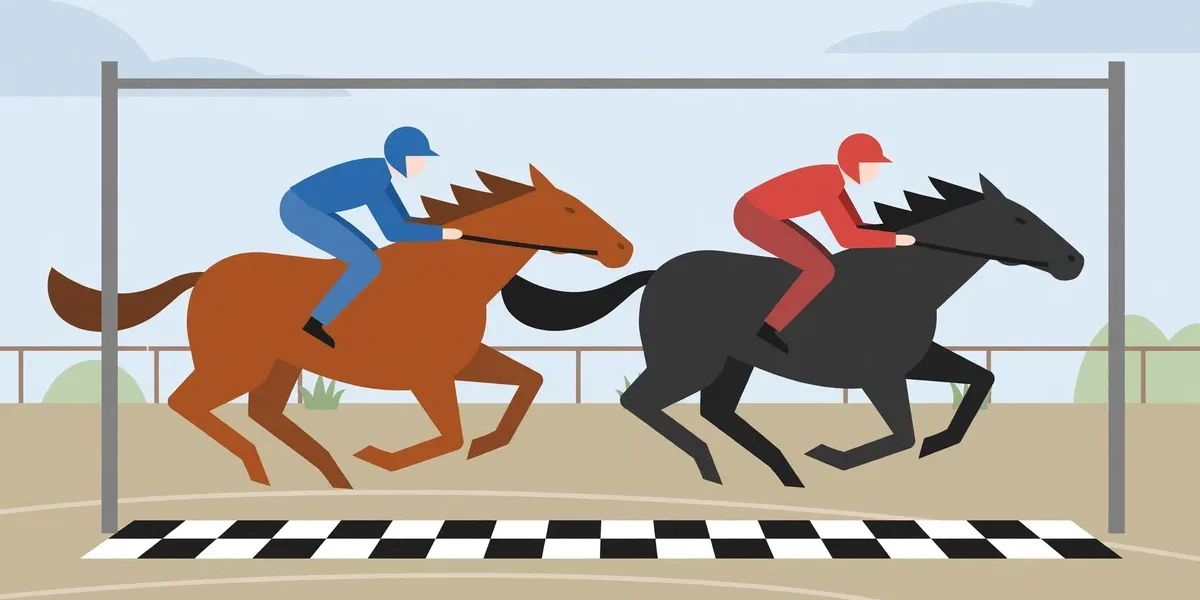
For example, a horse race can end with two horses crossing the line together, or a golf tournament with three players tied for fifth. In both cases, the market has more winners than places, so the bookmaker shares the payout between them.
However, dead-heat rules only apply where a draw is not already an outcome in the market. In other words, a tied football match does not create a dead heat, because the draw is a normal result. Dead heats belong to markets with a single winner or a set number of places.
Meanwhile, the settlement follows one simple rule: the odds stay exactly as taken, and the stake is divided. As a result, the bettor keeps the price agreed at the start, but only part of the stake counts as a winner.
What Is a Dead Heat in Betting for a Win?
For a win dead heat, the stake is divided by the number of runners tied for first place, and the reduced stake is paid at the full odds. For example, stake ₦1,000 on a horse at 5.00, and it dead-heats for the win with one other horse: half the stake (₦500) wins at full odds, so ₦500 × 5.00 = ₦2,500 returned — a profit of ₦1,500, half of what a clear win would have paid.
| Dead heat | Stake that counts | Odds | Return on ₦1,000 at 5.00 |
|---|---|---|---|
| Two-way | ₦500 | 5.00 | ₦2,500 |
| Three-way | ₦333.33 | 5.00 | ₦1,666.67 |
| Four-way | ₦250 | 5.00 | ₦1,250 |
In a three-way dead heat, ₦1,000 divided by three gives ₦333.33, settled at 5.00 for about ₦1,666.67 — a profit of about ₦666.67. Similarly, a four-way dead heat leaves ₦250 counting at 5.00, returning ₦1,250.
On the other hand, a dead heat can return less than the stake when the odds are short. For instance, ₦1,000 at 2.00 in a three-way dead heat returns ₦333.33 × 2.00 = ₦666.67, a loss of ₦333.33. As a result, a dead heat is not a safety net: a short-priced selection shared three ways can still lose money.
Above all, the win part of the rule is the same in every sport: the stake is split by the number tied, and the odds do not change. Greyhound racing settles win dead heats the same way.
What Is a Dead Heat in Betting for a Place?
Dead heats for a place follow the same idea, with one extra step: the place stake is reduced by the number of places remaining divided by the number of runners tied. For example, three players tying for one remaining place cuts the place stake to one third, while two places remaining with three tied cuts it to two thirds.
For instance, take an each-way bet of ₦1,000 each way at odds of 17.00, with the top five places paying at one fifth of the odds. The golfer ties for fifth place with three other players. Firstly, the place odds are 1 + (17.00 − 1) × 1/5 = 1 + 3.20 = 4.20. Secondly, one place remains and four players are tied, so the place stake is ₦1,000 × 1/4 = ₦250. Thirdly, the place return is ₦250 × 4.20 = ₦1,050. The win part loses, so the total return is ₦1,050 on ₦2,000 staked.
Similarly, the each-way guide on this site works through a dead heat for a place in horse racing. Therefore, the key question for any place dead heat is always the same: how many places were left, and how many runners tied for them?
What Is a Dead Heat in Betting in Golf?
Golf is where dead heats appear most often: tournaments regularly end with players tied, and the places below the winner are often shared — five players can tie for fifth, or three for second.
Firstly, outright winner bets can dead-heat when two players finish level at the top. Secondly, top-five and top-ten bets dead-heat whenever the last paying place is shared. Thirdly, each-way place parts use the boundary rule above, so a tie for the final place cuts the place stake.
For instance, a bet on a golfer to finish in the top five at 6.00 can end with four players tied for fifth. In that case, one place remains and four players share it, so a ₦1,000 stake is reduced to ₦250 and settled at 6.00, returning ₦1,500. Meanwhile, a top-ten bet on the same golfer would be unaffected, because fifth place sits inside the top ten. Therefore, the market matters as much as the tie.
In short, golf is the sport where the dead-heat rule earns its keep. Our golf betting guide explains the main golf markets behind it.

What Is a Dead Heat in Betting in Football?
In football, dead heats show up in top scorer markets, which ask who scores the most goals in a season or a tournament. If two players finish level on goals, they dead-heat for first place. For example, two strikers each score 24 league goals: the stake is split in two, and half is settled at the full odds.
Similarly, winner and top-goalscorer doubles can dead-heat on the goalscorer leg, and the same split applies there. As a result, a football dead heat usually comes as a surprise, clear only when the final whistle blows on the last match.
However, dead heats do not apply to ordinary match betting: a drawn match is a normal result with its own odds, not a tie that needs splitting. Therefore, football dead heats live in the season-long and tournament markets, not in the weekend coupon.
Dead Heat vs Rule 4
A dead heat and Rule 4 are different rules. A dead heat is a tie for a position: two or more selections finish level, and the stake is shared. Rule 4 is a deduction from winnings when a horse is withdrawn — a non-runner — after a bet is placed, because the field is smaller than the bettor bargained for.
For example, a horse withdrawn on the morning of the race leaves bets on the remaining horses standing, but their winnings are cut by the Rule 4 deduction. Meanwhile, a dead heat has nothing to do with withdrawals: every runner ran, and two of them could not be separated.
Meanwhile, betting in Nigeria is for adults only — 18+ only. Regulation is state-led: the Supreme Court nullified the National Lottery Act 2005 on 22 November 2024, and the National Lottery Regulatory Commission framework applies only in the Federal Capital Territory. As a result, a bettor should check that a bookmaker is licensed in the bettor’s own state. In addition, licensed bookmakers ask for identity checks, usually a Bank Verification Number or National Identity Number, before paying out winnings.
Frequently Asked Questions
What is a dead heat in betting in horse racing?
It is a tie for first place, or for a place, the photo finish cannot separate. The stake is divided by the number of horses tied and paid at the full odds. Dead heats in horse racing are rare, because the camera usually finds a nose in front.
How is a dead heat paid out?
The stake is divided by the number of selections tied and settled at the original odds. For place bets, the stake is reduced by the places remaining divided by the runners tied.
Can a dead heat return less than my stake?
Yes. At short odds, a three-way or four-way dead heat can return less than the amount staked. For example, ₦1,000 at 2.00 in a three-way dead heat returns about ₦666.67. Bookmaker terms differ, so check the rules of the bookmaker used.
What is the difference between a dead heat and Rule 4?
A dead heat is a tie between runners that all ran. Rule 4 is a deduction from winnings when a horse is withdrawn before the race.
Do dead heats happen in football betting?
Yes, in top goalscorer markets, where two or more players finish level on goals. They do not happen in ordinary match-result betting, because a draw is a normal result with its own odds.
Does a dead heat void my bet?
No. The bet is paid, but only part of the stake counts as a winner. A void bet returns the whole stake; a dead heat returns a share of it at the full odds.
The Bottom Line
In short, what is a dead heat in betting? It is a tie that shares the payout: the stake is divided by the number of selections tied, and the reduced stake is paid at the full odds. Golf is where the rule appears most, horse racing is where it is rarest, and football top-scorer markets are where it surprises most often. Above all, remember that the odds stay the same — it is the stake that is shared.
Bet Responsibly: Betting is entertainment, not a way to make money. Only bet what you can afford to lose, and never chase losses. If betting stops being fun, take a break. For help and advice, see our Responsible Gambling page. 18+ only.