- Quick Answer
- What Is a Placepot Bet? Meaning and How It Works
- What Is a Placepot Bet? What Counts as Placed
- What Is a Placepot Bet? How the Dividend Is Worked Out
- What Is a Placepot Bet? Permutations, Lines and Cost
- What Is a Placepot Bet? Non-Runners, Void Legs and Rollovers
- Placepot Strategy: Bankers and Cover
- Betting on a Placepot in Nigeria: Law and Safety
- Frequently Asked Questions
- What is a placepot bet in simple terms?
- How many races are in a placepot?
- Do I need a winner in any leg?
- What happens if my horse is a non-runner?
- What happens if nobody wins the placepot?
- Can I pick more than one horse in a race?
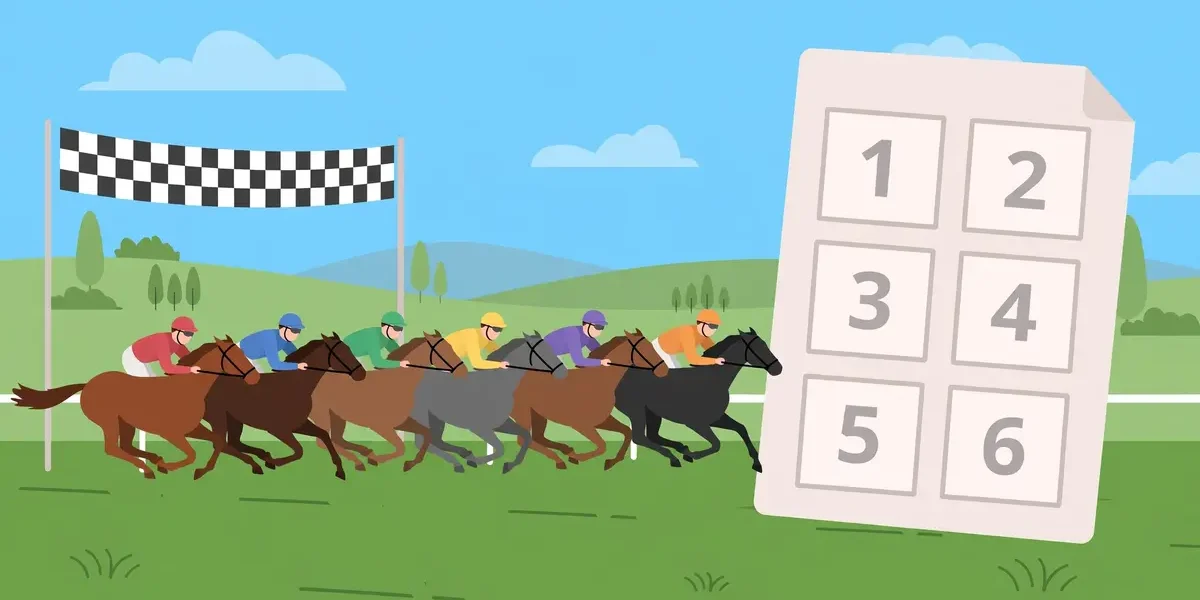
What is a placepot bet? In short, it is a Tote pool bet on horse racing in which you pick a horse to be placed in each of the first six races at one meeting. In other words, you do not need a single winner. On the other hand, you do need a placed horse in every leg, because one failed leg ends the whole ticket.
Last updated: November 2026
Quick Answer
- What is a placepot bet in one line? A Tote pool bet that needs a placed horse in each of the first six races at one meeting.
- Firstly, a horse counts as placed only under the place terms for its race, which depend on the number of runners.
- Secondly, all stakes go into one pool, the Tote deducts 27%, and the rest is shared by the winners.
- Thirdly, extra selections in a leg multiply the lines and the cost.
- Finally, a non-runner is replaced by the starting-price favourite.
What Is a Placepot Bet? Meaning and How It Works
A placepot covers the first six races at a single meeting, and those six races are called legs. For example, leg one is the first race on the card, and leg six is the sixth race. In particular, the bet must be placed before the first leg starts, because the pool closes at the off of race one.
In effect, the placepot is a pool bet, which is also called pari-mutuel betting. For instance, every placepot stake at that meeting goes into the same pool.
Above all, the aim is simple: survive all six legs. For example, a horse that wins counts as placed. However, a horse that finishes outside the paying places knocks that line out at once.
What Is a Placepot Bet? What Counts as Placed
What counts as placed depends on the field size and, in large fields, on whether the race is a handicap. In particular, the Tote placepot uses the standard place terms in the table below. As a result, check the terms for each leg before you pick.
| Runners in the race | Places that count |
|---|---|
| 2 to 4 runners | 1st only |
| 5 to 7 runners | 1st and 2nd |
| 8 to 15 runners | 1st, 2nd and 3rd |
| 16 or more runners, non-handicap | 1st, 2nd and 3rd |
| 16 or more runners, handicap | 1st, 2nd, 3rd and 4th |
Firstly, a four-runner race is the hardest leg, because only the winner counts. Secondly, a five, six or seven-runner race gives you two places. Thirdly, most races with eight or more runners give you three places, while a handicap with 16 or more runners gives you four.
On the other hand, field sizes can change before the off. For instance, late withdrawals can reduce the number of paying places. For guidance on reading the card, see how to read a racing form.

What Is a Placepot Bet? How the Dividend Is Worked Out
The dividend is the return paid for each winning £1 line, and it is declared only after the sixth leg. Firstly, all the placepot stakes at the meeting form the gross pool. Secondly, the Tote deducts 27% from that gross pool, which leaves a net pool of 73%. Thirdly, the net pool is divided by the total winning stakes to give the dividend. In addition, the calculated dividend is rounded down to the next 10p, and the minimum placepot dividend is £1.10.
For example, take an ILLUSTRATIVE pool with a gross pool of £100,000. In other words, the 27% deduction is £27,000, so the net pool is £73,000. In particular, if there are 1,000 winning £1 units, the dividend is £73,000 divided by 1,000, which is £73.00 per £1 line.
In general, favourites that place keep thousands of tickets alive, so the dividend stays small. On the contrary, one outsider that places can knock out a large share of the pool. Above all, remember that the dividend includes the stake, so a £73.00 dividend on a £1 line returns £73.00 in total.
What Is a Placepot Bet? Permutations, Lines and Cost
A permutation, often called a perm, lets you pick more than one horse in a leg. Firstly, each combination of your selections across the six legs is a separate line. Secondly, the number of lines is found by multiplying the number of selections in each leg together. Thirdly, the total cost is the number of lines multiplied by your unit stake per line.
For example, two selections in three legs and one in the other three gives 2 x 2 x 2 x 1 x 1 x 1 = 8 lines. On the other hand, two selections in every leg gives 2 x 2 x 2 x 2 x 2 x 2 = 64 lines.
| Selections per leg | Lines | Cost at 10p per line | Cost at 50p per line | Cost at £1 per line |
|---|---|---|---|---|
| 1, 1, 1, 1, 1, 1 | 1 | £0.10 | £0.50 | £1.00 |
| 2, 2, 2, 1, 1, 1 | 8 | £0.80 | £4.00 | £8.00 |
| 2, 2, 1, 2, 1, 3 | 24 | £2.40 | £12.00 | £24.00 |
| 2, 2, 2, 2, 2, 2 | 64 | £6.40 | £32.00 | £64.00 |
In particular, check the 24-line row: 2 x 2 x 1 x 2 x 1 x 3 = 24 lines, and 24 lines at 10p per line cost £2.40. As a result, always read the total on the slip, not the per-line figure, before you confirm the bet.
Above all, minimum stakes vary by outlet, so check the point of sale before you bet, because the 10p, 50p and £1 figures above are unit-stake examples only.
What Is a Placepot Bet? Non-Runners, Void Legs and Rollovers
A non-runner does not end your placepot. Firstly, a non-runner selection is replaced by the starting-price favourite in that race. Secondly, when there are joint or co-favourites, the horse with the lowest racecard number is taken.
For example, if your pick in leg three is withdrawn in the morning, the favourite in leg three takes its place. On the other hand, a horse that comes under starter’s orders and then fails to finish is not a non-runner.
In general, a leg that is a walkover, void or abandoned is settled on the remaining legs. For instance, every selection in that leg is deemed to have been successful. On the contrary, if none of the legs takes place, the pool is declared void and all stakes are refunded.
Above all, the rollover rule covers the case where nobody wins. Firstly, if there are no winning tickets, the entire gross pool is carried forward to another placepot as decided by the Tote. Secondly, if the pool is only partly won, the unwon balance is carried forward in the same way.
Placepot Strategy: Bankers and Cover
A banker is a single horse you trust to place in a leg, and it keeps the cost down. Firstly, pick your bankers in the legs you feel most confident about. Secondly, spend your cover on the wide-open legs, where several horses could place. Thirdly, avoid covering every leg equally, because that multiplies the lines without a plan.
For example, a perm of 2, 1, 2, 1, 1, 3 gives 12 lines: 2 x 1 x 2 x 1 x 1 x 3 = 12, and 12 lines at 50p per line cost £6.00.
In general, form study is the starting point for every leg, and a reader asking what is a placepot bet should start there too. In addition, the Betting Academy has guides on the basics, including how to bet on horse racing for beginners and how to bet on greyhound racing for beginners. Above all, treat the placepot as entertainment and set a budget for the meeting.
Betting on a Placepot in Nigeria: Law and Safety
The placepot is a UK and Irish Tote product, so a reader in Nigeria should start with the law at home. Firstly, gambling regulation in Nigeria is state-led. Secondly, the Supreme Court nullified the National Lottery Act 2005 on 22 November 2024, so that Act must not be cited as current law. Thirdly, the National Lottery Regulatory Commission framework applies only in the Federal Capital Territory. As a result, check that any operator you use is licensed in the state where you are betting.
In particular, betting in Nigeria is 18+ only. For example, identity checks often use a Bank Verification Number or an 11-digit National Identification Number.
Above all, never treat a placepot as income. As a result, only stake money you can afford to lose.
Frequently Asked Questions
What is a placepot bet in simple terms?
A placepot is a Tote pool bet that needs a placed horse in each of the first six races at one meeting.
How many races are in a placepot?
A standard placepot covers six races, normally the first six races at a meeting.
Do I need a winner in any leg?
You do not need a winner, unless the leg has four or fewer runners. For example, a winner always counts as placed.
What happens if my horse is a non-runner?
Your line stays alive. In particular, the selection is replaced by the starting-price favourite.
What happens if nobody wins the placepot?
The pool is carried forward. For instance, the whole gross pool goes into another placepot as decided by the Tote.
Can I pick more than one horse in a race?
You can pick more than one horse in any leg. As a result, each extra selection multiplies the lines.
Bet Responsibly: betting is for adults aged 18+ only. In other words, treat it as entertainment, not as a way to make money, and only stake what you can afford to lose. For help and safer gambling guidance, see responsible gambling.