- Quick Answer
- What Is a Quadpot Bet? How the Bet Works
- What Counts as Placed in a Quadpot Bet
- What Is a Quadpot Bet Worth? Dividends and Costs
- What Is a Quadpot Bet? Placing Your First Ticket
- What Is a Quadpot Bet? Non-Runners, Void Legs and Dead Heats
- What Is a Quadpot Bet? Quadpot vs Placepot
- Frequently Asked Questions
- What is a quadpot bet minimum stake?
- Which races does a quadpot cover?
- What happens if my horse is a non-runner?
- Can a quadpot pay more than a placepot?
- What happens if a race is abandoned?
- Do I need a winner in any leg?
- The Bottom Line
- Bet Responsibly
What is a quadpot bet? In short, it is a Tote pool bet on horse racing in which you pick a horse to be placed in each of races three, four, five and six at one meeting. In other words, you do not need a single winner — but you do need a placed horse in every leg, because one failed leg ends the whole ticket.
Last updated: November 2026
Quick Answer
- What is a quadpot bet in one line? A Tote pool bet that needs a placed horse in each of races three to six at one meeting.
- Firstly, a horse counts as placed only under the place terms for its race.
- Secondly, all stakes go into one pool, the Tote deducts 26%, and the winners share the rest.
- Thirdly, extra selections in a leg multiply the lines and the cost.
- Finally, a non-runner is replaced by the starting-price favourite.
What Is a Quadpot Bet? How the Bet Works
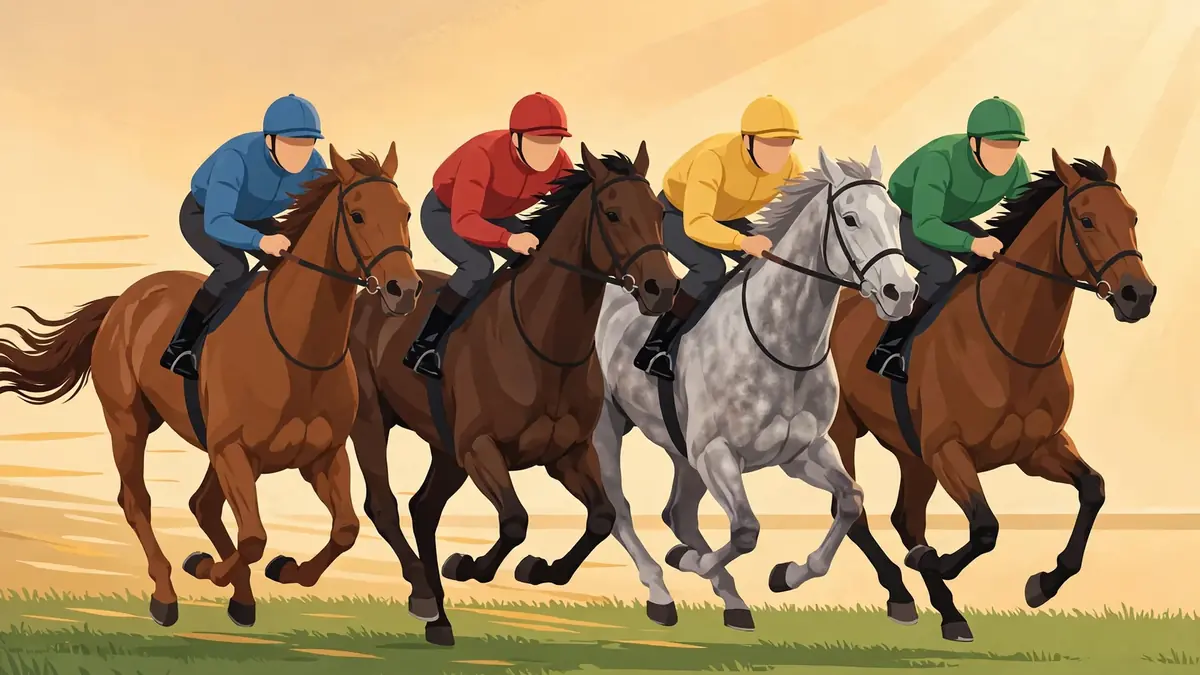
A quadpot covers four races at a single meeting, and those four races are called legs: leg one is the third race on the card, and leg four is the sixth race. In particular, the bet must be placed before the third race starts, because the pool closes at the off of that race.
In effect, the quadpot is the second half of the placepot: it covers only the last four of the placepot’s six races. As a result, it suits a punter who arrives late, or one whose placepot ticket has already lost in the first two races.
In short, the quadpot is a pool bet, which is also called pari-mutuel betting: every quadpot stake goes into the same pool, and the Tote shares the net pool among the winning tickets. Therefore, there are no fixed odds.
The quadpot runs at all British meetings and at selected overseas meetings, and you can play it online through the Tote or at the racecourse. Pool betting also runs on greyhound racing — see our guide to how to bet on greyhound racing for beginners.
What Counts as Placed in a Quadpot Bet
A horse does not need to win to count as placed — it needs to finish inside the paying places for its race, which depend on the size of the field.
| Runners in the race | Places that count |
|---|---|
| 2 to 4 | 1st only |
| 5 to 7 | 1st and 2nd |
| 8 to 15 | 1st, 2nd and 3rd |
| 16 or more (non-handicap) | 1st, 2nd and 3rd |
| 16 or more (handicap) | 1st, 2nd, 3rd and 4th |
For example, in a five-runner race, a horse that finishes second counts as placed, while in a four-runner race, only the winner counts. Therefore, check the number of runners in each leg before you pick.
What Is a Quadpot Bet Worth? Dividends and Costs
The quadpot has its own pool, so its dividend is not a slice of the placepot pool. In particular, the quadpot pool is smaller, because fewer legs mean fewer tickets.
Firstly, the Tote takes its deduction from the gross pool: under the Tote’s published pool rules, that deduction is 26%, which leaves 74% as the net pool. Secondly, the net pool is divided by the total winning stakes to give the dividend, declared to a £1 stake and rounded down to the next 10p, with a minimum dividend of £1.10.
The table below shows an ILLUSTRATIVE dividend example. The figures are made up to show the arithmetic, and a real dividend depends on the pool and the number of winners.
| ILLUSTRATIVE quadpot dividend | Amount |
|---|---|
| Gross pool | £100,000 |
| Tote deduction at 26% | £26,000 |
| Net pool | £74,000 |
| Winning £1 units | 1,000 |
| Dividend per £1 unit | £74.00 |
In other words, a winning £1 line would return £74.00, including the stake, while a winning 10p line would return £7.40 and a winning 50p line £37.00.
What Is a Quadpot Bet? Placing Your First Ticket
Placing a quadpot is simple. Firstly, pick one horse in each of races three, four, five and six. Secondly, decide your stake per line. Thirdly, hand in the ticket, or confirm it online, before the third race starts — once it is off, the pool is closed.
A single line costs as little as £1 in total. On the other hand, most players cover more than one horse in at least one leg, and each extra horse creates more lines: the number of lines is the selections in leg one multiplied by leg two, multiplied by leg three, multiplied by leg four.
| Selections in each leg | Lines | Cost at 10p a line | Cost at 50p a line | Cost at £1 a line |
|---|---|---|---|---|
| 1, 1, 1, 1 | 1 | £0.10 | £0.50 | £1.00 |
| 2, 2, 2, 2 | 16 | £1.60 | £8.00 | £16.00 |
| 2, 2, 2, 3 | 24 | £2.40 | £12.00 | £24.00 |
| 3, 3, 3, 3 | 81 | £8.10 | £40.50 | £81.00 |
Note that permutation lines start at 10p, but the total stake must reach at least £1, so a one-line ticket at 10p would not be accepted on its own. For example, 16 lines at 10p come to £1.60, which clears the minimum.
In Nigeria, gambling regulation is state-led since the Supreme Court nullified the National Lottery Act 2005 on 22 November 2024, and the National Lottery Regulatory Commission framework applies only in the Federal Capital Territory. Above all, betting is for adults only — 18+ only — and you should only use licensed operators in your state. The Tote itself is a UK operator, and this guide explains how its bet works rather than promising it is on offer everywhere.
If you are new to reading a racecard, our guide on how to bet on horse racing for beginners explains the form, the going and the race types in plain terms.
What Is a Quadpot Bet? Non-Runners, Void Legs and Dead Heats
A non-runner does not kill your ticket. Firstly, if your horse does not run, your selection moves to the starting-price favourite of that race — or, if two horses share favouritism, the one with the lowest racecard number. Secondly, the favourite must then be placed for your line to stay alive.
A void or abandoned leg is treated as a win for every selection. For example, if the fifth race is abandoned and not re-run the same day, every ticket passes that leg and the bet is settled on the other three legs. On the other hand, if none of the four legs takes place, the pool is void and stakes are refunded.
A dead heat for a place counts in full. For instance, two horses that dead-heat for second in a six-runner race both count as placed, and a dead heat for first means both count as winners of that leg.
If no ticket finds four placed horses, the whole gross pool is carried forward to another quadpot pool as decided by the Tote. In contrast, the Tote only takes its deduction when the money is won, so the full gross pool carries over.
What Is a Quadpot Bet? Quadpot vs Placepot
The quadpot and the placepot are close cousins, but they are not the same bet. Firstly, the placepot covers six races, while the quadpot covers four. Secondly, the placepot starts at race one, while the quadpot starts at race three. Thirdly, the placepot pool is bigger, because more legs bring more tickets.
| Feature | Placepot | Quadpot |
|---|---|---|
| Races covered | First six races | Races three to six |
| Legs | 6 | 4 |
| What you need | A placed horse in each leg | A placed horse in each leg |
| Minimum total stake | £1 | £1 |
| Tote deduction | 27% | 26% |
| Pool | Own pool | Own pool |
For example, a punter who fancies the later races but has no view on the first two can skip the placepot and play the quadpot alone. On the other hand, a punter who wants the full card will play the placepot and may add a quadpot as a second ticket.
Frequently Asked Questions
What is a quadpot bet minimum stake?
The minimum total stake is £1, and permutation lines start at 10p a line — for example, 16 lines at 10p cost £1.60.
Which races does a quadpot cover?
A quadpot covers races three, four, five and six at one meeting, unless the Tote states otherwise. Above all, the bet must be placed before the third race starts.
What happens if my horse is a non-runner?
Your selection moves to the starting-price favourite of that race — or, if two horses are joint favourites, the one with the lowest racecard number. In short, your line stays alive on the favourite, which must then be placed.
Can a quadpot pay more than a placepot?
Yes, it can, even though its pool is usually smaller. For example, if the first two races go to short-priced favourites, the placepot dividend can be small, while competitive late races can make the quadpot pay well.
What happens if a race is abandoned?
The leg is treated as successful for every selection. However, if none of the four legs takes place, the pool is void and stakes are refunded.
Do I need a winner in any leg?
No. A placed horse is enough in every leg, under the place terms for that race — for example, a horse that finishes third in a ten-runner race counts as placed.
The Bottom Line
In short, what is a quadpot bet? It is four placed horses, one pool, and a dividend shared by every winning ticket. Firstly, it covers races three to six. Secondly, it costs from £1, with perms from 10p a line. Thirdly, its own pool and its 26% deduction keep it separate from the placepot.
You can find more guides in the Betting Academy, including the placepot bet guide that explains the six-race version of this bet.
Bet Responsibly
Betting should be fun, not a way to make money. Only bet what you can afford to lose, set a limit before you start, and never chase losses. This article is for readers aged 18 and over only. If betting stops being fun, take a break and read our Responsible Gambling page for help and support.